Few backyard visitors can turn a peaceful cookout into a chaotic interpretive dance quite like yellow jackets. One minute youbandoning your drink, and wondering whether moving to Antarctica is a reasonable life choice.
The good news: you can get rid of yellow jackets safely and reduce the odds of another colony setting up shop next season. The not-so-good news: there is no magic peppermint spray, fake paper nest, or heroic flip-flop maneuver that reliably solves a serious infestation. Real yellowjacket control is about identifying the problem, removing what attracts them, treating nests carefully when necessary, and making your property a less appealing address in the future.
Note: This guide is designed for manageable outdoor yellowjacket problems. Do not attempt DIY nest treatment if you have a known sting allergy, the nest is inside a wall or attic, the nest is near electrical equipment, or children, pets, and frequent foot traffic make the area difficult to secure. In those situations, hiring a licensed pest-control professional is the smart movenot the cowardly move.
Why Yellow Jackets Keep Coming Back
Yellow jackets are social wasps that often nest underground, inside wall voids, beneath decks, in sheds, or around eaves and rooflines. They are especially interested in outdoor food, sugary drinks, fallen fruit, trash cans, compost, pet food, and anything that smells remotely like a free buffet.
In most parts of the United States, a yellowjacket colony lasts for one season. That does not mean your yard is permanently safe after fall arrives. New queens may look for protected nest sites the following spring, especially where there are open gaps, old rodent burrows, accessible wall voids, and easy food sources. Getting rid of yellow jackets “for good” means breaking that cycle rather than simply winning one dramatic afternoon battle.
Step 1: Make Sure You Are Actually Dealing With Yellow Jackets
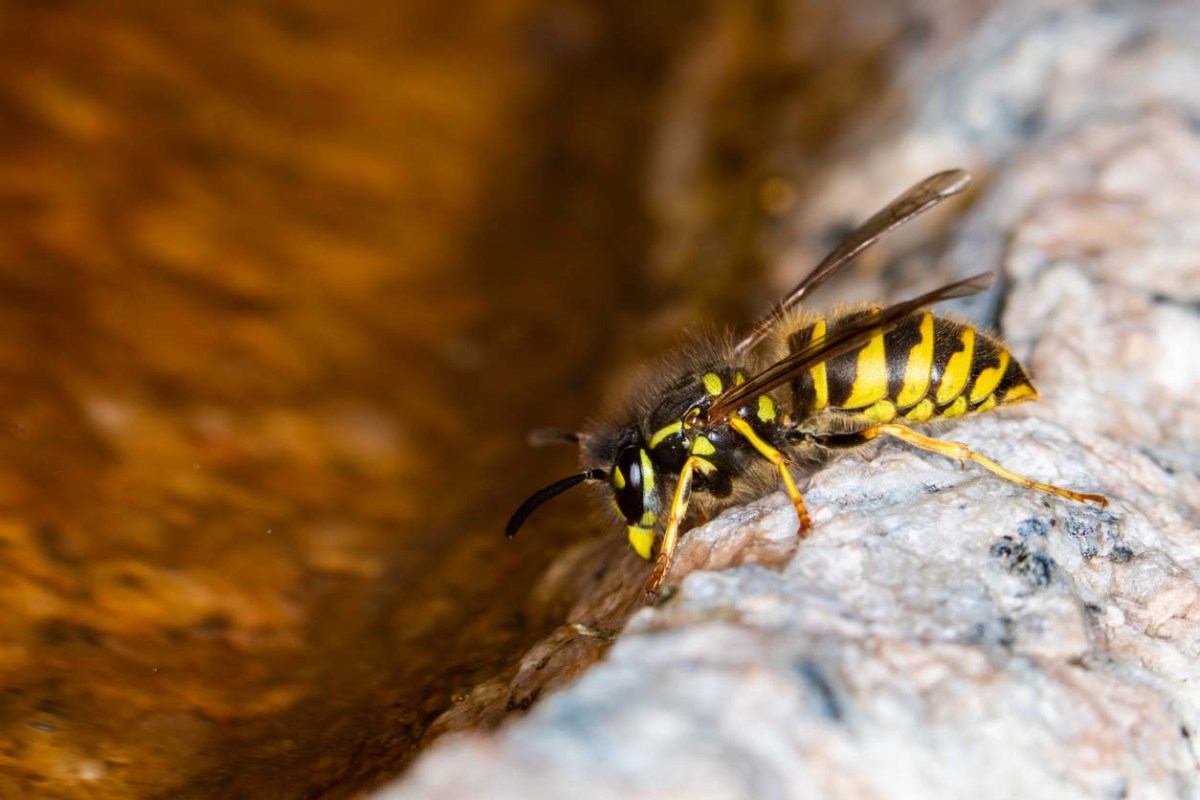
Before launching a full anti-wasp campaign, identify the insect. Yellow jackets are usually smooth-bodied, black-and-yellow wasps with narrow waists. They tend to look shiny rather than fuzzy and can sting more than once. They are commonly seen hovering around garbage, grilled meat, soda cans, fruit, and picnic tables.
Honey bees look fuzzier and are valuable pollinators. Bumble bees are rounder, hairier, and generally less interested in your potato salad. Paper wasps have longer legs and a more stretched-out appearance, often building open, umbrella-shaped nests beneath eaves. Bald-faced hornets are also social wasps, although they are black and white rather than yellow.
This matters because not every flying insect requires extermination. A solitary bee or non-aggressive wasp far from doors, play areas, and patios may be helping control garden pests. A large yellowjacket colony beside the back door, however, is not a charming wildlife encounter. It is a safety issue with wings.
Quick Signs You Have a Yellowjacket Nest Nearby
- Multiple yellow jackets repeatedly fly into and out of one hole in the ground.
- Wasps disappear through a crack in siding, a roofline gap, or an opening near a vent.
- Activity suddenly increases when you mow, trim shrubs, move a deck chair, or walk near one spot.
- You see yellow jackets returning to the same location in a steady stream.
Step 2: Find the Nest Without Starting a Backyard War
The safest way to locate a yellowjacket nest is to observe from a distance. Watch the flight path of several workers rather than chasing one insect around your yard like a detective who skipped coffee. Yellow jackets usually fly in a fairly direct line when returning to a nest.
Look around shrubs, retaining walls, deck edges, woodpiles, compost areas, utility openings, old animal burrows, crawlspace vents, and cracks near siding. Underground nests are often hidden in places people disturb accidentally, such as lawn edges, beneath landscaping timbers, or beside patios.
Do not poke into a suspected hole. Do not spray randomly into the ground. Do not stomp around near the entrance to “see what happens.” What happens is usually immediate regret.
Once you identify the likely nest entrance, mark the area from a safe distance. A garden stake, small cone, or piece of bright tape placed several feet away can help family members avoid the spot. Keep children, pets, lawn equipment, and guests away until you decide how to handle the nest.
Step 3: Remove the Food Sources That Invite Yellow Jackets to Dinner
You may not be able to stop every yellow jacket from flying through your neighborhood, but you can make your yard much less tempting. Yellow jackets are scavengers, and they are very good at detecting easy calories. A sticky recycling bin or a plate of uncovered ribs can function like a flashing neon sign that says, “Wasps welcome.”
Start with outdoor sanitation. Keep garbage lids closed tightly and rinse recyclable cans and bottles before placing them outside. Empty trash regularly during warm months, especially after parties. Pick up fallen fruit beneath trees, clean spills from patio tables, and cover food while people are not actively eating.
Pet food should not sit outdoors for long periods. Compost bins need secure lids, and meat scraps should be managed carefully. If you use a hummingbird feeder, clean drips and leaks promptly because sugar solution can attract more than hummingbirds.
Simple Yellowjacket Prevention Habits
- Serve food shortly before people eat instead of leaving it uncovered for an hour.
- Use cups with lids when possible, especially for children outdoors.
- Check soda cans and straws before drinking; yellow jackets can crawl inside unnoticed.
- Wipe outdoor tables after meals and rinse recycling containers.
- Remove windfall fruit before it ferments into an insect happy hour.
Step 4: Use Yellowjacket Traps as a Supporting Tool, Not a Miracle Cure
Traps can help reduce the number of scavenging yellow jackets around a patio, pool, or trash area. They can also help you monitor whether activity is increasing. But traps usually do not eliminate a colony by themselves, especially when the nest is nearby and producing a steady stream of workers.
Place traps away from doors, outdoor dining spaces, and play areas. Putting a lure trap beside the picnic table is a little like placing a pizza delivery sign beside your front door and then being surprised when hungry people arrive. Put traps farther from the places you want to protect, ideally along the edge of the property where practical.
Use products specifically designed for yellow jackets, follow the manufacturer’s instructions, and empty or replace traps as directed. If traps catch only a few insects but you still see heavy activity in one area, focus on finding the nest rather than buying trap number six.
Step 5: Decide Whether DIY Treatment Is Actually Safe
DIY yellowjacket nest treatment is only appropriate when the nest is outdoors, accessible from the ground, clearly visible or easy to identify, and far enough from people that you can keep the area secure. You should also have a clear path away from the nest and no history of severe reactions to insect stings.
Call a professional instead when the nest is inside a wall, attic, crawlspace, chimney, utility box, or roof structure. A professional is also the better choice for a large nest, a nest near a front entrance, a colony beneath a heavily used deck, or anything requiring a ladder. Mixing heights, stinging insects, and panic is not a home-improvement project. It is a blooper reel waiting to happen.
Never use gasoline, diesel fuel, fire, boiling water, bleach, or homemade chemical mixtures to destroy a nest. These methods can create fire hazards, contaminate soil, damage structures, injure people and pets, and make the colony more defensive. They are not clever shortcuts; they are expensive mistakes wearing a DIY costume.
When to Hire a Pest-Control Professional Immediately
- You or someone in the household has a history of a serious sting reaction.
- The nest is hidden inside a wall, ceiling, attic, or enclosed structure.
- The colony is close to a school entrance, playground, patio, pool, or main doorway.
- You cannot reach the area safely from the ground.
- You have already tried treatment and the activity continues.
Step 6: Treat the Nest Carefully and Verify That It Is Inactive
If you choose a DIY option, use only an EPA-registered wasp or hornet product specifically labeled for yellowjacket nests and for the location you are treating. Read the entire label before doing anything. The label is not decorative packaging; it tells you where the product can be used, how much to apply, what protective clothing to wear, how long to stay away, and how to protect people, pets, and pollinators.
Treatment is often safest during a low-activity period, such as late evening or early morning, but follow the timing directions on the product label and make sure you can see clearly enough to move safely. Wear long sleeves, long pants, closed shoes, gloves, and eye protection if the label calls for it. Keep everyone else indoors and away from the treatment area.
Stand at the distance recommended by the product label, treat the entrance or nest exactly as directed, and leave the area promptly. Do not stand nearby to admire your work. Yellow jackets do not award participation trophies.
After treatment, observe from a safe distance over the next day or two, or for the period directed on the label. Do not seal an entrance immediately after treatment because surviving workers may look for another exit and end up inside a wall or home. If activity continues, do not keep layering random products onto the problem. Contact a licensed professional for a targeted solution.
Step 7: Seal Entry Points and Prevent Next Season’s Nest
Once you are certain the colony is inactive, prevent future nesting by closing the openings that made your property attractive in the first place. Repair cracks in siding, damaged screens, loose soffits, gaps around pipes, attic vent openings, and worn weather stripping. Add appropriate screening to vents and openings while maintaining proper airflow.
For ground-nesting areas, fill abandoned rodent holes once yellowjacket activity has stopped. Keep landscape edges tidy, remove loose debris piles near patios, and inspect under decks and sheds periodically. The goal is not to make your yard sterile or insect-free. The goal is to remove the easy, protected real estate that a queen might choose next spring.
Make inspections part of your seasonal routine. In spring and early summer, walk around your home every couple of weeks and look under eaves, around sheds, near vents, beneath decks, and along fence lines. Small nests and early activity are usually easier to manage than a late-summer colony that has turned your lawn into restricted airspace.
Common Yellowjacket Mistakes That Make the Problem Worse
The biggest mistake is treating every yellow jacket you see as proof that a nest is directly under your lawn. Workers may travel from elsewhere in the neighborhood, especially when food is available. Clean up attractants first, then investigate whether there is a consistent flight path to a nest on your property.
Another mistake is sealing a wall opening while yellow jackets are still active. This can redirect the insects into your home or deeper into the structure. Let treatment work, confirm activity has stopped, and then repair the opening.
Finally, avoid aggressive swatting. Fast arm movements can make outdoor dining more stressful and may provoke defensive behavior. Stay calm, move slowly away, cover food, and give the insect a chance to leave. It is not friendship, but it is practical diplomacy.
When a Yellowjacket Sting Needs Medical Attention
Most stings cause immediate pain, redness, swelling, or itching around the sting site. A severe allergic reaction can involve symptoms beyond the sting area, including widespread hives, swelling of the face, tongue, or throat, trouble breathing, wheezing, dizziness, fainting, vomiting, or severe stomach cramps.
Call 911 or seek emergency medical care immediately if someone develops breathing difficulty, throat swelling, fainting, or signs of a severe allergic reaction after a sting. People with a prescribed epinephrine auto-injector should follow their clinician’s emergency plan. Multiple stings can also be serious, even for someone without a known allergy.
Yellowjacket Experiences: Lessons Homeowners Learn the Hard Way
The following examples are composite homeowner scenarios designed to show how yellowjacket problems commonly unfold and how safer choices usually produce better results.
The barbecue surprise: A family noticed a few yellow jackets around the grill every afternoon and assumed the insects were only attracted to hamburgers. They bought a trap, placed it beside the patio, and suddenly had even more yellow jackets circling the eating area. The real issue was not the grill alone. A nest was hidden beneath a landscape timber about twenty feet away, while an overflowing recycling bin provided a dependable snack station.
Once the family moved the trap away from the patio, rinsed cans, kept garbage covered, and watched the insects from a distance, the flight path became obvious. They hired a professional because the nest was close to where children played. The lesson was simple: do not treat yellow jackets as random party crashers until you rule out a nearby nest.
The lawn mower ambush: Another homeowner discovered a ground nest the least enjoyable way possible: by mowing directly over it. The mower vibrations disturbed the colony, and the homeowner was stung several times before getting indoors. Afterward, the family marked the area, stopped mowing that section, and kept pets away. They resisted the urge to pour anything into the hole, which was fortunate because the nest was next to a wooden retaining wall.
A pest-control technician treated the nest and later confirmed it was inactive. The homeowner then filled the old opening and changed the landscaping around the wall to reduce hiding places. The lesson here is that unusual insect activity in one patch of grass deserves investigation before you bring in noisy equipment.
The wall-void problem: A homeowner saw yellow jackets entering a small gap near the roofline and planned to seal it with expanding foam. That could have created a much bigger issue. The insects were using a wall void, and blocking the exterior opening while workers were alive may have pushed them toward indoor spaces. Instead, a professional treated the colony, waited until activity stopped, and then sealed the gap properly.
The experience taught the homeowner that a tiny hole can lead to a large hidden nest. When yellow jackets disappear into a structure, the most economical solution is often professional treatment followed by repairnot a can of foam and crossed fingers.
The early-spring advantage: One homeowner began making a short spring inspection part of regular yard maintenance. Every few weeks, they checked under eaves, around the shed, beneath the deck, and near vent covers. They repaired torn screens, sealed siding gaps, picked up fallen fruit, and kept outdoor bins clean. That routine did not eliminate every yellow jacket from the neighborhood, but it prevented nests from becoming established near the house.
That is the real long-term win. You may never convince every yellow jacket in the county to change careers, but you can make your home far less attractive as a nesting site and far less rewarding as a food stop. Fewer attractants, fewer access points, earlier inspections, and safer nest decisions create a backyard that belongs to you again.
Final Thoughts
The best way to get rid of yellow jackets for good is not one dramatic spray-and-sprint moment. It is a practical system: identify the insect, find the nest safely, remove food sources, use traps strategically, choose professional help when risk is high, treat carefully, and prevent future nesting. With that approach, your next backyard meal can go back to being about burgers, friends, and arguing over who forgot the napkins.