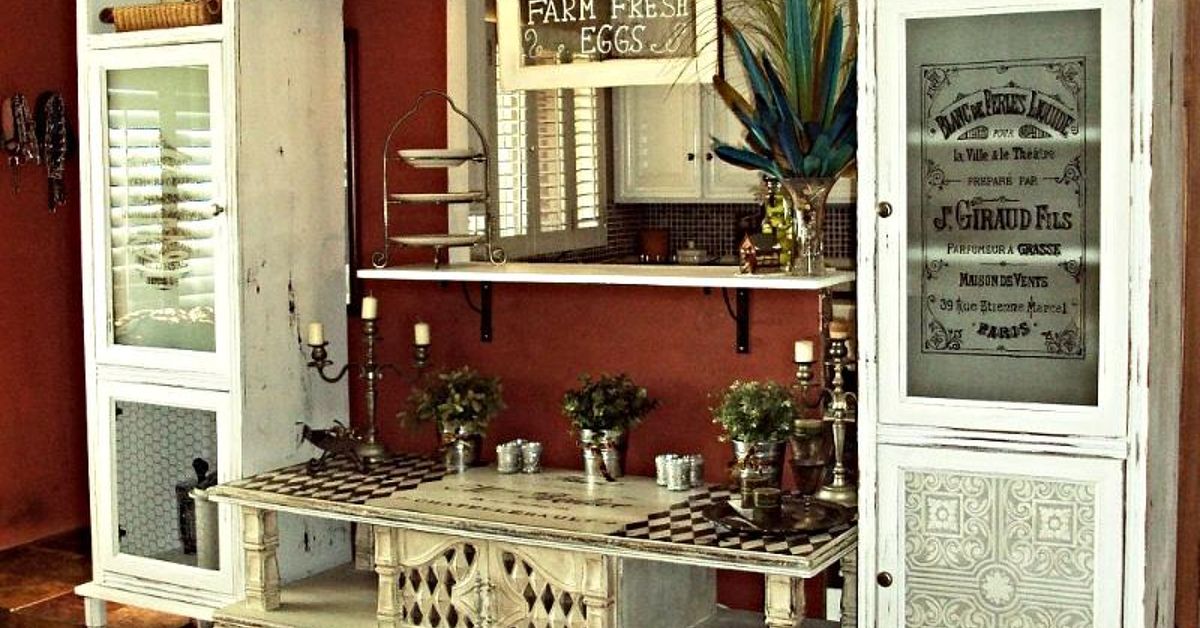
There is a particular kind of magic in spotting an old armoire sitting at the curb. One minute it looks like a dusty relic from someone’s 1994 formal dining room. The next, you are mentally placing a coffee maker inside it, hanging mugs from the shelves, and explaining to your spouse that “yes, it absolutely will fit in the car.”
A curbside armoire can become a beautiful farmhouse coffee pantry with a little cleaning, a few repairs, a practical layout, and just enough French-inspired charm to make every morning feel slightly more civilized. The goal is not to create a museum piece. The goal is to create a hardworking coffee station that stores beans, mugs, syrups, tea, snacks, and the mysterious pile of reusable travel lids that somehow multiplies overnight.
Repurposing an old cabinet works especially well because tall furniture already offers the things a coffee area needs most: vertical storage, doors that hide visual clutter, shelves for daily supplies, and a surface that can become a compact beverage counter. Design publications increasingly recommend using hutches, armoires, cabinets, and pantry storage for coffee bars because they create dedicated zones without requiring a full kitchen renovation.
Why a Curbside Armoire Makes the Perfect Coffee Pantry
A farmhouse coffee pantry is more than a trendy corner with a cute sign that says “But First, Coffee.” It is a practical storage system disguised as décor. Instead of spreading coffee supplies across the kitchen counter, the armoire gives everything a designated home.
French-style armoires are particularly useful because their tall proportions create a dramatic focal point while their doors allow you to close off the mess. A French Provincial piece may have curved legs, carved trim, paneled doors, decorative molding, or worn hardware. Even a plain old wardrobe can borrow the look with creamy paint, aged brass knobs, woven baskets, and a little strategic distressing.
The best part is flexibility. One shelf can hold mugs. Another can hold coffee beans, tea tins, and sugar jars. A lower cabinet can hide bulky appliances, paper towels, cleaning supplies, or backup snack stashes. You can even create a breakfast station with cereal, granola bars, and bowls if your household runs on caffeine and chaos before 8 a.m.
Before You Rescue It: Inspect the Curbside Find
Not every curbside armoire deserves a heroic makeover montage. Some pieces are charmingly worn. Others are damp, unstable, infested, or held together by a screw that has clearly given up on life. Inspect before bringing anything inside.
Check the Structure First
Open and close every door. Pull on the handles. Wiggle the sides gently. Look for loose joints, water damage, sagging shelves, strong mildew odors, cracked particleboard, or swollen veneer. Solid wood and sturdy plywood are generally worth saving. A cabinet with damaged hardware, scratched paint, or an ugly finish is usually an easy cosmetic project. A cabinet that leans like it is auditioning for a disaster movie is not.
Make sure the shelves can support the intended load. Coffee makers, espresso machines, ceramic mugs, and glass jars get heavy quickly. Reinforce weak shelves with shelf brackets or replace them with cut plywood if necessary. Use a level before calling the project finished; no one wants a coffee maker slowly migrating toward the edge like it has places to be.
Think About Safety Before Style
Tall furniture should be anchored to the wall, especially in homes with children, pets, or enthusiastic climbers. The U.S. Consumer Product Safety Commission warns that furniture tip-overs can cause serious injuries, and it recommends securing tall furniture with appropriate anti-tip restraints.
Also be cautious with old paint. Sanding can create airborne wood dust, and old painted finishes may present additional hazards. Work outdoors or in a well-ventilated area, wear appropriate protection, clean dust thoroughly, and avoid aggressive sanding of unknown old paint. EPA and OSHA guidance emphasizes that sanding and repair work can create dust exposure concerns.
Plan the Coffee Pantry Before You Paint
Before buying paint, knobs, baskets, or twelve jars you do not technically need, measure the armoire and decide how it will function. A beautiful coffee pantry that cannot fit the coffee maker is simply a very expensive lesson in optimism.
Measure the width, depth, and height of your coffee machine, grinder, kettle, and largest mug. Leave room above appliances for lids, water reservoirs, and steam. If the coffee maker will sit inside the cabinet while operating, make sure there is adequate clearance and follow the appliance manufacturer’s safety guidance. Many people prefer placing the machine on a pull-out tray, a lower shelf, or an open middle section where it can be used comfortably.
Sketch three zones:
- Top zone: decorative mugs, extra glasses, serving trays, seasonal décor, or rarely used items.
- Middle zone: coffee maker, grinder, kettle, beans, filters, sweeteners, spoons, and daily mugs.
- Lower zone: backup supplies, snacks, larger appliances, linens, and cleaning essentials.
This layout follows the same organizing principle used in efficient pantry and beverage stations: keep the most frequently used items within easy reach and use higher or lower storage for less frequent items.
Materials for a Farmhouse French Armoire Makeover
You do not need a workshop full of intimidating tools. A simple furniture makeover can be completed with a small collection of basics:
- Warm water, mild dish soap, microfiber cloths, and a scrub brush
- Wood filler and a putty knife
- Sandpaper or sanding sponges in medium and fine grits
- Primer suitable for the cabinet material
- Furniture paint or durable cabinet enamel
- A quality angled brush and small foam roller
- Clear protective topcoat if needed
- New knobs, pulls, hooks, baskets, trays, and labels
- Wall anchor hardware and shelf brackets if required
Cleaning is not glamorous, but it matters. Remove dirt, grease, old furniture polish, and mystery residue before painting. A lightly damp cloth with mild soap is often enough for wood furniture; dry the piece afterward so moisture does not linger.
How to Turn the Armoire Into a Farmhouse Coffee Pantry
Step 1: Clean It Like It Has Been Through Something
Vacuum the interior, brush out corners, and wipe every surface. Remove old shelf liner, stickers, nails, and loose hardware. If there is a strong musty odor or visible mold damage, do not rush ahead with paint. Resolve moisture issues first. Paint is decorative, not magical. It cannot transform mildew into French country charm.
Step 2: Repair the Bones
Tighten screws, glue loose joints, fill dents, and repair veneer chips if they are visible. Replace damaged back panels or weak shelves. If doors rub, adjust the hinges before painting. It is much easier to solve structural problems while the cabinet is bare than after you have applied three beautiful coats of creamy paint and emotionally bonded with the finished look.
Step 3: Sand Lightly and Prime Smartly
Light sanding helps create a surface that accepts primer and paint more evenly. You do not need to sand every inch down to raw wood unless you are removing a failing finish. For painted furniture, preparation typically includes cleaning, light sanding, dust removal, primer where needed, and adequate drying time between coats.
Use a stain-blocking primer if the wood has knots, dark stains, or a strong finish that may bleed through. For laminate or MDF surfaces, use a bonding primer designed for slick materials. This step prevents the unfortunate surprise of yellow stains appearing through your lovely white paint two days after you announce the project is done.
Step 4: Choose a French Farmhouse Finish
For a classic farmhouse coffee pantry, choose soft, warm colors rather than harsh bright white. Good options include antique ivory, mushroom beige, muted sage green, dusty blue, warm greige, pale taupe, or soft charcoal. French-inspired pieces often look best when the paint has depth, not when it resembles a brand-new plastic storage cabinet.
Apply thin, even coats. Use a brush for trim and detailed areas, then use a small roller on flat surfaces for a smoother finish. Let each coat dry fully before applying the next. Two coats usually create stronger coverage than one heavy coat.
Step 5: Add Gentle Distressing, Not Furniture Trauma
If you want an aged French farmhouse look, distress only the spots that would naturally wear over time: corners, edges, drawer pulls, lower trim, and raised moldings. Use fine sandpaper lightly. The goal is “beloved vintage cabinet,” not “this survived a shipwreck and several emotional betrayals.”
Another option is a soft glaze or wax applied sparingly over carved details. This can highlight moldings and create warmth without covering the entire piece in fake antique drama.
Step 6: Upgrade the Hardware
Hardware is the jewelry of the armoire. Replace shiny modern knobs with antique brass, aged bronze, black iron, porcelain, or glass pulls. Add cup pulls for a more rustic pantry feel. Small hooks inside the doors can hold measuring spoons, reusable coffee scoops, tea strainers, or lightweight mugs.
Decorative hardware can completely change the personality of an old cabinet, just as updated knobs and pulls can refresh ordinary kitchen cabinetry without a full remodel.
How to Style the Inside Without Creating a Clutter Avalanche
The best farmhouse coffee pantry looks collected, not crowded. Start with function, then add charm in small doses.
Use Clear Containers for Everyday Supplies
Store coffee beans, tea bags, sugar, cocoa, biscotti, and oatmeal packets in labeled jars or canisters. Clear containers make it easier to see when you are running low on coffee, which is valuable information because running out of coffee should never be a surprise event.
Give Mugs Their Own Zone
Stack mugs on shelves, hang them from hooks, or arrange them on a small riser. Keep daily mugs within arm’s reach and reserve the fancy mugs for higher shelves. A tray can corral syrups, spoons, napkins, and sugar bowls so the area stays neat even during busy mornings.
Hide the Ugly but Necessary Stuff
Use baskets or lidded bins for filters, paper cups, snack bars, cleaning cloths, and backup supplies. Woven seagrass baskets, wire bins, fabric-lined crates, and vintage-style wood boxes all support a farmhouse look while keeping random packaging out of sight.
French Farmhouse Details That Make the Piece Feel Intentional
The difference between “old cabinet in the kitchen” and “charming French farmhouse coffee pantry” is usually in the details. Add a small framed print, a ceramic pitcher, a wooden tray, linen napkins, or a tiny vase of dried lavender. Use one or two materials repeatedly: aged brass, natural wood, creamy ceramics, glass jars, and woven fibers work beautifully together.
Consider lining the back panel with peel-and-stick wallpaper in a subtle floral, stripe, gingham, or faded botanical pattern. A muted blue-and-cream print can make the shelves feel like a little French café. For a darker farmhouse look, paint the interior back panel deep charcoal, muted olive, or black while keeping the exterior light. This creates contrast and makes white mugs and glass jars stand out.
Do not decorate every shelf until it looks like a flea market exploded. Leave breathing room. The coffee machine is already a visual feature. The pantry should make mornings easier, not require a treasure map to find a teaspoon.
Common Mistakes to Avoid
- Skipping repairs: Paint does not fix a wobbly frame or weak shelves.
- Using the wrong paint: Choose paint and primer appropriate for wood, veneer, laminate, or MDF.
- Over-distressing: A few softened edges look authentic; sanding the entire cabinet into oblivion does not.
- Ignoring appliance clearance: Measure the coffee maker, open lids, and access to outlets before committing to a shelf layout.
- Forgetting wall anchors: Tall furniture should be secured for stability.
- Overloading shelves: Ceramic mugs and glass containers are heavier than they look, especially when you own enough mugs to serve a small village.
Experience Notes: What a Curbside Coffee Pantry Teaches You
The first lesson from turning curbside junk into a farmhouse coffee pantry is that potential is rarely glamorous at first glance. A good candidate may arrive scratched, dusty, missing one knob, and smelling faintly like someone’s attic. That does not mean it is worthless. It means you need to separate cosmetic problems from structural problems. Scratches can be painted. Ugly hardware can be replaced. A boring finish can become warm, matte, and French-inspired. But a cabinet with water damage, loose joints, or crumbling particleboard may be asking for more labor than it deserves.
The second lesson is that planning saves more frustration than paint ever will. It is tempting to choose a color immediately because creamy white paint and brass knobs are basically catnip for DIY lovers. But the practical questions matter more. Where will the coffee maker sit? Can the doors close? Is there an outlet nearby? Will the steam damage the finish? Do you need a tray that slides out? Can the shelves hold a stack of mugs without bending in the middle like a sad little hammock?
A successful coffee pantry also teaches you that organization becomes easier when the storage feels pleasant to use. Coffee filters placed in a labeled basket are more likely to stay organized than filters jammed into a drawer beside old batteries and three mystery keys. A small tray for syrups and spoons turns a messy counter ritual into a repeatable routine. A designated mug shelf prevents the daily “Where is my favorite cup?” search, which can feel surprisingly personal before caffeine.
There is also something satisfying about giving an object a second life. A discarded armoire may have been too large for someone’s bedroom, too dated for a dining room, or too scratched for a resale listing. Yet with paint, repairs, and a new purpose, it becomes a piece people notice. Guests see the coffee pantry and assume it was chosen intentionally. They do not see the moment you found it leaning beside a recycling bin while trying to convince yourself it would fit through the front door.
Finally, these projects remind you that farmhouse style does not have to mean buying everything new. The most convincing spaces usually mix old and new: a rescued cabinet, modern coffee equipment, thrifted baskets, handmade labels, and simple everyday ceramics. The result feels personal because it is personal. It contains a little effort, a little imperfection, and probably one coat of paint applied while you were wearing clothes you no longer loved anyway.
Conclusion
A farmhouse coffee pantry made from a curbside French armoire proves that useful storage and beautiful décor can come from the same unlikely place. Start with a sturdy piece, repair it carefully, build a functional coffee zone, and finish it with warm paint, practical storage, and a few French farmhouse details. The final result is more than a coffee bar. It is a daily-use piece of furniture with character, storage, and a story worth telling.