Before it became a record-breaking dark comedy machine, It’s Always Sunny in Philadelphia began with one gloriously uncomfortable half-hour, a bar that barely worked, and four people who treated self-awareness like a contagious disease.
Why the ‘It’s Always Sunny in Philadelphia’ Series Premiere Still Matters
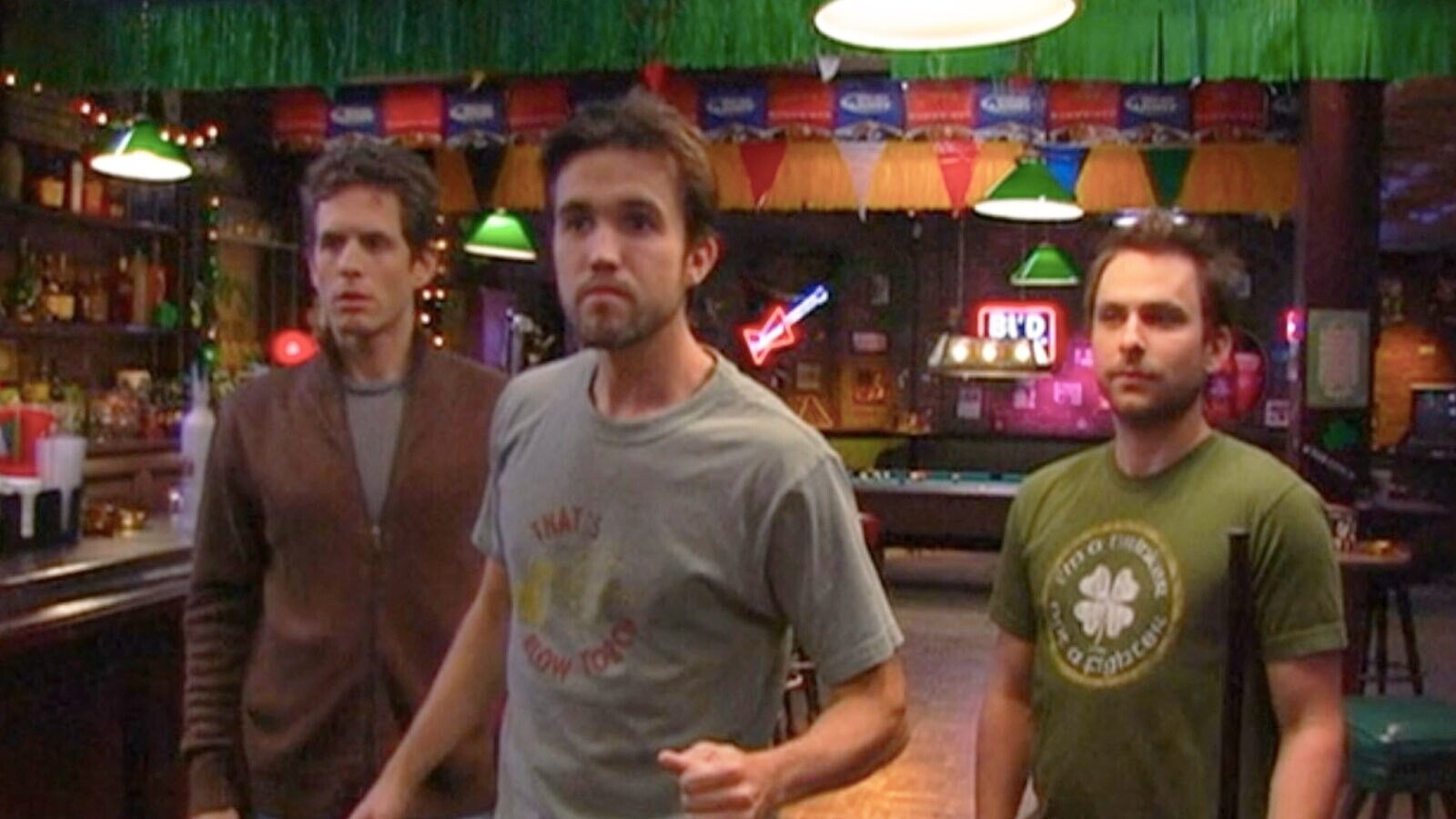
The It’s Always Sunny in Philadelphia series premiere, “The Gang Gets Racist,” first aired on FX on August 4, 2005. At the time, it looked like a scrappy cable sitcom about a group of irresponsible bar owners. Two decades later, it reads like a mission statement written on a beer-stained napkin: no hugging, no learning, no moral victory lap, and absolutely no one in Paddy’s Pub should be trusted with a business plan.
The premiere introduced Mac, Dennis, Charlie, and Dee before Frank Reynolds joined the chaos in Season 2. It also established the show’s favorite comedic engine: characters who try to prove they are good people and somehow produce evidence for the prosecution. From its low-budget roots to its sharp social satire, the first episode planted the DNA of a series that would become one of American television’s most durable cult comedies.
20 Things You Didn’t Know About “The Gang Gets Racist”
1. The Premiere Was Not the Famous Homemade Pilot
Many fans hear that Always Sunny began as a tiny, ultra-low-budget project and assume “The Gang Gets Racist” was that exact original video. Not quite. The famous homemade version was an earlier proof-of-concept shot by Rob McElhenney, Charlie Day, and Glenn Howerton. FX later commissioned the televised pilot, which became the actual series premiere.
2. The Original Concept Was About Actors, Not Bar Owners
Before Paddy’s Pub existed as television’s least promising hospitality business, the concept centered on struggling actors in Los Angeles. FX reportedly felt there were already too many shows about actors, so the idea shifted to a bar in Philadelphia. That change gave the show its grubby workplace home, its city identity, and a perfect excuse for the characters to have endless free time while still claiming to be employed.
3. Paddy’s Pub Was the Perfect Comedy Trap
A sitcom bar usually promises warmth, regulars, and community. Paddy’s Pub offers sticky floors, bad decisions, and the emotional support of a broken stool. The premiere instantly uses the bar as a pressure cooker. It is a business, a hangout, a stage, and a battlefield where every character can be lazy, defensive, jealous, greedy, and weirdly confident at the same time.
4. Danny DeVito Was Nowhere to Be Found
Modern viewers often think of Frank Reynolds as essential to It’s Always Sunny in Philadelphia, which he is. But he does not appear in the series premiere. The first season focused on Mac, Dennis, Charlie, and Dee. DeVito joined in Season 2, bringing celebrity heat and a new level of filthy goblin energy. The premiere is fascinating because it shows the show before Frank detonated inside it.
5. Sweet Dee Was Already More Than “The Girl Character”
In many early-2000s comedies, the main woman in the ensemble existed to scold the men. Dee could have fallen into that trap. Instead, Kaitlin Olson’s performance quickly reveals Dee as vain, insecure, opportunistic, and just as capable of terrible judgment as the guys. The premiere gives her a plot function, but the character’s future as a full member of The Gang is already visible.
6. The Episode Title Announced the Show’s Risky Strategy
Calling your first episode “The Gang Gets Racist” is not exactly the safe route. The title signals the show’s method: take a social issue, place it in the hands of people with no emotional maturity, and watch them make everything worse. The joke is not that the topic is light. The joke is that The Gang is catastrophically unqualified to discuss it.
7. Charlie’s Story Shows the Show’s Favorite Pattern
Charlie wants to prove he is not racist after an offensive comment creates trouble. In classic Always Sunny fashion, his attempt at image repair becomes more incriminating than the original problem. This pattern would define the series: the characters start with a selfish fear, adopt a fake moral position, and sprint confidently into humiliation.
8. Terrell Changes the Bar Overnight
Dee’s friend Terrell, played by Malcolm Barrett, becomes a promoter for Paddy’s Pub and attracts a new crowd. The Gang thinks they have found success, then immediately mishandles it because success requires social intelligence, and Paddy’s Pub has none in stock. The premise lets the episode explore insecurity, performance, and prejudice while still functioning as a chaotic business story.
9. The Waitress Appears Right Away
Mary Elizabeth Ellis appears as The Waitress in the premiere, making one of the show’s most important recurring characters part of the universe from day one. Charlie’s fixation on her would become one of the series’ longest-running and most uncomfortable jokes. Even in the first episode, the show understands that obsession is funnier when the obsessed person has no game and no brakes.
10. The Episode Was Written by Rob McElhenney and Charlie Day
The premiere’s writing credit is important because Always Sunny was never simply a performer-for-hire sitcom. Its stars were also shaping the engine. McElhenney and Day helped establish the conversational messiness, sudden turns, and aggressive lack of sentimentality that made the show feel different from more polished network comedies of the same era.
11. John Fortenberry Directed the Premiere
John Fortenberry directed “The Gang Gets Racist,” helping translate the show’s rough-edged concept into a finished FX episode. The direction keeps the rhythm loose without letting scenes fall apart. That balance matters: the show feels improvised and reckless, but the jokes are built around carefully escalating discomfort.
12. The Premiere Had a Rougher Look Than Later Seasons
Compared with later episodes, the first season has a simpler, rawer visual style. That roughness became part of the charm. The premiere does not look like a glossy sitcom world. It looks like a place where the beer taps might be sticky, the lights might flicker, and the health inspector should have arrived three scandals ago.
13. It Was Darker Than Most Sitcom Pilots of Its Time
In 2005, many sitcoms still leaned on likable leads, romantic tension, or workplace warmth. It’s Always Sunny in Philadelphia opened with people being defensive, prejudiced, horny, jealous, and incompetent. The premiere’s boldness is not just in the subject matter; it is in the refusal to reassure the audience that the characters are secretly sweet.
14. The Show’s “No Lessons Learned” Formula Was Already There
Great sitcom characters often learn just enough to reset next week. The Gang learns nothing, and that is the joke. In the premiere, every attempt to appear tolerant, desirable, successful, or misunderstood becomes a new form of self-exposure. By the end, nobody has grown. Somehow, that lack of growth becomes the show’s renewable energy source.
15. Dennis Was Already Dangerously Vain
Dennis Reynolds would later become one of television’s most hilariously alarming narcissists. In the premiere, the full “Golden God” mythology has not arrived yet, but the vanity is already humming. Dennis responds to attention with the subtlety of a man discovering a mirror in a survival bunker. His self-image is fragile, theatrical, and ready for disaster.
16. Mac’s Insecurity Was Planted Early
Mac’s identity issues would become a major part of the series over time. The premiere already gives viewers a version of Mac who is obsessed with how he is perceived. He wants control over the room, the bar, and the story people tell about him. Unfortunately for Mac, his self-presentation skills are roughly as reliable as Paddy’s bookkeeping.
17. Charlie Was Chaotic but Not Yet Full Charlie
Charlie Kelly would eventually become a rat-smashing, cheese-loving, musical wild card with his own strange inner mythology. The premiere presents a more grounded version of him, but the essential Charlie is present: impulsive, emotionally intense, socially disastrous, and convinced that a terrible idea can become a good idea if he simply commits harder.
18. The Episode Helped Define FX’s Comedy Identity
FX took a gamble on a comedy that was cheap, strange, and aggressively uncomfortable. That gamble mattered. Always Sunny helped prove that cable comedy could be darker, smaller, and more creator-driven than traditional sitcoms. The premiere did not arrive with a giant parade. It arrived like someone kicking open the side door of a dive bar.
19. The Premiere Is Funnier After You Know the Future
Watching “The Gang Gets Racist” after seeing later seasons creates a strange time-machine effect. The characters are recognizable, but not fully mutated into their most extreme forms. It is like seeing baby photos of monsters: adorable, concerning, and clearly headed toward legal trouble.
20. It Proved the Show Could Survive Discomfort
The most important thing about the It’s Always Sunny in Philadelphia series premiere is that it did not run away from discomfort. It built comedy out of defensiveness, ignorance, and social panic. That approach could have collapsed instantly. Instead, it became the core of a long-running series that kept asking, “What if the worst people you know opened a bar and never improved?”
How the Premiere Built a Cult Sitcom Legacy
The brilliance of “The Gang Gets Racist” is not that it is the most polished episode of the series. It is not. Later seasons would sharpen the character dynamics, expand the world, and add Frank Reynolds as a human wrecking ball in loafers. But the premiere has something just as valuable: clarity of attitude.
The episode knows The Gang should not be rewarded. It knows Paddy’s Pub is not a dream workplace. It knows social issues become dangerous when filtered through insecure people who only want to win the conversation. That is why the show’s satire still works. The characters say and do awful things, but the comedy usually comes from their exposure, failure, and punishment. The audience is not asked to admire them. The audience is invited to watch them build a trap, step into it, and blame the trap.
For SEO readers searching for It’s Always Sunny in Philadelphia premiere facts, The Gang Gets Racist trivia, Paddy’s Pub origin, or FX comedy history, the first episode offers more than nostalgia. It is a compact lesson in how a sitcom can establish tone quickly. The premiere introduces the workplace, the moral universe, the ensemble conflict, and the comic philosophy in one messy package. That is efficient television, even if the characters themselves could not efficiently run a lemonade stand.
Viewer Experience: Rewatching the ‘Always Sunny’ Premiere Today
Rewatching the It’s Always Sunny in Philadelphia series premiere today is a slightly strange experience, especially if your first exposure to the show came through later, louder episodes. The first thing you notice is how small it feels. Paddy’s Pub is not yet the mythic disaster zone fans know by heart. The characters are not yet exaggerated into their most famous forms. Frank is absent. The title cards still feel like a threat whispered from a cheap laptop. Everything is smaller, but that smallness works.
The second thing you notice is how quickly the show declares war on the idea of likability. A lot of sitcom pilots spend their first episode begging you to love the characters. “The Gang Gets Racist” does the opposite. It almost dares you to keep watching. Mac, Dennis, Charlie, and Dee are not introduced as misunderstood sweethearts. They are introduced as people who can turn a simple misunderstanding into a civic emergency. Somehow, that honesty feels refreshing.
The experience is also funnier if you watch it with knowledge of what comes later. Dennis has not yet reached his full theatrical menace, but the vanity is there. Charlie is not yet the full-blown wildcard poet of sewer logic, but the panic is there. Mac is not yet surrounded by years of identity-based storytelling, but the insecurity is there. Dee is already fighting not to be treated as the sensible outsider, which is good, because Dee being sensible would be a waste of Kaitlin Olson’s Olympic-level commitment to humiliation.
For new viewers, the premiere may feel rough. That is part of its value. It shows how a comedy can begin with a clear voice before it has perfect rhythm. The pacing is looser than later seasons. The character extremes are still developing. Some jokes are intentionally uncomfortable, and the episode expects viewers to understand that the target is The Gang’s ignorance, not the groups they misunderstand. That distinction is essential to the show’s survival.
For longtime fans, the premiere feels like finding an old photo of your favorite terrible relatives before they became fully terrible. You can see the future forming in real time. The schemes, the denial, the competitive selfishness, the bar-as-chaos-lab structureit is all there. The episode is not just a beginning; it is a blueprint. And like many blueprints connected to Paddy’s Pub, it probably violates several codes, but it somehow still stands.
The best way to watch “The Gang Gets Racist” today is not as a perfect pilot, but as a fearless one. It took a risky subject, a cheap setting, and a cast of morally defective characters, then trusted the audience to understand the joke. That confidence is why the premiere still matters. It is the first crack in the wall before the whole disgusting, brilliant building comes into view.
Conclusion
The It’s Always Sunny in Philadelphia series premiere remains one of the most revealing first episodes in modern sitcom history. “The Gang Gets Racist” introduced Paddy’s Pub, established The Gang’s selfish worldview, and proved that a comedy did not need lovable heroes to build a loyal audience. Its rough edges are part of the appeal. The premiere feels like a show sneaking onto television with a fake ID, then somehow refusing to leave for decades.
What began as a scrappy FX comedy became a long-running American sitcom landmark because the core idea was brutally simple: terrible people are funniest when they think they are the reasonable ones. The premiere understood that from the start. It gave viewers Mac, Dennis, Charlie, and Dee before fame, before Frank, and before the mythology exploded. And even in that early form, the show already had its secret weapon: absolute commitment to bad decisions.