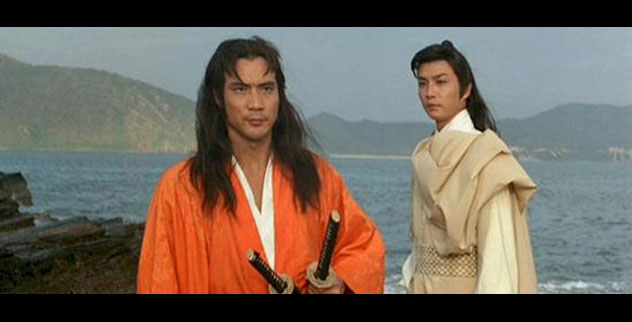
Kung fu cinema is famous for discipline, lightning-fast footwork, heroic revenge, impossible training routines, and wise masters who somehow know everything except how to explain anything clearly. But hiding in the smoky back alleys of martial arts movie history is a stranger shelf: bizarre kung fu films where warriors fight ghosts, soccer balls become artillery, heroes battle monsters in the jungle, and “Bruce Lee” wakes up in the afterlife surrounded by pop-culture impostors.
This list celebrates the wonderfully weird side of martial arts cinema. These are not simply “bad” movies, although a few happily wrestle with chaos like it owes them rent. They are cult kung fu films that twist action, horror, comedy, fantasy, gore, superhero logic, and midnight-movie madness into something unforgettable. Some are Shaw Brothers oddities. Some are Hong Kong action-horror roller coasters. Some are comedies so absurd they appear to have been written during a sugar rush in a prop warehouse.
Note: “Bizarre” here refers to unusual storytelling, wild genre combinations, extreme visual style, cult reputation, surreal fight design, and the general feeling that the movie might start levitating off your screen at any moment.
Why Bizarre Kung Fu Films Still Matter
The best weird martial arts movies remind us that kung fu cinema has never been one neat thing. It can be elegant like Come Drink with Me, philosophical like classic Shaolin training stories, athletic like Jackie Chan’s stunt comedies, or completely unhinged like a film where a martial artist punches through a prison wall and everyone acts as if this is normal Tuesday behavior.
These movies also show the experimental power of Hong Kong and Asian genre filmmaking. During the 1970s, 1980s, and early 1990s, studios and independent producers competed for attention in crowded markets. The result was a fearless culture of mashups: kung fu plus black magic, kung fu plus slasher horror, kung fu plus fantasy lasers, kung fu plus war adventure, kung fu plus sports comedy, and kung fu plus whatever was left in the costume department.
So warm up your wrists, stretch your eyebrows, and prepare your remote for emotional damage. Here are the top 10 bizarre kung fu films worth watching, studying, quoting, or describing to confused friends at parties.
Quick Ranking: The Weirdness at a Glance
| Rank | Film | Year | Why It Is Bizarre |
|---|---|---|---|
| 1 | The Boxer’s Omen | 1983 | Thai boxing, Buddhism, black magic, and psychedelic horror collide. |
| 2 | Riki-Oh: The Story of Ricky | 1991 | Superhuman prison kung fu meets outrageous splatter gore. |
| 3 | The Dragon Lives Again | 1977 | A Bruce Lee stand-in fights Dracula, Popeye, and other strange icons in the underworld. |
| 4 | Human Lanterns | 1982 | Shaw Brothers swordplay becomes a gothic slasher nightmare. |
| 5 | The Seventh Curse | 1986 | Jungle adventure, monsters, curses, gunfire, and martial arts mayhem. |
| 6 | Holy Flame of the Martial World | 1983 | Fantasy wuxia with magic swords, glowing attacks, and nonstop color. |
| 7 | Five Element Ninjas | 1982 | Ninja battles organized around earth, water, fire, wood, and gold traps. |
| 8 | Fantasy Mission Force | 1983 | World War II adventure crashes into slapstick, haunted houses, and anachronistic chaos. |
| 9 | Kung Fu vs. Yoga | 1979 | A martial arts comedy built around increasingly odd challenges. |
| 10 | Kung Pow! Enter the Fist | 2002 | An American parody digitally inserts a new hero into vintage kung fu footage. |
1. The Boxer’s Omen (1983)
The midnight-movie champion of strange kung fu cinema
If bizarre kung fu films had a royal court, The Boxer’s Omen would sit on the throne wearing a ceremonial robe made of nightmares. Directed by Kuei Chih-hung for Shaw Brothers, this 1983 horror-action fever dream begins with a fairly understandable revenge setup: a Hong Kong boxer is crippled by a corrupt Thai opponent, and his brother travels to Thailand seeking payback. Simple enough, right? Please enjoy that sense of stability while it lasts.
Before long, the film mutates into a surreal parade of Buddhist mysticism, black magic duels, grotesque creatures, cursed rituals, and hallucinatory imagery. It is less a conventional martial arts movie than a spiritual wrestling match between revenge and cosmic gross-out theater. The fight scenes matter, but the real attraction is the atmosphere: neon colors, occult ceremonies, strange bodily transformations, and a plot that behaves like it was assembled from fever fragments.
Why does it top the list? Because The Boxer’s Omen does not merely add weirdness as seasoning. Weirdness is the entire stew. For fans of cult kung fu cinema, it is an essential reminder that Shaw Brothers could go far beyond clean tournament stories and heroic swordplay. Sometimes, the studio opened a trapdoor beneath the genre and dropped viewers into pure delirium.
2. Riki-Oh: The Story of Ricky (1991)
When prison reform involves punching through people
Riki-Oh: The Story of Ricky, directed by Lam Nai-choi, is one of the most notorious martial arts splatter films ever made. Adapted from a Japanese manga, it stars Fan Siu-wong as Ricky, a superhuman fighter imprisoned in a corrupt private facility where wardens and inmates apparently skipped “conflict resolution” day and went straight to “cartoonish bodily destruction.”
The plot is a dystopian prison revenge story, but the execution is so exaggerated that it becomes a live-action comic book soaked in buckets of red syrup. Ricky does not simply defeat opponents; he dismantles them with the casual determination of someone opening a stubborn jar. Heads break, walls crumble, and human anatomy is treated with the same respect a blender gives a banana.
Yet beneath the gore geysers, there is a strange moral clarity. Ricky is pure-hearted, loyal, and incorruptible. The villains are grotesque symbols of institutional cruelty. That almost noble structure makes the insanity even funnier, because the movie swings between righteous melodrama and effects-driven carnage with no fear of whiplash. It is absurd, brutal, strangely sincere, and impossible to confuse with anything else.
3. The Dragon Lives Again (1977)
Bruceploitation enters the afterlife and loses the map
The Bruceploitation era produced many strange films after Bruce Lee’s death, but The Dragon Lives Again may be the genre’s most jaw-dropping oddity. The movie imagines a Bruce Lee-like hero arriving in the underworld, where he encounters unauthorized versions of pop-culture figures including Dracula, James Bond-style spies, Clint Eastwood-like gunmen, Zatoichi-inspired swordsmen, Popeye, and other characters who seem to have wandered in from entirely different legal departments.
This is not just bizarre kung fu cinema. It is a cinematic yard sale where every item starts fighting. The film’s underworld setting allows the story to ignore normal logic and build a playground of imitation icons. The result is part martial arts fantasy, part parody, part exploitation spectacle, and part “Did I accidentally sit on the remote?”
Its historical value comes from how loudly it reflects the post-Bruce Lee marketplace. Producers wanted to keep the Dragon’s image alive, audiences wanted more martial arts spectacle, and filmmakers were willing to try almost anything. In this case, “anything” included Popeye in hell. For that alone, cinema should probably send a thank-you card and an apology.
4. Human Lanterns (1982)
Elegant Shaw Brothers style takes a horror detour
Human Lanterns, directed by Sun Chung, is one of Shaw Brothers’ strangest blends of martial arts and horror. On paper, it begins with rivalry between wealthy martial figures and a lantern-making competition. In practice, it becomes a gothic revenge story involving a disturbed craftsman, kidnapping, murder, and lanterns made from horrifying materials.
The film stands out because it does not abandon Shaw Brothers elegance. The sets, costumes, and swordplay still carry the studio’s polished theatrical style. But that beauty is wrapped around a deeply macabre premise, creating a nasty contrast between graceful movement and ugly obsession. The action is not as constant as in pure kung fu tournament films, but when violence arrives, it has the sharp, stylized force of a nightmare wearing silk.
What makes Human Lanterns so memorable is its mood. It feels like a bridge between traditional martial arts drama and slasher horror. The heroes are flawed, the villain is theatrical, and the whole thing glows with the wrong kind of lantern light. It is one of those cult martial arts movies that makes you admire the craftsmanship while quietly moving all lamps out of your living room.
5. The Seventh Curse (1986)
A monster-packed jungle adventure with kung fu bones
Also directed by Lam Nai-choi, The Seventh Curse is a Hong Kong action-horror adventure that throws almost everything at the screen: martial arts fights, gun battles, jungle cults, blood curses, monsters, ancient evil, and supporting appearances from familiar stars including Chow Yun-fat and Maggie Cheung. The film is based on pulp-style adventure material, and it behaves exactly like pulp should: fast, reckless, colorful, and allergic to boredom.
The story follows Dr. Yuen, who is cursed after rescuing a woman from sacrifice in Thailand. To survive, he must return and confront the supernatural forces behind the curse. That summary sounds straightforward, but the movie’s actual rhythm is closer to sprinting through a haunted adventure park while someone keeps launching rubber monsters from the bushes.
Its martial arts elements blend with horror and fantasy rather than dominating every scene. That is what makes it so fun. The Seventh Curse expands the idea of a kung fu film until it becomes a pulp action carnival. It is messy in the best way: breathless, excessive, and proud of its own madness.
6. Holy Flame of the Martial World (1983)
Magic swords, glowing palms, and fantasy kung fu overload
Holy Flame of the Martial World is wuxia fantasy turned up until the knob snaps off. Directed by Lu Chun-ku, the film centers on siblings trained by rival masters after their parents are killed over secret scrolls connected to a powerful mystical weapon. That setup gives the movie plenty of room for revenge, training, hidden identities, and outrageous martial arts fantasy.
What makes it bizarre is not horror but total visual exaggeration. Fighters unleash supernatural attacks, weapons behave like guided missiles, and the color palette seems determined to win a staring contest with a fireworks factory. This is not grounded hand-to-hand combat. It is martial arts as comic-book sorcery, where emotional problems are solved with acrobatics, glowing energy, and possibly a dramatic cape.
For viewers who think kung fu cinema is only about realistic fighting, Holy Flame of the Martial World is a cheerful correction. The film belongs to the fantasy branch of the genre, where physical skill meets mythic nonsense and everyone accepts that swords can be both weapons and special-effects departments.
7. Five Element Ninjas (1982)
Chang Cheh builds a martial arts obstacle course from pure chaos
Chang Cheh’s Five Element Ninjas, also known as Chinese Super Ninjas, is one of the most beloved over-the-top Shaw Brothers action films. The premise is built around enemy ninjas using elemental tactics: gold, wood, water, fire, and earth. Each group attacks with specialized costumes, weapons, traps, and strategies. Subtle? Absolutely not. Entertaining? Extremely.
The movie’s bizarre charm comes from its structure. It feels like a martial arts video game before video games had fully learned how to be video games. Heroes must learn, adapt, and survive increasingly elaborate stages of combat. The elemental gimmick gives every sequence a new flavor, and the fights are staged with bloody theatrical flair.
Compared with the horror entries on this list, Five Element Ninjas is more action-forward. But its costumes, trap designs, and battle concepts are so flamboyant that it earns a secure place among weird martial arts movies. It is the kind of film where strategy meetings probably included phrases like, “What if the ninjas were also landscaping?”
8. Fantasy Mission Force (1983)
A war movie that forgot what war movies are
Fantasy Mission Force, directed by Kevin Chu, is often marketed around Jackie Chan, although his role is not the central showcase some viewers expect. The film stars a large cast including Jimmy Wang Yu and Brigitte Lin, and it starts as a World War II rescue mission involving captured generals. Then the movie looks at its own premise and apparently decides, “What if we became twelve other movies at once?”
The team encounters strange enemies, slapstick detours, haunted-house weirdness, anachronistic vehicles, and action-comedy sequences that feel imported from unrelated films. The result is chaotic even by cult cinema standards. It is not polished in the conventional sense, but its unpredictability is the point. You do not watch Fantasy Mission Force for clean storytelling. You watch it to see what impossible left turn it takes next.
As a bizarre kung fu film, it works because it captures a certain wild freedom of early 1980s genre filmmaking. War adventure, martial arts, horror comedy, and parody all crash together, and nobody stops the collision. The movie is uneven, but it is never timid. That counts for a lot in the land of cinematic oddballs.
9. Kung Fu vs. Yoga (1979)
A strange challenge comedy with a title that does half the work
Sometimes a bizarre kung fu film announces itself before the opening credits finish. Kung Fu vs. Yoga is one of those titles that immediately raises questions, several of which should probably be answered by a responsible adult. Directed by Chan Chuen, the film follows a martial artist who must complete a series of unusual tasks to win a woman’s hand. The structure is a challenge-based comedy, but the individual episodes become increasingly odd.
By modern standards, some of the humor and character depictions can feel dated or insensitive, so the film is best approached as a product of its era rather than a flawless comedy recommendation. Still, its place in the weird martial arts canon is secure because it combines acrobatic fighting, broad slapstick, and strange scenario design in a way that makes the title feel less like marketing and more like a dare.
The appeal is partly athletic and partly anthropological. You are watching filmmakers stretch the kung fu comedy format, looking for fresh gimmicks in a competitive market. Not every joke lands gracefully, but the movie’s oddball energy makes it a notable curiosity for viewers exploring cult kung fu cinema beyond the obvious classics.
10. Kung Pow! Enter the Fist (2002)
The American parody that turned dubbing into a weapon
Kung Pow! Enter the Fist is not a traditional Hong Kong kung fu film, but no list of bizarre martial arts movies feels complete without it. Written, directed by, and starring Steve Oedekerk, the movie takes footage from the 1970s Hong Kong film Tiger & Crane Fists, digitally inserts Oedekerk into scenes, shoots new material, and redubs characters into an absurd new storyline.
The result is a full-length parody of dubbed martial arts imports, complete with ridiculous voices, intentionally stupid dialogue, and gags that range from inspired to aggressively silly. Its most famous absurdities include a martial-arts cow, a villain named Betty, and a style of comedy that behaves like a teenager discovered editing software and caffeine on the same afternoon.
What makes it important to this list is its relationship to kung fu movie fandom. It jokes about awkward dubbing, exaggerated training scenes, revenge plots, and the visual language of vintage martial arts cinema. It is not respectful in a scholarly way, but it is clearly built by someone who watched a lot of old kung fu movies and thought, “Yes, but what if the tongue had a character arc?”
What These Films Reveal About Cult Kung Fu Cinema
The wildest kung fu films are not random accidents. They come from a tradition of constant reinvention. In Hong Kong cinema especially, filmmakers had to move quickly, attract attention, and satisfy audiences hungry for novelty. If a straightforward revenge film worked, someone tried revenge with ghosts. If ninja films were popular, someone added elemental death traps. If Bruce Lee was gone, dozens of imitators rushed in, and one of them eventually met Popeye in the afterlife.
That willingness to experiment is why these films still attract cult audiences. They are unpredictable in a streaming era where many action movies feel carefully polished into sameness. A bizarre kung fu movie might be uneven, messy, or ethically complicated, but it is rarely dull. It gives viewers the pleasure of surprise. You may not always know whether to laugh, wince, cheer, or check whether your snacks have been cursed.
They also prove that martial arts cinema is not limited to physical realism. The genre can express myth, comedy, horror, social anger, pulp adventure, and pure visual imagination. A punch can be a joke. A kick can be a moral argument. A sword can be a laser. A training montage can become a philosophical statement or an excuse for someone to balance on furniture for three minutes. This flexibility is the genre’s secret superpower.
Viewing Experiences: How to Enjoy Bizarre Kung Fu Films
Watching bizarre kung fu films is a different experience from watching polished modern action cinema. You cannot approach these movies expecting every plot point to click into place like a luxury watch. Many of them operate more like carnival rides: loud, colorful, dangerous-looking, and clearly assembled by people who believed gravity was only a suggestion. The best way to enjoy them is to meet them halfway. Accept the handmade effects. Accept the tonal whiplash. Accept that a character may explain a mystical curse with the confidence of a doctor reading a weather report.
The ideal viewing experience is communal. These films come alive with friends, especially friends who appreciate midnight movies, practical effects, strange dubbing, and heroic overacting. A living room screening of Riki-Oh or The Boxer’s Omen can become half movie night, half group therapy. Someone will pause to ask, “Wait, why is this happening?” and the correct answer is usually, “Because cinema loves us.”
Snacks matter, although maybe avoid noodles during the more graphic scenes. Tea works. Popcorn works. Anything crunchy pairs well with Shaw Brothers swordplay, though you may find yourself chewing in rhythm with the fight choreography. If you are introducing newcomers to weird martial arts movies, start with something energetic but accessible, such as Five Element Ninjas or Kung Fu Hustle if you want a slightly more mainstream bridge. Then gradually move toward deeper madness. Do not open with The Boxer’s Omen unless your guests have already signed a spiritual waiver.
It also helps to understand the historical context. Some of these films contain dated jokes, stereotypes, or exploitation elements that can be uncomfortable today. Enjoying cult cinema does not mean ignoring those problems. A thoughtful viewer can laugh at the absurdity, admire the choreography, recognize the craft, and still acknowledge that not every creative choice has aged gracefully. In fact, that tension is part of studying genre history honestly.
For martial arts fans, these movies offer a refreshing reminder that choreography is not only about technical perfection. It is about personality. A strange weapon, a weird training method, a haunted-house fight, or a supernatural duel can make a sequence memorable even when the budget is modest. The imagination behind the action often matters as much as the action itself.
The best personal experience with bizarre kung fu cinema is the feeling of discovery. You start with Bruce Lee, Jackie Chan, Jet Li, Donnie Yen, or Shaw Brothers classics. Then one recommendation leads to another, and suddenly you are reading about a movie where a lantern maker becomes a horror villain or a fake Bruce Lee fights Dracula. That rabbit hole is part of the fun. Cult kung fu cinema rewards curiosity. It invites viewers to wander past the famous titles and into the dusty, glowing, monster-filled corners of film history.
Most importantly, these films are joyful because they feel handmade. Even when they are chaotic, they carry the energy of filmmakers trying something bold with limited resources and unlimited nerve. They may not all be masterpieces, but they are alive. In a world of safe entertainment, that weird little spark is worth celebrating.
Conclusion: The Beautiful Madness of Weird Martial Arts Movies
The top bizarre kung fu films are more than curiosities. They are proof that martial arts cinema can absorb almost any genre and still keep fighting. Horror, fantasy, parody, sports, war adventure, superhero logic, and supernatural chaos all find a home here. From the occult insanity of The Boxer’s Omen to the splatter heroics of Riki-Oh, from the elemental traps of Five Element Ninjas to the digital parody of Kung Pow! Enter the Fist, these movies show how flexible and fearless kung fu filmmaking can be.
They are not always tidy. They are not always tasteful. Sometimes they are not even sure what genre they are in. But that is exactly why they endure. Bizarre kung fu films give viewers something increasingly rare: the thrill of not knowing what could possibly happen next. And when the answer is “a glowing sword duel, a hopping vampire, or Popeye in the underworld,” the only reasonable response is to press play.