The internet has many unofficial jobs. It finds lost pets, identifies mysterious kitchen gadgets, argues about whether a hot dog is a sandwich, andperhaps most efficiently of alldocuments people behaving as though the entire planet is their personal customer-service desk.
That last category has produced one of the web’s most recognizable characters: the “Karen.” The label has evolved far beyond the old joke about a demanding customer asking to speak to the manager. Today, it is commonly used online for displays of extreme entitlement, unnecessary public confrontation, intrusive rule enforcement, discriminatory behavior, and the remarkable belief that shouting louder automatically makes someone correct.
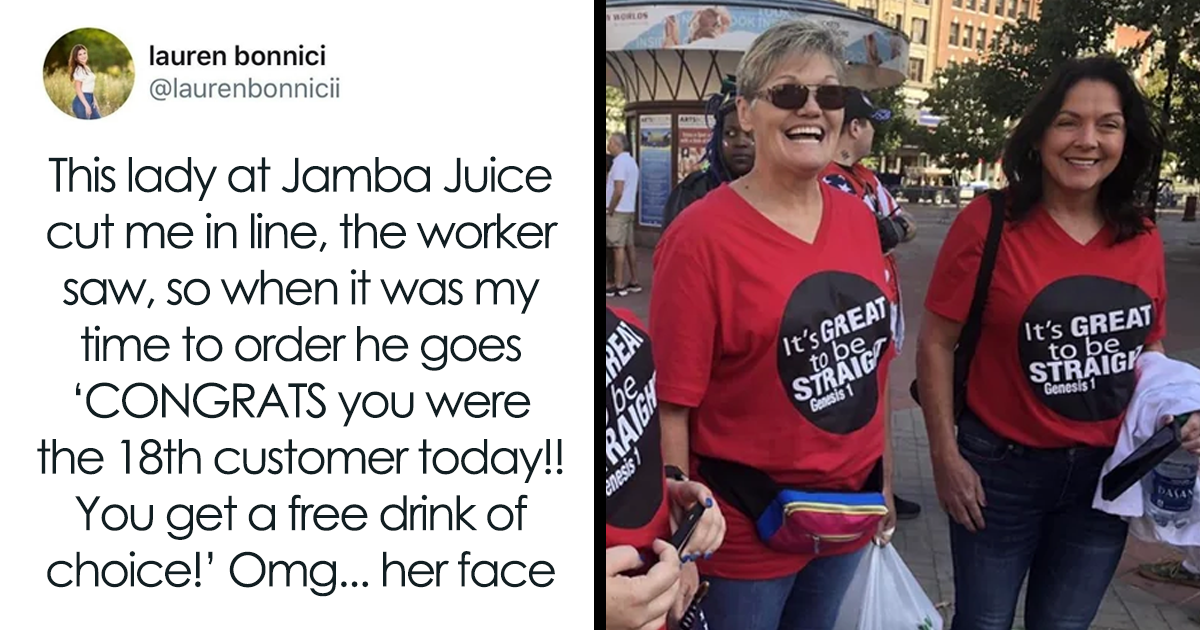
A viral collection titled “45 ‘Karens’ That Went Too Far And Got Shamed For It Online, As Shared By This Online Group” gathers examples of this phenomenon from an online community devoted to documenting entitled behavior. The individual posts vary, but the pattern is remarkably consistent: someone believes normal rules should not apply to them, treats another person as inferior, creates an avoidable conflict, and then discovers that smartphones have cameras and the internet has opinions.
Sometimes the results are hilarious. Sometimes they are uncomfortable. Occasionally, the situations reveal something much more serious about privilege, prejudice, customer-service culture, and our collective enthusiasm for public judgment.
What Exactly Makes Someone a “Karen”?
Despite the name, being named Karen does not make anyone a “Karen.” Millions of perfectly pleasant people have the name, and they deserve to order coffee without apologizing for their birth certificate.
In internet slang, the term generally describes behavior rather than an actual identity. The stereotypical version is aggressively entitled, quick to complain, convinced that personal inconvenience is a public emergency, and eager to summon a manager, authority figure, homeowners association, security guard, or police officer to enforce a preferred version of reality.
The stereotype has also broadened over time. The internet now routinely uses the label for men and younger people displaying similar behavior. The essential ingredient is not age, gender, or hairstyle. It is the combination of entitlement and confrontation: “I want this, therefore I deserve this, and anyone preventing me from getting it is obviously the villain.”
That distinction matters. A customer politely reporting spoiled food is not being entitled. A resident raising a legitimate safety concern is not automatically a busybody. Asking for help, setting boundaries, or making a reasonable complaint should not earn anyone an insulting nickname. The behavior becomes “Karen-like” when a person treats ordinary disagreement as a license to bully, intimidate, discriminate, or control strangers.
Why These 45 “Karen” Stories Are So Addictive
The appeal of entitled-people stories is partly the same reason audiences love courtroom dramas and instant-replay sports controversies: there is a conflict, evidence, and the promise of a verdict.
A typical viral “Karen” story follows an almost perfect three-act structure. First comes the unreasonable demand. Then comes the escalation. Finally comes the consequenceor, at minimum, the devastating realization that someone has been filming the entire performance.
The online collection includes screenshots, anecdotes, confrontations, and situations in which perceived entitlement crashes directly into reality. Some examples are petty. Others involve prejudice, harassment, or attempts to misuse authority. Together, they form a strange museum of modern public behavior.
1. The Customer Who Thinks “No” Means “Start Negotiating”
Retail and restaurant workers frequently appear in stories about entitled customers because they operate in an environment where employees are expected to remain calm even when customers are doing their best audition for a daytime courtroom show.
The classic pattern begins with a simple limit: an expired coupon, an unavailable product, a closing time, a return policy, or a rule the employee did not personally invent. Instead of accepting the answer, the customer escalates. Suddenly, a $3 discount becomes a constitutional crisis.
The funniest part is often the assumption that “the manager” exists as a magical higher authority whose sole purpose is to reverse every decision. Then the manager arrives and says exactly what the employee said five minutes earlier. Plot twist: company policy survived.
2. The Self-Appointed Neighborhood Government
Another recurring character is the person who believes living near other humans gives them regulatory authority over those humans.
These disputes may involve parking spaces, lawns, decorations, children playing outside, packages, noise, pets, or the deeply suspicious activity of someone existing in a place where the complainant did not expect them to exist.
Reasonable neighbors talk. Entitled neighbors issue proclamations.
That difference is why neighborhood “Karen” stories spread so easily online. Readers immediately recognize the personality type: someone who treats preference as policy and inconvenience as wrongdoing. A curtain color becomes an offense against civilization. A visitor parks legally on a public street, and suddenly someone is conducting a one-person investigation.
3. The Rule Enforcer Who Does Not Actually Know the Rules
Few things generate internet comedy faster than a person confidently enforcing a regulation that exists only inside their imagination.
These situations often feature demands for permits that are not required, claims that public spaces are private, invented dress codes, fictional parking restrictions, or threats to call authorities over entirely legal behavior.
Confidence can be persuasive in person. Online, however, confidence plus easily verifiable misinformation is basically a piñata.
Once commenters begin checking local regulations, business policies, or basic facts, the self-appointed enforcer can quickly become the person being corrected by thousands of strangers. It is an important reminder that saying something with your hands on your hips does not transform it into law.
4. The Person Who Treats Service Workers Like Furniture
Some of the most infuriating examples are not dramatic enough to make national news. They are simply cruel.
They involve people speaking down to cashiers, servers, receptionists, delivery drivers, flight attendants, hotel employees, and other workers because they assume the person serving them is somehow socially beneath them.
This may be the purest form of everyday entitlement. The problem is not a disagreement over policy. It is the belief that paying for a product gives someone the right to humiliate the person providing it.
Online audiences tend to have little sympathy for that behavior, especially because so many readers have worked customer-facing jobs themselves. One viral clip can activate an enormous informal support group composed of everyone who has ever smiled politely while a stranger blamed them for a coupon printed in 2017.
5. The Demand for Special Treatment
Entitlement often comes with an invisible VIP card that only the entitled person can see.
Why should they wait in line? Why should they make a reservation? Why should they follow the return window? Why should they obey the rule everyone else is following?
The answer, of course, is that shared systems generally function because people agree not to behave as though they are the surprise main character of every room they enter.
The internet particularly enjoys stories in which someone attempts to skip a process and ends up waiting even longer. There is something deeply satisfying about administrative karma. You demanded immediate service, argued for 20 minutes, and are now somehow farther from your goal than when you started. Magnificent.
When a Funny “Karen” Story Stops Being Funny
Not every example of entitled behavior is harmless comedy.
The “Karen” meme became culturally significant partly because viral recordings exposed cases in which white people confronted, reported, or threatened Black people and other minorities who were simply going about ordinary activities. In those situations, calling authorities is not merely an exaggerated complaint. It can create genuine danger.
That history is why serious discussions of the meme often distinguish between petty entitlement and the misuse of social or institutional power. Complaining about a coffee order is annoying. Trying to portray an innocent stranger as threatening because of prejudice is a fundamentally different matter.
Smartphones changed these encounters by creating independent records. Before widespread video recording, many public confrontations came down to competing stories. Today, a person may begin an argument assuming their version will automatically be believed, only to discover that another participantor three bystandersis recording the interaction.
The camera does not always provide complete context, and edited clips can mislead. Still, video has undeniably changed the balance of power in public disputes. People who once controlled the narrative may now find their own words replayed to millions.
Why Online Shaming Feels So Satisfying
There is a powerful emotional reward in watching an arrogant person face consequences.
Psychologically, these stories often offer a form of moral closure. Many people have experienced unfair treatment from a customer, boss, neighbor, stranger, or authority figure and were unable to respond. Watching someone else successfully stand up to similar behavior can feel like secondhand justice.
There is also humor in broken expectations. The entitled person expects obedience. Instead, the employee calmly refuses. The neighbor produces a property survey. The supposed rule-breaker actually has permission. The manager sides with the worker. The police arrive and do not deliver the outcome the caller expected.
In comedy, timing is everything. In “Karen” stories, documentation is everything.
But satisfaction can turn into something uglier when criticism becomes mass harassment. A person may deserve to be corrected without deserving threats, doxxing, or endless punishment. The internet is not especially talented at moderation. It can move from “that behavior was wrong” to “destroy this person forever” with the enthusiasm of a golden retriever spotting an unattended sandwich.
Accountability and Public Humiliation Are Not the Same Thing
This is the uncomfortable question behind collections of public-shaming stories: when does exposure become excessive?
Accountability focuses on conduct. It asks what happened, who was harmed, whether the facts are accurate, and what response is proportionate. Shaming often goes further, reducing someone to the worst available description of their worst recorded moment.
The distinction becomes especially important online because context disappears easily. A 30-second clip can travel farther than a 30-minute explanation. Incorrect names can be attached to viral videos. Strangers can identify innocent relatives or employers. A minor conflict can suddenly produce thousands of messages from people who were not present.
None of that excuses genuinely abusive behavior. It simply means that the internet should not confuse accountability with unlimited punishment.
The best lesson from these 45 “Karen” examples is therefore not “film everyone and unleash the mob.” It is simpler: behave as though other people are human beings. And when criticizing bad behavior, remember that the person being criticized is one too.
The Internet Has Turned Public Behavior Into a Reputation Test
Once upon a time, losing your temper in a store might become a story told by six employees during their lunch break. Today, it could become content for millions.
That reality creates a new kind of social pressure. The possibility of being recorded may discourage some people from behaving badly. It may also make public disagreements more performative, as participants become aware that they are potentially speaking not only to each other but to a future online audience.
There is an obvious practical lesson here: pause before escalating.
Is the inconvenience truly important? Is the person you are yelling at actually responsible? Do you know the rule you are claiming exists? Would you say the same thing if your employer, family, and entire neighborhood were watching?
If the answer to the final question causes a sudden internal emergency meeting, perhaps lower your voice.
What the 45 Viral Examples Really Have in Common
The individual situations may involve different locations and disputes, but most examples of extreme entitlement share a handful of traits.
First, the person assumes their perspective is automatically correct. Second, disagreement is interpreted as disrespect. Third, the conflict escalates because backing down feels like losing status. Finally, the person often seeks a more powerful authority to force others into compliance.
That pattern explains why the stereotype is bigger than a haircut, age group, or gender. Entitlement is a behavioral script.
A healthier script is much less exciting and therefore rarely goes viral: ask a question, listen to the answer, verify the facts, remain respectful, and leave when the issue is not worth pursuing.
Admittedly, “Customer calmly accepts store policy and continues having a normal Tuesday” would not dominate the front page of the internet.
Experiences and Lessons From the World of Real-Life “Karen” Encounters
Anyone who has spent significant time in retail, hospitality, food service, transportation, property management, education, or public-facing work eventually collects stories about unreasonable behavior. The details change, but the emotional rhythm is often familiar.
A worker explains a policy. The customer assumes the worker personally created it. The worker repeats the explanation. The customer interprets repetition as insolence. A supervisor is requested. The supervisor confirms the exact same information. Somehow, the first employee is still blamed for the existence of reality.
One of the most useful lessons from these encounters is that many arguments are not really about the stated problem. A parking dispute may actually be about control. An argument over a coupon may be about embarrassment. A confrontation with a neighbor may be driven by the fear of losing authority. Once someone has publicly committed to being right, admitting a mistake can feel more painful than continuing an obviously losing argument.
That is why calm responses are often more effective than matching aggression with aggression. A person looking for a fight expects emotional participation. A simple statement“I understand that you are frustrated, but this is the policy”offers very little dramatic fuel.
Of course, remaining calm is much easier to recommend from a comfortable chair than when someone is shouting six inches from your face. Service workers should not be expected to absorb unlimited abuse simply because a company values customer satisfaction. Clear boundaries matter. Managers who support employees can prevent aggressive customers from learning that tantrums are a successful negotiation technique.
Bystanders also have a role. In serious confrontations, especially when someone is being targeted unfairly, a calm witness can help establish what happened. Recording may be appropriate in some circumstances, but safety should come first, and local laws regarding recording and privacy still matter. The goal should be documentation or protectionnot creating entertainment at any cost.
There is another lesson for the rest of us: most people are capable of having a “Karen moment.” Stress, fatigue, fear, embarrassment, and frustration can make otherwise reasonable people act badly. The important question is what happens next.
Do we double down?
Do we insist that the cashier, neighbor, driver, receptionist, or stranger must be wrong because admitting our own mistake feels uncomfortable?
Or do we take the miraculous escape hatch available to every human being and say, “I’m sorry. I misunderstood.”
That sentence has prevented fewer viral videos than it should.
People who have worked with the public often remember kind customers just as clearly as difficult ones. The person who sees an overwhelmed employee and waits patiently. The traveler who understands that a canceled flight was not personally arranged by the gate agent. The diner who reports a mistake without treating it as evidence of moral collapse. These interactions do not generate millions of views, but they make everyday life function.
Perhaps that is the most valuable takeaway from a collection of 45 people allegedly going too far. The opposite of “Karen” behavior is not silence. It is proportion.
You can complain without humiliating someone. You can protect your rights without inventing new ones. You can disagree without calling in every authority between the assistant manager and the United Nations.
And when you are genuinely wrong, you can simply stop.
The internet may love a spectacular meltdown, but in real life, dignity is usually the better ending.
Conclusion: The Manager Cannot Save You From the Internet
The popularity of “Karen” stories says as much about online culture as it does about entitled behavior. People are fascinated by hypocrisy, power reversals, instant consequences, and moments when someone who expects special treatment discovers that the rules remain stubbornly universal.
The 45 examples shared by this online group fit comfortably into that tradition. Some are absurd enough to make readers laugh. Others reveal the uglier side of entitlement, including bullying, prejudice, and attempts to misuse authority. Together, they offer a simple warning for the smartphone era: public behavior is no longer guaranteed to remain a private memory.
Still, the healthiest response is not to turn every unpleasant person into a permanent internet target. Criticize harmful actions. Support people being mistreated. Document serious incidents when necessary. But leave room for context, proportionality, correction, and growth.
Above all, remember the easiest way to avoid becoming the star of tomorrow’s viral “Karen” compilation: treat people with respect, accept that “no” is sometimes a complete answer, and think very carefully before demanding to speak to the manager of planet Earth.
Note: The term “Karen” is used here as internet slang describing a pattern of entitled or abusive behavior, not as a judgment about people who are actually named Karen. The article discusses online culture and publicly shared behavior while encouraging proportionate accountability rather than harassment.