If your breaker keeps tripping with nothing plugged in, your house may appear to be haunted by a tiny electrician with a grudge. The lights are off, the toaster is innocent, the phone charger is sitting there like it has an alibi, and yetclickthe breaker trips again.
The good news: this is not usually supernatural. The less-fun news: it can be a real electrical warning sign. A circuit breaker is not a moody wall switch. It is a safety device designed to shut power off when it senses overload, short circuit, ground fault, arcing, or another unsafe condition. So when it trips repeatedly with “nothing plugged in,” it may actually be doing its job.
This guide explains why a breaker trips with no obvious load, what hidden problems may be lurking behind walls, what you can safely check, and when it is time to call a licensed electrician before your electrical panel starts auditioning for a disaster movie.
Quick Answer: Why a Breaker Trips When Nothing Is Plugged In
A breaker can trip with nothing plugged in because the problem may not be a plug-in device at all. The cause could be damaged wiring, a loose connection, moisture in an outlet or junction box, a ground fault, an arc fault, a faulty breaker, a hidden hardwired load, or a circuit that is not actually empty.
In other words, “nothing plugged in” does not always mean “nothing connected.” Your home may still have lights, smoke alarms, doorbell transformers, bathroom fans, outdoor receptacles, garage equipment, sump pumps, furnace components, or other hardwired devices on that same circuit. Electricity is a sneaky little overachiever.
How Circuit Breakers Actually Work
A standard circuit breaker protects a circuit by shutting off power when current flow becomes unsafe. Most household breakers are designed to trip during an overload or short circuit. Newer homes may also have AFCI breakers, GFCI breakers, or dual-function AFCI/GFCI breakers that detect additional hazards.
Standard Breakers
A standard breaker reacts when a circuit draws more current than it is designed to handle. For example, a 15-amp breaker is supposed to protect a 15-amp branch circuit. If too much current flows, the breaker opens the circuit before wires overheat.
GFCI Breakers
A GFCI breaker, or ground-fault circuit interrupter breaker, is designed to reduce shock risk. It trips when electricity appears to be leaking outside its normal path, such as through moisture, damaged insulation, or a person in contact with a fault path.
AFCI Breakers
An AFCI breaker, or arc-fault circuit interrupter breaker, detects dangerous arcing patterns. Arcing can happen when loose or damaged conductors create tiny electrical sparks. Those sparks may be hidden behind an outlet, inside a junction box, or in damaged cable. Translation: if your AFCI breaker is being dramatic, it may have a very good reason.
Common Reasons a Breaker Keeps Tripping with Nothing Plugged In
1. There Is Still Something on the Circuit
The most common misunderstanding is assuming a circuit only powers wall outlets. Many circuits also power ceiling lights, exhaust fans, outdoor fixtures, garage door openers, built-in appliances, alarm systems, or smoke detectors. You may unplug every lamp in the room and still have several active devices connected.
For example, a bedroom breaker might also control a hallway light. A garage breaker might also feed an exterior outlet. A bathroom circuit might include a fan, light, and GFCI receptacle. If a hardwired device has a fault, the breaker can trip even when every visible plug is empty.
2. A Short Circuit Is Hiding in the Wiring
A short circuit occurs when electrical current takes an unintended path with very low resistance. In a home, this can happen when a hot wire touches a neutral wire, a wire connector comes loose, insulation breaks down, or a cable is damaged by a nail, screw, staple, heat, or age.
Short circuits are serious because they can produce heat, sparks, and fire risk. If the breaker trips instantly after you reset it, especially with no load connected, a short circuit is one of the big suspects. At that point, do not keep flipping the breaker back on like you are trying to win an argument. The breaker is trying to protect you.
3. A Ground Fault Is Present
A ground fault happens when electrical current strays from its intended path and finds a route to ground. This may involve a damaged wire touching a metal box, a wet exterior outlet, moisture inside a bathroom receptacle, or degraded insulation in a damp basement.
Ground faults are especially concerning in wet areas such as kitchens, bathrooms, laundry rooms, garages, crawl spaces, basements, and outdoor locations. If rain, humidity, a plumbing leak, or condensation recently appeared, moisture may be the villain. Water and electricity have never been a cute couple.
4. Moisture Has Entered an Outlet, Box, or Panel Area
Moisture is one of the sneakiest causes of a breaker tripping with nothing plugged in. Outdoor outlets, exterior lights, porch fixtures, basement receptacles, crawl-space wiring, and garage circuits are especially vulnerable.
A cracked weatherproof cover, loose conduit fitting, roof leak, plumbing drip, or condensation inside an electrical box can create enough leakage current to trip a GFCI breaker. Even if the outlet looks dry from the outside, moisture may be hiding inside the box. Unfortunately, electricity does not care about appearances. It is not on Instagram.
5. Loose Connections Are Causing Heat or Arcing
A loose wire connection can cause intermittent tripping. Connections can loosen over time from vibration, poor installation, thermal expansion, or repeated use of an outlet. Back-wired receptacles, worn terminals, old wire nuts, and crowded junction boxes can also create trouble.
When a connection is loose, electricity may arc across a small gap. An AFCI breaker may detect this and trip. Sometimes the clues are subtle: flickering lights, buzzing sounds, a warm outlet, a faint burning smell, or a breaker that trips only when someone walks across a floor or shuts a door. Your circuit should not behave like it has stage fright.
6. The Breaker Itself May Be Faulty
Breakers can wear out. They are mechanical devices, and like door hinges, sneakers, and your patience during software updates, they do not last forever. A breaker that has tripped many times may become weak or overly sensitive.
A faulty breaker may trip even when the circuit is not overloaded. It may feel loose, refuse to reset, trip randomly, or feel warmer than nearby breakers. However, replacing a breaker is not a guessing game for homeowners. The breaker must match the panel, circuit rating, wire size, and code requirements. A licensed electrician can test whether the breaker is bad or whether it is correctly responding to a hidden wiring problem.
7. The Circuit Has an AFCI or GFCI Compatibility Issue
Some AFCI and GFCI breakers are sensitive by design. That sensitivity is important because they detect hazards standard breakers may miss. However, certain equipment can sometimes cause unwanted tripping because of motor startup, electronic controls, leakage current, or shared wiring conditions.
This is more common with appliances, HVAC equipment, older wiring, outdoor equipment, or circuits with multiple devices. Still, never assume it is “just nuisance tripping.” First, rule out real faults. A tripping AFCI or GFCI breaker is often annoying, but annoyance is not proof of innocence.
8. A Shared Neutral or Wiring Error Exists
Some older or multiwire branch circuits share a neutral conductor. When these circuits are not arranged correctly, or when modern AFCI/GFCI breakers are installed without proper configuration, the breaker may trip even with little or no visible load.
Other wiring errors can also cause repeated trips, including neutral-to-ground contact downstream of a GFCI breaker, reversed conductors, damaged splices, or improperly connected devices. These problems can be difficult to diagnose without electrical testing equipment and training.
9. Rodents or Pests Have Damaged Wiring
If your breaker trips randomly and the circuit runs through an attic, crawl space, garage, or basement, damaged cable is possible. Rodents can chew insulation, leaving conductors exposed. That damage may not trip the breaker constantly; it might happen only when humidity changes, vibration occurs, or wires shift slightly.
Signs include scratching sounds in walls, droppings, unexplained flickering, burning smells, or multiple electrical issues appearing around the same time. Mice may be small, but their electrical repair qualifications are shockingly poor.
10. An Outdoor Circuit Has Weather Damage
Outdoor outlets and fixtures work hard. They face rain, heat, cold, sprinklers, insects, dirt, lawn equipment, and the occasional mystery splash from someone washing a car with too much enthusiasm.
If the tripping happens after rain, snow, pressure washing, or high humidity, inspect the area visually from a safe distance. Look for broken covers, cracked fixtures, loose outlet boxes, water stains, or damaged cords connected to outdoor equipment. Do not open electrical boxes or touch wet electrical components. Shut the breaker off and call a professional.
What You Can Safely Check Before Calling an Electrician
You do not need to panic the first time a breaker trips. But you should also avoid becoming the person who resets a dangerous circuit twelve times and then says, “It smelled weird, but I was busy.” Here are safe, basic checks you can do without opening panels or electrical boxes.
Step 1: Reset the Breaker Correctly One Time
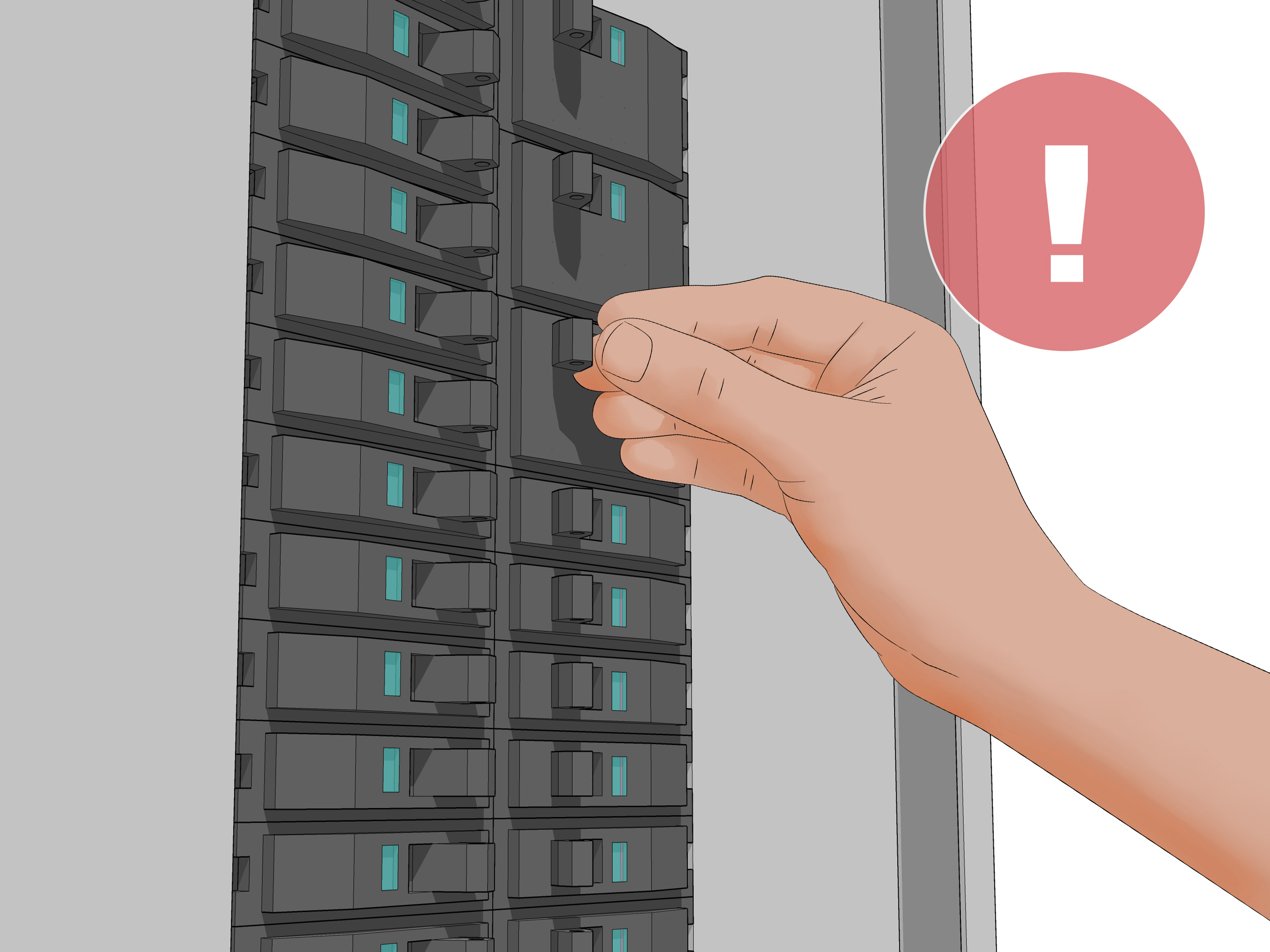
Move the breaker fully to the OFF position, then back to ON. Some breakers look halfway between on and off when tripped, so a firm full reset is necessary. If it holds, monitor the circuit. If it immediately trips again, stop resetting it.
Step 2: Unplug Everything You Can Identify
Unplug lamps, chargers, small appliances, power strips, space heaters, computers, and anything else connected to that circuit. If the breaker still trips, the issue is likely not a normal plug-in load.
Step 3: Check for Obvious Warning Signs
Look for scorch marks, melted plastic, buzzing, crackling, burning odors, warm wall plates, flickering lights, or wet areas near outlets. If you notice any of these signs, leave the breaker off and call a licensed electrician.
Step 4: Think About Timing
Did the breaker trip after rain? After a new fixture was installed? After a picture was hung? After pest activity? After a bathroom fan started sounding like a lawn mower? Timing gives clues. A breaker that trips after rain points toward moisture. One that trips after renovation may suggest a damaged cable or wiring mistake.
Step 5: Identify What the Circuit Controls
Make a simple list of what loses power when the breaker is off. Include lights, outlets, fans, outdoor fixtures, smoke alarms, garage items, and built-in equipment. This map helps an electrician troubleshoot faster and may reduce diagnostic time.
What Not to Do When a Breaker Keeps Tripping
Electrical troubleshooting is one of those areas where confidence can be less helpful than caution. Please avoid these common mistakes:
- Do not keep resetting a breaker that trips immediately.
- Do not tape a breaker in the ON position.
- Do not replace a breaker with a larger amp rating.
- Do not remove panel covers unless you are qualified.
- Do not touch wet outlets, wet switches, or damaged wiring.
- Do not ignore burning smells, buzzing, heat, smoke, or scorch marks.
Putting in a bigger breaker is especially dangerous. Breakers are sized to protect the wiring. If you install a larger breaker on wire that cannot safely carry that current, the wire can overheat before the breaker trips. That is not an upgrade. That is giving your wall cavity a bad idea.
When to Call a Licensed Electrician Immediately
Call a licensed electrician if the breaker trips instantly with nothing plugged in, trips repeatedly, feels hot, makes noise, smells burnt, or controls an area with moisture. Also call if you recently had remodeling work, storm damage, pest problems, or a new appliance installed.
A professional can safely test the circuit, inspect connections, check insulation resistance, identify shared neutral problems, evaluate AFCI/GFCI behavior, and determine whether the breaker itself is failing. The goal is not just to make the breaker stay on. The goal is to make the circuit safe.
Real-World Examples of “Nothing Plugged In” Breaker Trips
Example 1: The Outdoor Outlet After Rain
A homeowner unplugs everything in the living room, but the breaker still trips. Later, they discover the same circuit also feeds an outdoor receptacle with a cracked cover. Rainwater enters the box, creating a ground fault. The breaker was not being annoying; it was being a tiny safety bouncer.
Example 2: The Loose Bedroom Outlet
A bedroom breaker trips randomly, even when no devices are plugged in. The real cause is a loose connection inside one receptacle. Vibration from foot traffic causes intermittent arcing. An AFCI breaker detects the arc and shuts the circuit off.
Example 3: The “Empty” Garage Circuit
The homeowner thinks nothing is connected, but the garage circuit also powers a freezer, a ceiling light, and an exterior security fixture. The fixture has moisture damage, and the breaker trips every few days. The outlet was not empty; it was just hiding its social network.
Why You Should Take Repeated Breaker Trips Seriously
A breaker that trips once may be responding to a temporary overload. A breaker that trips again and again is giving you a message. Repeated tripping may indicate overheating, damaged insulation, arcing, moisture intrusion, or a wiring fault. These problems can increase the risk of electrical shock or fire.
That does not mean every tripped breaker is an emergency. It does mean you should pay attention. Breakers are not designed to be used like light switches. If one keeps opening the circuit, your next move should be diagnosis, not denial.
Experience Section: What Homeowners Often Notice Before the Breaker Trips
In real homes, breaker problems rarely arrive with a polite announcement. They usually show up as small clues that are easy to dismiss. A light flickers once. A bathroom fan sounds rough. A porch outlet stops working after rain. A breaker trips, resets, and behaves for two days. Then it trips again right when everyone is trying to make coffee, dry hair, and pretend Monday is not happening.
One common experience is the “I unplugged everything” mystery. A homeowner walks around the room, removes chargers, lamps, extension cords, and maybe a suspicious old power strip from 2009. The breaker still trips. This is when people often assume the breaker is bad. Sometimes it is. But often the circuit is still connected to something hidden: a ceiling fixture, outside light, attic fan, smoke detector, or receptacle in another room. Homes are not always wired in ways that make emotional sense.
Another frequent story involves weather. The breaker behaves perfectly during dry weeks, then starts tripping after a heavy storm. The homeowner blames the panel, but the actual cause may be an outdoor outlet, landscape light, garage receptacle, or exterior junction box. Moisture creates tiny leakage paths that a GFCI breaker can detect. From the homeowner’s perspective, it feels random. From the breaker’s perspective, it is basically shouting, “Water found the wires!”
Older homes bring their own personality. Wiring can be aged, modified, extended, patched, and re-patched over decades. A circuit may include rooms that do not seem related. A previous owner may have added a basement outlet, replaced a switch, or installed a light fixture with the confidence of a person who watched half a tutorial and said, “Close enough.” Years later, a loose splice or damaged conductor starts causing trips. The breaker gets blamed, but the real problem has been quietly waiting behind a wall.
Homeowners also report trips that happen only at certain times. Maybe the breaker trips when the bathroom fan starts, when an exterior light turns on at dusk, or when the HVAC system cycles. These patterns matter. They help narrow the problem from “the whole house is cursed” to “something on this branch circuit changes at this moment.” Writing down when the breaker trips can be surprisingly useful.
The most important experience-based lesson is this: repeated tripping is not something to “live with.” Many people keep resetting a breaker because the power comes back and life continues. But a breaker that repeatedly trips with nothing plugged in may be warning you about a fault you cannot see. Treat it like a smoke alarm with better manners. It may be inconvenient, but it is trying to prevent something worse.
Conclusion
So, why does your breaker keep tripping with nothing plugged in? Because the issue may be hiding beyond the obvious outlet. The real cause could be a short circuit, ground fault, loose wire, damaged cable, moisture problem, faulty breaker, AFCI/GFCI sensitivity, shared neutral issue, or a hardwired device you forgot was on the circuit.
The safest approach is simple: reset once, unplug visible devices, look for warning signs, note patterns, and stop if the breaker trips again. Do not oversize the breaker, ignore burning smells, or keep forcing the circuit back on. Electricity is useful, but it is not impressed by optimism.
If the breaker trips repeatedly with no clear appliance causing it, call a licensed electrician. A professional inspection can identify the hidden fault and restore power safely. In the end, a tripping breaker is not just a nuisance. It is your electrical system’s way of saying, “Something is wrongplease do not make me explain with smoke.”
Safety note: This article is for general educational purposes only. Electrical faults can create fire and shock hazards. If a breaker trips repeatedly, immediately, or with signs of heat, moisture, noise, smoke, or burning odor, leave the circuit off and contact a licensed electrician.