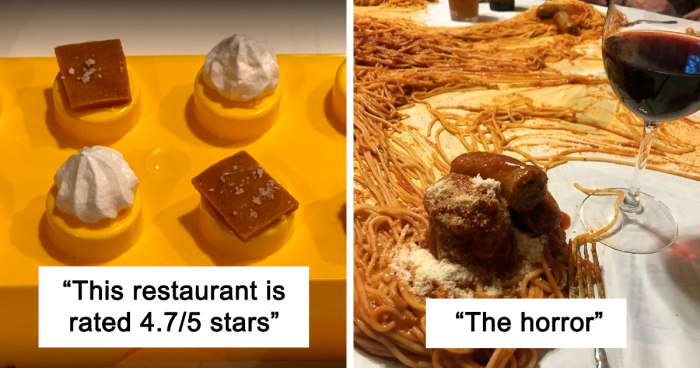
There is a universal dining-room moment when a server approaches with something that appears edible, but the object carrying it raises a much bigger question: “Where is my plate?”
Restaurants have every right to be creative. A beautiful bowl, handmade pottery, a sizzling skillet, or a thoughtful platter can elevate a meal. But somewhere along the road from “memorable presentation” to “social-media stunt,” certain kitchens decided that plates were too ordinary. Suddenly, fries appeared in flowerpots, burgers arrived on roof tiles, and dessert was trapped inside an object that looked like it belonged in a garage sale.
This is not an attack on traditional serving methods. Food served on banana leaves, in bread bowls, on cast iron, in bamboo steamers, or on regional platters can be practical, meaningful, and delicious. The real problem begins when the serving vessel makes the meal harder to eat, easier to spill, or oddly similar to an item from a bathroom renovation.
When Restaurant Presentation Becomes a Cry for Help
Good food presentation should make a dish easier to enjoy. It can create contrast, keep sauces contained, preserve temperature, and give diners enough space to use a fork without needing the coordination of a circus performer. Research on food presentation has found that visual arrangement can affect how diners perceive and enjoy a dish. That is exactly why plates matter: the right vessel supports the food instead of competing with it.
Unfortunately, some restaurants treat every meal like an audition for an art-school final project. The result is a growing museum of dining disasters: slippery wooden boards, tiny construction equipment, random household objects, and serving pieces that demand a user manual.
Here are 50 of the worst ways people have had food served in restaurantsranked not by flavor, but by the number of times a diner probably whispered, “Please bring me a plate.”
1. The “Why Is This on a Building Material?” Category
1. Fries on a Roof Slate
A roof slate may be sturdy enough to survive rain, wind, and a bad home-renovation decision. It is not automatically the ideal home for French fries. Salt rolls off, ketchup slides around, and every bite feels like you are having lunch on a tiny patio.
2. Steak on a Wooden Plank
A cutting board can look rustic, but it also has no rim. Add steak juices, chimichurri, or mashed potatoes, and your table becomes an accidental floodplain.
3. Pasta on a Chunk of Tree Trunk
Nothing says “Italian comfort food” like balancing spaghetti on a piece of timber that appears to have been rescued from a lumberyard.
4. Nachos on a Tile
A tile is great for kitchens, bathrooms, and people who enjoy grout. It is less exciting when your melted cheese is slowly traveling toward your lap.
5. A Burger on a Brick
There is rustic, and then there is “the chef found this behind the restaurant.” A burger deserves a bun, not a construction-site atmosphere.
6. Salad on Fake Grass
A salad is already trying its best to look healthy. Placing it on artificial turf makes it seem like it is warming up for a soccer match.
7. Dessert on a Pebble Slab
Chocolate sauce and pebbles are not natural partners. One belongs in a pastry case. The other belongs beside a decorative fountain.
8. Tacos on a Mini Shovel
Technically, it holds food. Technically, a snow shovel also holds food. That does not mean either should become part of taco night.
9. Onion Rings Hanging From a Metal Frame
Onion rings are supposed to be eaten, not displayed like industrial jewelry. Nobody needs to hunt their appetizer with both hands.
10. Wings on a Gardening Trowel
The only thing separating this meal from yard work is the ranch dressing. Even that may not be enough.
2. The “Please Do Not Make Food Look Like a Household Chore” Category
11. Fries in a Flowerpot
A flowerpot can be charming when it contains flowers. When it contains fries, the diner must decide whether to eat first or ask whether the kitchen has a greenhouse.
12. Soup in a Watering Can
Soup is difficult enough when served in a bowl. A watering can turns lunch into a test of gravity, patience, and wrist strength.
13. Cookies on a Paint Palette
Yes, frosting resembles paint. No, that does not mean dessert needs to arrive on something that makes everyone wonder whether it is food-safe.
14. Bread in a Tool Box
Fresh bread should smell like butter, herbs, and warm doughnot like the memory of a hardware aisle.
15. Tater Tots in a Lunchbox
A lunchbox can be nostalgic, but it should not require diners to relive third-grade cafeteria anxiety before eating fried potatoes.
16. Pancakes on a Clipboard
This presentation says, “Please review the syrup policy and sign at the bottom.”
17. Ice Cream in a Lightbulb
It is hard to relax around dessert when the vessel looks one wrong move away from an electrical emergency.
18. Fries in a Tiny Shopping Cart
Miniature carts are adorable for about four seconds. Then you realize your fries are trapped behind miniature metal bars like they committed a crime.
19. Chicken Nuggets in a Metal Pail
A pail is for sand, tools, or possibly Halloween candy. Nuggets do not need to arrive like they were collected during a farm chore.
20. Popcorn in a Shoe
Even if it is a brand-new shoe, there is no amount of seasoning that can make this feel normal.
3. The “This Looks Like It Came From a Garage Sale” Category
21. Steak on a License Plate
A license plate has already spent years battling weather, dirt, and road grime. It has earned retirement, not a rib-eye.
22. Salad in a Dog Bowl
Pet owners may appreciate the joke. Everyone else will spend the meal wondering whether the chef is trying to communicate something.
23. Shrimp in a Mini Bathtub
Seafood belongs near water, but that does not mean it should arrive in a porcelain bathtub with cocktail sauce nearby.
24. Appetizers in a Birdcage
When diners need to open a cage to access mozzarella sticks, dinner has become a puzzle game.
25. Waffles on a Vintage Record
Breakfast should not come with a risk of syrup damaging an album that may or may not be collectible.
26. Tacos in a Toy Truck
The truck may be cute, but the meal should not look like it is headed toward a sandbox.
27. Fries in a Mason Jar
Mason jars are excellent for drinks, flowers, and pantry storage. They are terrible when diners must reach past a narrow neck to retrieve a cold fry.
28. Cake on a Book
Nothing creates appetite quite like deciding whether your dessert is damaging a first edition.
29. Cheese on an Antique Mirror
The guest sees the cheese, the reflection of the cheese, and perhaps a tiny glimpse of regret.
30. Sandwiches on a Suitcase
This might work for a travel-themed party. In a restaurant, it mostly suggests that your lunch has baggage.
4. The “Why Is My Meal Trying to Escape?” Category
31. Curry on a Flat Board
Curry is a sauce-based dish. A board has no walls. This is not a bold culinary decision; it is a sauce evacuation plan.
32. Eggs on a Spoon the Size of a Canoe
Giant spoons look dramatic, but they force diners to chase their breakfast around a curved surface like it owes them money.
33. Fries in a Wire Basket Without a Liner
Small pieces fall through. Salt falls through. Dignity falls through. At least the basket remains optimistic.
34. Pasta in a Champagne Coupe
A champagne coupe is elegant for bubbles. It becomes considerably less elegant when marinara sauce starts dripping down the stem.
35. Soup in a Martini Glass
The first sip might feel glamorous. The second is usually when the soup tries to leave the building.
36. Tacos Hanging From Hooks
A taco should rest peacefully. It should not swing from a rack like a tiny edible coat.
37. Ribs on a Clothesline
Barbecue is already messy. Suspending it from clothespins transforms dinner into a laundry-themed endurance sport.
38. Fries Inside a Whisk
Forks were invented for a reason. A whisk is not a basket, even when it is trying very hard to become one.
39. Dessert on a Tilted Plate
A tilted plate can look artistic until caramel sauce begins its long journey toward the tablecloth.
40. Sushi on a Block of Ice
Cold sushi is fine. Sushi slowly sliding into a puddle as the ice melts is less fine.
5. The “This Is Not a Plate, It Is a Cry for Attention” Category
41. Burgers in a Metal Lunch Tray With Compartments
Compartment trays are useful in cafeterias. In a trendy restaurant, they can make a $22 burger feel like a field trip.
42. Appetizers in a Medical-Style Tray
There are certain objects that should never appear near mozzarella sticks. A clinical tray is one of them.
43. Salad in a Fishbowl
A fishbowl creates a spectacular view of lettuce. It also makes the guest feel as though they are eating from an aquarium exhibit.
44. Steak on a Cast-Iron Pan With a Blazing Hot Handle
Cast iron can be wonderful, but only when the server clearly warns guests and the handle is protected. Otherwise, dinner comes with a surprise lesson in reflexes.
45. Fries in a Tiny Dumpster
Some jokes are too committed. Serving food in a miniature dumpster is one of them.
46. Dessert in a Hollowed-Out Coconut With Glitter
A coconut can make sense. Glitter does not. Nobody wants to wonder whether the sparkle is edible, washable, or permanent.
47. Steak on a Ceramic Hand
The hand may be artistic, but it turns dinner into an episode of a haunted cooking show.
48. Fried Food in a Mini Toilet Bowl
This is where humor takes a wrong turn, misses three exits, and somehow keeps driving.
49. Dessert in a Laboratory Beaker
A beaker can work for a themed cocktail. For cheesecake, it makes the diner feel like they should wear goggles.
50. Food Placed Directly on the Table
This is the final boss of bad restaurant presentation. The table may be clean, but diners generally do not want their dinner served on the same surface that held keys, phones, elbows, and someone’s mystery purse contents.
Why Restaurants Keep Doing This
The answer is simple: attention. In a crowded restaurant market, presentation can create an instant social-media moment. A regular plate may not trigger a photo, but fries in a miniature shopping cart definitely will. The problem is that a viral photo does not always create a pleasant meal.
Restaurants also use unusual tableware to support a theme. A beachside spot may use shells, a barbecue restaurant may use metal trays, and a playful brunch place may serve drinks in whimsical glasses. Those choices can work when they are clean, safe, easy to handle, and connected to the experience.
The trouble starts when the container makes the food harder to cut, scoop, share, or keep warm. Diners should not need engineering skills to eat lunch. They should not have to use a fork to prevent fries from falling through a wire cage. They should not have to angle their body like a yoga instructor to keep a sauce from sliding onto their jeans.
The Simple Rule for Better Restaurant Plating
Before serving food on anything unusual, restaurants should ask one question: does this make the meal better for the customer? If the answer is “It will look great online,” that is not enough. The best serving vessel should be cleanable, stable, food-safe, easy to carry, appropriate for the temperature of the dish, and comfortable for diners to use.
That does not mean every meal needs a plain white plate. Handmade bowls, colorful pottery, cast iron, wood trays with proper liners, and custom serving dishes can all be wonderful. The goal is not to eliminate personality. The goal is to prevent pasta from escaping down a wooden plank like it is fleeing a tiny culinary crime scene.
Restaurant Experiences That Made Diners Ask for a Real Plate
Bad restaurant plating becomes memorable because it creates a tiny conflict between expectation and reality. Diners arrive expecting a meal. Instead, they receive a story. Sometimes it is a funny story. Sometimes it is the kind of story that begins with, “The food was actually good, but then they served it in…”
One of the most common experiences involves the wooden board. At first glance, it can look stylish: rustic bread, grilled meat, roasted vegetables, perhaps a small cup of sauce. Then the diner cuts into the food, and the board reveals its secret identity as a sauce-launching platform. There is no rim, no edge, and no mercy. A little olive oil becomes a table decoration. A little gravy becomes a new shirt pattern.
Another classic moment happens with tiny containers. A restaurant may serve fries in a miniature shopping cart, onion rings in a wire cone, or popcorn chicken in a small metal bucket. The presentation earns a laugh, and the first photo looks terrific. Then reality appears. The cart is too narrow. The wire cone has gaps. The bucket is too deep. Diners end up performing a delicate extraction process just to retrieve one fry that has somehow rotated sideways and become permanently lodged.
Hot serving dishes create their own special category of panic. A sizzling skillet can be excellent when it is handled carefully, the server gives a clear warning, and the table has enough room. But when a scorching cast-iron pan arrives without explanation, it becomes a surprise obstacle. The food may be delicious, yet everyone at the table suddenly speaks in the same nervous tone: “Do not touch that. Seriously. Do not touch that.”
Then there are the vessels that resemble objects people associate with cleaning, gardening, pets, or bathrooms. These are the hardest to defend. A dessert in a flowerpot might make sense for a garden-themed café, but it also creates a strange mental detour. A guest should not have to remind themselves that the pot is new, clean, and definitely not used for plants. The same applies to dog bowls, tiny toilets, paint cans, and footwear. A meal should inspire appetite, not a sanitation questionnaire.
The funniest part is that diners are not asking restaurants to stop being imaginative. People enjoy a beautiful plate, a dramatic garnish, a handmade bowl, or a dish that tells a story. They simply want the story to end with food that stays where it belongs. When presentation supports the meal, it feels thoughtful. When presentation turns lunch into an obstacle course, it feels like the chef is trying to win an argument nobody started.
Great restaurants understand that hospitality is more than visual drama. It is comfort, clarity, and care. A server who brings a warm bowl of pasta, a sturdy plate of ribs, or a properly lined basket of fries is not being boring. They are giving diners the rare luxury of eating without needing a strategy meeting.
So here is a modest request to every restaurant tempted to serve dessert in a lightbulb or wings on a gardening tool: pause for one moment. Ask whether the dish would improve on a plate. If the answer is yes, congratulations. You have discovered the most revolutionary restaurant trend of all: serving food on something designed to hold food.