Buying a grill should be exciting. After all, you are shopping for a machine whose primary purpose is turning ordinary food into sizzling, smoke-kissed happiness. Unfortunately, the process can quickly become a maze of burner counts, British thermal units, cooking areas, smart controllers, ceramic walls, pellet hoppers, and product descriptions that make every grill sound capable of catering the Super Bowl.
The truth is simpler: The best grill is the one that fits your space, preferred cooking style, patience level, and usual number of guests. Bob Vila’s hands-on grill testing examined models across the gas, charcoal, electric, flattop, kamado, portable, and smoker-grill categories. Testers considered assembly, construction, temperature control, heat distribution, searing ability, cleanup, storage, and everyday usability.
That testing produced several memorable winners, led by the Weber Spirit II E-310 as the best all-around choice. The complete list also offers practical options for bargain hunters, charcoal traditionalists, apartment dwellers, frequent travelers, ambitious smokers, and backyard cooks who believe a side burner is not an accessory but a constitutional right.
Best Grills at a Glance
| Category | Grill | Best For | Main Trade-Off |
|---|---|---|---|
| Best Overall | Weber Spirit II E-310 | Most households and frequent weeknight grilling | No side burner |
| Best Value | Char-Broil Performance Series 4-Burner | Large cooking capacity on a moderate budget | Less intense searing heat |
| Best Upgrade | Weber Genesis EPX-335 | Serious cooks seeking smart features and high heat | Large footprint and premium cost |
| Best Flattop | Cuisinart CGG-0028 28-Inch Gas Griddle | Breakfasts, fajitas, smash burgers, and group meals | Low-temperature control requires practice |
| Best Charcoal | Weber Original Kettle Premium | Classic charcoal flavor and flexible heat zones | Temperature management has a learning curve |
| Best Electric | George Foreman Indoor/Outdoor Electric Grill | Small spaces and flame-restricted properties | Some uneven heating |
| Best Kamado | Kamado Joe Classic Joe II | High-heat searing and low-and-slow smoking | Heavy and relatively expensive |
| Best Small Grill | Char-Broil Performance Series 2-Burner | Couples, small families, and compact patios | Limited cooking area |
| Best Portable | Weber Q1200 | Camping, tailgating, and tabletop cooking | Only one burner |
| Best Smoker-Grill Combo | Masterbuilt Gravity Series 800 | Long smoking sessions with digital control | Not ideal for direct-flame searing |
How the Best Grills Were Evaluated
A grill can look magnificent beneath showroom lights and still become a wobbly disappointment once it meets a steak. Meaningful grill testing must therefore go beyond checking specifications on a box.
Bob Vila’s evaluation began with assembly and build quality. Panel alignment, hardware, wheels, shelves, hinges, grates, coatings, and overall stability all matter because an outdoor grill must survive heat, weather, movement, grease, and the occasional enthusiastic cook leaning on a side table.
Cooking tests included familiar foods such as burgers, steak, and chicken. These reveal different performance characteristics. Steak tests maximum heat and searing power. Burgers expose hot spots and flare-up control. Chicken tests whether a grill can hold a moderate temperature long enough to cook thick meat without turning the outside into roofing material.
Temperature responsiveness was another priority. A good grill should react predictably when burners, vents, or digital controls are adjusted. Testers also considered cleanup, grease management, ash removal, storage, side burners, lighting, wireless monitoring, and smoker functions. These details may not sound glamorous, but neither is crouching beneath a grill with a greasy disposable pan while mosquitoes conduct aerial surveillance.
Top Grill Reviews
Best Overall: Weber Spirit II E-310 Gas Grill
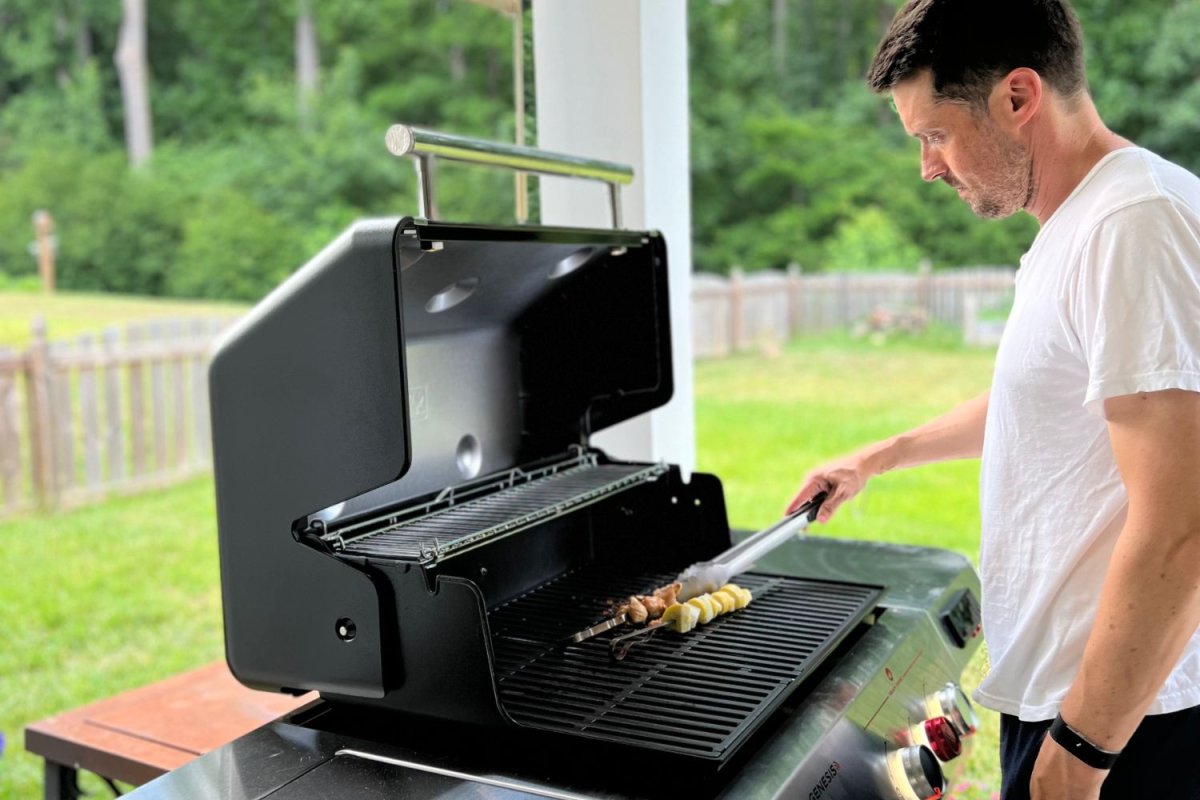
The Weber Spirit II E-310 earned Bob Vila’s best-overall position by combining durable construction, useful cooking space, responsive heat, and straightforward operation. Its three-burner layout provides separate heat zones, allowing a cook to sear burgers over direct heat while finishing vegetables or chicken more gently on another section.
The grill offers 529 square inches of cooking space and a rated output of 30,000 BTUs. Bob Vila’s testers found that its cooking surface could reach approximately 550 degrees Fahrenheit, providing enough heat to produce attractive browning and grill marks. Porcelain-enameled cast-iron grates hold heat effectively, while metal bars above the burners help shield the flames and vaporize drippings.
The open-cart design leaves the propane tank visible, and there is no side burner. Those drawbacks are minor for shoppers primarily interested in reliable grilling. This is a sensible choice for a family that grills several times per week and wants consistent performance without turning dinner into an engineering experiment.
Best Value: Char-Broil Performance Series 4-Burner Gas Grill
The Char-Broil Performance Series delivers the flexibility of four burners without immediately launching the buyer into luxury-grill territory. Its 425-square-inch cooking surface provides enough room for burgers, kebabs, steaks, and vegetables, while individually controlled burners make it possible to create multiple temperature zones.
Bob Vila’s testing found that the burners produced even heat at moderate temperatures, although the cooking surface did not become as hot as some more expensive competitors. That limits aggressive steakhouse-style searing, but it is less important when preparing chicken, sausages, vegetables, or a large batch of burgers.
A removable bottom tray simplifies cleanup, and the included side burner can handle beans, sauces, or a skillet. This grill is particularly attractive for hosts who need space and versatility but would prefer to keep enough money in the budget to purchase the actual food.
Best Upgrade: Weber Genesis EPX-335 Smart Gas Grill
The Weber Genesis EPX-335 is built for cooks who want greater capacity, stronger searing power, and digital assistance. Its cooking area approaches 800 square inches, giving users room to prepare several foods at different temperatures. A dedicated searing burner can create intense surface heat for browning steaks and burgers.
Integrated smart features allow the cook to monitor grill and food temperatures, create alerts, and follow progress through a connected device. Illuminated controls and built-in hood lighting are also useful during evening cookouts, when distinguishing a beautifully browned steak from a forgotten hockey puck becomes more difficult.
The Genesis is wide, heavy, and substantially more expensive than a basic gas grill. It makes sense for committed outdoor cooks who regularly entertain and will use its extra capacity. Occasional grillers may find the smaller Spirit series more practical.
Best Charcoal Grill: Weber Original Kettle Premium
The Weber Original Kettle Premium proves that a strong basic design does not need a touchscreen, an app, or a motivational speech. Its rounded bowl and lid support both direct and indirect cooking, while adjustable upper and lower vents control airflow and temperature.
With 363 square inches of cooking space, the kettle can handle a family meal without occupying half the patio. It heats efficiently with a relatively modest quantity of charcoal and can reach temperatures suitable for searing. Moving the coals to one side creates a cooler zone for chicken, thicker cuts, or foods that need more time.
The Premium model improves the classic kettle formula with an enclosed ash-catching system. Instead of producing a gray cloud every time the grill is cleaned, ash can be swept into a removable container. Maintaining very low temperatures still takes practice, but cooks who value smoky flavor and hands-on fire control will understand why the Weber kettle remains a backyard standard.
Best Kamado Grill: Kamado Joe Classic Joe II
The Kamado Joe Classic Joe II is a ceramic charcoal grill capable of operating at very high temperatures for searing and much lower temperatures for smoking. Thick ceramic walls retain heat, reduce rapid temperature swings, and make the grill efficient during long cooking sessions.
Its adjustable vents allow careful airflow control, while heat-deflector plates support indirect roasting and smoking. Optional accessories expand the system for pizza and other specialized cooking methods. The result is less like buying a single grill and more like adopting a compact outdoor cooking department.
The compromise is weight. The grill is extremely heavy and should be assembled with help. It also costs considerably more than a kettle grill. For enthusiasts who want to grill steaks, smoke pork shoulder, roast chicken, and bake pizza in one durable cooker, however, its versatility can justify the investment.
Best Portable Grill: Weber Q1200
A portable grill should be compact without behaving like a toy. The Weber Q1200 uses a sturdy cast-aluminum body, porcelain-coated cast-iron grates, electronic ignition, and folding side shelves. Its 189-square-inch cooking area is large enough for roughly six generously sized burger patties.
Bob Vila’s testing recorded cooking temperatures near 550 degrees Fahrenheit, which is impressive for a single-burner tabletop grill. The domed lid helps circulate heat around thicker foods, improving its usefulness for chicken and other items that need more than a quick blast of direct heat.
The one-burner design prevents true two-zone cooking, and a freestanding cart costs extra. Still, at approximately 31 pounds, the Q1200 can travel to campsites, tailgates, picnics, and vacation rentals without requiring its own trailer and road crew.
Best Smoker-Grill Combo: Masterbuilt Gravity Series 800
The Masterbuilt Gravity Series 800 combines charcoal flavor with digitally regulated temperature control. Charcoal feeds from a vertical hopper while an electronically controlled fan manages airflow and heat. The system can maintain a selected cooking temperature with far less supervision than a traditional charcoal smoker.
Its roughly 800-square-inch cooking area accommodates multiple racks of ribs, large cuts of pork, poultry, and side dishes. The hopper can hold enough fuel for an extended smoking session, and connected controls allow the user to monitor temperatures without standing beside the cooker for an entire afternoon.
Because heat reaches the cooking chamber indirectly, the Masterbuilt is better at smoking and roasting than direct-flame searing. Assembly can also be time-consuming. It is nevertheless a compelling option for anyone who wants authentic charcoal cooking with fewer 2 a.m. vent adjustments.
Gas, Charcoal, Pellet, Electric, or Kamado?
Choose Gas for Speed and Convenience
Gas grills ignite quickly, preheat predictably, and respond almost immediately when a burner is adjusted. They are ideal for weeknight dinners, frequent cooking, and households that value convenience. Three burners are usually enough to create useful direct and indirect zones for a typical family.
Choose Charcoal for Flavor and Fire Management
Charcoal grills reward users with strong browning, high heat, and traditional smoke flavor. They also require more preparation and cleanup. A kettle grill is affordable and versatile, while a gravity-fed charcoal model adds automation at a higher price.
Choose a Pellet Grill for Low-and-Slow Cooking
Pellet grills use compressed wood pellets, an electric auger, and a digital controller to maintain cooking temperatures. They are exceptionally convenient for ribs, brisket, pork shoulder, and other long cooks. Some models can reach searing temperatures, but many perform better as outdoor convection smokers than as direct-flame steak machines.
Choose Electric for Restricted Spaces
Electric grills eliminate propane tanks and burning charcoal. They can be useful where property rules prohibit open flames, although buyers must confirm local regulations and product instructions. Electric models tend to offer easy cleanup, but their heat output and smoke flavor may be more limited.
Choose Kamado for Maximum Versatility
A kamado can sear, roast, smoke, and bake while using fuel efficiently. The trade-offs are weight, cost, and a steeper learning curve. It is an enthusiast’s grill: extremely capable, slightly demanding, and unlikely to fit discreetly in the trunk of a compact sedan.
Features That Matter More Than Marketing
- Cooking area: Buy for the number of people you normally feed, not the one party you might host during the next solar eclipse.
- Multiple heat zones: Two or more independently controlled burners make indirect cooking easier.
- Strong grates: Cast iron retains heat well, while quality stainless steel is durable and easier to maintain.
- Grease or ash management: Removable trays and enclosed ash catchers dramatically reduce cleanup frustration.
- Stable construction: Check the cart, wheels, lid, shelves, and firebox for excessive movement.
- Replacement parts: Burner tubes, ignition systems, grates, and grease components eventually wear out. Parts availability can extend a grill’s useful life.
- Useful extras: Side shelves, tool hooks, lights, thermometers, and storage are valuable when they support the way you actually cook.
Do not evaluate a gas grill by total BTUs alone. Heat output must be considered alongside cooking area, firebox design, burner placement, lid construction, and grate material. A huge BTU number on a poorly designed grill is merely an efficient way to heat the neighborhood.
Grill Safety and Maintenance
Propane, charcoal, and pellet grills should be operated outdoors in an open, well-ventilated location. Keep the grill away from siding, railings, eaves, branches, play areas, and busy foot traffic. Never leave an active grill unattended, and open the lid before lighting a gas model.
Inspect propane connections for leaks according to the manufacturer’s directions. Empty grease trays regularly because accumulated fat can ignite. Charcoal starter fluid should never be added to burning or hot coals.
Preheating helps stabilize the cooking temperature and loosen residue on the grates. After heating, clean the surface with an appropriate bristle-free scraper, coil cleaner, stone, or other manufacturer-approved tool. Several large wire-bristle grill-brush recalls in 2026 highlighted the risk of detached metal bristles sticking to food, so owners should check current recall information and inspect cleaning tools carefully.
Use a food thermometer rather than judging doneness by color. As a general safety guide, poultry should reach 165 degrees Fahrenheit, ground beef should reach 160 degrees, and whole cuts of beef, pork, veal, and lamb should reach at least 145 degrees followed by a three-minute rest.
Practical Grilling Experience: What You Learn After the First Few Cookouts
The first cook on a new grill rarely reveals its full personality. Everything is clean, the owner is unusually attentive, and nobody has yet poured a sugary sauce over a burner. The more revealing experience begins after several meals, when convenience, temperature recovery, cleanup, and construction start influencing how often the grill is actually used.
A three-burner gas grill such as the Weber Spirit II E-310 demonstrates why balanced design often matters more than flashy extras. Imagine cooking for four people on a weekday. One burner can remain high for burgers, the center can run at medium heat for vegetables, and the third can stay low or off to create a cooler finishing area. The grill reaches cooking temperature quickly, reacts predictably, and does not require lighting a chimney of charcoal while hungry family members stare through the patio door.
The charcoal experience is different. A Weber kettle takes longer to prepare, but it encourages the cook to think about fuel placement, airflow, and lid position. Coals banked on one side create a powerful searing zone and a gentler indirect zone. A steak can brown over the coals and then move away from the fire to finish. The process is more involved, yet that involvement is part of the appeal. Charcoal grilling feels less like operating an appliance and more like negotiating with a small, delicious volcano.
Kamado cooking rewards even greater patience. Once a heavy ceramic cooker stabilizes at a low smoking temperature, it can hold heat remarkably well. The challenge is avoiding a large overshoot. Opening the vents too aggressively may send the temperature climbing, and cooling a heat-soaked ceramic body takes time. Experienced users therefore make small adjustments and wait for the grill to respond.
Portable-grill ownership reveals another practical lesson: A compact cooker is only useful when it is easy to carry, set up, fuel, and clean. The Weber Q1200 is heavier than some minimalist camping grills, but that weight comes with sturdier construction and cast-iron grates. For car camping or tailgating, the trade-off is reasonable. For a long hike, carrying 31 pounds of grill would rapidly become a character-building exercise.
Long smoking sessions highlight the value of digital control. A gravity-fed charcoal cooker or pellet grill can maintain a target temperature while the cook prepares side dishes, talks with guests, or sleeps. Smart alerts are helpful, but an independent instant-read or leave-in thermometer remains a worthwhile backup. Built-in sensors measure temperature at a particular point, and the actual heat near the food can differ.
Cleanup eventually determines whether a grill becomes a weekly tool or an expensive patio sculpture. Removable grease trays, accessible fireboxes, ash catchers, and uncomplicated grate designs make a major difference. A five-minute cleanup after each cook is easier than excavating a season’s worth of grease during the first warm weekend of spring.
The most useful real-world conclusion is that bigger is not automatically better. A massive grill takes longer to clean, consumes more fuel, and occupies valuable space. A household that normally cooks six burgers and a few ears of corn may be happier with a well-made midsize grill than a stainless-steel command center designed to feed an airport terminal.
Choose the model you will enjoy using on an ordinary Tuesday, not just the one that looks impressive during a holiday sale. Frequent, relaxed cooking is where a good grill proves its value.
Final Verdict
For most households, the Weber Spirit II E-310 remains the standout selection from Bob Vila’s tested lineup. It offers a practical combination of durable construction, responsive three-zone heat, useful cooking capacity, and approachable operation. The Char-Broil Performance Series 4-Burner is a strong value choice when capacity matters more than extreme searing heat.
Charcoal fans should consider the Weber Original Kettle Premium, while experienced outdoor cooks seeking greater versatility may prefer the Kamado Joe Classic Joe II. The Weber Q1200 is a dependable portable option, and the Masterbuilt Gravity Series 800 provides a convenient path into long charcoal-smoking sessions.
No single grill is perfect for every cook. Match the fuel, size, temperature range, cleanup system, and construction to your routine. Do that, and the best grill will not merely look impressive on the patio. It will be hot, slightly smoky, and busy making dinner.