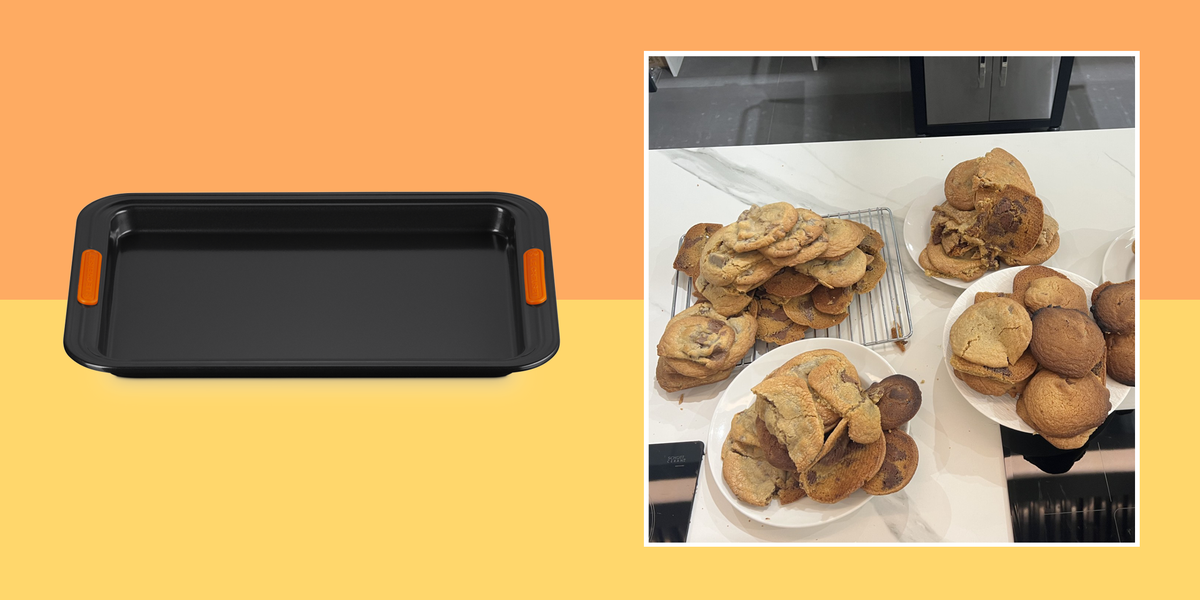
A baking tray seems like one of those kitchen purchases that should take approximately six seconds. You need a flat piece of metal. You buy a flat piece of metal. You bake cookies. Civilization continues.
Then the bottoms burn while the tops look pale, the tray makes a loud metallic “BONG” in the oven, and your cookies spread into a single chocolate-chip continent. Suddenly, you are standing in your kitchen at 10:42 p.m., accusing a pan of sabotaging dessert.
The truth is that the best baking trays do far more than hold dough. Their material, color, thickness, rim design, and surface finish all influence heat transfer, browning, cookie spread, cleanup, and whether the tray remains flat after a few high-heat dinners. Across recent testing from major American food publications, one pattern is remarkably consistent: light-colored, heavy-gauge, uncoated aluminum half-sheet pans are usually the most dependable all-purpose choice for cookies and everyday roasting.
To find the strongest contenders, we looked at what matters in a serious cookie-tray showdown: even browning, resistance to warping, cookie release, cleanup, durability, oven limits, and usefulness beyond a batch of chocolate chip cookies. Because a baking tray should not become a single-purpose cookie limousine. It should roast vegetables, hold sheet-pan dinners, chill dough, catch drips, and quietly make you feel like a person who has their life together.
The Quick Verdict: Best Baking Trays for Cookies and More
- Best overall baking tray: Nordic Ware Naturals Baker’s Half Sheet
- Best nonstick baking tray: OXO Good Grips Nonstick Pro Half-Sheet Pan
- Best premium uncoated option: Made In Sheet Pan
- Best high-heat ceramic-coated tray: Caraway Cookie Sheet or Large Baking Sheet
- Best compact option: A natural aluminum quarter-sheet pan
- Best for classic slide-off cookies: A traditional rimless or three-sided cookie sheet
What Makes a Baking Tray Great for Cookies?
The best cookie sheet is not always the prettiest one in the store. In fact, the tray that turns out the most reliable chocolate chip cookies often looks almost aggressively ordinary: pale silver, lightly scratched, a little stained, and entirely uninterested in becoming kitchen décor.
Light color helps prevent over-browning
Cookie bottoms are sensitive little creatures. Dark pans absorb and retain more heat, which can make cookies brown too quickly underneath before the center finishes baking. King Arthur Baking specifically recommends light-colored, shiny cookie sheets for preventing excessive browning, while cautioning that dark nonstick sheets can make cookies too dark on the bottom.
That does not mean dark trays are useless. They can be excellent for roasting vegetables, crisping potatoes, and giving bacon the kind of caramelized confidence it deserves. But for cookies, especially pale sugar cookies, shortbread, or delicate butter cookies, a light-colored tray gives you more control.
Thickness matters more than most people think
Thin trays heat quickly, but they can heat unevenly. They are also more likely to warp, buckle, or make a noise that suggests a robot uprising has begun in your oven. A heavier-gauge pan spreads heat more evenly and holds its shape better during repeated use.
The sweet spot is a sturdy tray that feels substantial without requiring forearm training to lift. Heavy aluminum is especially popular because it heats efficiently, cools relatively quickly, and usually produces even browning. That is why professional-style aluminum half-sheet pans remain a favorite in many test kitchens.
Rims make a tray more versatile
A rimless cookie sheet has one major advantage: cookies slide off easily. That is lovely when you are moving delicate shortbread or trying to make a dozen identical gingerbread people escape with their limbs intact.
However, a rimmed baking tray is far more versatile. A one-inch edge keeps juices, roasted vegetables, melted butter, and suspiciously enthusiastic marinades from spilling into the oven. It also makes the tray useful for sheet cakes, slab pies, chicken dinners, roasted vegetables, and freezer prep.
Best Overall: Nordic Ware Naturals Baker’s Half Sheet
The Nordic Ware Naturals Baker’s Half Sheet is the baking tray equivalent of a dependable friend who helps you move, brings snacks, and never asks why you own three waffle makers.
Its formula is simple: light-colored, uncoated aluminum; a standard half-sheet footprint; and reinforced rolled edges designed to improve strength and reduce warping. The pan is commonly listed at roughly 18 by 13 inches, which fits most standard home ovens and gives you enough room to bake a respectable number of cookies without forcing them to share personal space.
Independent testing repeatedly places this tray at or near the top because it heats evenly, browns cookies reliably, handles roasting jobs well, and remains affordable compared with premium brands. Serious Eats found that cookies and cakes baked evenly on the Nordic Ware half-sheet, while roasted foods browned well and released easily.
Why it wins
- Light aluminum color supports gentler, more even cookie browning.
- Uncoated surface tolerates high-heat cooking better than many coated alternatives.
- Rimmed design works for cookies, vegetables, sheet-pan meals, and baking projects.
- Commercial-style shape makes it easy to find matching cooling racks, parchment sheets, and silicone mats.
- It is durable enough to become your everyday tray rather than your “special occasion cookie pan.”
The trade-off
It will stain. It may acquire brown marks, light scratches, and the visual personality of a veteran line cook. That is not a failure. Bare aluminum trays age like cast-iron skillets without all the emotional paperwork. As long as the tray remains flat and clean, cosmetic discoloration generally does not hurt baking performance.
Best Nonstick Baking Tray: OXO Good Grips Nonstick Pro Half-Sheet Pan
There are days when you want the romance of bare aluminum. Then there are days when your cookie dough contains melted chocolate, caramel pieces, marshmallows, or enough butter to lubricate a small tractor. On those days, nonstick convenience becomes very persuasive.
The OXO Good Grips Nonstick Pro Half-Sheet Pan is one of the stronger coated options because it combines an aluminized-steel body, reinforced edges, and a textured nonstick surface. In Epicurious testing, it browned cookies evenly, released food well, and cleaned up easily. Its main limitation is heat tolerance: it is rated for temperatures up to 450°F, which is enough for cookies, biscuits, brownies, and many weeknight meals, but less suitable for broiling or extremely high-heat pizza work.
Choose OXO if:
- You dislike scrubbing baked-on sugar.
- You frequently bake sticky cookies, bars, cinnamon rolls, or gooey desserts.
- You want a nonstick tray that still performs reasonably well with cookies.
- Your usual baking temperature stays at or below 450°F.
Skip it if:
You want one tray for everything, including broiling, high-heat roasting, or repeated use under intense oven temperatures. Nonstick coatings are convenient, but they have limits. They also need gentler tools and hand-washing if you want the coating to remain happy for more than a handful of baking seasons.
Best Premium Uncoated Baking Tray: Made In Sheet Pan
For bakers who like the clean, modern look of premium cookware but still want the practical benefits of bare aluminum, the Made In Sheet Pan is a strong contender. It uses heavy-gauge aluminum and a fully enclosed rolled rim, with a half-sheet size of about 17.75 by 13 by 1 inch. The brand also positions it as hand-wash only and backs it with a lifetime warranty.
Its biggest appeal is the balance between professional-style construction and refined finishing. It is designed to conduct heat efficiently, resist warping, and contain juices without becoming excessively bulky. That makes it especially appealing to cooks who regularly use baking trays for roasted vegetables, sheet-pan chicken, crisp potatoes, and cookies that deserve a little more attention than “whatever pan was clean.”
Why it is worth considering
The Made In tray is not necessary for great cookies. A less expensive aluminum half-sheet can produce excellent results. But if you value a heavier construction, polished design, and a pan intended for long-term use, it is a premium upgrade that still prioritizes baking performance over flashy coatings.
Best High-Heat Ceramic-Coated Tray: Caraway Cookie Sheet
Caraway’s ceramic-coated cookie sheet is for bakers who want easy cleanup, attractive design, and a tray that can move from cookies to roasted vegetables without looking like it has survived a kitchen tornado.
The Caraway Cookie Sheet has an aluminized-steel core, a nonstick ceramic coating, and a listed oven-safe temperature of up to 550°F. Its total dimensions, including the handles, are about 18.3 by 14.6 by 1 inch.
That high temperature rating gives it an advantage over many standard nonstick trays. It is especially useful for sheet-pan dinners, roasted vegetables, and recipes where easy release matters more than a deeply chewy cookie center.
The important cookie caveat
Very slick trays can encourage cookie dough to spread more than expected. Epicurious found that Caraway’s highly nonstick ceramic surface was excellent for sheet-pan meals but produced thinner, crispier cookies in testing.
That does not make it a bad cookie sheet. It simply means you should match the tray to your cookie goals. Want thin, crisp chocolate chip cookies with golden edges? Great. Want thick bakery-style cookies with chewy centers? Bare aluminum, parchment, or a silicone mat may be the better route.
Best Compact Baking Tray: Natural Aluminum Quarter-Sheet Pan
Not every baking project needs an 18-by-13-inch tray. A quarter-sheet pan is perfect for smaller ovens, toaster ovens, compact kitchens, and those occasions when you want six cookies instead of a batch large enough to negotiate international peace.
Quarter-sheet pans are typically around 9 by 13 inches. They work beautifully for small cookie batches, reheating leftovers, roasting a single serving of vegetables, toasting nuts, freezing dough balls, and holding ingredients while you prep dinner. Natural aluminum versions are usually the best choice because they provide quick, even heat without a dark coating that may over-brown delicate bakes.
A compact tray also earns its keep in larger kitchens. Use one as a landing zone for chopped vegetables, a drip catcher under a cooling rack, or a place to chill cookie dough. You may buy it for “small baking,” then discover it is somehow involved in every meal you make.
Should You Buy a Rimmed Baking Tray or a Rimless Cookie Sheet?
For most households, buy a rimmed half-sheet pan first. It is the most versatile style by a country mile.
A traditional rimless cookie sheet is useful if you bake fragile cookies, biscuits, scones, or pastries that benefit from sliding directly onto a cooling rack. King Arthur Baking’s traditional cookie sheet design leaves three sides rimless, making it easier to move baked goods off the pan.
Still, the rimmed half-sheet pan wins the kitchen popularity contest because it can hold wet foods, roasting juices, loose vegetables, and sheet-cake batter. It is also safer when carrying a tray full of hot cookies across a kitchen while someone asks, “Can I have one yet?” every eight seconds.
How to Choose the Best Baking Tray for Your Kitchen
Choose a half-sheet size for everyday use
A standard half-sheet pan is usually around 18 by 13 inches and fits most home ovens. It is large enough for a dozen or more cookies, a full dinner, or a modest amount of emotional support nachos.
Choose light aluminum for classic cookies
Uncoated light aluminum is the safest choice for bakers who want even browning, flexible high-heat use, and a tray that can last for years. It may stain, but stains are not a baking emergency.
Choose nonstick for convenience-heavy baking
Nonstick trays are useful for sticky foods and quick cleanup. Just remember that they generally need more careful handling and may not be suitable for the highest oven temperatures.
Check the rim construction
Rolled or reinforced rims can help trays resist warping. A tray may still flex during extreme temperature changes, but a sturdy rim gives it a much better chance of returning to normal instead of permanently becoming a shallow metal canoe.
Think about your oven before buying
Measure your oven rack, especially if you have a compact oven, a wall oven, or an older range with unusual dimensions. A beautiful tray that does not fit in your oven is simply a very expensive serving platter for disappointment.
Do Parchment Paper and Silicone Mats Change Cookie Results?
Absolutely. The tray is important, but the surface between your cookie dough and the metal can change spread, texture, release, and cleanup.
King Arthur Baking’s cookie tests found that parchment paper created cookies with an even thickness, easy release, and manageable spread. A silicone baking mat produced thick, chewy, attractively shaped cookies with well-browned edges and minimal sticking. Aluminum foil, meanwhile, led to more spreading and difficult release.
For most bakers, parchment paper is the simplest default. It is forgiving, keeps trays cleaner, and works with nearly every cookie recipe. Silicone mats are excellent when you want more uniform cookies and reusable nonstick performance. Baking directly on an ungreased aluminum tray can also work well, especially with butter-rich doughs, but you may need a thin spatula and a little patience.
How to Keep Baking Trays in Good Shape
A good baking tray should age, not self-destruct. Follow a few simple habits and your favorite half-sheet pan can outlast several trendy kitchen gadgets.
- Hand-wash aluminum trays with warm, soapy water whenever possible.
- Let a hot tray cool before washing it; dramatic temperature changes can encourage warping.
- Use parchment or silicone mats for sticky foods and messy roasting jobs.
- Avoid metal utensils on coated trays.
- Do not panic over stains on bare aluminum; they are usually cosmetic.
- Do not leave acidic foods, such as tomatoes or citrus-heavy marinades, sitting on bare aluminum for long periods.
Aluminum pans can come out of the dishwasher looking dull or etched because of oxidation, so hand-washing is generally the kinder long-term choice. For stubborn stains on bare aluminum, a baking soda and hydrogen peroxide paste can help lift discoloration, while coated trays should be cleaned more gently.
Our Final Recommendation
If you want one baking tray that can bake cookies, roast vegetables, support weeknight dinners, chill dough, catch drips, and survive regular use without demanding a spa day afterward, buy a light-colored, uncoated aluminum half-sheet pan.
The Nordic Ware Naturals Baker’s Half Sheet remains the easiest recommendation because it consistently delivers the features most home bakers need: even heating, reliable browning, practical sizing, useful rims, and durable construction without a premium price tag.
Choose the OXO Nonstick Pro if easy cleanup is your top priority. Choose Made In if you want a heavier, premium uncoated tray. Choose Caraway if you want a high-heat ceramic-coated option for roasting and simple cleanup. And add a quarter-sheet pan if you enjoy baking for one, two, or the rare quiet evening when you do not need enough cookies to feed an entire school fundraiser.
What 350 Cookies Teach You About Baking Trays
After enough cookies, you begin to realize that baking trays are not passive participants. They have opinions. Strong ones. One tray quietly encourages a cookie to remain thick and chewy. Another turns the same dough into a thin, crunchy disk that could double as a coaster. A third somehow browns the left side faster than the right, leaving you with a batch that looks like it was baked in two separate zip codes.
The first major lesson is that cookie dough is only half the equation. You can use the same butter, flour, sugar, chocolate, oven temperature, and scoop size, yet get different results depending on the tray and liner. A light aluminum tray tends to give you a more balanced result: browned edges, a softer center, and fewer surprises. It does not promise perfection, but it gives you a fair fight.
The second lesson is that darker does not always mean better. Dark trays can create dramatic browning, but cookies do not always need drama. Sometimes they need subtlety. A sugar cookie should not emerge from the oven looking like it spent a weekend at a beach resort without sunscreen. If your favorite cookies always seem darker underneath than you want, your tray may be absorbing more heat than your recipe expects.
The third lesson is that nonstick surfaces are both magical and mischievous. They can release sticky cookie dough like a dream and make cleanup feel almost suspiciously easy. But very slick surfaces can also help cookies spread farther than expected. That can be wonderful for crispy cookies. It can be less wonderful when you were hoping for thick, bakery-style cookies and instead create twelve delicious little pancakes.
The fourth lesson is that parchment paper deserves more respect. It is inexpensive, easy to use, and remarkably effective at creating consistent cookies with simple cleanup. It also protects your tray from burned sugar and sticky chocolate. Silicone mats can go a step further for bakers who want thick, uniform cookies with dependable release. The right liner can make a good tray better without forcing you to buy a different pan for every recipe.
The fifth lesson is that warping is not always a death sentence. A tray may pop or flex in a hot oven, especially when cold food hits a preheated surface. Many quality trays settle back into shape as they cool. Permanent warping is annoying, but a little temporary movement is not automatically a reason to throw a pan away and start browsing cookware websites at midnight.
Finally, 350 cookies teach you to stop expecting your baking tray to stay beautiful. The best tray in your kitchen may eventually wear a collection of brown marks, scratches, and baked-on memories. That is not neglect. That is evidence. It has roasted vegetables on tired Tuesdays, held birthday cookies, cooled cinnamon rolls, and probably caught a few escaping chocolate chips along the way.
A great baking tray does not need to look brand new. It needs to bake evenly, sit flat, clean up without a wrestling match, and help you make cookies worth stealing off the cooling rack before they are fully cool. That is the real test. And unlike 350 cookies, it is one you will happily repeat.