Fear rarely arrives wearing a helpful name tag. It tends to creep in as a tight stomach, a racing thought, an unexplained urge to check the door for the fourth time, or the suspicion that the laundry pile has finally developed political ambitions. That is what makes this drawing challenge so interesting: instead of merely describing your worst fear, you must give it paws, claws, wings, scales, teeth, or perhaps an alarming number of elbows.
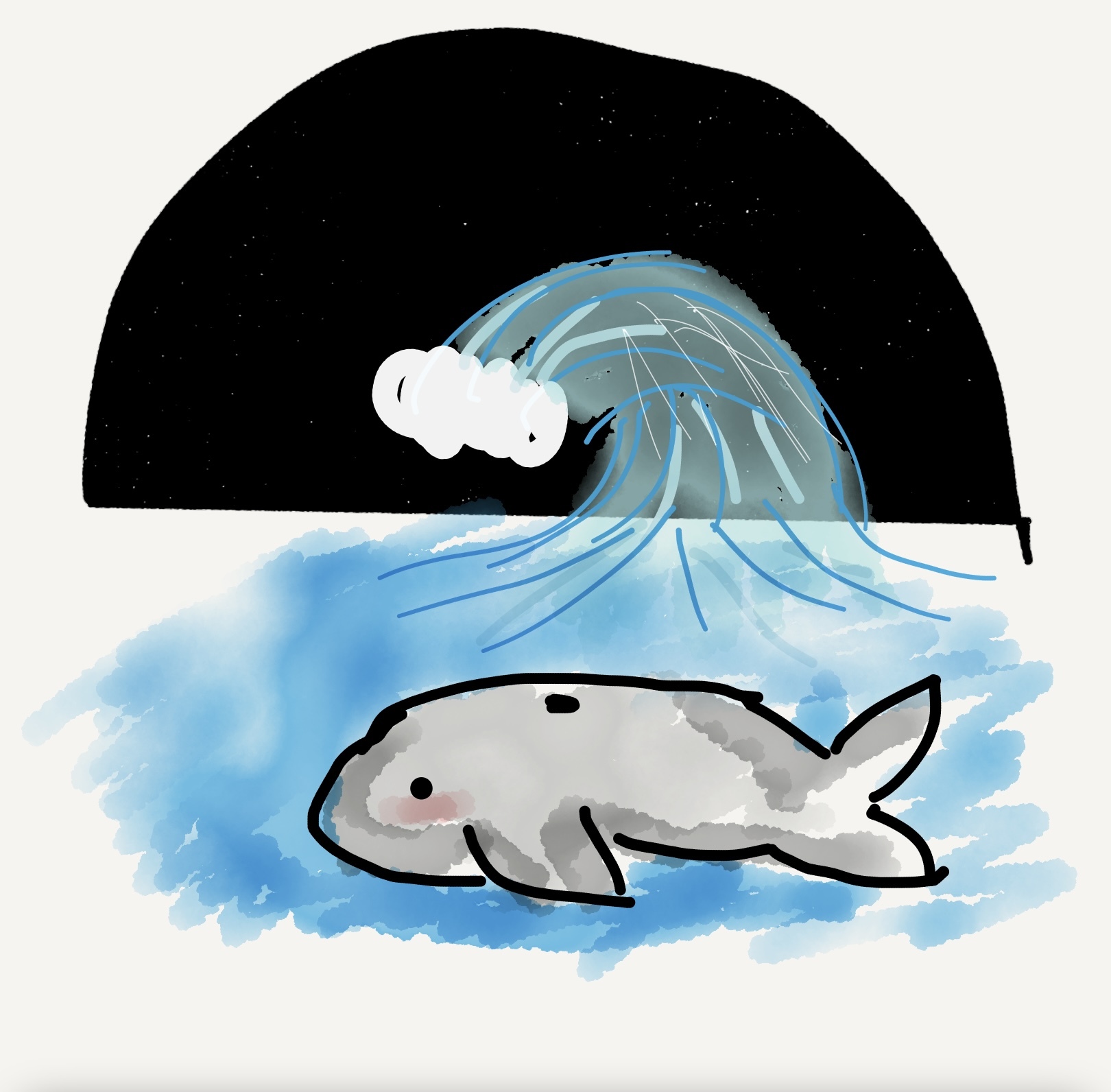
The prompt “Draw a picture of your worst fear in the form of an animal” turns an invisible emotion into a visible creature. Your fear of failure might become a vulture that collects unfinished projects. Loneliness could appear as a pale whale calling through an empty ocean. Public speaking may transform into a peacock with hundreds of judgmental eyes on its feathers. The resulting animal can be frightening, ridiculous, beautiful, or all three before breakfast.
You do not need professional art skills to participate. A nervous stick insect drawn with a ballpoint pen can communicate more personality than a perfectly rendered tiger. The goal is not anatomical accuracy. The goal is to let imagination take fear out of its hiding place and put it on the page, where you can finally look at the strange little menace.
Why Turn Your Worst Fear Into an Animal?
Animals Give Abstract Fears a Body
Many fears are difficult to draw directly. How do you sketch rejection, uncertainty, aging, losing control, or realizing you accidentally replied to everyone? Turning the fear into an animal gives it a body. Suddenly, uncertainty has six legs that keep changing direction. Rejection has a porcupine’s defensive spines. Lost time becomes a rabbit sprinting away with a clock between its teeth.
Fear itself is a protective response that prepares the body to react to possible danger. A specific phobia, however, involves intense fear or anxiety connected to a particular object or situation, sometimes even when the actual danger is limited. Animal-related fearsincluding fears of spiders, dogs, snakes, birds, and insectsare common examples.
Drawing is not a diagnosis or a substitute for treatment, but it can offer a manageable way to describe an experience. The moment you decide whether your creature crawls, flies, watches, hides, or chases, you are translating a vague feeling into specific visual choices.
A Creature Creates Useful Distance
Saying “I am afraid of disappointing everyone” can feel painfully direct. Saying “This is Gerald, a twelve-foot mole who stores other people’s expectations in his cheeks” creates a little breathing room. The issue has not disappeared, but it now exists as a character separate from you.
Creative expression and art therapy often use images, symbols, and metaphors to communicate emotions that may be difficult to explain verbally. Research and clinical accounts suggest that art-making can support emotional expression, reflection, and a sense of personal agency, although casual drawing should not automatically be labeled art therapy unless it occurs within a professional therapeutic relationship.
Humor Can Sit Beside Fear
A fear animal does not have to be grim. In fact, humor may make the creature more honest. Your anxiety could be a squirrel wearing seventeen wristwatches. Your fear of confrontation might be a lion that practices roaring in the mirror but apologizes whenever someone hears it. Your fear of technology failing could be a cybernetic raccoon frantically unplugging the router.
Humor does not erase a serious emotion. It simply gives you another way to approach it. Sometimes the funniest monster is also the one that reveals the most.
How to Design Your Fear Animal
Begin With the Fear’s Behavior
Before choosing an animal, ask what the fear actually does. Does it follow you? Does it wait quietly? Does it attack without warning? Does it grow when ignored? Does it whisper, repeat old conversations, or convince you that one minor mistake will end civilization?
The behavior can guide the anatomy:
- A fear that constantly watches might become an owl, fly, chameleon, or many-eyed hybrid.
- A fear that slowly surrounds you could resemble an octopus, vine-covered serpent, or enormous constrictor.
- A fear that arrives suddenly may take the form of a striking snake, diving hawk, or spring-loaded cat.
- A fear that drains your energy might become a leech, tick, moth, or sleepy creature sitting on your shoulders.
- A fear that multiplies could appear as ants, mice, frogs, or one animal splitting into smaller copies.
Choose Features for Meaning, Not Realism
Your creature does not need to belong in a biology textbook. Give it the tail of a scorpion, the eyes of a goat, the feet of a chicken, and the posture of an office manager who has just scheduled a “quick chat.” Hybrid animals are useful because complicated fears rarely behave like one neat species.
Across cultures and historical periods, people have used real and imaginary animals to represent danger, chaos, protection, power, death, mystery, and transformation. Ancient artworks include threatening hybrids, protective monsters, powerful jaguars, dangerous hippos, and serpent imagery with meanings that varied dramatically by place and time. Animal symbolism is therefore not universal; your own memories and cultural associations matter more than a generic symbolism chart.
A snake could represent betrayal to one artist, renewal to another, and the unpleasant discovery of something moving in the garage to a third. Draw what the animal means to you.
Exaggerate the Most Important Detail
Visual exaggeration makes the concept readable. A creature representing criticism might have ears larger than its entire body. A fear of being misunderstood may have ten mouths but no tongue. A perfectionism beast could possess dozens of hands, each erasing what another hand has drawn.
Consider enlarging one or two features:
- Eyes for surveillance, judgment, or hypervigilance
- Teeth for aggression or consequences
- Claws for control or entrapment
- Wings for escape, instability, or thoughts that will not settle
- Armor for defensiveness
- Multiple heads for conflicting worries
- A tiny body beneath a huge shadow for fears that feel larger than their source
Design the Environment Too
The surroundings can reveal how the fear operates. A fear of isolation might live in an enormous white room. A deadline monster could crouch inside a maze of calendars. A fear of deep water may appear beneath a tiny boat, with most of its body hidden in black waves.
Scale is especially effective. A tiny creature can feel disturbing if it is hiding inside an ordinary place, while an enormous animal can show how a problem dominates the artist’s attention. You could also reverse expectations by drawing a gigantic person confronted by one microscopic but extremely confident spider.
Popular Fear-Animal Ideas to Explore
The Spider of Overthinking
Give the spider one leg for every possible outcome. Instead of a normal web, let it spin flowcharts, unanswered messages, old mistakes, and imaginary arguments. The spider may sit in the center wearing reading glasses, carefully reviewing something embarrassing you said in 2014.
The Wolf of Failure
This wolf never attacks. It follows at a distance, becoming larger whenever the artist avoids trying something new. Its fur could be made from torn report cards, rejected applications, broken pencils, or unfinished plans. Perhaps it looks terrifying from the front but has wheels instead of back legs, revealing that it cannot chase anyone unless they pull it along.
The Octopus of Lost Control
Each tentacle can hold a different responsibility: work, money, family, health, chores, relationships, and the mysterious password you were definitely going to remember. The octopus might appear calm while its arms tie everything into knots.
The Moth of Being Forgotten
A moth naturally lends itself to themes of fragility, darkness, attraction, and disappearance. Its wings could resemble fading photographs or erased names. It might circle a distant light but never reach it, leaving powdery traces wherever it lands.
The Peacock of Social Judgment
Replace the peacock’s feather markings with staring faces, phone cameras, speech bubbles, or tiny scorecards. The bird could become more colorful when it feels observed, even though it desperately wants to hide. This contrast can capture the exhausting performance of trying to appear confident while feeling exposed.
The Rat King of Small Problems
One minor concern is manageable. Twenty concerns tangled together by their tails become a squeaking committee. Draw each rat carrying a bill, notification, awkward memory, or unfinished task. Naturally, one rat should be holding a snack and contributing absolutely nothing.
A Simple Step-by-Step Drawing Exercise
Step 1: Write One Honest Sentence
Complete the phrase: “I am afraid that…” Avoid polishing the answer. You might write, “I am afraid I will fail,” “I am afraid people will leave,” or “I am afraid there is a centipede in my shoe even though I checked twice.”
Step 2: List Three Qualities
Choose three words describing the fear. Examples include silent, fast, heavy, sticky, unpredictable, hungry, fragile, loud, cold, or impossible to satisfy.
Step 3: Match the Qualities to Animal Parts
A sticky fear may need frog feet or a web. A heavy fear could have an elephant’s body or a shell made from stone. An unpredictable fear might combine a rabbit’s speed with a crocodile’s mouth and a weather vane for a tail.
Step 4: Draw the Silhouette First
Use a pencil, marker, digital brush, or whatever is available. Start with the overall shape rather than details. Ask whether the silhouette feels hunched, aggressive, trapped, inflated, or ready to flee.
Step 5: Add the Fear’s Evidence
Include objects or markings that connect the creature to your experience. Receipts could form its scales. Its horns might resemble notification icons. Its spots could be tiny clocks. Its nest may be built from crumpled drafts.
Step 6: Give It a Name and Caption
A name turns the animal into a character. Try “The Maybe-Maybe-Not,” “Captain Catastrophe,” “The Deadline Deer,” “The Approval Hound,” or “Steve.” Sometimes a frightening creature named Steve becomes 14 percent easier to discuss. This percentage is artistically accurate and scientifically invented.
Sharing Your Fear Animal With Other Pandas
A community art prompt works best when people feel safe enough to be creative. Share only what you are comfortable revealing. You can post the drawing without explaining the personal story, use a fictionalized fear, or focus on something lighthearted. Nobody is required to turn a public comment section into a private therapy session.
When responding to another person’s artwork, avoid diagnosing the artist or declaring what the creature “really means.” Ask curious questions instead: What inspired the animal? Which detail matters most? Is the creature powerful, frightened, or both? A drawing may contain personal symbolism that outsiders cannot accurately decode.
Also remember that artistic skill is not the point. A rough sketch can be emotionally sharp, and polished artwork can still be playful. Encourage imagination rather than ranking technique. There are already enough competitive arenas in life; the anxiety ferret does not need a performance review.
When a Fear Is More Than a Drawing Prompt
Most people experience fear, and many enjoy exploring it through stories, humor, or art. However, professional support may be appropriate when a fear causes intense distress, persistent avoidance, panic symptoms, or significant disruption at school, work, home, or in relationships.
Specific phobias can be treated. Approaches such as cognitive behavioral therapy and carefully planned exposure therapy are commonly used to help people change their responses to feared objects or situations. Exposure should be gradual and appropriately supported; deliberately overwhelming yourself is not the same thing as evidence-based treatment.
A drawing may help you begin a conversation, identify a pattern, or explain what the fear feels like. It does not obligate you to confront the fear alone.
Experiences From the Sketchbook: Meeting the Fear Animals
One of the most surprising parts of this challenge is how quickly a vague worry can develop a personality. Consider an artist who begins with a general fear of falling behind. At first, they plan to draw a cheetah because speed seems obvious. After a few lines, however, the creature becomes a centipede wearing running shoes on every foot. Each shoe points in a different direction. Tiny calendars hang from its antennae, and a stopwatch replaces its heart. The artist realizes that the fear is not simply about moving too slowly. It is about trying to move toward too many goals at once. The finished drawing is absurd, but the absurdity makes the idea clearer.
Another participant might focus on social judgment. They draw a bright peacock surrounded by dull gray birds. The peacock’s tail contains dozens of eyes, but the eyes are looking inward rather than outward. As the picture develops, it becomes apparent that the bird is not being watched by an actual crowd. It is monitoring itself. The creature adjusts every feather, rehearses every movement, and assumes the other birds are keeping score. A humorous caption“Act natural, but more impressively”captures the exhausting contradiction.
A third artist may choose a fear that is more physical: dark water. Their first sketch shows an enormous sea serpent beneath a swimmer. Yet the serpent’s face does not look vicious. It looks curious. Most of the terror comes from what cannot be seen: the body disappearing beyond the edge of the page, the empty space below the swimmer, and the uncertain distance between them. By leaving the creature unfinished, the artist discovers that the unknown is scarier than any specific set of teeth.
Someone else may draw grief or the fear of losing a loved one. Their animal becomes a moth whose wings are made from translucent memories. The artist does not want to make the creature ugly because the fear is connected to love. Instead, the moth is delicate, beautiful, and impossible to hold without damaging it. The drawing creates room for two emotions at once: dread of loss and gratitude for what matters.
Then there is the participant who intends to create something terrifying but ends up drawing a tiny goblin-like hamster called Mr. Consequences. He lives under a desk, eats unfinished paperwork, and grows whenever an email begins with “Just following up.” The artist laughs at the final result, yet recognizes the avoidance pattern immediately. The creature may be comical, but its appetite is familiar.
These experiences show why the prompt can produce such different images. Two people may share a fear of failure but imagine completely different animals. One draws a predator chasing them; another draws a wounded bird afraid to leave its nest. One fear feels external, while the other feels protective. Neither interpretation is more correct.
The most meaningful moment often occurs after the drawing is finished. The artist looks at the creature and asks a new question: What does this animal need? The chasing wolf may need to rest. The overthinking spider may need someone to cut one strand of its web. The defensive porcupine may need a safe place to lower its quills. The answer does not magically eliminate fear, but it can change the story from “How do I destroy this monster?” to “Why did this creature appear, and how much authority should it have?”
That shift can make the page feel less like a battlefield and more like a meeting place. Fear is still present, but now it has boundaries, features, habits, and perhaps a ridiculous name. You have drawn it, observed it, and decided where it belongs in the composition. For a feeling that usually prefers to control the whole picture, being reduced to one creature on one sheet of paper is already a notable demotion.
Conclusion: Let the Creature Out of Its Cage
Drawing your worst fear as an animal is part creative challenge, part visual storytelling exercise, and part invitation to meet an emotion from a safer distance. Your creature can be frightening, sympathetic, funny, grotesque, or strangely adorable. It can have perfect anatomy or resemble a potato with unresolved concerns.
Start with the way your fear behaves. Build a body that matches its habits, exaggerate the most meaningful features, and place it in an environment that tells the rest of the story. Most importantly, resist the pressure to make “good art.” Honest art, weird art, scribbled art, and art created during a suspiciously long meeting are all welcome.
So, Pandas, sharpen your pencils, open your drawing apps, and introduce us to the beast under your metaphorical bed. Just remember to give it a name. Monsters hate paperwork, and a proper introduction makes everything more civilized.
Editorial note: This article is an original synthesis of established information about fear responses, specific phobias, animal symbolism, creative expression, and responsible community discussion. The drawing activity is intended for creativity and reflection, not medical diagnosis or treatment.