Editor’s note: The 45 moments below are original composite scenarios inspired by familiar social media habits. They are not copied posts, direct quotes, or screenshots from real people. The joke is the gloriously chaotic learning curve of online lifenot anyone’s age.
There is a special kind of comedy that happens when someone approaches Facebook with the same confidence they bring to a church bulletin, a neighborhood phone tree, or a handwritten holiday card. Suddenly, the comment section becomes a family reunion, the marketplace listing includes a full autobiography, and “Reply All” evolves into a lifestyle.
That is the magic behind Old People Facebook. It is not really about older adults being “bad at technology.” Plenty of grandparents can troubleshoot a Wi-Fi router, spot a fake profile from three counties away, and produce better vacation photos than the rest of the family. The funny part is that social media has its own weird etiquette, invisible rules, tiny icons, and buttons that seem designed by people who believe a thumbs-up can communicate every human emotion.
When someone treats Facebook like a public announcement board, a group text, an email chain, and a help desk all at once, comedy gold tends to follow. Here are 45 classic old people social media moments that prove the internet is much funnier when everyone gets invited.
45 Old People Facebook Moments That Could Power a Sitcom
1. The Message Box Mysteries
- Posting “Happy birthday, Karen!” as a brand-new status update, then waiting patiently for Karen to discover it through the algorithm.
- Writing an entire private response beneath a public photo: “Yes, your uncle is recovering well. His medication is working. Call me.”
- Replying “Amen” to a weather forecast, a dog video, and a coupon for 20 percent off patio furniture.
- Beginning every Facebook comment with “Dear Facebook,” as though the platform personally delivered the post in an envelope.
- Typing “I do not know this woman” beneath an ad because Facebook apparently introduced her without permission.
- Signing every comment with a full name, city, and date: “Lovely photo! Love, Barbara, Phoenix, Arizona, March 12.”
- Using ALL CAPS because “I CAN SEE IT BETTER THIS WAY,” which is honestly a very difficult argument to challenge.
- Asking Mark Zuckerberg to remove a spam post directly in the comments, ideally with several exclamation marks and a disappointed emoji.
- Posting a question intended for one grandchild: “Tyler, what is a meme and why does it have a frog?”
- Reacting angrily to a news headline because the button looked like a red heart from a distance.
- Leaving a comment that says, “I will call you later,” beneath a photo of a neighbor’s casserole.
- Copying an email into a Facebook comment, including the greeting, subject line, closing, and accidental office signature.
- Writing “Please remove me from this” under every group post, as though Facebook were a mailing list operated by one exhausted receptionist.
- Posting “Testing testing 123” three times in a row, then celebrating in the fourth post because the internet has officially been conquered.
- Using a question mark after every sentence because the keyboard has made everyone slightly suspicious? Even punctuation?
2. The Neighborhood Network
- Turning a local lost-cat alert into a detailed update about a cat they owned in 1987, named Muffin, who also had “a wandering streak.”
- Uploading a blurry photo of a squirrel and asking the community, “Does anyone know whose pet this is?”
- Posting a marketplace listing for a lamp that includes its purchase year, former room, emotional history, and why “it deserves a good home.”
- Announcing that the grocery store moved the pickles, as if notifying the town of an approaching hurricane.
- Adding “Not political” before a seven-paragraph political opinion that could comfortably qualify as a small constitution.
- Sharing an image that reads “GOOD MORNING” in glittery letters with three roses, two doves, and a coffee cup the size of Nebraska.
- Starting a neighborhood post with “I’m not naming names,” then naming names by the second sentence.
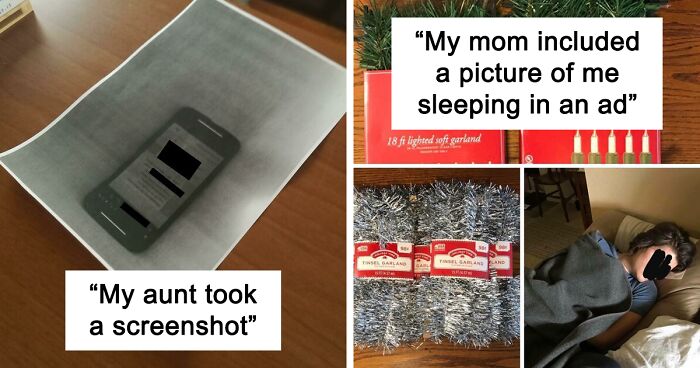
- Taking a screenshot of a Facebook post instead of sharing it, resulting in a tiny, blurry image inside another tiny, blurry image.
- Uploading forty nearly identical photos of a sunset because choosing one would be unfair to the other thirty-nine.
- Joining a local group and introducing themselves with a full biography, three hobbies, and a note that they make an excellent potato salad.
- Responding to “Does anyone recommend a plumber?” with “My cousin Dennis was a plumber until his back surgery in 2009.”
- Warning everyone about a suspicious white van that turns out to be a cable company vehicle parked in front of a house.
- Posting a photo of a receipt because a store charged 12 cents more for bananas, and the public deserves transparency.
- Using Facebook Marketplace as a personal garage sale, historical archive, and gentle reminder that “they do not make things like this anymore.”
- Uploading a picture of a pothole every Monday until the city repairs it, thereby becoming the neighborhood’s unofficial infrastructure department.
3. The Family Album Era
- Commenting “Who are these people?” beneath a grandchild’s group photo, despite everyone being clearly labeled in the caption.
- Tagging every family member in a photo of a roast turkey because, technically, everyone did eat it.
- Posting a baby photo and adding a detailed birth story that makes every adult child quietly reach for the privacy settings.
- Using the “feeling” feature with total sincerity: “Feeling blessed at Walmart.”
- Sharing a vacation photo from 2004 with the caption, “This came up on my memories. We were younger then.” The comments immediately become emotional.
- Uploading a low-angle selfie that captures mostly forehead, ceiling fan, and an unexpected amount of nostril.
- Writing “LOL” after a sentence that is not funny, simply because it appears to be the traditional digital farewell.
- Posting a long message about a childhood friend they have not seen in 50 years, only for that friend to comment, “I’m right here.”
- Accidentally going live while trying to take a photo, creating six minutes of silent footage from inside a purse.
- Sending a voice message that begins with, “I don’t know if this is recording,” followed by a complete twenty-minute family update.
- Adding a public birthday message to someone’s timeline, then calling them immediately to make sure they saw it.
- Sharing a “copy and paste if you agree” post, but adding, “I do not know how to copy and paste, but I agree very strongly.”
- Commenting on their own photo with “This is me,” just in case the family needed identification assistance.
- Using one heart emoji, one praying-hands emoji, and one accidental eggplant emoji, then calling a grandchild for an emergency explanation.
- Ending every Facebook post with “Please do not share,” which of course makes everyone briefly wonder what happened.
Why “Old People Facebook” Is So Funny
The best funny senior social media posts work because they reveal a collision between old-school communication habits and new-school digital behavior. For decades, a message had a clear destination: a phone call went to a person, a letter went in an envelope, and a family update happened around a kitchen table. Facebook flattened all of that into one glowing screen where a private note, a public statement, a local announcement, and an advertisement can sit side by side.
That confusion is universal. Younger users also post in the wrong group, send messages to the wrong person, misread sarcasm, and mistake a bot for a real human. Older adults simply tend to approach the platform more directly. They take the words at face value. They answer a question because it was asked. They offer useful context because useful context is polite. They see a “What’s on your mind?” box and, by goodness, they answer honestly.
That sincerity is the secret ingredient. A post about a lost dog becomes a heartfelt neighborhood rescue mission. A photo of lunch becomes evidence that someone cooked with love. A birthday greeting becomes a formal announcement with enough warmth to heat a small town. In a digital world overflowing with irony, the lack of irony can be surprisingly refreshing.
The Rule: Laugh With, Not At
There is a thin line between affectionate social media humor and plain old ageism. A funny Facebook mistake is funny because everyone has made some version of it. The person who writes “Congratulations” beneath a recipe video is not a technological dinosaur; they are a human being using a bizarre platform that changes its buttons every other Tuesday.
The most memorable examples celebrate personality: the overexplainer, the determined neighborhood watchdog, the proud grandparent, the person who has never met a glitter graphic they did not trust. These people are not side characters in the internet’s story. They are the reason family photo albums, local groups, hobby pages, and community updates often feel alive.
So enjoy the comedy, but keep the respect. Offer help without grabbing the phone. Explain what a private message is without making it sound like advanced quantum physics. And never underestimate the person who asks what a hashtag does; they may also know how to make soup that changes your entire outlook on life.
Experiences From the “Old People Facebook” Universe
Anyone who has spent time in a family Facebook group has probably witnessed the moment an older relative fully embraces the platform. At first, they are cautious. They might scroll quietly for weeks, observing the digital wildlife from a safe distance. They notice that people post photos of dinner, children, pets, yard projects, and mysteriously emotional quotes written over pictures of beaches. Then one day, they post their first comment: “Nice.”
That single word is often the beginning of an era.
Before long, they are checking in on everyone. Your aunt posts a photo from a restaurant, and your grandmother wants to know whether the mashed potatoes were homemade. Your uncle sees a picture of a new car and immediately asks about fuel economy, warranty coverage, and whether the dealership “gave you a decent deal.” A cousin shares a photo of a new haircut, and suddenly three relatives are comparing it to a style from the late 1980s.
These experiences can be hilarious, but they also create a record of connection. Facebook becomes a digital porch where people stop by, wave, ask questions, and occasionally overshare with the confidence of someone who believes every neighbor needs the full story. A person who might not text much can still leave a heart beneath a graduation photo, a comment under a birthday post, or a cheerful reminder that they are thinking about you.
The funniest moments usually come from earnestness. Consider the grandparent who comments on every photo with “Beautiful children,” even when the photo is clearly a bowl of macaroni. Or the family member who discovers GIFs and spends two weeks replying to serious news with dancing penguins. Or the neighbor who posts, “Can anyone recommend a good dentist?” and receives a ten-paragraph response about root canals, insurance, and the decline of customer service since 1994.
There is also a strange emotional power in old people Facebook. Older relatives often treat social media as a memory box. They share scanned wedding photos, school portraits, old recipes, military snapshots, and stories that younger relatives may never have heard in person. A slightly blurry photo can spark a comment thread full of names, dates, family jokes, and unexpected history. Suddenly, Facebook is not just an app. It is the place where someone remembers who stood next to whom at a wedding in 1968.
That is why the kindest response to a confusing post is usually not laughter alone. It is laughter, followed by help. Show someone how to adjust privacy settings. Explain why they should not post an address, bank details, travel plans, or every answer to an online quiz. Help them recognize scam messages and fake friend requests. Teach them how to use video calls, photo albums, group chats, and the mute buttonespecially the mute button.
And when they accidentally comment “Happy birthday” under a furniture ad, resist the urge to turn it into a family legend too quickly. They are learning a language that keeps changing, and they are doing it in public. That takes courage. Besides, one day you may be the person asking why your refrigerator keeps recommending videos, and an 18-year-old will be quietly trying not to laugh.
Final Thoughts
“Old People Facebook” is comedy gold because it captures something deeply human: people trying to connect in a world full of unfamiliar buttons. The best moments are never about who is behind on technology. They are about warmth, curiosity, blunt honesty, and the accidental chaos that appears when real life meets social media. Laugh at the glittery good-morning graphics, the all-caps comments, and the marketplace novelsbut save a heart reaction for the people who make the internet feel a little more like home.