Researched and synthesized from reputable U.S. cycling publishers and bike-education organizations.
If bike gears have ever made you feel like you are trying to crack a secret code while also not falling over, welcome to the club. Nearly every rider has had that awkward moment: the hill appears, the legs panic, the chain clunks like a kitchen drawer full of silverware, and suddenly the ride becomes a full-body negotiation. The good news is that shifting gears on a bike is not mysterious, magical, or reserved for people who own suspiciously expensive sunglasses. It is a skill, and once you understand the rhythm, your rides get smoother, faster, and a whole lot more fun.
The best way to shift gears on a bike is simple: shift early, ease up on pedal pressure, use the rear gears for small changes and the front gears for bigger changes, and try to keep a steady cadence instead of mashing the pedals. That is the short version. The longer version is where the magic lives, because smart gear shifting can help you climb more comfortably, accelerate more efficiently, protect your drivetrain, and feel like you actually know what your bike is doing under you.
Whether you ride a road bike, mountain bike, hybrid, commuter, or e-bike, the basic rules are surprisingly similar. Once you learn how to read the terrain and react before your legs start filing formal complaints, you will shift with more confidence and less drama. Let’s get into the best bike gear shifting techniques, the mistakes to avoid, and what good shifting actually feels like in the real world.
Why Gear Shifting Matters More Than Most Riders Think
Your bike gears control how hard or easy it feels to pedal. In an easier gear, your legs spin more quickly with less force. In a harder gear, each pedal stroke moves you farther, but it takes more effort. The goal is not to stay in the hardest gear possible like some kind of heroic potato-powered locomotive. The goal is to find a gear that matches the terrain, your speed, and your energy level.
Good shifting helps you keep a smooth cycling cadence, which is just a fancy way of saying how fast your legs are turning. When your cadence is too slow, you end up grinding. When it is too fast, you start spinning like a cartoon character who just stepped on a banana peel. Most riders feel best somewhere in the middle, where the effort feels controlled and sustainable.
Shifting well also reduces wear on the chain, cassette, and chainrings. Translation: smoother rides now, fewer repair bills later, and less time standing in your garage staring at your bike like it has betrayed you personally.
The Best Way to Shift Gears on a Bike
1. Shift Before You Need To
This is the golden rule of bike gear shifting. If a hill is coming, shift into an easier gear before the climb bites back. If you wait until you are already grinding uphill at five dramatic pedal strokes per minute, the shift will feel rougher and your legs will be much less cooperative.
Think of gear changes as preparation, not emergency response. The best riders do not react late. They anticipate. They look ahead, notice the terrain changing, and make the adjustment while the pedals are still moving smoothly. If you remember only one thing from this article, remember this: shift early.
2. Keep Pedaling, but Lighten the Pressure
Your bike usually needs the chain to be moving in order to shift. That means you should keep pedaling while you change gears. But there is a catch: you want to ease off the pressure on the pedals for a moment as the chain moves from one cog or chainring to another.
Imagine handing your drivetrain a glass of water instead of a piano. If you are stomping hard on the pedals during the shift, the chain has to move under heavy load, which makes the change noisy, clunky, and harder on the components. A light pedal stroke during the shift makes everything smoother.
3. Use the Rear Gears for Small Adjustments
On most bikes with two shifters, the rear derailleur is your fine-tuning tool. The cassette in the back gives you smaller, more precise changes. If the terrain is rolling gently, if the wind picks up a little, or if you just want your cadence to feel more natural, the rear gears are usually the first place to adjust.
This is why experienced riders are always making little shifts in the back. They are not being fussy. They are keeping the ride efficient.
4. Use the Front Gears for Bigger Changes
If your bike has more than one front chainring, the front derailleur creates bigger jumps in gearing. Moving the chain between front chainrings is useful when the terrain changes more dramatically, like rolling into a longer climb or transitioning from a slow section onto a flat, open stretch where you want more speed.
A practical rule: use the front for the big move, then use the rear to dial it in. Think of the front shifter as changing the mood of the ride and the rear shifter as adjusting the volume.
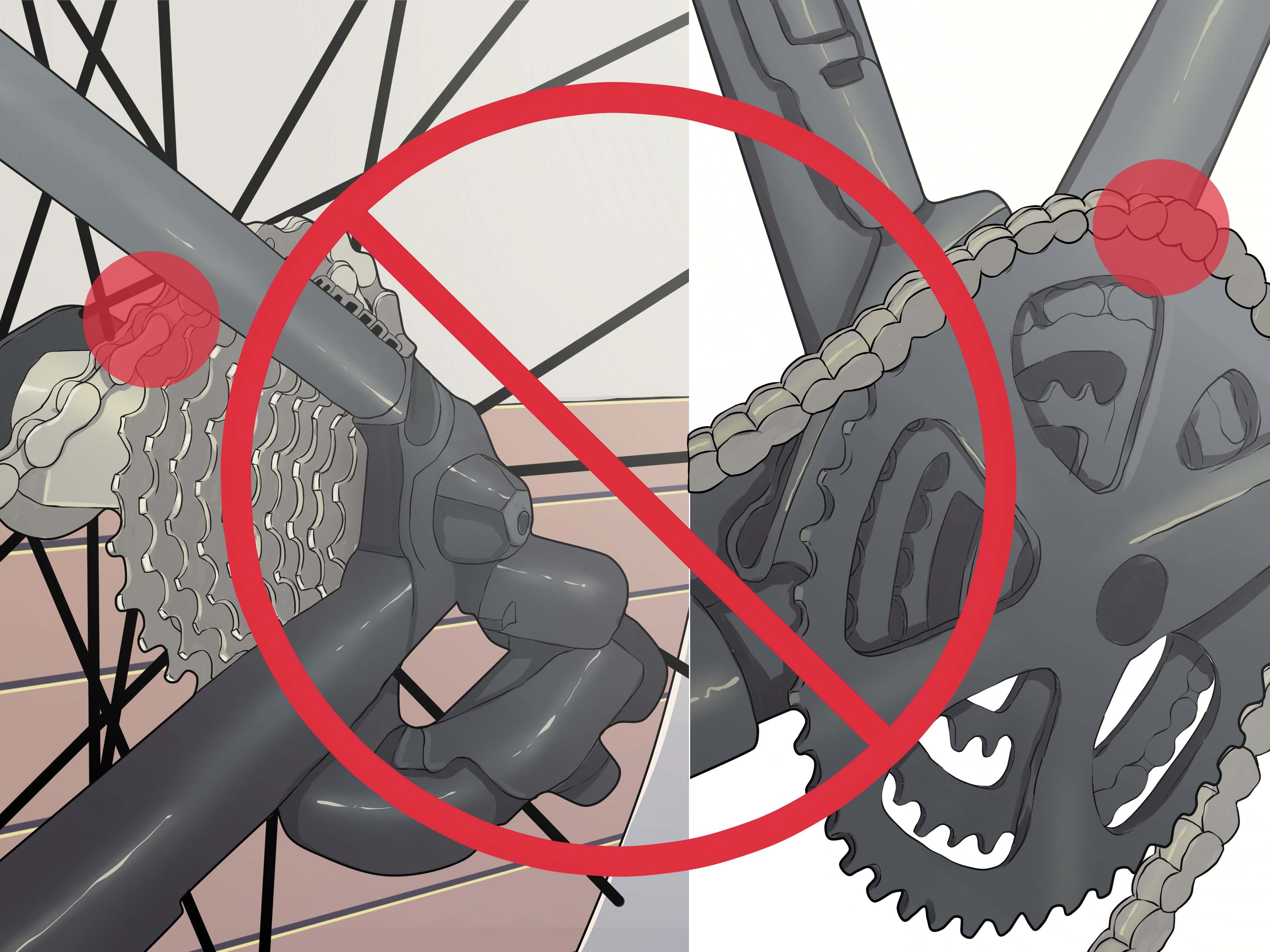
5. Avoid Cross-Chaining
Cross-chaining happens when the chain runs at an extreme angle, such as being on the big chainring in the front and the biggest cog in the back, or the small chainring in the front and the smallest cog in the back. Your bike can sometimes do this, but it is not ideal. It creates extra noise, extra wear, and the mechanical equivalent of a side-eye from your drivetrain.
Instead, try to keep your gear combinations balanced. If you are in the small front chainring, stay more toward the easier half of the rear cassette. If you are in the big front chainring, use more of the harder half of the rear cassette. Your bike will sound happier because it is happier.
6. Downshift Before You Stop
Coming to a red light in a hard gear feels fine right up until the light turns green and your first pedal stroke feels like trying to launch a refrigerator. A smart habit is to shift into an easier gear as you slow down. That way, when you start again, your legs can spin up comfortably.
This is especially useful for city riding, commuting, and anywhere stops happen often. It is one of those small skills that makes you look instantly more experienced.
7. Let Cadence Guide You
If your legs feel like they are bogging down, shift easier. If they are spinning wildly with no resistance, shift harder. A lot of riders overcomplicate shifting because they focus on the gear number instead of how the gear feels. Your body is actually a pretty good sensor. When the effort feels steady, smooth, and repeatable, you are probably in the right gear.
A Quick Reference Guide for Real-World Riding
| Riding Situation | Best Shift Move | Why It Works |
|---|---|---|
| Hill coming up | Shift to an easier gear before the slope steepens | Keeps cadence steady and avoids grinding under load |
| Riding into a headwind | Shift one or two gears easier | Maintains momentum without overloading your legs |
| Flat road with plenty of speed | Shift slightly harder | Lets you apply power without spinning out |
| Approaching a stoplight | Downshift before you stop | Makes restarting much easier |
| Rolling terrain | Use the rear gears often | Fine-tunes effort with smaller changes |
| Long sustained climb | Use a front shift if needed, then fine-tune in the rear | Handles bigger changes in resistance efficiently |
Common Gear Shifting Mistakes to Avoid
Waiting Too Long to Shift
This is the classic beginner move. You see the hill. You believe in yourself. You attack bravely. Three seconds later, your knees are writing a strongly worded letter. Shift earlier than you think you need to. Your future self will be thrilled.
Shifting Under Heavy Load
If you are standing, sprinting, or stomping on the pedals, a shift is more likely to feel rough. Try to soften your pedal pressure during the gear change. This matters on every bike, but it is especially important on e-bikes, where extra motor torque can put even more stress on the drivetrain.
Using Only One Side of the Drivetrain
Some riders never touch the front shifter because they are afraid of it. Others shift the front constantly and ignore the rear. Neither approach is ideal on a multi-chainring bike. The best way to shift gears on a bike is to use both systems for what they are built to do: front for major changes, rear for precise control.
Ignoring Weird Noises
If your bike clicks, hesitates, rubs, or refuses to shift smoothly, that is information. It may mean cable tension is off, the derailleur needs adjustment, the chain is dirty, the derailleur hanger is bent, or the battery on an electronic drivetrain needs charging. Smooth shifting should feel crisp, not argumentative.
How Shifting Changes by Bike Type
Road Bikes
Road bikes reward early, subtle shifts. Because speed changes quickly with wind, grade, and group pace, small rear shifts are your best friend. Good road riders are constantly making tiny adjustments to keep cadence smooth.
Mountain Bikes
On trails, timing matters even more. Shift before a punchy climb, before a technical feature, and before loose terrain where too much torque can wreck traction. Many mountain bikes use a 1x drivetrain, which simplifies things because you only manage the rear cassette. That means your timing and rear-shift choices matter even more.
Hybrid and Commuter Bikes
These bikes often live in stop-and-go environments, so downshifting before stops is huge. The goal is comfort and consistency, not heroic suffering in the wrong gear at every intersection.
E-Bikes
E-bikes still need smart shifting. In fact, they often need gentler shifting because the added motor assistance increases drivetrain load. Lighten your pedal force during shifts, especially on climbs and during acceleration. Your chain will thank you by not trying to leave the chat.
How to Know You Are Shifting Correctly
You are probably shifting well when these things are true:
- Your cadence stays fairly steady instead of swinging from grinding to frantic spinning.
- Your shifts feel quick and smooth rather than loud and crunchy.
- You can climb without feeling like you are leg-pressing a sofa.
- You can accelerate on flat ground without running out of gear immediately.
- Your chain is not constantly making unhappy rubbing noises.
Good shifting feels almost boring, and that is a compliment. The smoother you get, the less dramatic it all seems. The bike just flows.
What to Do If Your Bike Will Not Shift Smoothly
Sometimes the issue is technique. Sometimes the bike needs attention. If your shifting feels stubborn even when you are doing everything right, check the basics:
- Make sure the chain is clean and lubricated.
- Check whether the rear derailleur indexing is slightly off.
- Look for cable stretch or sticky housing on mechanical systems.
- Inspect for a bent derailleur hanger if shifting is inconsistent across the cassette.
- Charge the battery if you use electronic shifting.
- Have a bike shop inspect it if the chain skips, drops, or refuses certain gears.
Even the best shifting technique cannot fully compensate for a drivetrain that is dirty, worn, or out of adjustment. If your bike sounds like it is auditioning for a percussion section, maintenance may be part of the answer.
The Mental Trick That Makes Shifting Easier
Stop thinking about gears as numbers and start thinking about them as effort management. Ask one simple question as you ride: Can I keep this pedal rhythm comfortably for the next minute? If the answer is no, shift. That is it.
This mindset helps you react naturally to climbs, descents, fatigue, wind, and traffic without obsessing over what cog you are in. You are not trying to win an argument with your cassette. You are trying to keep the bike moving efficiently.
Rider Experiences: What Good Shifting Feels Like in Real Life
Once riders finally understand the best way to shift gears on a bike, the difference is immediate and oddly satisfying. One day the bike feels like a stubborn shopping cart with opinions. The next day it feels like a partner. That shift in confidence is not just mechanical. It is emotional. You stop dreading hills. You stop panicking at intersections. You stop treating the left shifter like it might explode if touched.
A lot of riders first notice the improvement on a climb. Before learning proper bike gear shifting, they often attack the hill in a gear that is too hard, lose momentum, and then try to shift at the exact moment their legs are under maximum strain. The result is a loud clunk, a messy cadence, and the sudden realization that gravity has no sense of humor. After learning to shift early, the same rider approaches the hill, clicks into an easier gear before the slope steepens, and keeps spinning. The hill is still a hill, but it is no longer a personal insult.
Commuters often describe a similar breakthrough at stoplights. Inexperienced riders tend to forget to downshift before stopping, so when the light changes they mash the pedals in a hard gear and wobble forward like a confused forklift. Once they build the habit of shifting down as they slow, starts become smoother and more controlled. The ride through town feels calmer, faster, and less like an accidental strength competition.
Weekend riders on rolling roads usually talk about rhythm. At first, every rise in the road feels like a disruption. They speed up, slow down, shift late, then overcorrect. But after some practice, they begin to use the rear cassette almost like a volume knob, making tiny adjustments to hold a comfortable cadence. Suddenly the ride has flow. They are not fighting the road anymore. They are reading it.
Mountain bikers often notice the payoff in traction and control. On a trail, a badly timed shift can break momentum right when it matters most. Shift too late on a steep punchy climb and you either stall out or stomp so hard you lose grip. Shift before the feature, lighten the pedal stroke, and everything feels cleaner. The bike stays balanced. The rear wheel hooks up better. The rider feels more composed. The trail has not become easier, but the rider has become smarter.
There is also a quieter, long-term experience riders mention after they improve their technique: the bike simply sounds better. Fewer chain rubs. Fewer crunchy shifts. Less drivetrain complaining. Your ride becomes less noisy, and that changes the feel of the whole outing. You hear the tires, the wind, your breathing, maybe the birds if they are feeling supportive. The machine stops interrupting every moment.
Perhaps the best part is psychological. Riders who learn how to shift bike gears properly start making decisions earlier and with more confidence. They look farther ahead. They anticipate terrain. They respond instead of react. That makes them feel stronger even before their fitness improves. And that confidence tends to spread into everything else: climbing, cornering, pacing, even how much they enjoy the ride.
So if shifting still feels awkward, that is normal. Every smooth rider you have ever seen had to learn it too. The skill is built one hill, one stoplight, and one slightly-too-late gear change at a time. Soon enough, you stop thinking, “What on earth is this bike doing?” and start thinking, “Oh, we’ve got this.” That is when cycling gets really fun.
Conclusion
The best way to shift gears on a bike is not about memorizing every possible combination or pretending your drivetrain is a graduate-level engineering exam. It is about timing, feel, and a few simple habits: shift before the terrain changes, keep pedaling lightly during the shift, use the rear for small adjustments, use the front for bigger ones, avoid extreme chain angles, and downshift before stopping.
Do that consistently, and your bike will feel smoother, your legs will feel fresher, and your rides will become far more enjoyable. In other words, shifting well is less about showing off and more about making cycling feel the way it is supposed to feel: efficient, fluid, and just a little bit addictive.