Some origin stories begin with radioactive spiders, ancient prophecies, or dramatic thunder cracking across the sky. This one began with a beach vacation, a long-awaited sunset, and one cloud with the timing of a villain entering a movie scene five minutes before the credits.
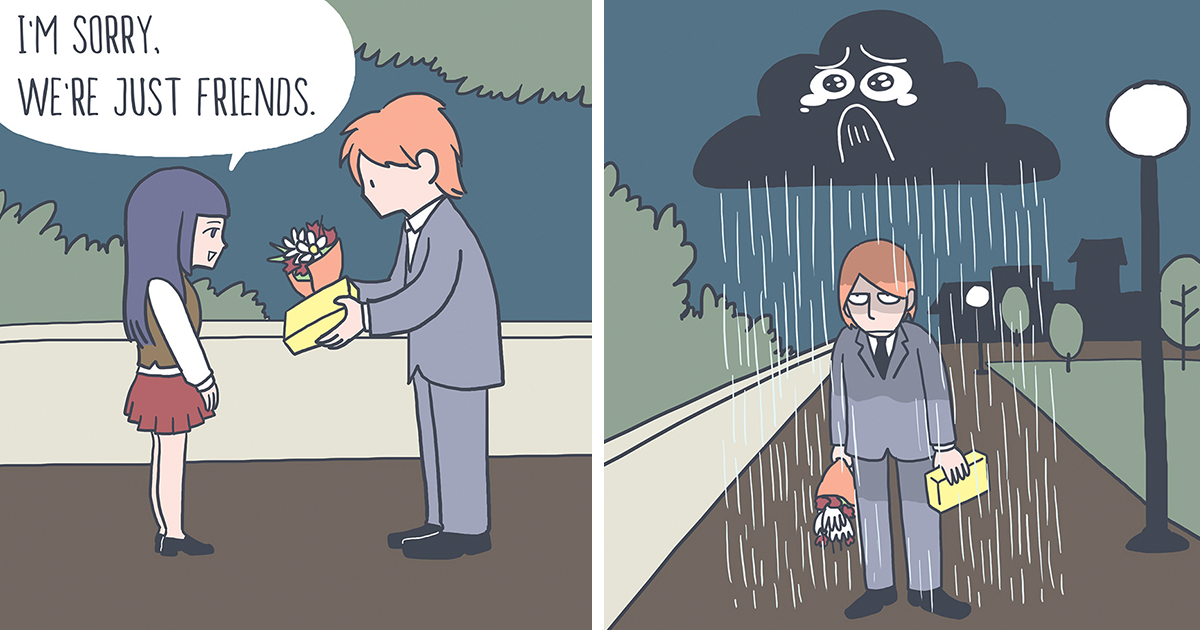
The idea behind the comic series “Hey Cloud!” is wonderfully simple: a cloud drifts into a perfect moment and ruins it. Not with lightning. Not with an evil monologue. Just by existing in exactly the wrong place at exactly the wrong time. That tiny act of atmospheric sabotage became the seed of a funny, relatable webcomic series by Nixon Siow, turning everyday frustration into visual comedy.
And honestly, that is why the concept works. Everyone has had a “cloud moment.” Maybe your phone died right before the photo. Maybe your food arrived cold after you spent 40 minutes fantasizing about it. Maybe your favorite pen disappeared the moment you needed to sign something important. Life rarely sends a full orchestra to announce inconvenience. It usually sends a cloud.
How One Ruined Sunset Became A Comic Idea
The premise is charming because it comes from a real, tiny disappointment. Picture it: you are finally at the beach, the sun is lowering itself toward the horizon like it has been practicing for a travel brochure, and you are ready for that golden-orange masterpiece. Then a cloud casually slides across the view. No apology. No customer service number. Just “hello, I live here now.”
Most people would sigh, take a worse photo, and move on. A comic artist looks at that same moment and thinks, “What if the cloud knew exactly what it was doing?” That is the magic switch. A random object becomes a character. A weather event becomes a prank. A small annoyance becomes a story.
In “Hey Cloud!”, the cloud is not just background scenery. It behaves like a mischievous little troublemaker, showing up at the worst possible moment. The comedy comes from personification: giving human motives to something that clearly has no calendar, no conscience, and, presumably, no LinkedIn profile. The cloud becomes funny because readers recognize the feeling behind it. We know the cloud is not actually plotting against anyone. But emotionally? Oh, it absolutely is.
Why Clouds Are Perfect Comic Villains
Clouds are one of nature’s most flexible characters. They can be fluffy and adorable. They can be dramatic and gray. They can look like a bunny, a dragon, or a mashed potato having an identity crisis. They can improve a sunset by catching pink and orange light, or completely block it like a theatergoer wearing a huge hat in the front row.
Scientifically, clouds play a major role in how sunsets appear. When the sun is low on the horizon, its light travels through more atmosphere. Shorter blue wavelengths scatter away, leaving longer red, orange, and pink wavelengths to dominate the sky. Thin, high clouds can reflect those colors beautifully, creating the kind of sunset people photograph so intensely you worry their phones may overheat. Low, thick clouds, however, can block the sunlight and flatten the whole sky into gray disappointment.
That contrast makes clouds funny. They are both the artist and the vandal. One day they paint the sky like a masterpiece. The next day they stand directly in front of the masterpiece and say, “What sunset?”
The Power Of Observational Humor
The best slice-of-life comics often begin with a small observation. Not a huge plot twist. Not a giant battle. Just a moment so ordinary that it almost escapes attention. A cloud blocks a sunset. A coffee cup leaks. A sock vanishes in the laundry. A person tries to act normal in public and fails with Olympic-level commitment.
Observational humor works because it tells the reader, “You are not the only one who noticed this.” That tiny recognition creates connection. The reader laughs partly at the joke and partly at the relief of seeing their private irritation turned into something playful.
In a comic series like “Hey Cloud!”, the joke does not need to be complicated. The setup is clean: someone expects a pleasant moment. The cloud enters. The moment collapses. The punchline is visual, immediate, and easy to understand. This is the strength of short webcomics: they do not need a long runway. They can land the joke in a few panels before the reader’s thumb scrolls away.
Why A Simple Character Can Carry A Whole Series
A good recurring comic character does not always need a detailed backstory. Sometimes the character only needs one clear behavior. Garfield loves lasagna. The Road Runner keeps escaping. The “Hey Cloud!” cloud ruins things. That is enough to build expectation.
Once readers understand the rule, the fun comes from variation. Where will the cloud appear next? What peaceful scene will it interrupt? How much chaos can one little puff of vapor cause? A simple character gives the artist room to explore endless situations without needing to explain the concept every time.
1. The Character Is Instantly Readable
A cloud is visually simple. Round edges, soft shape, expressive face, and done. Readers do not need a guidebook. They know what they are seeing immediately, which allows the joke to move fast.
2. The Motive Is Absurd
The idea of a cloud intentionally ruining someone’s day is ridiculous in the best way. That absurdity keeps the tone light. The cloud is not terrifying. It is more like a tiny floating coworker who keeps scheduling meetings at 4:55 p.m.
3. The Conflict Is Universal
Everyone understands wanting a perfect moment and getting interrupted. The cloud simply gives that interruption a face. Once frustration has a face, it becomes easier to laugh at.
What Creators Can Learn From This Comic Origin Story
The story behind “Hey Cloud!” is a useful reminder for artists, writers, and content creators: inspiration does not always arrive dressed as inspiration. Sometimes it arrives as inconvenience.
Many creators wait for a grand idea before starting a project. They imagine a perfect concept, a perfect style, a perfect launch plan, and maybe a small choir of angels approving the thumbnail. But great comic ideas often come from noticing what is already happening. The real trick is not finding an idea. It is recognizing one before it floats away.
Start With A Feeling, Not A Plot
The feeling here is disappointment. More specifically, the comic captures the dramatic betrayal of a beautiful view being blocked by something completely indifferent. That emotional seed is strong enough to support many jokes. When creating your own comic, ask what feeling you want to exaggerate: awkwardness, impatience, hunger, envy, nostalgia, panic, or the very specific rage of stepping on a wet bathroom floor while wearing socks.
Turn The Problem Into A Character
One of the smartest creative moves is turning an abstract irritation into a visible figure. Bad luck can become a gremlin. Procrastination can become a sleepy monster. Anxiety can become a tiny alarm bell with legs. In “Hey Cloud!”, ruined timing becomes a cloud. Suddenly the problem can move, react, hide, smirk, and return for another joke.
Keep The Design Simple
Simple character design is powerful online because readers process it quickly. A clean shape, readable expression, and strong silhouette matter more than unnecessary detail. In webcomics, clarity is not laziness. It is hospitality. You are letting the reader understand the joke without making them solve a visual crossword puzzle first.
Why Webcomics Thrive On Small Disasters
Webcomics are built for the bite-sized drama of modern life. The format fits quick reading habits, social feeds, and mobile screens. A four-panel comic can deliver a full emotional arc: hope, interruption, reaction, punchline. That is basically the structure of a Greek tragedy, except with fewer swords and more snack-related despair.
Small disasters are especially useful because they invite exaggeration. A cloud blocking a sunset is mildly annoying in real life. In a comic, it can become a personal betrayal. The artist can enlarge the reaction, sharpen the timing, and let the cloud look smug. The result is not just a joke about weather. It is a joke about expectation.
This is also why readers share these comics. They are not only sharing artwork; they are sharing a mood. A funny cloud comic can say, “This is exactly how my day went,” without requiring a 900-word caption about office printers, traffic lights, and the sandwich that fell open-side down.
The Sunset As A Symbol: Beauty, Timing, And Interruption
A sunset is one of the few daily events that still feels special even though it happens, with impressive punctuality, every evening. People stop walking. Couples take photos. Travelers plan entire itineraries around it. The sunset asks very little from us: just look up for a few minutes and remember that the sky is showing off again.
That is why the interruption feels so funny. A sunset is supposed to be peaceful. A cloud blocking it is not tragic, but it is comically rude. The mismatch between the beauty of the moment and the pettiness of the interruption creates the joke.
In storytelling, contrast is fuel. Soft cloud versus dramatic sunset. Tiny inconvenience versus huge emotional reaction. Nature’s randomness versus human desire for control. The comic series works because it squeezes comedy out of that contrast without becoming mean or cynical. The mood stays playful. The cloud may be annoying, but it is also adorable enough that readers forgive it by the next panel.
How To Build A Comic Series From One Funny Moment
If you want to start a comic series from a small personal experience, the “Hey Cloud!” idea offers a practical blueprint. You do not need a complicated universe. You need a repeatable comic engine.
Find The Repeatable Conflict
Ask what can happen again and again in different forms. A cloud can interrupt sunsets, photo shoots, picnics, beach days, car washes, umbrellas, and dramatic movie-style moments. The conflict stays familiar while the setting changes.
Create A Clear Emotional Pattern
Readers enjoy rhythm. The character expects something nice. The cloud appears. The situation turns silly. The character reacts. This pattern becomes comforting because the audience knows the joke’s language, even when the punchline changes.
Let The Character Evolve Slowly
A simple comic character can gain personality over time. Maybe the cloud becomes proud of its chaos. Maybe it occasionally tries to help and still ruins everything. Maybe it meets other weather characters: an overdramatic thunderstorm, a shy rainbow, or a fog bank that refuses to explain itself. Growth does not have to mean deep lore. It can mean richer possibilities.
Why The “Hey Cloud!” Concept Feels So Relatable
At its heart, the comic is about the gap between what we imagine and what actually happens. We imagine the perfect sunset photo. Reality sends a cloud. We imagine a productive Monday. Reality sends an inbox that looks like it reproduced overnight. We imagine a peaceful cup of coffee. Reality sends the final sip directly onto a white shirt.
That gap is where comedy lives. The cloud is funny because it gives form to life’s interruptions. It reminds us that not every ruined plan needs to become a ruined day. Sometimes it can become a joke, a drawing, a series, or even a strangely lovable cartoon villain.
Experiences Related To “After A Cloud Destroyed A Sunset For Me, I Started This Comic Series”
Anyone who has tried to capture a perfect sunset knows the emotional journey. First comes confidence. The sky begins turning gold, and you feel like a nature photographer despite having wiped your phone camera on your shirt. Then comes urgency. The sun is sinking faster than expected, as if it has another appointment. You step around strangers, dodge beach towels, and line up the shot. For a moment, everything is perfect. The horizon glows. The ocean reflects warm light. You are ready to take the photo that will make your group chat say, “Wow,” or at least send one respectful emoji.
Then the cloud arrives.
It never rushes. That is the insulting part. A cloud does not sprint into position. It drifts with the relaxed confidence of someone who knows it cannot be removed by customer complaint. You watch it cover the sun inch by inch, and suddenly your breathtaking sunset becomes a gray blob with orange edges. The moment is still natural, still real, still technically “the sky,” but emotionally it feels like someone canceled the finale of a fireworks show and replaced it with a PowerPoint about humidity.
That kind of experience is exactly why the comic idea feels so satisfying. It takes a moment when we feel powerless and gives us a way to laugh. The cloud becomes a character because that is how frustration often works in our minds. We know the universe is not personally targeting us, but when the timing is bad enough, it feels personal. Your toast lands butter-side down. Your umbrella flips inside out in public. The elevator doors close just as you arrive. These things are not villains, but they audition for the role convincingly.
I have had similar cloud moments in ordinary life. Waiting all week to eat leftovers, only to discover someone else ate them. Charging a laptop all night, then realizing the charger was not plugged into the wall. Preparing a brilliant comment in a meeting, only for someone else to say it first and receive the thoughtful nods that were clearly meant for me. These are not disasters. No dramatic violin is required. But they are tiny interruptions of expectation, and that makes them perfect comic material.
The best part about turning these experiences into comics is that the disappointment shrinks. Once you draw it, exaggerate it, and give it a funny face, it stops being merely annoying. It becomes useful. The ruined sunset becomes the first panel. The cloud becomes the punchline. The bad timing becomes a repeatable joke. In a strange way, the cloud did not destroy the sunset after all. It redirected it. Instead of becoming one pretty photo, the moment became a whole comic series. That is a pretty good trade, even if the cloud still owes everyone an apology.
Conclusion: A Cloud, A Sunset, And A Surprisingly Big Lesson
“After A Cloud Destroyed A Sunset For Me, I Started This Comic Series” is more than a funny title. It is a reminder that creative ideas often hide inside small frustrations. A blocked sunset could have been forgotten as a minor vacation annoyance. Instead, it became the beginning of “Hey Cloud!”, a playful comic series built around mischief, timing, and the universal comedy of plans going slightly wrong.
The reason the concept works is simple: it turns inconvenience into character. The cloud becomes a symbol for every interruption we cannot control, from bad weather to bad timing to the tiny betrayals of daily life. By making that frustration cute, funny, and repeatable, the comic transforms annoyance into connection. Readers laugh because they recognize the feeling. They have met that cloud before, even when it was disguised as traffic, technology, laundry, or a suspiciously empty snack drawer.
In the end, the lesson is bright enough to survive even a blocked sunset: when life ruins the view, draw the cloud.
Note: This article is written as original, publish-ready content based on real publicly available information about the “Hey Cloud!” comic premise, sunset science, webcomic storytelling, and observational humor.