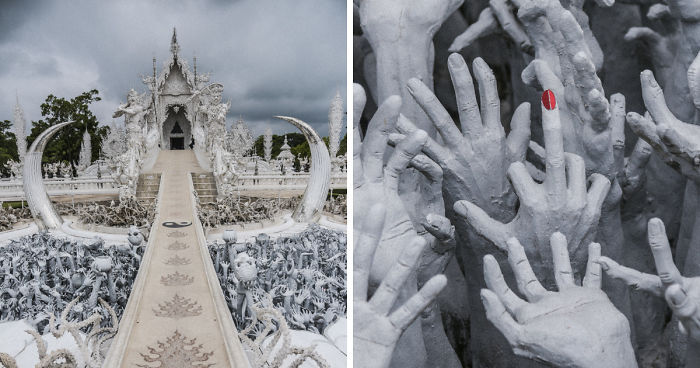
If castles, cathedrals, and snow globes had a very dramatic cousin with a philosophy degree, it might look like Wat Rong Khun, better known as Thailand’s White Temple. At first glance, the place seems almost too pristine to be real. It glows. It sparkles. It practically dares the sun to bounce off one more mirrored shard. Then you get closer and notice the outstretched hands clawing up from beneath the bridge, the demonic faces, the warnings about desire, greed, and modern chaos, and suddenly this dazzling monument feels less like a postcard and more like a spiritual plot twist.
That contrast is exactly why the White Temple fascinates so many travelers. It is beautiful, yes, but not in a calm, sleepy, “what a nice building” kind of way. It is beautiful in a strange, confrontational, unforgettable way. This is a place that looks heavenly from afar and unsettling up close. It wants you to admire it, but it also wants you to think. In that sense, the title says it perfectly: this white temple in Thailand is both heaven and hell at once.
Located near Chiang Rai in northern Thailand, Wat Rong Khun is one of the most recognizable religious-art landmarks in Asia. Yet calling it just a temple does not fully capture what it is. It is a contemporary spiritual artwork, a symbolic landscape, a deeply personal vision by Thai artist Chalermchai Kositpipat, and a tourist magnet that somehow still feels like a philosophical essay carved in plaster and glass. You do not just visit it. You decode it.
Why the White Temple Feels So Different From Other Thai Temples
Thailand is famous for extraordinary temples, but Wat Rong Khun does not behave like the others. Many of the country’s best-known temples impress visitors through age, royal history, or traditional grandeur. The White Temple, by contrast, is deliberately modern. It began in 1997 and continues to evolve, which already makes it unusual in a country where travelers often chase ancient sacred sites.
Its surface is what first shocks people. Instead of the rich gold tones common in many Thai temple complexes, the White Temple is covered in brilliant white plaster embedded with mirrored glass. The result is almost theatrical. In full daylight, it looks frosted, luminous, and slightly unreal, as if somebody built a palace out of ice and then gave it a graduate seminar on karma. The white color symbolizes purity, while the mirrored fragments catch the light in a way that suggests wisdom, awareness, and transcendence.
But this radiant exterior is not merely decorative. The design is meant to express Buddhist ideas about suffering, rebirth, morality, and enlightenment. This is where the temple becomes more than a photogenic landmark. Every bridge, statue, guardian figure, and ornamental detail is part of a larger message: getting to spiritual clarity is not supposed to be easy.
The Artist Behind the Vision
Wat Rong Khun exists because Chalermchai Kositpipat did not want to build something ordinary. A Chiang Rai native and a major Thai visual artist, he envisioned the White Temple as both an offering to Buddha and a lasting work of art. That combination matters. The site is religious in symbolism, but it is also deeply artistic, even personal. You can feel that tension everywhere.
Kositpipat did not create a minimalist retreat for quiet contemplation. He created a visual argument. He wanted a place that would stop people in their tracks, confront them with moral choices, and translate Buddhist teachings into a language modern visitors could recognize. That is one reason the complex often feels surprising, provocative, and sometimes even weird in the best possible sense. It is not trying to look ancient. It is trying to speak to the present.
And yes, it absolutely succeeds. Few sacred spaces in the world are so willing to mix reverence with spectacle. Fewer still are bold enough to say, in effect, “Come for the beauty, stay for the existential discomfort.”
From Hellish Hands to the Gate of Heaven
The most memorable sequence at the White Temple begins before you even enter the main hall. Visitors cross what is often described as the Bridge of the Cycle of Rebirth. Beneath it, a sea of sculpted hands stretches upward in desperation. Some seem to beg. Some appear to grasp. Some look as if they are reaching for rescue, while others seem determined to drag you down into their misery. It is one of the most photographed parts of the temple, and for good reason: it is haunting.
Symbolically, those hands represent worldly desire and suffering. Greed, lust, obsession, addiction, ego, and every other human weakness get folded into that visual field of torment. This is the “hell” side of the temple experience, though it is less about literal flames and more about the spiritual trap of wanting too much, clinging too hard, and losing yourself in temptation. Not exactly the vibe of a casual souvenir stop.
Then comes the crossing. The bridge itself becomes a moral path. You move from the realm of suffering toward a more sacred space, and the act of walking takes on symbolic weight. By the time you reach the Gate of Heaven, flanked by fierce mythic guardians, the message is clear: enlightenment requires passing through fear, desire, and illusion. The White Temple is not just showing you beauty. It is staging a transformation.
This is what makes the site feel like heaven and hell at once. The hell is not hidden away in some side corner. It is built into the experience of approaching holiness. The beautiful white structure ahead only becomes meaningful because of the darkness you symbolically pass through to reach it.
Inside the Temple: Where Buddhism Meets Pop Culture
If the exterior feels surreal, the interior pushes that feeling even further. Photography inside the ordination hall is not allowed, which somehow makes the place more legendary. People leave talking about the murals because they are so unexpected. Instead of only presenting traditional religious imagery, the interior includes references to modern pop culture and global catastrophe. Visitors have reported seeing figures such as Neo, Superman, and other familiar icons woven into apocalyptic scenes.
That artistic choice is not random, and it is definitely not decorative fluff. The murals function as commentary on the modern world: consumerism, violence, celebrity worship, technological anxiety, environmental destruction, and moral confusion. In simpler terms, the artist seems to be saying that today’s demons do not always wear horns. Sometimes they wear brand logos, movie references, and the shiny face of distraction.
This is one of the reasons the White Temple keeps showing up in travel features, architecture lists, and culture stories. It does something rare. It bridges ancient spiritual concepts and modern visual language without becoming shallow. It trusts viewers to make the connection. You recognize the imagery, then realize you are being asked to interpret it ethically, not just aesthetically.
In other words, the White Temple understands the modern attention span and then politely hijacks it for religious reflection. Frankly, that is impressive.
Why White Matters So Much Here
Color in sacred architecture is never accidental, and at Wat Rong Khun, white does almost all the heavy lifting. White suggests purity, but here it also suggests exposure. Gold can feel warm, luxurious, and celebratory. White is less forgiving. It reflects everything. Under northern Thailand’s sunlight, the complex becomes almost blinding, which creates a sense of intensity rather than softness.
That intensity matters to the temple’s message. Spiritual clarity is not always cozy. Moral truth is not always gentle. The White Temple uses brightness as a kind of pressure. The dazzling surface is gorgeous, but it also strips away comfort. You are not supposed to wander through it half-asleep. It keeps demanding your attention.
The mirrored glass amplifies that effect. The temple seems to shimmer with movement, almost as if it were alive. As the light changes throughout the day, the structure changes with it. Morning gives it crisp elegance. Noon makes it blaze. Late afternoon softens the edges. That shifting quality adds to the sense that the temple belongs to a symbolic space between worlds: earthly and divine, beautiful and unsettling, dreamlike and severe.
The Strange Humor of the White Temple
For all its serious symbolism, the White Temple is not humorless. In fact, one of the oddest joys of visiting is realizing that the site has a streak of wit. The most famous example is the golden restroom building, which has become a minor celebrity in its own right. Visitors often joke that it might be the most glamorous bathroom in Thailand, and honestly, that joke writes itself.
But the humor runs deeper than that. There is something knowingly mischievous in the temple’s mix of sacred gravity and pop references. The site is not mocking faith. It is using surprise as a tool. It understands that the line between awe and absurdity can be very thin. Instead of avoiding that tension, it leans into it.
This playful edge may be one reason the White Temple appeals to travelers who do not normally get excited about religious architecture. It has drama, beauty, symbolism, controversy, and yes, the occasional “Did I really just see that?” moment. It invites contemplation without acting stuffy about it.
What the White Temple Says About Modern Travel
There is a reason Wat Rong Khun performs so well online. It is wildly photogenic, instantly recognizable, and loaded with visual contrast. But reducing it to an Instagram stop misses the point. The White Temple is powerful because it resists being flattened into a simple travel image. You can photograph the bridge, the white carvings, the sky, the reflections, and the ornate details, but a photograph cannot fully communicate the emotional sequence of approaching the structure.
You have to feel the shift from fascination to discomfort to admiration. You have to sense how carefully the visitor’s journey has been choreographed. The White Temple is a reminder that the best travel experiences are not always the prettiest ones. Sometimes they are the places that unsettle you a little, make you laugh unexpectedly, and then leave you thinking about them much later than planned.
That is especially true in Chiang Rai, which often feels more relaxed and less saturated than some of Thailand’s other tourism giants. The White Temple stands out not just because it is visually spectacular, but because it turns a stop on the itinerary into an actual encounter with ideas. It asks more of visitors than a quick selfie and a caption about “paradise.”
Planning a Visit to Wat Rong Khun
If you are building a Chiang Rai itinerary, the White Temple is usually the star attraction, and for good reason. It sits just outside the city, making it easy to reach by taxi, tour, or local transport. Arriving early is wise. The light is beautiful, the weather is kinder, and the crowds are more manageable before the busiest part of the day begins.
Because this is still a religious site, even with all its contemporary quirks, respectful clothing matters. Shoulders and knees should be covered, and visitors should behave accordingly once inside the grounds. The murals may include pop culture, but that does not mean the temple has turned into a theme park. It has not.
If time allows, many travelers pair the White Temple with Chiang Rai’s other famous artistic landmarks, especially the Black House and the Blue Temple. Together, they create an unusually rich triangle of modern Thai spiritual and artistic expression. The White Temple dazzles and warns. The Black House broods. The Blue Temple glows. It is basically a crash course in how color, symbolism, and atmosphere can completely reshape a visitor’s emotional experience.
Why “Heaven and Hell” Is the Right Description
Calling the White Temple “heaven and hell at once” is not a dramatic exaggeration. It is the core of the place. Heaven appears in the purity, radiance, symmetry, and spiritual aspiration of the architecture. Hell appears in the grasping hands, demonic imagery, moral warnings, and reminders of human corruption. Neither side works without the other.
That duality is what makes Wat Rong Khun more than a beautiful building. It is a narrative. It is a moral landscape rendered in white plaster and mirrored light. It insists that beauty without struggle is superficial, and that spiritual progress requires confronting what is ugly, selfish, and destructive in human life. Heavy message, gorgeous packaging.
And that may be the ultimate reason this temple lingers in memory. It does not merely show you something heavenly. It forces you to pass the hellish parts first. Then, once you are dazzled, it reminds you that purity is not innocence. It is effort. It is discipline. It is clarity earned on the other side of temptation.
Extended Experience: What It Actually Feels Like to Be There
Reading about the White Temple is one thing. Standing in front of it is something else entirely. The first sensation is usually disbelief. Even if you have seen dozens of photos, the real structure has a way of short-circuiting your expectations. It is brighter than you imagine, more intricate than pictures suggest, and somehow both delicate and aggressive at the same time. You do not simply look at it. Your eyes keep scanning for a place to rest, and the building refuses to give you one. There is always another spike, another mirrored fragment, another carved flourish curling into view.
Then the emotional rhythm starts to change. You walk toward the bridge, and what seemed magical from a distance becomes unnerving up close. The outstretched hands below do not feel like an abstract art detail. They feel desperate. Suddenly the temple’s beauty becomes conditional. It is still beautiful, absolutely, but it is beauty framed by warning. You begin to understand that this place is not trying to soothe you. It is trying to wake you up.
That tension continues throughout the visit. There are moments when you feel genuine calm, especially when the white surfaces catch the light just right and the whole complex seems to hover against the sky. Then, almost immediately, some grotesque face, strange symbol, or surreal detail brings back the sense of disturbance. It is like being in a dream that cannot decide whether it wants to bless you or judge you. Oddly enough, that is part of the thrill.
There is also a crowd energy that adds to the experience. You will hear people laughing, gasping, whispering, and doing that universal tourist thing where they say, “Wow,” as if the word itself has just been invented. And honestly, fair enough. The White Temple earns every wow it gets. But the best moments are often the quieter ones, when you step slightly aside, stop trying to capture everything, and let the symbolism land. That is when the place stops being merely impressive and starts becoming memorable.
By the end of a visit, many people leave with a strange mix of emotions: delight, confusion, admiration, and a faint sense that they have just walked through somebody else’s spiritual fever dream in the most elegant way possible. That may sound dramatic, but so is the temple. Wat Rong Khun is not subtle, and it does not want to be. It wants to dazzle you, unsettle you, amuse you, and maybe even challenge the way you think about holiness, art, and modern life. Not bad for one very shiny temple outside Chiang Rai.
And that is why people keep talking about it long after they leave. The White Temple is not just another place you visited in Thailand. It becomes a story you tell: about the impossible whiteness, the mirrored sparkle, the hands reaching from below, the surreal murals inside, the strange sense of walking from chaos toward clarity, and the realization that a sacred place can be breathtaking without being comforting. Sometimes heaven is bright. Sometimes hell is close. At Wat Rong Khun, they stand right next to each other and somehow make each other more meaningful.