A lawn can go from neighborhood showpiece to suspicious brown quilt surprisingly fast. One week, the grass is green enough to make the neighbors jealous. The next, circular patches, rusty blades, or fuzzy growth appear as though the yard has joined a fungal rebellion.
The good news is that several dependable lawn fungicides can prevent or suppress common turf diseases. The less convenient news is that choosing one requires more than grabbing the bottle with the most dramatic “kills fungus” label. You need to consider the disease, grass species, active ingredient, application method, treatment timing, and fungicide resistance group.
This guide examines the products highlighted in Bob Vila’s lawn fungicide roundup, including BioAdvanced Fungus Control for Lawns, Spectracide Immunox, Scotts DiseaseEx, Syngenta Heritage G, and The Andersons Prophesy. It also compares their practical strengths using current manufacturer information, EPA registrations, university extension recommendations, and fungicide-resistance guidance.
Our Top Lawn Fungicide Picks
| Category | Product | Active Ingredient | Form | Best For |
|---|---|---|---|---|
| Best Overall | BioAdvanced Fungus Control for Lawns | Propiconazole | Hose-end liquid | Simple treatment of common residential lawn diseases |
| Best Value | Spectracide Immunox Multi-Purpose Fungicide | Myclobutanil | Liquid concentrate | Lawns, shrubs, roses, and ornamentals |
| Best Granular | Scotts DiseaseEx Lawn Fungicide | Azoxystrobin | Granules | Easy, mess-free broadcast applications |
| Best Broad-Spectrum | Syngenta Heritage G | Azoxystrobin | Professional granular formulation | Large lawns and preventive disease programs |
| Also Consider | The Andersons Prophesy | Propiconazole | Dispersing granules | Homeowners who prefer granular Group 3 protection |
Best Overall: BioAdvanced Fungus Control for Lawns
BioAdvanced earns the best-overall position because it combines broad residential usefulness with an application method that does not require measuring cups, mixing tanks, or advanced chemistry skills. The ready-to-spray version connects directly to a garden hose and treats up to approximately 5,000 square feet, depending on the exact package and label.
Its active ingredient, propiconazole, is a systemic fungicide. Instead of remaining only on the surface of the grass, it is absorbed into treated plant tissue. The product is labeled to control common diseases such as brown patch, dollar spot, rust, red thread, and powdery mildew, with protection lasting up to about 30 days under labeled conditions.
Why It Stands Out
The hose-end sprayer is the main attraction. It automatically combines concentrate with water as you spray, making it suitable for homeowners who would rather not perform lawn-care algebra before breakfast. Liquid coverage can also be useful when a disease affects the grass blades and crown rather than primarily the root zone.
BioAdvanced is particularly practical for medium-size lawns and early outbreaks. Its main limitation is that propiconazole does not control every turf pathogen, and repeated use of the same fungicide group can encourage resistant fungal populations.
Best for: Homeowners seeking an uncomplicated, broad-spectrum liquid treatment.
Best Value: Spectracide Immunox Multi-Purpose Fungicide
Spectracide Immunox is a concentrated liquid containing 1.55 percent myclobutanil. Bob Vila selected it as the budget-friendly option because one product can be used for labeled diseases on lawns and various ornamental plants. That versatility is helpful when powdery mildew is visiting the roses while brown patch is holding a conference in the fescue.
Unlike a hose-end product, the concentrate usually must be diluted according to the label and applied with an appropriate garden sprayer. This adds a few steps, but it gives the user more control over the quantity mixed and the area treated. The lawn coverage cited in Bob Vila’s comparison is up to roughly 2,500 square feet per 16-ounce bottle, although actual coverage depends on the disease and labeled application rate.
Where Immunox Makes Sense
Immunox is most appealing when you have a smaller lawn or several kinds of landscape plants needing disease protection. It is systemic and can offer preventive as well as early curative activity against labeled diseases.
The biggest practical drawback is the mixing process. Measuring too much wastes product and can injure plants; measuring too little may deliver disappointing control. A dedicated sprayer, gloves, long clothing, and careful label reading are not optional accessories.
Best for: Cost-conscious gardeners who want one concentrate for several labeled landscape uses.
Best Granular: Scotts DiseaseEx Lawn Fungicide
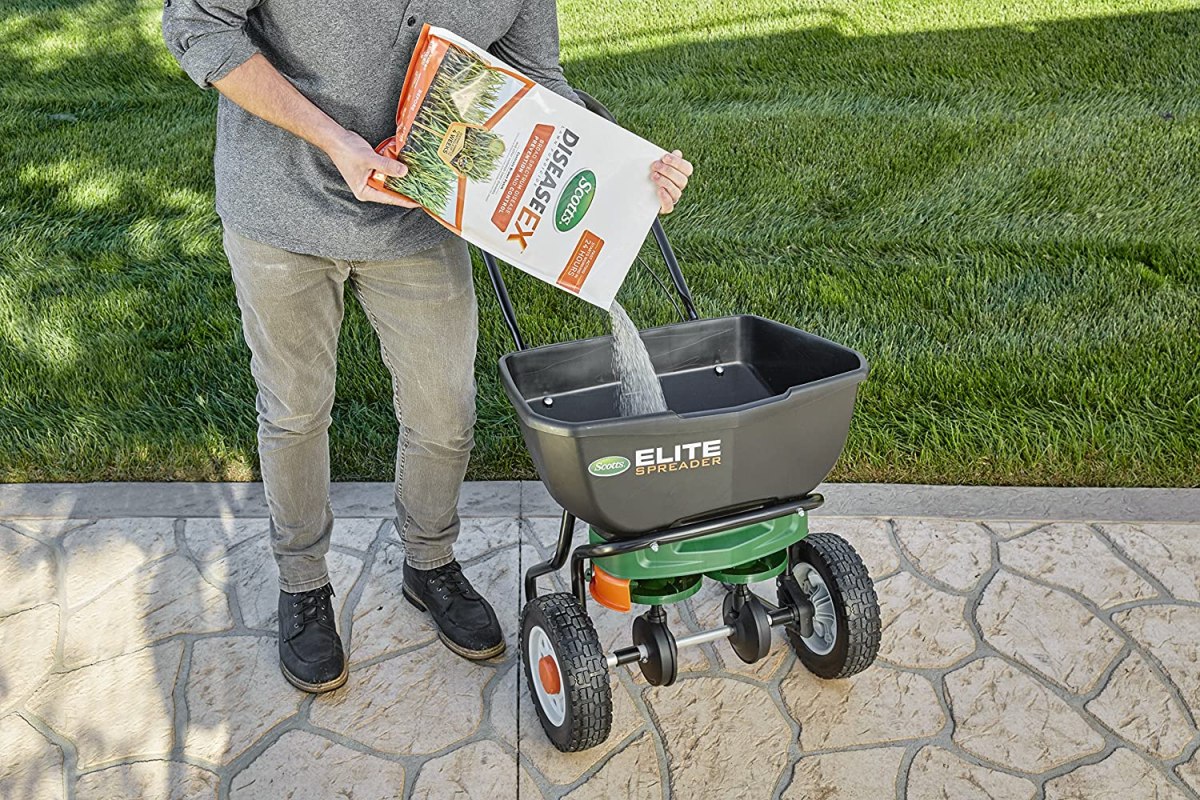
Scotts DiseaseEx is one of the easiest lawn fungicides to apply evenly over a typical suburban yard. The granules contain 0.31 percent azoxystrobin and are distributed with a drop or broadcast spreader. There is no spray drift, no hose dragging through flower beds, and no need to explain to the family why the patio suddenly smells like a chemistry lab.
Scotts states that DiseaseEx controls 26 listed lawn diseases, begins working within about 24 hours, and can provide up to four weeks of control. A 10-pound bag covers up to 5,000 square feet at the preventive rate, although higher curative rates reduce the total area covered. It may be reapplied at labeled intervals of approximately 14 to 28 days.
Diseases Covered
The label includes common problems such as brown patch, red thread, rust, powdery mildew, gray leaf spot, pink patch, snow mold, summer patch, necrotic ring spot, and certain Pythium diseases. That broad disease list makes DiseaseEx a useful preventive treatment when weather conditions favor several possible pathogens.
Granules must be applied uniformly. Walking too slowly can create overtreated stripes, while sprinting through the yard as though chased by hornets can leave untreated gaps. Calibrate the spreader, measure the lawn, and sweep stray granules off sidewalks and driveways before watering according to the label.
Best for: Homeowners who prefer a spreader over a sprayer.
Best Broad-Spectrum: Syngenta Heritage G
Heritage G is the more professional-style choice in this group. It contains 0.31 percent azoxystrobin in a low-dust granular carrier and is registered for residential lawns, parks, athletic fields, commercial turf, and golf-course applications. Syngenta lists protection against more than 20 turfgrass diseases and residual control lasting up to approximately 28 days.
A 30-pound bag may treat as much as 15,000 square feet at a low labeled rate. However, Heritage G rates vary substantially by disease. At higher rates, the same bag covers a much smaller area. Shoppers should therefore resist the temptation to compare products solely by bag size or the largest coverage number printed in an advertisement.
Why Advanced Lawn Enthusiasts Like It
The granules disperse with moisture and deliver azoxystrobin systemically. Heritage G is labeled for diseases including brown patch, gray leaf spot, leaf spot, snow mold, anthracnose, fairy ring, summer patch, take-all patch, and certain Pythium problems.
It is usually more expensive than consumer lawn products, but the formulation and large package can make sense for extensive turf areas. The label also contains restrictions that deserve serious attention, including precautions involving certain desirable plants and aquatic environments. Never let the “professional” label persuade you that professional precautions are unnecessary.
Best for: Large properties, recurring disease pressure, and experienced lawn-care users.
Also Consider: The Andersons Prophesy
The Andersons Prophesy uses 0.72 percent propiconazole on a dispersing granular carrier. It provides systemic control or suppression of diseases such as brown patch, dollar spot, snow mold, red thread, anthracnose, and other label-listed turf problems. The company positions it primarily as a preventive product, although the label also allows curative applications for certain diseases.
The patented dispersing-granule technology helps the particles break apart after watering, improving movement from the carrier into the turf. Bob Vila’s comparison lists a 25-pound bag as treating up to about 10,000 square feet, with protection commonly managed on roughly two-week intervals where disease pressure warrants repeat treatment.
Prophesy is a useful alternative for people who want propiconazole without spraying a liquid. Its limitation is that it belongs to the same resistance group as BioAdvanced and Spectracide Immunox. Switching among those three brand names does not create a meaningful mode-of-action rotation.
Best for: Granular application of a propiconazole-based fungicide.
How to Choose the Best Lawn Fungicide
Confirm That the Problem Is Actually a Disease
Brown grass does not automatically equal fungus. Drought stress, fertilizer burn, dog urine, compacted soil, dull mower blades, grubs, chinch bugs, buried construction debris, and sprinkler-coverage problems can create similar symptoms. Applying a fungicide to drought-stressed grass is like prescribing cough medicine to a lawn that is merely thirsty.
Look closely at individual blades, the pattern of damage, recent weather, and soil moisture. Disease clues may include defined leaf lesions, smoky or dark margins around expanding patches, powdery coatings, rust-colored spores, or areas that remain wet for unusually long periods. A county extension office or university plant-disease laboratory can provide a more reliable diagnosis than photographs alone.
Match the Product to the Disease
A product may be advertised as broad-spectrum and still omit the pathogen in your lawn. Check the disease table on the current EPA-approved label, not just the front of the bag. Brown patch, large patch, dollar spot, Pythium blight, summer patch, take-all patch, and gray leaf spot are different diseases that may require different ingredients, rates, watering instructions, and application timing.
University guidance also shows that chemical control is not always necessary. Fungicides are rarely needed for ordinary lawn rust, for example, and harmless slime molds usually disappear or can be removed by mowing, brushing, or rinsing.
Understand Preventive and Curative Performance
Preventive applications are made before infection becomes severe, generally when weather, previous history, and soil temperatures indicate high disease risk. Curative applications are made after symptoms appear. Curative does not mean the dead grass will spring back to life like a green zombie. It means the fungicide may slow or stop active infection while surviving turf recovers.
Many root and crown diseases respond best when treatment begins before obvious damage. Once leaf spot progresses into severe melting-out or roots have been extensively damaged, chemical treatment may produce limited visual improvement.
Choose Liquid or Granular Application
Liquid fungicides provide direct foliar coverage and can be convenient for targeted areas. Hose-end sprayers simplify mixing, while concentrates offer rate flexibility but require more equipment and care.
Granular fungicides are easier to broadcast over large lawns and eliminate spray drift. They require a properly calibrated spreader and usually need irrigation to release the active ingredient. Always follow the specific label because some products are watered in immediately, while others need time on the foliage.
Read the FRAC Group Number
The Fungicide Resistance Action Committee assigns fungicides to groups based on their mode of action and cross-resistance behavior. Propiconazole and myclobutanil are Group 3 DMI fungicides. Azoxystrobin is a Group 11 QoI fungicide. FRAC classifies Group 11 chemistry as having a high resistance risk and advises resistance-management practices.
This matters because rotating BioAdvanced, Spectracide Immunox, and Prophesy would still mean repeatedly using Group 3 chemistry. Likewise, alternating Scotts DiseaseEx with Heritage G would repeatedly use Group 11 azoxystrobin. A genuine rotation changes the group number, provided both products are labeled for the target disease and use site.
How to Improve Results Without Applying More Chemicals
Fungicides work best as one part of an integrated lawn disease program. Irrigate deeply but less frequently, and water early enough for grass blades to dry during the day. Reduce standing water, improve compacted soil, remove excessive thatch, mow at the recommended height, and keep mower blades sharp.
Avoid excessive quick-release nitrogen during periods favorable to brown patch or large patch. Lush, tender growth can be highly susceptible to infection. At the same time, severely underfed turf may be more vulnerable to dollar spot, so the goal is balanced fertility based on the grass species and a soil testnot a fertilizer buffet followed by regret.
For warm-season lawns, pay close attention to temperature restrictions and turf-safety warnings. Mississippi State Extension has cautioned that some DMI fungicides may injure warm-season turf when applied under hot conditions. The current product label and regional extension recommendations should override generic online schedules.
Safety Tips for Lawn Fungicide Application
- Read the entire current label before opening the package.
- Wear the personal protective equipment required on the label.
- Keep children and pets away during application and for the labeled reentry period.
- Prevent granules and spray from entering storm drains, ponds, streams, or drainage ditches.
- Do not guess at the lawn’s square footage or application rate.
- Never assume that doubling the rate will produce twice the control.
- Store concentrates and granules in their original containers.
- Follow local disposal rules for leftover pesticide and empty packaging.
The EPA evaluates pesticide products before they may be sold in the United States, but safe and legal use still depends on following the approved label. Directions concerning rates, protective clothing, environmental hazards, application sites, and annual limits are requirements, not friendly suggestions printed to fill space.
Experience Notes: What Using Lawn Fungicides Actually Teaches You
The first practical lesson is that diagnosis saves more money than bargain hunting. A homeowner may spend $25 on fungicide, apply it twice, and conclude that the product is uselessonly to discover that the brown patch was caused by poor sprinkler coverage. Before treatment, inspect the soil beneath healthy and damaged grass. Compare moisture, look for grubs, tug gently on the turf, and examine several grass blades under bright light.
The second lesson is to measure the lawn rather than trusting memory. A yard described as “about 5,000 square feet” has an uncanny ability to become 8,500 square feet once the product starts running out. Divide irregular lawns into rectangles and triangles, calculate each area, and subtract patios, driveways, planting beds, and swimming pools. This simple step improves coverage and prevents accidental overapplication.
Granular products reward a steady walking speed. A useful approach is to apply half the required amount while walking north to south, then apply the other half east to west, but only when the label and spreader instructions permit split-direction application. The crossing pattern reduces obvious streaks and missed lanes. Marking the spreader wheel path can also help maintain consistent spacing.
Liquid products reveal the importance of weather timing. Spraying immediately before a thunderstorm may wash away a protectant treatment or move pesticide away from the target area. Spraying during strong wind invites drift onto vegetables, flowers, vehicles, and the neighbor’s inflatable flamingo. Check the label’s rain-free period, choose a calm day, and avoid treating heat-stressed turf unless the instructions specifically allow it.
Another lesson is that the lawn often looks worse before it looks better. Fungicide can stop an infection, but damaged blades remain damaged until mowing and new growth replace them. Dead crowns or roots will not be repaired by another application. After disease activity has stopped, recovery may require appropriate fertilization, aeration, overseeding, sod replacement, or simply patience.
It is also easy to confuse brand rotation with chemistry rotation. A garage shelf holding four different packages may contain only two active ingredients. Write the active ingredient and FRAC group on a lawn calendar. Recording the date, product, rate, weather, irrigation, disease symptoms, and results turns random spraying into an actual management program.
Finally, the most successful fungicide treatment is often the one needed less frequently the following year. Correcting nighttime irrigation, scalping, poor drainage, excessive nitrogen, and thick thatch can reduce disease pressure more effectively than maintaining an endless chemical schedule. Fungicide is a toolnot a substitute for healthy turf management and definitely not lawn-flavored magic.
Final Verdict
BioAdvanced Fungus Control for Lawns is the most approachable all-around option for homeowners who prefer a ready-to-spray liquid. Scotts DiseaseEx is the standout granular choice for simple, broad residential coverage. Spectracide Immunox offers good value and landscape versatility, while Heritage G is better suited to large properties and experienced users. The Andersons Prophesy provides another convenient granular option for diseases controlled by propiconazole.
No single product is automatically the best lawn fungicide for every yard. The right choice is the one labeled for the diagnosed disease, compatible with the grass species, appropriate for current weather, and used within a resistance-management plan. Start with identification, correct the conditions encouraging disease, and then let the fungicide handle the job it was actually designed to do.
Note: Product formulations, state registrations, disease lists, coverage rates, and application restrictions can change. Consult the current EPA-approved product label and your local Cooperative Extension office before purchasing or applying a lawn fungicide.