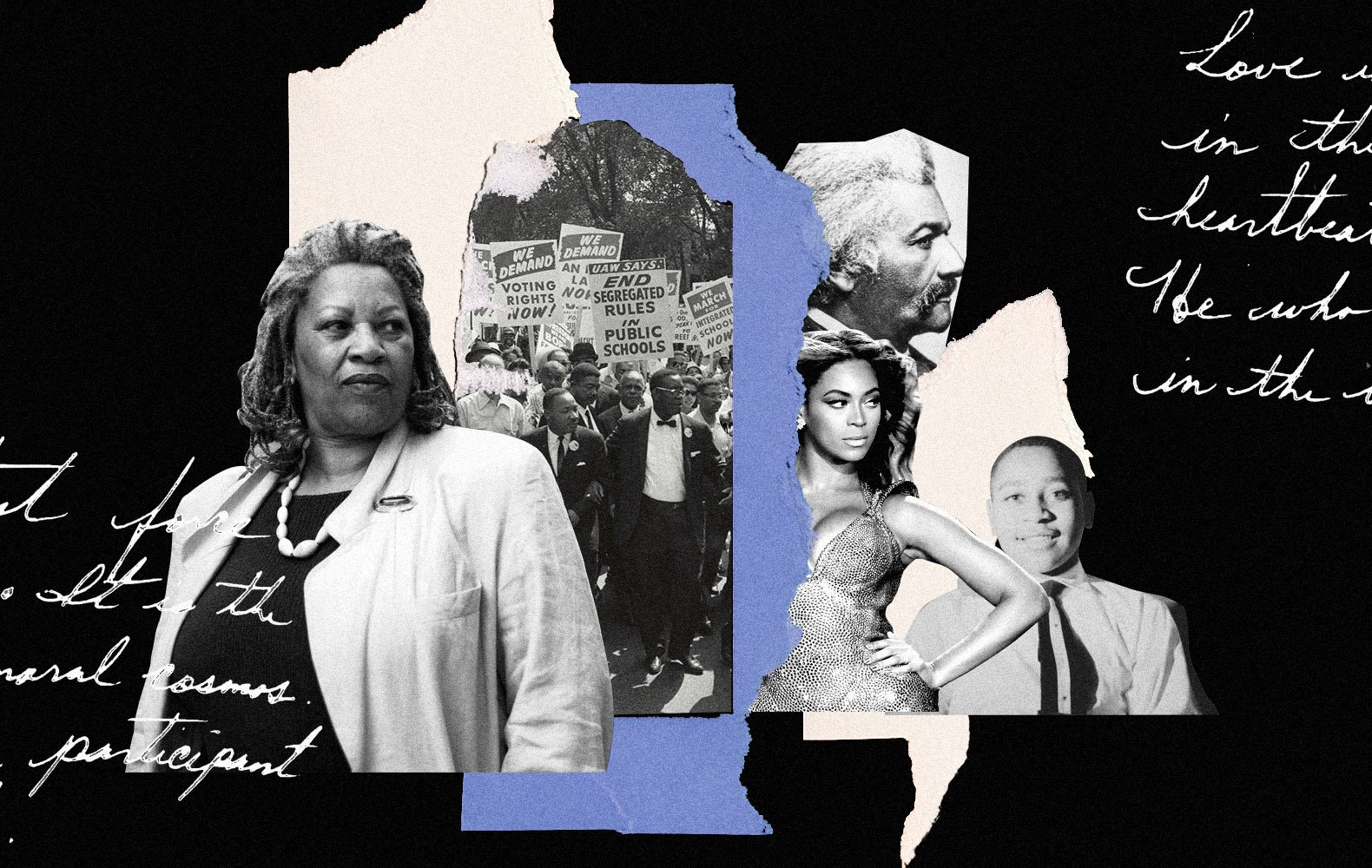
Teaching Black history well is not a matter of decorating a bulletin board with famous faces every February and calling the mission accomplished. Black history is American history, world history, literary history, scientific history, artistic history, and living community history. A culturally responsive approach treats that truth as a foundation rather than a seasonal add-on.
Culturally responsive teaching connects rigorous academic content with students’ identities, experiences, communities, and ways of making meaning. In a Black history classroom, that means more than adding diverse names to an unchanged lesson. It means examining whose voice frames the story, which questions students are invited to ask, and whether Black people appear as full human beings with ideas, families, humor, creativity, disagreements, and agencynot merely as victims of oppression.
The goal is not to make history comfortable. The goal is to make it accurate, intellectually honest, relevant, and humane. Done well, culturally responsive Black history instruction helps students build historical knowledge, analyze evidence, recognize complexity, and imagine how they might participate in civic life.
What Culturally Responsive Black History Teaching Looks Like
A responsive classroom begins with a simple principle: students should encounter Black history throughout the year and across the curriculum. Slavery, segregation, and racial violence must be taught honestly, but they should not become the entire storyline. Students also need access to Black resistance, institution-building, intellectual traditions, entrepreneurship, art, faith communities, scientific achievement, family life, political debate, and joy.
This approach avoids two common traps. The first is the “heroes and holidays” model, in which a few extraordinary figures appear briefly and then vanish from the syllabus. The second is the “suffering-only” model, in which Black people enter the narrative primarily when harmed by others. Both approaches shrink a vast history into a thin worksheet. Culturally responsive teaching restores scale, context, and human complexity.
Teach Black History All Year
Black history should be woven into the chronology of the course rather than placed in a February parking lot. A unit on the American Revolution can include Black Loyalists, Black Patriots, petitions for freedom, and the contradictions between liberty and enslavement. A westward expansion unit can examine Black homesteaders, cowboys, soldiers, entrepreneurs, and Indigenous-Black relationships. A lesson on industrialization can include Black labor organizers, inventors, business districts, and the Great Migration.
Year-round integration also works beyond social studies. English classes can study Phillis Wheatley Peters, Frederick Douglass, Zora Neale Hurston, James Baldwin, Gwendolyn Brooks, Octavia Butler, and contemporary writers. Music classes can trace spirituals, blues, jazz, gospel, hip-hop, and regional traditions. Science and mathematics courses can examine the work of Black researchers while also discussing the institutions, networks, and barriers that shaped their careers. This is not an extra unit. It is a more complete curriculum.
Center Agency, Resistance, and Joy
When lessons focus only on what was done to Black people, students may leave with a distorted message: oppression acted, while Black communities merely endured. A stronger curriculum asks what Black people built, argued, protected, invented, loved, celebrated, and resisted.
For example, a lesson on abolition should not present freedom as a gift handed down by a few powerful White leaders. Students can study freedom petitions, escape narratives, Black conventions, abolitionist newspapers, mutual-aid societies, military service, and organized resistance. During a civil rights unit, they can examine the strategic disagreements among local organizers, students, clergy, labor leaders, lawyers, artists, and national organizations. History becomes more interesting when students discover that movements had planning meetings, budget problems, personality clashes, tactical debates, and people who still had to eat lunch.
Joy matters, too. Black life has never been defined solely by struggle. Family photographs, dance, foodways, fashion, sports, neighborhood traditions, poetry, comedy, religious life, and celebrations can help students understand how people created beauty and belonging under every kind of circumstance. Joy is not a detour from serious history; it is evidence of humanity.
Build Lessons Around Strong Sources and Better Questions
Use Primary Sources as the Main Course
Primary sources allow students to encounter the language, choices, and perspectives of people who lived through the past. Letters, photographs, newspaper pages, oral histories, court records, maps, advertisements, songs, speeches, organizational flyers, and government documents turn students from passive note-takers into investigators.
Instead of asking students to memorize that the Great Migration happened, place a railroad map beside a Black newspaper advertisement, a family letter, a photograph of a crowded station, and an oral-history excerpt. Ask: What pushed people to leave? What attracted them to particular cities? What risks did they face? What did migration change for families, neighborhoods, music, labor, and politics?
Sources should be contextualized. Students need to know who created a document, for whom, under what conditions, and for what purpose. They should also learn that archives contain silences. Government records may describe Black communities through the eyes of officials. A newspaper may exclude certain voices. A photograph may capture one moment while hiding what happened before or after. Analyzing those gaps is part of historical thinking.
Ask Questions That Invite Inquiry
Weak questions produce weak learning. “Who was Rosa Parks?” may yield a copied paragraph. “How did years of organizing make the Montgomery bus boycott possible?” opens the door to networks, strategy, labor, gender, local leadership, and mythmaking.
Useful inquiry questions include:
- How did Black communities define freedom in different eras?
- What forms can resistance take besides public protest?
- How did geography shape Black culture and political action?
- Whose interests are served by the way a historical event is remembered?
- How do art, music, and literature preserve evidence that official records miss?
- What changed after a major legal victory, and what did not?
These questions encourage students to compare evidence, notice competing interpretations, and move beyond trivia. They also create room for students to bring prior knowledge and community history into the conversation without requiring any student to speak for an entire racial group.
Create a Classroom Where Difficult History Can Be Studied Honestly
Prepare Yourself Before Preparing the Slides
Culturally responsive teaching starts with teacher learning. Educators should audit their materials for missing voices, stereotypes, outdated terminology, decontextualized images, and narratives that center White observers while treating Black people as background characters. They should also anticipate where their own knowledge is thin.
A teacher does not need to know everything before beginning, but should be willing to verify facts, consult scholarship, revise materials, and say, “I need to research that before I answer.” That sentence is not a classroom disaster. Pretending to know is usually the bigger adventure.
Establish Discussion Norms and Emotional Safety
Lessons about slavery, racial terror, segregation, and present-day racism can provoke anger, grief, defensiveness, fear, or silence. Clear norms help students engage without turning the classroom into either a debate tournament or a group therapy session.
Teach students to challenge ideas with evidence, avoid slurs except when academically necessary and carefully framed, distinguish discomfort from harm, and refrain from asking classmates to represent a racial group. Give students time to write before speaking. Offer multiple participation formats, including pair discussion, anonymous questions, source annotation, and reflective exit tickets.
Teachers should avoid simulations that ask students to reenact enslavement, auctions, forced migration, segregation, or racial violence. Such activities can trivialize trauma and place students in humiliating roles. Source-based inquiry, testimony, maps, timelines, and carefully facilitated discussion can create intellectual and emotional engagement without turning historical suffering into classroom theater.
Respond to Misconceptions Without Shaming Students
Students may repeat inaccurate ideas they have heard elsewhere. A productive response separates the learner from the claim: “Let’s test that statement against the evidence.” This keeps standards high while making revision possible.
Teachers can ask students to identify the source of a belief, compare it with primary and secondary evidence, and explain why a simplified myth might remain popular. The purpose is not to win a verbal duel. It is to model how informed people change their minds.
Connect National History With Local and Personal Context
Local history makes large themes visible. Students can investigate school integration, housing restrictions, migration patterns, neighborhood businesses, local newspapers, churches, civic clubs, labor campaigns, music venues, monuments, or the history behind street names. A national policy becomes easier to understand when students see how it shaped a familiar block, school, park, or transit line.
Community knowledge can enter the classroom through oral histories, guest speakers, family artifacts, museum collections, and partnerships with libraries or historical societies. Participation should be voluntary and respectful. Students should never be pressured to disclose painful family experiences or prove their cultural authenticity.
A strong local project might ask students to create a digital map of Black community institutions across several decades. Each location could include a photograph, a short sourced explanation, and a quotation from an oral history or newspaper. The finished work demonstrates research, writing, geography, media literacy, and public communication all at once.
Design Assessments That Measure Thinking, Not Decoration
A poster can be beautiful and still reveal very little historical understanding. Culturally responsive assessment gives students meaningful choices while maintaining clear academic expectations.
Students might produce a podcast episode, document-based essay, museum label set, annotated map, spoken-word piece with a historical commentary, mini-documentary, public-history proposal, or traditional research paper. Whatever the format, the rubric should assess accuracy, source use, context, reasoning, and communication.
Choice should not mean lower rigor. A student creating a podcast still needs a defensible claim, reliable evidence, acknowledgment of complexity, and careful editing. The medium changes; the intellectual work does not.
Common Mistakes to Avoid
- Starting and ending with slavery: Teach African civilizations, the diaspora, Black life after emancipation, and contemporary history.
- Using only famous individuals: Include organizations, communities, ordinary people, and collective action.
- Treating Black Americans as one uniform group: Explore differences in region, class, gender, religion, politics, migration history, and generation.
- Making oppression the only theme: Include joy, creativity, debate, love, institution-building, and everyday life.
- Using trauma as engagement bait: Graphic material requires purpose, context, warnings, and age-appropriate judgment.
- Expecting Black students to teach the class: Their perspectives may enrich discussion, but instruction remains the educator’s responsibility.
- Confusing celebration with analysis: Appreciation matters, but students also need evidence, context, causation, and complexity.
Experiences and Classroom Scenarios: What the Work Teaches Us
Note: The following are composite classroom scenarios based on widely used teaching practices rather than claims about one specific teacher or school.
One recurring experience begins with a curriculum audit. A teacher lays out every major person named in a semester’s materials and notices that Black figures appear mainly in units on slavery and civil rights. The problem is visible before anyone runs a spreadsheet: the timeline contains long stretches in which Black life seems to disappear. The teacher revises one unit at a time, adding Black sailors to the Revolution, Black organizers to labor history, Black towns to western expansion, and Black artists to modern cultural history. Students do not complain that history has become less American. They usually say it finally makes more sense.
Another common turning point occurs when a teacher replaces a lecture with a source set. During a Great Migration lesson, students examine train schedules, letters, job advertisements, photographs, and oral histories. One group notices that economic opportunity and racial danger appear in the same family story. Another sees that moving north did not end discrimination. A third tracks how relatives helped newcomers find housing and work. The class moves from a simple push-pull chart to a richer conclusion: migration was a family strategy, a cultural transformation, and a political act.
Discussion routines also change outcomes. In one composite middle school classroom, students first answer a difficult question privately, then compare ideas with a partner before entering a whole-class discussion. This small adjustment matters. Students who need processing time arrive with language and evidence, while confident speakers are less likely to dominate. An anonymous question box reveals concerns students would not raise aloud. The teacher can address confusion without publicly embarrassing anyone.
A local-history project often produces the strongest engagement. Students research a neighborhood business district that once served Black residents excluded from other commercial spaces. They find advertisements, photographs, city-directory entries, and interviews with longtime residents. A building that students passed every day becomes evidence of entrepreneurship, segregation, community networks, and urban change. History is no longer somewhere else, wearing sepia tones. It is standing beside the bus stop.
Teachers also learn that a well-intended lesson can need revision. A dramatic simulation may leave students distressed or reduce a complex history to a role-playing exercise. Replacing it with testimony, maps, artifacts, and structured inquiry usually deepens rather than weakens engagement. Students do not need to pretend to be enslaved people to understand slavery. They need trustworthy evidence, careful context, and questions that respect the people whose lives they are studying.
Finally, responsive teaching often changes assessment. A student who rarely volunteers in discussion may produce a powerful audio documentary using family interviews and archival research. Another may create an annotated map that reveals patterns more clearly than a five-paragraph essay. The teacher still evaluates historical claims and evidence, but students have more than one route to demonstrate mastery. The lesson is not that every assignment must become a multimedia festival. It is that rigor and flexibility can share a desk.
Conclusion
Teaching Black history in culturally responsive ways requires more than adding a few names to a familiar script. It asks educators to redesign the script: teach Black history throughout the year, center agency and joy alongside oppression, use primary sources, connect national events to local communities, protect students during difficult conversations, and assess genuine historical thinking.
The result is not a niche curriculum for a particular group of students. It is a more accurate account of the United States and the wider world. Students gain the knowledge to recognize incomplete narratives, the skills to evaluate evidence, and the confidence to ask better questions. That is what good history teaching has always promisedeven when the textbook forgot to mention it.