Great on-screen chemistry is one of Hollywood’s weirdest superpowers. You cannot buy it, force it, or spray it on like expensive cologne. When it works, two actors can make eye contact across a diner table and suddenly the audience is ready to plan the wedding. When it does not work, even a huge budget, dramatic music, and a rain-soaked kiss cannot save the moment. Instead of romance, viewers get awkward pauses, stiff dialogue, and the unmistakable feeling that two attractive people are reading lines from opposite sides of a legal dispute.
To be fair, chemistry is subjective. One viewer’s swoon is another viewer’s shrug. Still, some couples keep popping up whenever fans and critics talk about romances that felt forced, mismatched, or just plain chilly. These are the pairings that made audiences lean forward and ask, “Wait, are they in love, or are they just trapped in the same scene?” From blockbuster superheroes to famous TV ships and glossy rom-coms, here are 20 on-screen couples that many viewers felt had negative chemistry.
1. Christian Grey and Anastasia Steele Fifty Shades of Grey
This romance was supposed to radiate dangerous magnetism, but for many viewers, it felt strangely mechanical. The movie asked the audience to believe this pair shared irresistible attraction, yet the emotional connection often came off as distant and awkward. Instead of sparks, the film delivered long stretches of polished discomfort, which is not exactly what a movie built on intensity was aiming for.
2. Valerian and Laureline Valerian and the City of a Thousand Planets
Luc Besson gave this pair a giant space opera and a lot of expensive visual fireworks. Unfortunately, the romance at the center often felt like it had been assembled from spare parts. Dane DeHaan and Cara Delevingne never quite sold the flirty banter as charming, and their dynamic landed more like bickering siblings than legendary partners saving the galaxy together.
3. Bruce Wayne and Rachel Dawes Batman Begins
Bruce and Rachel were written as lifelong emotional touchstones, but their scenes rarely had the warmth or history the story needed. Christian Bale played Bruce with icy focus, and Katie Holmes seemed stuck trying to generate tenderness against a wall of brooding billionaire gloom. Gotham had more romantic energy between Batman and his gadgets than Batman and Rachel.
4. Amsterdam Vallon and Jenny Everdeane Gangs of New York
Martin Scorsese’s epic has plenty of force, danger, and style, but the central romance often feels like the part everybody politely tiptoes around. Leonardo DiCaprio and Cameron Diaz are talented performers, yet their scenes together never seem to find the same rhythm as the rest of the film. The result is less doomed passion and more “historical side quest that wandered in by mistake.”
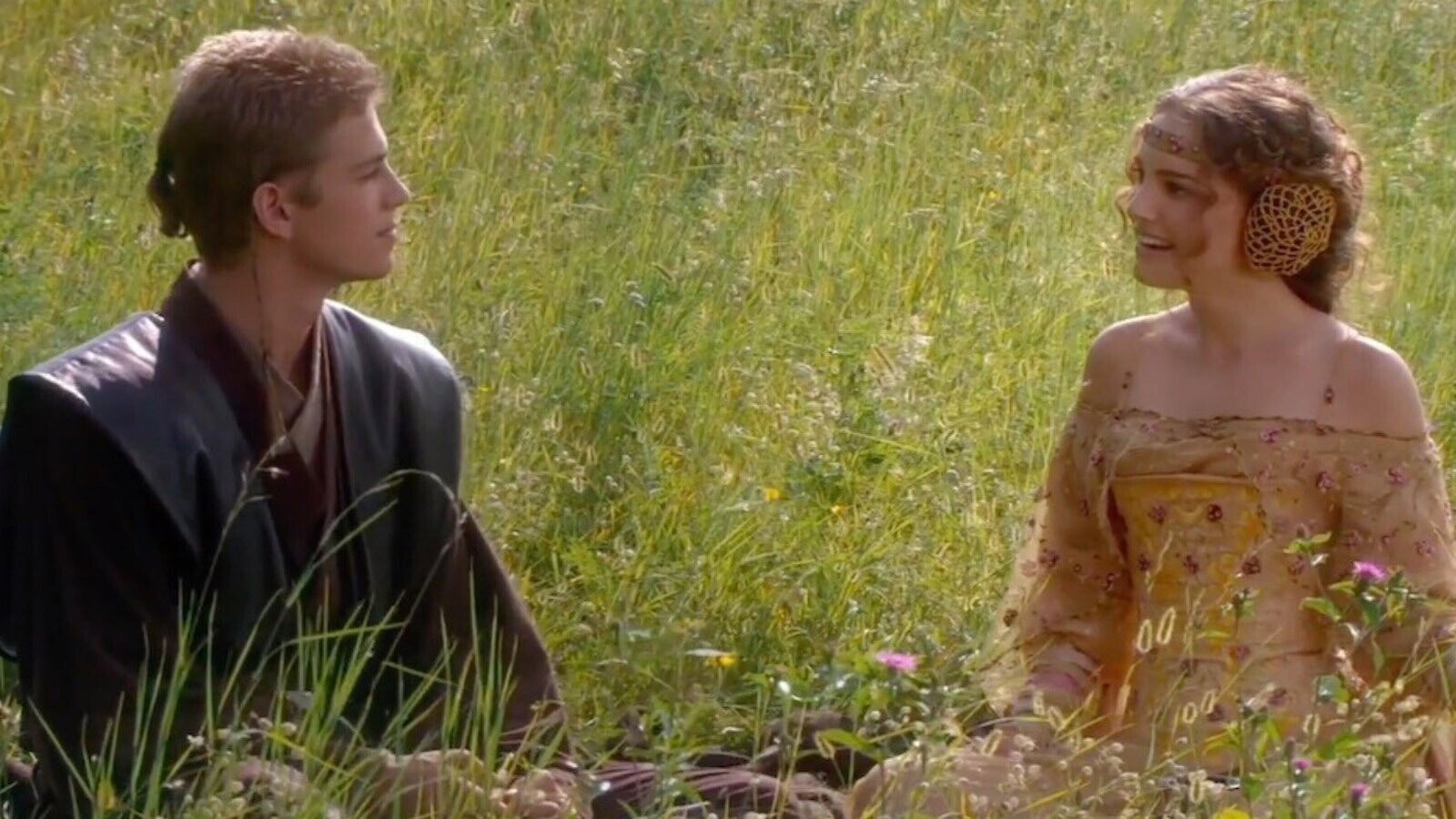
5. Anakin Skywalker and Padmé Amidala Star Wars: Episode II – Attack of the Clones
This pairing had one of the biggest jobs in franchise history: convincing audiences that these two would become the tragic heart of the Skywalker saga. That is a lot of pressure, and the movie did not exactly help with dialogue that clunked like a droid rolling down stairs. Natalie Portman and Hayden Christensen were left trying to create romance in a script that often made love sound like an uncomfortable Senate hearing.
6. Frank Tupelo and Elise Clifton-Ward The Tourist
Johnny Depp and Angelina Jolie sound like a guaranteed chemistry jackpot on paper. On screen, though, the pairing often felt weirdly inert. Both stars looked fabulous, the scenery was beautiful, and the wardrobe deserved its own agent, but the flirtation itself never fully came alive. The movie kept insisting on seduction while the leads seemed to be starring in two different films.
7. Harry Potter and Ginny Weasley Harry Potter film series
Book fans had years to imagine this romance landing with emotional weight, but the films never quite got there. Daniel Radcliffe and Bonnie Wright were handed key moments that should have felt tender, inevitable, and a little magical. Instead, many scenes arrived with the vibe of two nice people standing in a kitchen because the director said so. It remains one of the franchise’s most debated romantic misses.
8. Reed Richards and Susan Storm Fantastic Four
Superhero movies can survive silly villains, shiny CGI, and questionable science, but weak central chemistry is harder to hide. Reed and Sue were supposed to ground the story emotionally, yet the romance often felt undercooked. Their scenes lacked urgency, and the emotional temperature stayed lukewarm even when the world around them was supposedly in danger. Not ideal for Marvel’s first family.
9. Bruce Banner and Natasha Romanoff Avengers: Age of Ultron
The MCU has delivered some fun pairings, but Bruce and Natasha never quite convinced a lot of viewers. Their romance felt less like a natural evolution and more like a plot twist someone scribbled in the margin five minutes before lunch. The emotional logic was thin, the pacing was rushed, and the pairing came off as forced rather than fated. Fans were left asking why this relationship existed at all.
10. Steve Rogers and Sharon Carter Captain America: Civil War
Steve Rogers deserved a love story with emotional clarity. What he got here was a romance that many viewers found abrupt, awkward, and oddly uncomfortable. The movie never builds enough connection to make the kiss feel earned, and the pairing suffers from unfortunate narrative baggage that made audiences recoil instead of root. This was not a spark; it was a continuity headache in attractive packaging.
11. Thor and Jane Foster Thor films
Chris Hemsworth has charisma to spare, and Natalie Portman is one of the strongest actors of her generation, so this should have been easy. Yet the romance often felt more dutiful than electric. The films told us Thor and Jane were a great love, but the screen kept showing us a relationship that never fully deepened beyond plot necessity. It was cosmic, yes. Convincing? Not always.
12. Sersi and Ikaris Eternals
When a movie tells you two immortal beings have loved each other for thousands of years, you expect at least one look that melts the furniture. Instead, Sersi and Ikaris often felt emotionally distant, even in scenes designed to prove their bond. Their romance was meant to anchor the film, but for many viewers it floated off into the atmosphere like a balloon with commitment issues.
13. Adam Franklin and Emma Kurtzman No Strings Attached
A friends-with-benefits movie lives or dies by the central duo making audiences believe they are one bad decision away from kissing and one worse decision away from feelings. Ashton Kutcher and Natalie Portman had charm individually, but together the magic never quite clicked. The film kept reaching for breezy rom-com chemistry and came back with something closer to well-lit scheduling logistics.
14. Debbie Dunn and Peter Coleman Your Place or Mine
Reese Witherspoon and Ashton Kutcher in a rom-com sounds like a studio executive’s dream sentence. Then the movie happened. Much of the story keeps them physically apart, which is risky when the entire concept depends on the audience wanting them together. By the time they finally share more screen space, the film still struggles to ignite the emotional payoff. Cute premise, weak spark.
15. Cole Turner and Sadie Rhodes Ghosted
Chris Evans and Ana de Armas had worked well together before, which made this mismatch even more surprising. Ghosted keeps telling viewers they are watching a fun action-romance, but the flirtation often feels thin and the banter lands with a thud. It is one of those movies that keeps shaking the chemistry box and hoping something falls out. Mostly, it is packing peanuts.
16. Joey Tribbiani and Rachel Green Friends
Few TV romances have been debated more bitterly by sitcom fans. Joey and Rachel worked beautifully as friends, which is exactly why the romantic turn felt so strange to many viewers. Their storyline had the air of a writers’ room trying to create late-series chaos rather than following genuine character momentum. Instead of sweet tension, the pairing produced a collective audience wince.
17. Jackie Burkhart and Fez That ’70s Show
By the time this relationship arrived, many fans felt the series was digging through the couch cushions for romantic ideas. Jackie and Fez never developed the natural emotional build that makes a surprise pairing satisfying. The romance seemed more like a last-minute experiment than an earned connection, and for a lot of viewers, the mismatch highlighted the show’s fading momentum rather than refreshing it.
18. Archie Andrews and Veronica Lodge Riverdale
Riverdale was never exactly subtle, but even by its heightened standards, Archie and Veronica often felt more scripted than sincere. They had physical polish, sure, but emotional depth was another story. Their relationship could look glamorous in a still image, yet many scenes played like two very pretty people posing next to a neon sign that said “ROMANCE” in all caps.
19. Owen Grady and Claire Dearing Jurassic World
Chris Pratt and Bryce Dallas Howard both bring star power, but the romantic thread in Jurassic World often feels stapled onto the dinosaur chaos. The movie never fully earns the emotional pivot from snark and friction to rekindled affection. Instead, the relationship reads like a studio note that said, “Could we add a kiss here? Audiences like kisses. Also, dinosaurs.”
20. Ricki and Larry Gigli
Gigli is famous for many things, and none of them are “wow, what a believable love story.” Even with Ben Affleck and Jennifer Lopez arriving with massive celebrity attention, the onscreen dynamic failed to catch fire for many critics and viewers. The film became a cautionary tale: real-life buzz does not automatically translate into cinematic heat. Sometimes the tabloid spark stays in the tabloids.
Why Negative Chemistry Is So Easy to Spot
When a romantic pairing misses, audiences feel it instantly because chemistry is not just about kissing scenes or witty banter. It is about rhythm. It is about whether two characters seem genuinely curious about each other. It is about the tiny pauses, the shared glances, the sense that two people are changing because they are in the same room. When those ingredients are missing, viewers start noticing the seams. They notice the script straining. They notice the music working overtime. They notice the actors looking like they are waiting for someone to yell “cut.”
That is why negative chemistry can be more memorable than good chemistry. A great romantic pairing pulls you into the story. A bad one yanks you right out of it, hands you a flashlight, and invites you to inspect every awkward line reading like a building code violation. Once that happens, the audience is no longer shipping the couple. The audience is auditing them.
What Watching Low-Chemistry Couples Feels Like: A Viewer’s Experience
Watching a couple with negative chemistry is a strangely specific kind of entertainment. It is not always boring, and it is not always terrible. Sometimes it is accidentally fascinating. You can feel the movie trying to manufacture sparks with swelling music, dramatic close-ups, and dialogue that sounds like it escaped from a greeting card factory at midnight. Meanwhile, the actors are giving you body language that says, “We met five minutes ago and are waiting for the valet.”
As a viewer, the first stage is confusion. You wonder whether the movie is setting up a fake-out. Maybe these two are supposed to feel awkward because the story will eventually reveal they are wrong for each other. Then the film doubles down. There is another slow-motion stare. Another kiss shot like the fate of civilization depends on it. Another friend character smiles knowingly, as if everyone in the room can feel the fireworks. At that point, you realize the movie is serious, and that is when low-chemistry viewing becomes a whole experience.
The second stage is distraction. Instead of following the romance, your brain starts wandering into unhelpful but entertaining side quests. You begin wondering whether the actors got better chemistry with the coat rack, the sidekick, the villain, or the family dog. You compare every romantic scene to other films where the leads barely touched hands and still somehow generated enough tension to power a small city. It is not that you want to be mean. You just start noticing how hard the film is working to sell something you are absolutely not buying.
Then comes the accidental comedy phase, which may be the greatest gift negative chemistry can offer. The dialogue becomes funnier. The longing stares become less “destiny” and more “Did I leave the oven on?” The dramatic declaration of love can land like a customer service complaint. Entire franchises have been rewatched for this exact reason: not because the romance succeeded, but because the failure is so oddly mesmerizing. Bad chemistry can turn an ordinary scene into camp, and camp has survived on less.
There is also a more serious side to the experience. Weak chemistry exposes storytelling problems. It reveals when a relationship exists only because a formula demands one. It highlights when writers confuse proximity with passion, or when two characters are pushed together because the plot says “male lead plus female lead equals romance.” In those moments, negative chemistry becomes useful. It teaches viewers to expect more from love stories. It reminds us that attraction on screen needs emotional logic, not just attractive faces and an expensive soundtrack.
And yet, weirdly enough, these mismatched couples can become iconic in their own way. Fans debate them for years. Rewatch podcasts dine out on them forever. Entire corners of the internet gather to say, “I thought I was the only one!” So while positive chemistry gives us the romances we treasure, negative chemistry gives us something else: a shared cultural side-eye. In its own chaotic way, that is a kind of screen legacy too.
Conclusion
Hollywood has always loved the idea that casting two stars together is enough to create magic. Sometimes that works. Sometimes it creates romance for the ages. And sometimes it creates the cinematic equivalent of two magnets turned the wrong way. The 20 couples above are memorable precisely because their relationships asked audiences to feel a spark that many people simply never felt. In some cases, the writing was the culprit. In others, the performances never found the same frequency. And in a few especially glorious disasters, everything was wrong at once.
Still, there is something oddly fun about these pairings. They remind us how rare real chemistry is and why audiences know it when they see it. Genuine screen romance cannot be faked by lighting, lip gloss, or orchestral strings alone. When it is there, it is electric. When it is not, well, at least we get a very entertaining list out of it.