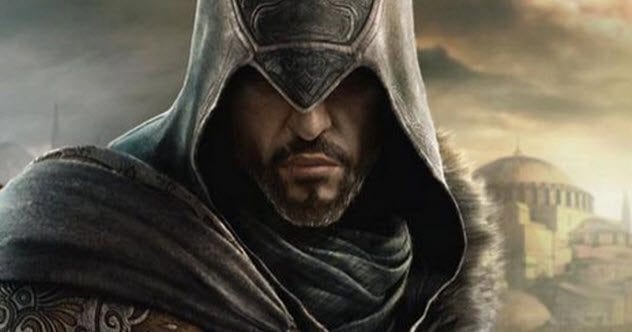
Note: This article is written for historical education. The “Original Assassins” refers to the medieval Nizari Ismailis of Alamut and Syria, whose reputation was shaped by real political killings, hostile chroniclers, Crusader rumor, and centuries of legend.
Introduction: Before “Assassin” Became a Video Game Word
Long before stealth games, movie ninjas, and suspiciously quiet people in hooded sweatshirts, the word assassin had a very specific historical background. It was attached in medieval Europe to the Nizari Ismailis, a Shi‘i Muslim community that built a network of fortified strongholds in Persia and Syria between the 11th and 13th centuries. Their enemies called them “Assassins,” a term wrapped in propaganda, fear, and more bad PR than a dragon with a tax problem.
The Nizaris did not command massive armies like the Seljuks, Abbasids, Fatimids, Crusaders, or Ayyubids. Instead, when surrounded by stronger powers, they relied on fortresses, diplomacy, intelligence networks, and targeted political assassination. Their fida’isdevoted agentsbecame infamous for reaching men who seemed untouchable: viziers, generals, caliphs, preachers, counts, and kings-in-waiting.
But history is rarely clean. Many murders were recorded by hostile medieval sources, and later writers loved turning the Nizaris into shadowy supervillains. Modern historians often use cautious language: “attributed to,” “reportedly,” or “traditionally blamed on.” That does not make the stories dull. If anything, it makes them more fascinating. The original Assassins lived in a world where politics was played with daggers, sermons, sieges, and enough betrayal to make a modern streaming drama look like a children’s puppet show.
Who Were the Original Assassins?
The “Original Assassins” were not a fantasy guild living under trapdoors. They were part of the Nizari branch of Ismaili Shi‘ism, associated above all with Hasan-i Sabbah and the mountain fortress of Alamut, captured in 1090. From there, the Nizari movement expanded into other strongholds across Persia and later into Syria, including places such as Masyaf.
Their enemies accused them of drugging recruits with hashish, hypnotizing young men with fake gardens of paradise, and turning murder into a sacred performance. Much of that is legend. The term “hashshashin” was likely an insult used by opponents, later misunderstood and exaggerated by Crusader and European writers. The reality was still dramatic enough: the Nizaris used assassination as a political weapon against officials who persecuted them, attacked their fortresses, or threatened their survival.
Below are ten of the most shocking murders attributed to the original Assassins. Some are well documented; others are wrapped in uncertainty. All show how a small mountain-based movement became one of the most feared names in medieval history.
10 Shocking Murders By The Original Assassins
1. Nizam al-Mulk: The Killing That Announced a New Kind of Fear
The assassination of Nizam al-Mulk in 1092 is often treated as the opening thunderclap of the Assassin legend. Nizam al-Mulk was no minor clerk misplacing scrolls in a dusty office. He was the powerful vizier of the Seljuk Empire, a statesman, administrator, patron of learning, and arguably one of the most influential men in the Islamic world.
According to traditional accounts, he was traveling near Nahavand or Sahna when a killer approached him disguised as a Sufi or dervish. The attacker got close enough to strike with a dagger. For the Seljuk elite, the message was terrifying: walls, armies, rank, and reputation could not guarantee safety.
Why was this murder so shocking? Because Nizam al-Mulk represented the heart of Seljuk authority. He had opposed Ismaili doctrines and supported campaigns against them. His death did not merely remove a political enemy; it advertised a new strategy. The Nizaris could not win a conventional war against the Seljuks, but they could make powerful men look over their shoulders every time a stranger approached with suspiciously humble manners.
2. Janah ad-Dawla: Murder Inside the Great Mosque of Homs
In 1103, Janah ad-Dawla, the emir of Homs, was killed in the Great Mosque of Homs. The location alone made the act shocking. Medieval political murders were already brutal, but killing a ruler in a sacred communal space carried extra symbolic force. It said, in effect, that even public worship could become a political battlefield.
Janah ad-Dawla had been connected to the turbulent politics of Syria, where local rulers, Seljuk power brokers, Fatimids, Crusaders, and emerging Nizari groups all competed for influence. A team of attackers reportedly struck him in the mosque. The murder demonstrated the Syrian wing of Nizari activity at an early stage and showed how assassination could be used to reshape local power.
The case also reveals a recurring pattern: the target was not always a distant emperor. Sometimes he was a regional strongman whose removal could shift the balance in one city or corridor. In medieval Syria, local politics was not “local” in the cozy town-hall sense. It was local in the “one gate controls the army road and three factions want it by breakfast” sense.
3. Khalaf ibn Mula‘ib: The Emir Cut Down in Apamea
Khalaf ibn Mula‘ib, the Fatimid emir of Apamea, was killed in 1106 inside Qalaat al-Madiq. His murder is frequently linked to early Nizari maneuvering in Syria, where control of fortresses mattered more than polite speeches. Apamea was strategically important, and whoever held it could influence the surrounding region.
Reports describe a sudden attack by a group of killers. Some accounts connect the plot to Abu Tahir al-Sa’igh and political allies who wanted Khalaf removed. The murder helped the Nizaris gain influence in and around the fortress. This was not random violence; it was political surgery performed with a dagger instead of a scalpel.
The shock comes from how targeted the killing was. The Assassins were not trying to destroy an entire city. They were removing a key person whose position blocked their interests. In a world of sieges and massacres, that could seem almost efficientmorally grim, yes, but strategically precise.
4. Fakhr al-Mulk: Like Father, Like Son, Like Tragedy
Fakhr al-Mulk, son of the murdered Nizam al-Mulk, was himself assassinated around 1106 or 1107. That detail gives the story a grim family symmetry. The father had been a towering Seljuk vizier; the son also served as a vizier and inherited not only political status but also danger.
Traditional accounts say the killer approached as a petitioner, a common tactic in medieval assassination stories. Petitioners had a legitimate reason to come close to officials, which made them ideal cover for attackers. In modern terms, it was the security nightmare hidden inside customer service.
The murder reinforced the idea that the Nizaris could pursue not only individual enemies but political families and networks. It also showed the vulnerability of bureaucratic power. A vizier needed to be accessible enough to receive requests, complaints, and court business. That access, essential to governance, could become fatal.
5. Ibn al-Khashshab: The Aleppo Judge Who Made Deadly Enemies
Ibn al-Khashshab, a qadi and influential leader in Aleppo, was killed in 1125. He was not merely a judge in the narrow legal sense. He was a major civic and religious figure in a city that stood at the crossroads of Syrian politics and Crusader pressure.
His murder is often connected to earlier violence against Nizaris in Aleppo. According to historical summaries, he had been associated with anti-Nizari actions, and his killing came after severe persecution or massacre of local Nizari supporters. If true, the assassination functioned as revenge and warning.
The circumstances are especially dramatic: he was reportedly attacked at night near his home after leaving the Great Mosque. The image is chillinga respected urban leader walking through a familiar quarter, only to find that politics had followed him into the dark.
6. Aqsunqur al-Bursuqi: The Atabeg Attacked in a Mosque
Aqsunqur al-Bursuqi, atabeg of Mosul and a major military figure, was killed in 1126 or 1127. Like several other victims, he was attacked in a religious setting, reportedly the Great Mosque of Mosul. The attackers are said to have come in a team, and Aqsunqur allegedly fought back, wounding some of them before dying.
This was not a quiet alley killing. It was a public strike against a powerful commander. The Assassins understood spectacle. A murder in a visible place multiplied fear, rumor, and political effect. A private death removes a person; a public assassination sends a message to everyone watching.
Aqsunqur’s murder also shows why medieval rulers feared infiltrators. A battlefield enemy could be scouted. A besieging army could be counted. But a handful of determined agents in a crowd could be almost impossible to stop. The lesson was simple and unpleasant: sometimes the smallest weapon in the room changed the largest political map.
7. Al-Amir bi-Ahkami’l-Lah: A Fatimid Caliph Falls in Cairo
In 1130, the Fatimid caliph al-Amir bi-Ahkami’l-Lah was killed in Cairo. His death shocked the Fatimid world and deepened an already messy web of Ismaili succession disputes. The Nizaris and the Fatimid establishment had split after the contested succession following al-Mustansir’s death. That split was not a polite theological disagreement conducted over tea. It involved legitimacy, power, imprisonment, death, and rival claims to the imamate.
Al-Amir’s murder has been attributed to Nizari agents in several historical accounts. A team of attackers reportedly struck him, and the political consequences were severe. The Fatimid dynasty entered further instability, including succession problems that weakened the caliphate.
What makes this case extraordinary is the target’s rank. Caliphs were not ordinary rulers; they claimed religious and political authority. Killing one was not just regicide. It was an earthquake in the symbolic order of the age.
8. Al-Mustarshid: The Abbasid Caliph Stabbed in Captivity
Al-Mustarshid, the Abbasid caliph, was killed in 1135 after being captured during conflict with the Seljuks. His death is one of the most sensational murders attributed to the Assassins because it involved the Abbasid caliph himself, the symbolic head of Sunni Islam.
Accounts vary, and some sources suggest Seljuk political involvement or at least convenience. But the traditional story credits a group of Nizari attackers who entered his tent and stabbed him repeatedly. If accurate, it was a breathtaking example of assassination inside a supposedly controlled military environment.
The killing was politically explosive. The Abbasid caliphate had already lost much of its direct power to military rulers, but the caliph still carried enormous religious prestige. To murder him was to strike at the idea of authority itself. It also proved how useful deniability could be. When many factions benefit from one man’s death, history becomes a crowded room full of suspects pretending to admire the curtains.
9. Al-Rashid: Another Abbasid Caliph Meets the Knife
Al-Rashid, son of al-Mustarshid, also died by assassination, traditionally attributed to Nizari attackers, around 1138. Two murdered Abbasid caliphs in the span of a few years was not just bad luck. It was a political horror story.
Al-Rashid had lost power and was living in a fragile political position. Reports place his killing in Isfahan or Mosul, with attackers who may have entered his service or approached him closely enough to strike. The details differ across sources, but the broader point remains: the Abbasid house could not escape the dagger.
This murder deepened the Assassins’ reputation as people who could reach anyone. When caliphs, viziers, and commanders all appeared vulnerable, fear became a political tool. Every ruler had guards. The problem was that guards were human, and humans could be deceived, bribed, converted, distracted, or simply outmaneuvered.
10. Conrad of Montferrat: The Crusader King Who Never Wore the Crown
Conrad of Montferrat may be the most famous Crusader victim associated with the Assassins. In 1192, he had just been elected king of Jerusalem but had not yet been crowned. Then, in Tyre, two attackers struck him in the street. One was killed, the other captured. Both were identified as members of the Assassin order.
The murder set off a storm of suspicion. Was Richard the Lionheart involved? Was Saladin behind it? Did local Frankish rivals benefit? Did the Nizaris act for their own reasons? Medieval politics rarely offers the courtesy of a single clean answer.
Conrad’s death was shocking because of timing. He was on the edge of kingship. One moment he was a political solution for the Crusader states; the next, he was a corpse and a conspiracy. The Assassins had struck not merely a man but a future that never happened.
Why These Murders Shocked the Medieval World
The original Assassins became famous not because they killed the most people, but because they killed the right people at the rightor wrongmoment. Their targets were chosen for political meaning. A vizier could represent an empire’s policy. A preacher could represent religious hostility. A count could represent Crusader power. A caliph could represent divine legitimacy in human form.
Their methods also amplified fear. They often struck in public, in mosques, near gates, on roads, or during moments when a ruler felt protected by routine. The psychological effect was enormous. A ruler can fight an army with another army. Fighting uncertainty is harder. You cannot easily arrest every petitioner, servant, guard, worshipper, or messenger without turning your court into a paranoid circus.
Still, it is important not to turn the Nizaris into cartoon villains. Medieval sources often came from their enemies, and later European legends added lurid fiction. The famous “drugged assassins in paradise gardens” story is not supported by solid evidence. What we can say is that the Nizari state used targeted killing as one survival strategy in a violent political world where larger powers also used massacre, siege, torture, and execution with enthusiasm. Nobody in the 12th century was handing out peace prizes at the city gate.
Experience-Based Reflections: Reading the Assassins Without Losing Your Head
One of the strangest experiences when studying the original Assassins is realizing how quickly legend tries to hijack history. You begin with a real mountain fortress, real political conflicts, and real murders. Then, suddenly, you are knee-deep in stories about secret gardens, drugged recruits, hypnotic masters, and medieval super-spies who sound as if they should have their own theme music. The challenge is separating the historical dagger from the decorative smoke machine.
Reading about the Assassins is also an exercise in humility. Many of the accounts were written by people who feared, hated, or misunderstood the Nizaris. That does not mean every report is false. It means the reader has to slow down. When a source says “the Assassins did it,” the better question is: who is saying that, when, and why? Medieval chroniclers could be careful observers, but they could also be political storytellers. Sometimes blaming the Nizaris was convenient, especially when a murder benefited several powerful men who preferred not to leave fingerprintsor whatever the 12th-century equivalent of fingerprints was. Probably a suspiciously clean dagger.
Another powerful experience is noticing how small groups can shape huge events when they understand pressure points. The Nizaris did not need to defeat the Seljuk Empire in open battle to influence Seljuk behavior. They did not need to conquer Jerusalem to affect Crusader politics. By targeting decision-makers, they forced larger powers to think defensively. That lesson is uncomfortable, but historically important: power is not always about size. Sometimes it is about leverage.
The stories also remind us that fear is a political technology. A single assassination could echo through courts, mosques, markets, and military camps. People who never saw a Nizari fida’i could still imagine one nearby. That imagination did work of its own. It made rulers suspicious. It made officials nervous. It made enemies exaggerate. Over time, exaggeration became reputation, and reputation became a word: assassin.
Finally, studying these murders encourages a more responsible view of historical violence. It is tempting to treat the Assassins as thrilling antiheroes or mysterious villains. The truth is more complicated. They were a persecuted religious-political community that sometimes used ruthless methods. Their enemies used ruthless methods too. The medieval Middle East was not a chessboard of saints and monsters; it was a crowded arena of survival, belief, ambition, and fear.
That is why the topic remains gripping. It is not just about murder. It is about how stories are weaponized, how reputations are built, and how history can turn a marginal group into a myth that survives for nearly a thousand years. The original Assassins still fascinate us because they occupy the shadowy border between fact and legendand because, frankly, history rarely gives us a cast this dramatic without charging extra.
Conclusion: The Blade, the Myth, and the Memory
The ten shocking murders linked to the original Assassins reveal a medieval world where authority was powerful but fragile. Nizam al-Mulk, Janah ad-Dawla, Khalaf ibn Mula‘ib, Fakhr al-Mulk, Ibn al-Khashshab, Aqsunqur al-Bursuqi, al-Amir, al-Mustarshid, al-Rashid, and Conrad of Montferrat all stood at important political crossroads. Their deaths were not random footnotes; they were events that shaped fear, diplomacy, propaganda, and historical memory.
The Nizari Ismailis of Alamut and Syria were real people, not just characters from legend. Their use of targeted assassination made them infamous, but their story was later distorted by enemies and embellished by European imagination. To understand them properly, we must hold two truths at once: the murders were real and shocking, but the mythology around them is often exaggerated.
That balance is what makes the original Assassins such a compelling subject for modern readers. Their history is a reminder that power can be challenged from the margins, that fear can travel faster than armies, and that a single dramatic act can echo through language itself. After all, every time we use the word “assassin,” we are speaking a small piece of medieval historyhopefully without anyone hiding behind the curtains.