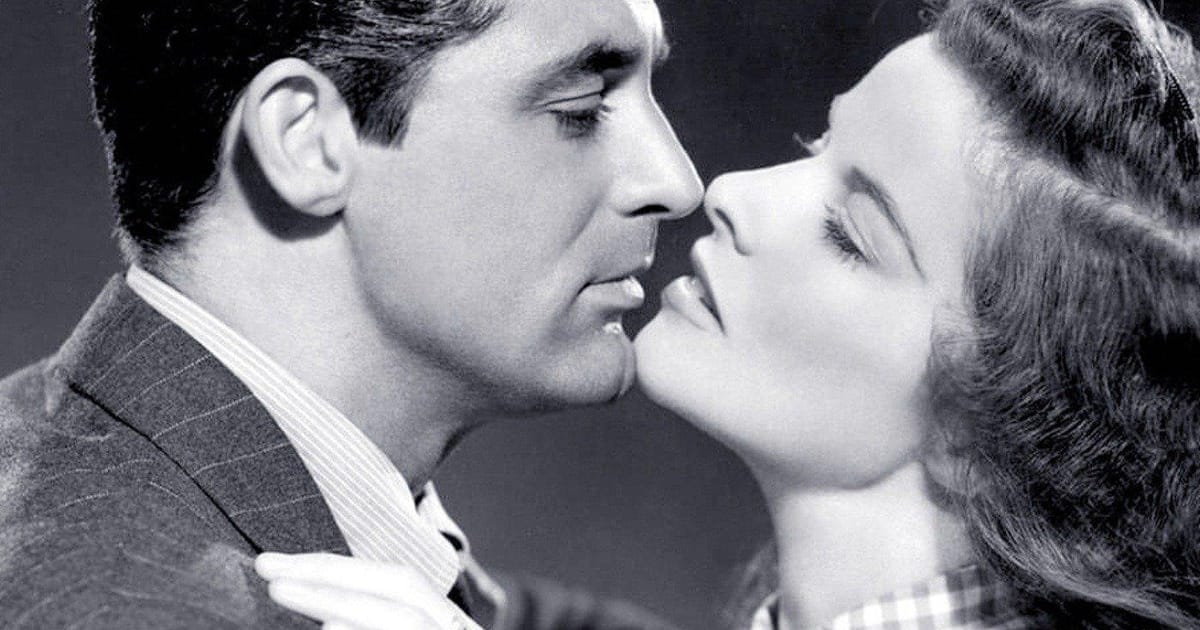
The Philadelphia Story is one of those classic Hollywood comedies that arrives wearing a tuxedo, holding a martini, and acting as if it has never once worried about rent. Released in 1940 and directed by George Cukor, this sparkling romantic comedy stars Katharine Hepburn, Cary Grant, James Stewart, Ruth Hussey, and John Howard in a story about pride, class, marriage, second chances, and the dangerous sport of talking too cleverly before breakfast.
At first glance, it sounds simple: Philadelphia socialite Tracy Lord is preparing to marry wealthy George Kittredge when her charming ex-husband C.K. Dexter Haven and tabloid reporter Macaulay Connor arrive to complicate everything. But the movie is not merely a love triangle. It is more like a love geometry exam, except everyone is beautifully dressed and the correct answer keeps changing.
This article offers rankings and opinions on The Philadelphia Story, including its performances, writing, comedy, romance, cultural reputation, and lasting value. Based on widely recognized film-history sources, critic ratings, audience platforms, and classic cinema commentary, the verdict is clear: this is not just an old movie people politely admire. It is still alive, still funny, and still sharp enough to cut glass.
Quick Ranking Summary: How Good Is The Philadelphia Story?
Overall ranking: 9.4 out of 10. That score reflects its elegant screenplay, exceptional cast chemistry, historical importance, and lasting influence on romantic comedy. The only reason it does not receive a perfect 10 is that some modern viewers may find its upper-class setting and gender politics slightly polished in that “everyone has a butler and a moral lecture” kind of way.
| Category | Ranking | Opinion |
|---|---|---|
| Screenplay | 10/10 | Fast, witty, layered, and still quotable. |
| Cast Chemistry | 10/10 | Hepburn, Grant, and Stewart make elegance look like a contact sport. |
| Comedy | 9/10 | More sophisticated than silly, but frequently hilarious. |
| Romance | 9/10 | Messy, charming, and emotionally smarter than it first appears. |
| Rewatch Value | 9/10 | The dialogue improves with every viewing. |
| Modern Accessibility | 8/10 | Wordy and old-fashioned in places, but never dusty. |
Why The Philadelphia Story Still Ranks So Highly
Many films from Hollywood’s Golden Age are called “classics” because they are old, famous, and available on streaming services when someone’s grandfather controls the remote. The Philadelphia Story earns the label for better reasons. It combines a top-tier cast, a refined script by Donald Ogden Stewart, and George Cukor’s smooth direction into a romantic comedy that feels theatrical without becoming stiff.
The film’s reputation is not built on nostalgia alone. It has been honored by the American Film Institute, preserved by the Library of Congress in the National Film Registry, and celebrated by critics as one of the great romantic comedies in American cinema. Its critic reputation remains extremely strong, with major review aggregators and classic-film institutions continuing to place it among the finest examples of screwball comedy and comedy of manners.
Historical Ranking: A Major Hollywood Comeback
One of the most fascinating parts of The Philadelphia Story is its role in Katharine Hepburn’s career. Before the film, Hepburn had been labeled “box-office poison” after a run of commercial disappointments. Rather than disappearing gracefully, she did something much more Hepburn-like: she helped control her own comeback.
Hepburn starred in Philip Barry’s stage play, obtained the film rights with help from Howard Hughes, and made a deal with MGM that allowed her influence over key creative choices. That decision changed everything. The finished movie did not simply restore her career; it reminded Hollywood that Katharine Hepburn was not a problem to solve. She was the main event.
Performance Rankings: Who Steals The Movie?
Ranking the performances in The Philadelphia Story is a little unfair, because the cast works like a perfectly tuned orchestra. Still, opinions are the point of this article, so let us commit to the beautiful danger of ranking legends.
1. Katharine Hepburn as Tracy Lord
Katharine Hepburn ranks first because the film revolves around Tracy Lord’s transformation. Tracy begins as brilliant, proud, chilly, and almost aggressively composed. She treats imperfection as if it were a stain on the tablecloth. Yet Hepburn makes her vulnerable beneath the shine. Tracy is not simply humbled; she learns to become human without losing her fire.
This is the performance that turned a career crisis into a victory lap. Hepburn’s sharp timing, physical elegance, and emotional intelligence make Tracy both exasperating and irresistible. She is the kind of character who can insult someone beautifully enough that they may need five minutes to realize they have been wounded.
2. Cary Grant as C.K. Dexter Haven
Cary Grant ranks second, though one could argue he is the film’s secret weapon. Dexter Haven is not on screen merely to look handsome, though he certainly fulfills that civic duty. Grant plays Dexter as amused, wounded, strategic, and still in love. He knows Tracy better than anyone, and he uses humor as both shield and scalpel.
Grant’s performance is wonderfully controlled. He does not chase laughs; he lets them come to him, usually while leaning in a doorway as if doorways were invented for Cary Grant. His chemistry with Hepburn is mature, prickly, and believable. They feel like two people who have hurt each other, forgiven almost nothing, and still know exactly how the other takes a drink.
3. James Stewart as Macaulay Connor
James Stewart won the Academy Award for Best Actor for this role, and while some film fans debate whether it was partly a delayed reward for earlier work, his performance is undeniably delightful. As Mike Connor, Stewart brings warmth, awkwardness, moral irritation, and romantic confusion. He begins as a cynical writer forced to cover society gossip, then slowly discovers that the rich are not all decorative monsters.
Stewart’s drunk scene remains one of the movie’s comic highlights. His voice, posture, and timing become wonderfully loose without turning the moment into a cartoon. Mike is funny because he is trying so hard to remain principled while being completely dazzled.
4. Ruth Hussey as Elizabeth Imbrie
Ruth Hussey deserves more attention than she often receives. As Liz Imbrie, she brings dry wit, patience, intelligence, and emotional clarity. Liz sees through Mike, Tracy, Dexter, and the entire shiny circus around them. In a movie full of people making romantic mistakes with impressive vocabulary, Liz is the one who seems most likely to survive real life.
Her Oscar nomination for Best Supporting Actress was well earned. She is not merely “the other woman” or “the reporter’s companion.” She is the movie’s quiet truth-teller, armed with a camera and a face that says, “I have seen this nonsense before.”
Ranking The Movie’s Best Elements
Best Element: The Dialogue
The screenplay is the film’s crown jewel. Adapted from Philip Barry’s Broadway play, the script has a rhythm that feels almost musical. Characters do not simply speak; they fence. Every line arrives polished, pointed, and usually carrying a second meaning in its coat pocket.
The dialogue works because it reveals character. Tracy’s lines are crisp because she wants control. Dexter’s lines are playful because he understands the game. Mike’s lines are skeptical because he distrusts the world he has entered. Liz’s lines are dry because she has already figured everyone out and is waiting for them to catch up.
Second Best Element: The Romantic Tension
The romance in The Philadelphia Story is unusually layered. Tracy is engaged to George, tempted by Mike, and still emotionally tied to Dexter. A weaker film would turn this into pure farce. Cukor’s film makes it a study of self-knowledge. Tracy’s real decision is not simply “which man should I choose?” It is “what kind of person am I willing to become?”
That is why the movie lasts. The romantic plot is charming, but the deeper subject is pride. Tracy must stop demanding perfection from others and from herself. The film’s central love story is not just between Tracy and Dexter. It is between Tracy and her own humanity.
Third Best Element: George Cukor’s Direction
George Cukor’s direction is elegant but not flashy. He understands that the film’s power rests in performance, rhythm, and space. The camera often gives the actors room to move, react, pause, and strike. In the wrong hands, this material could feel like a filmed stage play. Under Cukor, it feels airy, graceful, and alive.
His direction also balances tone. The movie can be romantic, satirical, silly, wounded, and tender without breaking apart. It glides from champagne comedy to emotional reckoning with the confidence of someone crossing a ballroom without spilling anything.
Where The Philadelphia Story Ranks Among Classic Romantic Comedies
Among classic romantic comedies, The Philadelphia Story belongs near the very top. It may not be as chaotic as Bringing Up Baby, as politically charged as His Girl Friday, or as populist as It Happened One Night, but it has a sophistication that few films match. It is less about slapstick and more about social performance: how people behave when pride, desire, reputation, and old wounds are all invited to the same wedding.
In a ranking of Golden Age romantic comedies, a fair placement would look like this:
- It Happened One Night – for inventing much of the rom-com road map.
- His Girl Friday – for speed, bite, and journalistic chaos.
- The Philadelphia Story – for elegance, character, and star chemistry.
- Bringing Up Baby – for pure screwball madness.
- The Awful Truth – for divorce-comedy perfection.
That ranking is, of course, debatable. Classic-film fans love debate almost as much as they love saying, “They do not make them like this anymore,” preferably while holding tea.
Opinions: What Works Best And What Has Aged
What Works Best
The best thing about The Philadelphia Story is that it trusts intelligence. It assumes viewers can enjoy wordplay, emotional ambiguity, and characters who are both charming and flawed. No one in the movie is entirely innocent. Tracy is proud. Dexter can be manipulative. Mike is judgmental. George is stiff and possessive. Even the supporting characters have motives. That complexity makes the comedy richer.
The film also understands attraction as conversation. Modern romantic comedies often rely on big gestures, misunderstandings, or carefully timed rain. Here, attraction happens through wit. People fall for each other because they see how the other person thinks. That is romantic in a way that still feels fresh.
What Has Aged Less Smoothly
Some aspects of the movie require historical context. The way Tracy is criticized for being too perfect, too cold, or too demanding can feel uncomfortable to modern viewers. At times, the men around her seem eager to diagnose her personality as if she were a misbehaving appliance. The film’s class setting can also feel sealed inside a very expensive snow globe.
Still, the movie is sharper than a simple “woman must be humbled” reading. Tracy’s growth is not about becoming smaller. It is about becoming more generous, less rigid, and more honest with herself. She does not lose her intelligence or independence. She gains emotional range. That distinction matters.
Audience Ranking: Is It Still Fun For Modern Viewers?
For modern audiences, The Philadelphia Story ranks highly if viewers enjoy dialogue-driven comedy, classic Hollywood acting, and character-based romance. If someone wants explosions, superheroes, or a plot twist every seven minutes, this may not be the movie for them. The biggest explosion here is emotional self-awareness, and frankly, it causes plenty of damage.
First-time viewers may need ten minutes to adjust to the pace and theatrical style. After that, the film’s charm usually takes over. The humor is not loud, but it is precise. The performances are not naturalistic in the modern sense, but they are deeply controlled and expressive. Once you tune into the rhythm, the movie becomes surprisingly easy to enjoy.
Best Scenes Ranked
1. Mike Connor’s Drunken Visit
James Stewart’s tipsy energy and Cary Grant’s reactions make this one of the funniest scenes in the movie. It is loose, odd, and perfectly timed. Grant’s amused restraint makes Stewart even funnier.
2. Tracy And Dexter’s Verbal Battles
Every exchange between Tracy and Dexter feels like a duel between two people who know where all the emotional trapdoors are hidden. Their banter is elegant, but the hurt underneath gives it weight.
3. Tracy’s Morning-After Realization
The film’s emotional payoff depends on Tracy facing herself. The morning-after sequence blends embarrassment, comedy, and growth without becoming cruel.
4. Liz Watching Everyone Make Bad Decisions
Ruth Hussey’s reactions are a quiet pleasure. Liz often looks like the only adult at a very expensive daycare.
Final Opinion: Is The Philadelphia Story Overrated?
No, but it is sometimes misunderstood. The Philadelphia Story is not great because it is flawless. It is great because its flaws are part of its texture. It is polished, privileged, and occasionally too pleased with its own cleverness. Yet it is also funny, beautifully performed, emotionally observant, and historically important.
The movie earns its high ranking because it does what the best romantic comedies do: it makes love feel like recognition. The right person is not simply the one who flatters you. It is the one who sees you clearly, including the parts you would prefer to hide behind excellent tailoring.
Experiences Related To The Philadelphia Story Rankings And Opinions
Watching The Philadelphia Story today can feel like attending a dinner party where every guest is smarter, better dressed, and more dangerous with a sentence than you are. At first, the film may seem distant because its world is so polished. There are estates, servants, society reporters, and wedding arrangements that appear to require more logistics than a small military campaign. But once the characters begin talking, the distance shrinks. The emotions are familiar: jealousy, pride, regret, attraction, insecurity, and the terrifying possibility that your ex might be right about you.
One common viewing experience is surprise. Many people expect an old black-and-white film to be slow or overly polite. Then Cary Grant shoves Katharine Hepburn in the opening scene, Hepburn breaks a golf club, and the movie announces that it has no intention of behaving like a museum piece. The comedy is not always loud, but it has bite. The humor comes from timing, posture, glances, and the way characters pretend to be civilized while emotionally throwing furniture.
Another experience is changing opinions on rewatch. The first time through, viewers may focus on Tracy and Dexter because Hepburn and Grant are impossible to ignore. On a second viewing, James Stewart’s Mike becomes more interesting. On a third, Ruth Hussey’s Liz may emerge as the secret favorite. She is observant, grounded, and quietly funny, the person you would actually want beside you if trapped at a rich person’s wedding with three romantic crises and a scandal-hungry magazine.
The film also creates great discussion because its ending invites debate. Some viewers find Tracy’s return to Dexter deeply romantic. Others wonder whether Mike offered a more exciting alternative. Some argue that George never understood Tracy at all, which is fair, because he often seems more in love with the statue version of her than the woman herself. These disagreements are part of the movie’s lasting appeal. It does not simply tell viewers what to feel. It lets them rank the relationships, defend their favorites, and occasionally accuse each other of having terrible romantic judgment.
From a modern perspective, the most rewarding way to watch The Philadelphia Story is with curiosity rather than automatic reverence. Do not watch it only because it appears on lists of great films. Watch it to see how romantic comedy once operated through language, class tension, performance, and restraint. Watch Hepburn turn pride into vulnerability without losing power. Watch Grant make stillness funny. Watch Stewart turn awkward sincerity into charm. Watch Hussey steal moments with the precision of a professional jewel thief.
In personal ranking terms, The Philadelphia Story is the kind of classic that becomes better when viewers stop asking whether it is “important” and start noticing how entertaining it remains. It is elegant, yes, but not fragile. It has survived because beneath the champagne bubbles is a sharp little lesson: love is easier when people stop worshiping perfection and start making room for humanity.
Conclusion
The Philadelphia Story deserves its high rankings among classic romantic comedies because it combines star power, smart writing, graceful direction, and emotional intelligence. Katharine Hepburn gives one of her defining performances, Cary Grant adds effortless sophistication, James Stewart brings warmth and comic looseness, and Ruth Hussey supplies dry-eyed balance. The film is witty without being hollow, romantic without being syrupy, and critical of pride without destroying its heroine.
For viewers interested in classic Hollywood, romantic comedy history, or performance-driven storytelling, this film remains essential. It may come from 1940, but its best ideas still feel current: people are complicated, love is humbling, and the most dangerous wedding guest is the one who knows your past.
Note: This article synthesizes established public film-history information, critical consensus, audience-ranking signals, and widely recognized commentary about The Philadelphia Story. No source links are included in the article body, as requested.