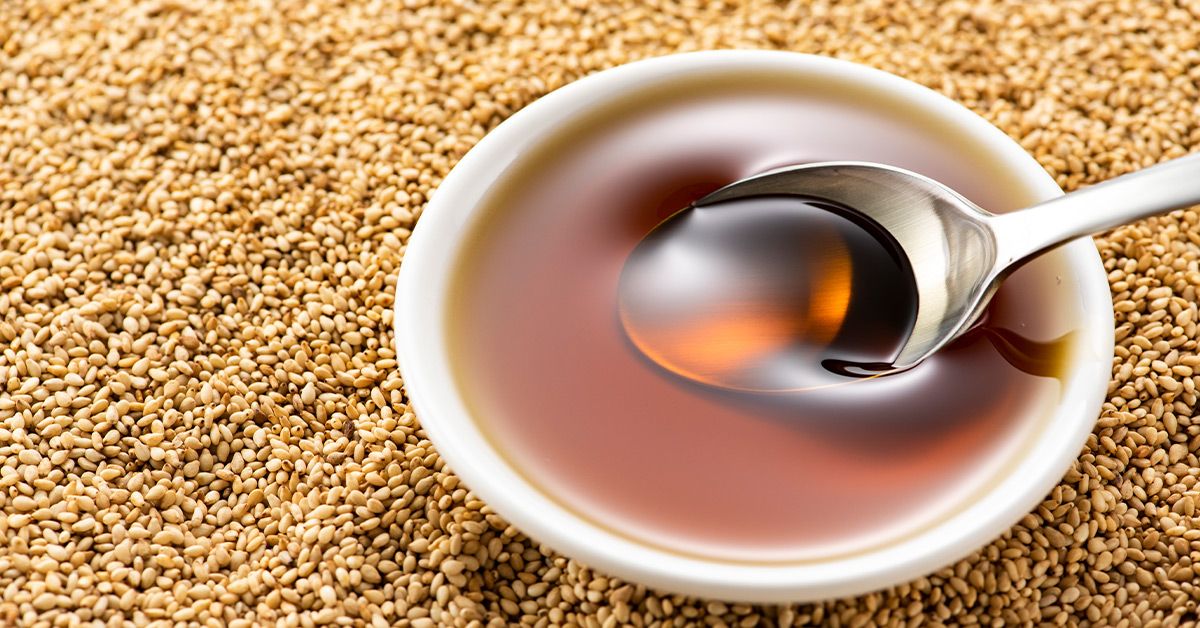
Sesame oil may already be sitting in your kitchen, waiting patiently between the soy sauce and the bottle of vinegar nobody remembers buying. But can you use sesame oil for hair without making your head smell like dinner?
Yes, you can. Sesame oil can soften dry strands, improve shine, reduce friction, and make tangled hair easier to manage. It may be especially useful as a pre-shampoo treatment or a tiny finishing oil for rough ends. However, it is not a proven treatment for hair loss, dandruff, premature graying, or scalp disease. It can also cause irritation, buildup, or an allergic reaction in some people.
The trick is knowing where to apply it, how much to use, and when your scalp would prefer that you kindly put the bottle back in the pantry.
What Is Sesame Oil?
Sesame oil is pressed from the seeds of Sesamum indicum. It is sometimes labeled sesame seed oil, gingelly oil, or til oil. The oil contains a mixture of fatty acids, primarily linoleic acid and oleic acid, along with smaller amounts of palmitic and stearic acids.
Sesame also contains naturally occurring compounds such as sesamin, sesamolin, sesamol, phytosterols, and tocopherols. These components have attracted scientific interest because of their antioxidant and skin-conditioning properties. In hair care, however, the most immediately useful characteristic is much less glamorous: sesame oil is an emollient. In plain English, it coats and lubricates surfaces, helping hair feel smoother and less rough.
Untoasted Versus Toasted Sesame Oil
For hair, choose plain, untoasted sesame oil or a cosmetic product formulated with sesame seed oil. Toasted sesame oil is designed for flavor. It is darker, more fragrant, and considerably more likely to make coworkers wonder whether you spent lunch break inside a stir-fry.
A cold-pressed, untoasted oil usually has a lighter scent and color. Cosmetic-grade products may also be easier to rinse out and may contain stabilizers that improve shelf life.
What Can Sesame Oil Actually Do for Hair?
1. Soften Dry, Rough Strands
Hair is largely made of keratin, a structural protein. When the outer cuticle becomes weathered through washing, coloring, heat styling, sunlight, friction, or ordinary daily life, individual strands can feel coarse and become more difficult to manage.
Sesame oil forms a thin lubricating layer over the hair shaft. This coating can temporarily smooth the cuticle, reduce that straw-like feeling, and make dry hair more flexible. It does not permanently repair damaged keratin, but it can make damaged hair behave betterwhich is often all anyone asks before 8 a.m.
2. Reduce Friction, Tangles, and Breakage
Hair fibers rub against one another during brushing, shampooing, towel drying, sleeping, and styling. More friction means more tangling, cuticle wear, and mechanical breakage.
Applying a modest amount of sesame oil before washing can improve slip, allowing strands to move past one another with less resistance. This may be particularly helpful for curly, coily, chemically processed, bleached, or high-porosity hair.
Research comparing plant oils has shown that oil performance depends heavily on molecular structure and the ability to penetrate the hair fiber. Coconut oil currently has stronger direct evidence for reducing protein loss from damaged and undamaged hair. Comparable clinical evidence for sesame oil is limited, so sesame should be viewed mainly as a conditioning and lubricating treatment rather than a miracle protein shield.
3. Add Shine
Rough cuticles scatter light in several directions, making hair appear dull. A very thin oil coating creates a more uniform surface, allowing light to reflect more evenly.
This means sesame oil can make hair look shinier immediately, even though it has not changed the strand’s internal biology. Use one or two drops rather than an enthusiastic palmful. The border between “glossy” and “has not shampooed since Tuesday” is surprisingly narrow.
4. Help Seal in Moisture
Oils do not hydrate hair in the same way water does. Sesame oil contains virtually no water, so it cannot directly add hydration. Instead, it may slow moisture loss by coating the hair after water or a water-based conditioner has been applied.
For this reason, sesame oil often works best on slightly damp hair or over a leave-in conditioner. Think of water as the guest and oil as the person locking the door so the guest does not immediately leave.
5. Protect Dry Ends During Shampooing
Shampoo belongs primarily on the scalp, where it removes sweat, sebum, styling residue, and dead skin. As the lather runs through the lengths, it can leave already-dry ends feeling stripped.
A light sesame oil pre-treatment can provide a temporary buffer. Applying it to the mid-lengths and ends 20 to 30 minutes before washing may reduce the harsh, squeaky feeling that sometimes follows shampooing.
Can Sesame Oil Make Hair Grow?
There is not enough high-quality human research to conclude that applying sesame oil to the scalp makes hair grow faster, reverses pattern hair loss, or awakens inactive follicles.
Some laboratory research has examined sesame compounds, antioxidants, or plant oils in relation to inflammation and cellular activity. That is scientifically interesting, but laboratory findings should not be presented as proof that a home sesame oil massage treats alopecia.
Hair loss can be caused by genetics, hormonal changes, nutritional deficiencies, autoimmune disease, medications, illness, stress, scalp inflammation, tight hairstyles, or damage to the hair shaft. A bottle of oil cannot diagnose which one has invited itself to the party.
What Sesame Oil May Do Instead
By reducing dryness, tangling, and breakage, sesame oil may help hair retain length. Someone who sees fewer broken pieces in the sink might reasonably feel that their hair is “growing better.” The follicles may be growing at the same rate; the existing strands are simply surviving longer.
Does Sesame Oil Treat Dandruff?
Sesame oil should not be treated as a proven dandruff remedy. Dandruff and seborrheic dermatitis involve a complicated interaction among skin oil, inflammation, individual susceptibility, and yeast that naturally lives on the skin.
Although oil may temporarily soften dry flakes, applying plant oil directly to the scalp can make some cases of seborrheic dermatitis feel greasier, itchier, or more difficult to control. Dermatologists commonly recommend appropriately formulated dandruff shampoos rather than relying on cooking oils.
If your flakes are fine and powdery because the scalp is simply dry, a small, short-contact treatment might feel soothing. If the scalp is red, oily, itchy, inflamed, or covered with stubborn yellowish scale, skip the sesame experiment and consider a dermatologist-approved treatment.
Why Sesame Oil May Not Be Right for You
Sesame Allergy
Sesame is officially recognized in the United States as a major food allergen. A person with a known sesame allergy should not apply sesame oil to the hair or scalp unless an allergist has specifically advised that a particular product is safe.
Skin contact is not identical to eating sesame, but contact can still trigger localized itching, redness, hives, swelling, or dermatitis. Severe allergic reactions are medical emergencies.
Scalp Irritation
Natural does not mean universally gentle. Sesame oil itself, fragrances added to a product, preservatives, botanical extracts, or oxidation caused by poor storage can irritate sensitive skin.
Contact dermatitis often begins with itching, redness, burning, or a rash where the product touched the skin. Stop using the oil if these symptoms appear.
Greasy Buildup
Applying too much oil can leave hair limp and attract dust, sweat, and styling residue. Repeated scalp oiling without thorough cleansing may also contribute to buildup around the roots.
Fine, straight, low-porosity, or naturally oily hair usually needs less sesame oil than thick, curly, coarse, or highly porous hair. Sometimes “three drops” is a treatment, while “three tablespoons” is a weekend shampooing project.
Existing Scalp Conditions
Avoid experimenting on skin that is broken, infected, weeping, severely inflamed, or covered in painful bumps. People with scalp psoriasis, eczema, folliculitis, seborrheic dermatitis, or acne around the hairline should speak with a dermatologist before making oiling a regular habit.
Unrealistic Hair-Loss Claims
Sesame oil is not an alternative to evidence-based treatment for androgenetic alopecia, alopecia areata, scarring alopecia, thyroid-related shedding, or iron deficiency. Early diagnosis matters, particularly when hair loss is sudden, patchy, painful, or accompanied by scalp changes.
How to Patch-Test Sesame Oil
- Place a small drop of the product on the inner arm or behind the ear.
- Leave it undisturbed and keep the area dry.
- Observe the skin for at least 24 hours, preferably up to 48 hours.
- Do not use the product on your scalp if you develop itching, swelling, redness, burning, bumps, or a rash.
A home patch test cannot guarantee that a reaction will never occur, but it is more sensible than introducing a new oil by marinating your entire head on day one.
How to Use Sesame Oil for Hair
Method 1: Pre-Shampoo Treatment
This is the most practical method for dry or damaged hair.
- Start with dry, detangled hair.
- Place one teaspoon of sesame oil in your palm. Thick or very long hair may need up to two teaspoons.
- Rub your hands together and apply the oil from the mid-lengths to the ends.
- Use whatever remains on your hands near the upper lengths. Avoid saturating the roots.
- Leave it on for 20 to 30 minutes.
- Shampoo the scalp thoroughly and rinse. Shampoo twice if necessary.
- Follow with conditioner if your hair still feels dry.
Method 2: Finishing Oil for Dry Ends
- Apply leave-in conditioner or style your hair as usual.
- Rub one drop of sesame oil between your palms.
- Gently press it onto the last few inches of hair.
- Add one more drop only when necessary.
This technique can calm flyaways and improve shine without coating the scalp.
Method 3: Short Scalp Massage
Try this only if your scalp is healthy and not prone to dandruff, acne, or dermatitis.
- Divide the hair into several sections.
- Apply a few dropsnot a riveracross the scalp.
- Massage gently with the pads of your fingers for three to five minutes.
- Avoid scratching with your nails.
- Leave the oil on for no longer than 20 minutes the first time.
- Shampoo thoroughly.
Massage may feel relaxing, but vigorous rubbing does not force oil into the follicles or command them to produce new hair.
Method 4: Mix It With Conditioner
For a controlled treatment, combine one or two drops of sesame oil with a single-use portion of conditioner in your palm. Apply the mixture to the lengths, wait several minutes, and rinse well.
Do not pour oil directly into the conditioner bottle. That can alter the formula and introduce contamination.
Should You Heat Sesame Oil?
Slightly warming the oil between your hands can make it easier to spread. There is no need to microwave it or place dangerously hot oil on your head.
If you use a warm-water bath, test the temperature on the inside of your wrist before application. Hot oil can burn the scalp and damage already-fragile hair. “Hot oil treatment” should mean comfortably warm, not bubbling like a tiny beauty-themed volcano.
How Often Should You Use It?
- Fine or oily hair: Once every one or two weeks, primarily on the ends.
- Normal hair: Once weekly or whenever the lengths feel dry.
- Thick, curly, or coily hair: Once or twice weekly, depending on buildup and washing frequency.
- Bleached or chemically processed hair: Use a small pre-shampoo amount weekly, while continuing to use conditioner and appropriate bond-building or protein products.
- Dandruff-prone scalp: Keep oil off the scalp unless a dermatologist recommends otherwise.
Your hair should feel softer after use, not coated, sticky, itchy, or mysteriously waterproof. If it takes repeated shampooing to remove the oil, reduce the amount next time.
Sesame Oil Versus Other Popular Hair Oils
Sesame Oil Versus Coconut Oil
Coconut oil has stronger research supporting its ability to penetrate hair and reduce protein loss. Sesame oil may still improve lubrication and shine, but it should not automatically be assumed to provide the same internal protection.
Sesame Oil Versus Argan Oil
Argan oil is commonly used as a lightweight finishing product. Sesame oil may be more economical but can have a stronger scent and may feel heavier on fine hair. Evidence for dramatic hair-growth benefits from either oil remains limited.
Sesame Oil Versus Jojoba Oil
Jojoba is technically a liquid wax and often feels lighter near the roots. It may be easier for oily or fine hair to tolerate. Sesame oil is richer and may be better suited to coarse, porous, or very dry ends.
Sesame Oil Versus Castor Oil
Castor oil is much thicker and stickier. Neither oil has strong proof that topical use accelerates hair growth. Sesame oil is generally easier to distribute and wash out, making it the less dramatic houseguest.
How to Choose a Sesame Oil Hair Product
Look for the ingredient name Sesamum Indicum (Sesame) Seed Oil. A simple product with minimal fragrance is usually the safest starting point for sensitive skin.
Plant-derived oils, including sesame-derived cosmetic ingredients, are widely used for conditioning and emollient purposes. Cosmetic safety evaluations generally consider properly formulated plant oils safe under their intended conditions of use, but formulation quality and individual allergies still matter.
Choose a sealed container, check the expiration date, and store it away from heat and direct sunlight. Discard oil that smells sharp, stale, paint-like, or noticeably different from when it was opened.
Who Is Most Likely to Benefit?
Sesame oil is most promising for people whose primary concerns are cosmetic and mechanical:
- Dry, rough, or dull lengths
- Frizz caused by raised or damaged cuticles
- Tangling during washing or detangling
- Breakage at the ends
- Curly, coily, coarse, or high-porosity hair
- Hair frequently exposed to coloring, heat, wind, or dry indoor air
It is less likely to suit people with extremely fine hair, oily roots, active scalp acne, known sesame allergy, or uncontrolled seborrheic dermatitis.
A Realistic Four-Week Experience With Sesame Oil for Hair
The following experience is an illustrative routine based on common hair-care outcomes, not a clinical trial or a claim that every person will receive identical results.
Week One: Learning That Less Is More
Imagine starting with shoulder-length hair that is dry at the ends, slightly frizzy, and easily tangled after shampooing. The first attempt involves two full tablespoons of sesame oil because the internet has a remarkable talent for making moderation seem cowardly.
The hair feels smooth while coated, but washing it requires two rounds of shampoo. After drying, the ends are softer, while the roots look flatter than expected. The first lesson arrives quickly: sesame oil works better as a measured treatment than as a full-head baptism.
On the second attempt, the amount drops to one teaspoon, applied only from ear level downward. After 25 minutes, the oil washes out easily. Detangling takes less time, and fewer short broken strands appear in the brush.
Week Two: Better Placement, Better Results
The routine continues once during the week. This time, one teaspoon is spread over dry mid-lengths and ends before shampooing. No oil is applied directly to the scalp.
The most obvious difference is not sudden growth or supernatural thickness. It is manageability. The hair feels less rough when wet and requires less pulling during detangling. The ends also appear shinier after styling.
A single drop is tested as a finishing oil the following day. Applied to both palms and pressed lightly over the ends, it controls flyaways without making the hair greasy. A second drop, however, begins to separate fine sections into shiny little groups. Another useful discovery: sesame oil does not reward ambition.
Week Three: Adjusting for Hair Type
Different hair textures would experience the oil differently. On thick, curly, or high-porosity hair, one teaspoon may disappear into the lengths without much drama. On fine, straight hair, even half a teaspoon may be enough for a pre-shampoo treatment.
A person with an oily scalp might notice that applying sesame oil near the roots shortens the time before the next wash. Someone with dry, tightly curled hair may appreciate the extra lubrication during sectioning and detangling.
This is also the stage when scalp tolerance becomes clear. Any itching, redness, bumps, increased flaking, or burning should end the experiment. Hair softness is not worth negotiating with an angry scalp.
Week Four: What Has and Has Not Changed
After four weeks of conservative use, the hair may look smoother and feel easier to comb. The ends may appear less fuzzy, and fewer strands may snap during routine handling. These improvements come from lubrication, reduced friction, and better moisture retentionnot necessarily from a change in follicle activity.
There is unlikely to be visible evidence that sesame oil has accelerated hair growth in such a short period. Existing split ends will not fuse permanently, bleached sections will not return to virgin condition, and hereditary thinning will not reverse.
The most realistic conclusion is that sesame oil can be a useful supporting product. It performs best when given a modest job: soften the lengths, reduce tangling, protect dry ends during washing, and provide a little shine. Problems begin when it is promoted from “helpful conditioner” to “chief medical officer of the scalp.”
When to See a Dermatologist
Professional evaluation is appropriate when you notice sudden shedding, widening of the part, distinct bald patches, scalp pain, pus-filled bumps, bleeding, thick scale, intense itching, or hair loss that continues for several months.
You should also seek medical advice if a hair product causes facial swelling, widespread hives, difficulty breathing, dizziness, or throat tightness. These can be signs of a serious allergic reaction.
The Bottom Line
Yes, you can use sesame oil for hair. It can soften dry strands, improve shine, reduce friction, make detangling easier, and protect rough ends during shampooing. The safest and most useful approach is usually a small amount applied to the mid-lengths and ends before washing.
Sesame oil is not a clinically proven cure for hair loss, dandruff, gray hair, or scalp disease. Avoid it if you have a sesame allergy, and be cautious when you have an oily, acne-prone, irritated, or dandruff-prone scalp.
Patch-test first, begin with a teaspoon or less, wash it out thoroughly, and judge the results by how your hair actually behaves. Your strands do not care how impressive the bottle looks on social media. They care whether the product leaves them softer without turning the scalp into a complaint department.