Winter driving has a funny way of turning a normal errand into an episode of “Why Didn’t I Pack Gloves?” One minute you are cruising past snow-dusted trees, and the next, your car is coughing, the dashboard is glowing like a holiday display, and the road shoulder looks about as welcoming as a frozen pizza. A car breakdown in winter is not just inconvenientit can become dangerous quickly if you are stranded in snow, sleet, freezing rain, high winds, or subzero temperatures.
The good news? Surviving a winter car breakdown is less about being a wilderness expert and more about staying calm, staying visible, staying warm, and making smart decisions. Whether your battery dies, your tire goes flat, your vehicle slides into a ditch, or your engine simply decides it has had enough of January, the steps you take in the first few minutes matter most.
This guide explains what to do before, during, and after a winter roadside emergency. You will learn how to prepare a winter car emergency kit, call for help effectively, avoid carbon monoxide poisoning, conserve heat, manage passengers, and decide when it is safer to stay put. Think of it as your cold-weather co-pilotminus the backseat driving.
Why Winter Car Breakdowns Are So Dangerous
A breakdown in mild weather is usually a hassle. A breakdown in winter can expose you to multiple hazards at once: icy traffic, reduced visibility, falling temperatures, snow-covered shoulders, dead phone batteries, and long emergency response times. Snowstorms can slow tow trucks, police, and plows. Rural roads may have poor cell service. Even in cities, a sudden cold snap can overwhelm roadside assistance services.
Winter also makes ordinary car problems worse. Cold temperatures weaken batteries, thicken fluids, reduce tire pressure, and make rubber parts less flexible. Ice can hide potholes, curbs, and lane markings. If you leave the vehicle in blowing snow, you may become disoriented quickly. If you idle the car without checking the exhaust pipe, carbon monoxide can build up inside the cabin. In other words, winter does not play fair.
Before Winter Hits: Prepare Your Car Like You Mean It
The best winter breakdown survival plan starts before you ever turn the key. A properly maintained vehicle is less likely to strand you, and a well-stocked emergency kit can turn a scary situation into a manageable wait.
Check the essentials before the season starts
Schedule a winter maintenance check or inspect the basics yourself if you are comfortable doing so. Pay close attention to the battery, tires, windshield wipers, defroster, heater, brakes, lights, belts, hoses, and fluid levels. Cold weather is especially hard on batteries, so if yours is old or slow to start, do not wait for it to fail in a grocery store parking lot during a snow squall.
Make sure your tires have adequate tread and are properly inflated. Tire pressure drops as temperatures fall, and underinflated tires can reduce control on slick roads. If you live in an area with regular snow and ice, winter tires can make a major difference. They are not magic, but they are much better than pretending all-season tires are tiny snowshoes.
Keep your gas tank at least half full
A half-full tank gives you more flexibility if traffic stalls, roads close, or you need to run the engine briefly for heat. It also helps reduce the chance of fuel-line freeze problems in very cold conditions. For electric vehicles, the same idea applies: start winter trips with more battery range than you think you need, because cold weather, cabin heat, and delays can reduce range.
Build a Winter Car Emergency Kit
A winter car emergency kit does not need to look like you are preparing to summit Everest. It should, however, cover the basics: warmth, visibility, communication, hydration, food, first aid, and traction. Store the kit inside the passenger area if possible, not buried under sports gear, beach chairs, and that mystery reusable bag in the trunk.
Must-have winter emergency supplies
- Fully charged phone and car charger or power bank
- Flashlight or headlamp with extra batteries
- Reflective triangles, flares, or LED warning lights
- Warm blankets, emergency Mylar blankets, or sleeping bags
- Extra hats, gloves, socks, and base layers
- Water bottles and high-energy snacks
- First aid kit and essential medications
- Ice scraper, snow brush, and compact shovel
- Jumper cables or a portable jump starter
- Traction aid such as sand, non-clumping cat litter, or traction mats
- Bright cloth or safety vest to signal for help
- Paper map, tire gauge, multipurpose tool, and duct tape
If you travel with children, older adults, pets, or anyone with medical needs, customize the kit. Add formula, diapers, pet food, extra medications, spare eyeglasses, inhalers, mobility aids, or anything else that would become urgent during a long delay.
What to Do Immediately After a Winter Breakdown
The first rule is simple: do not panic. The second rule is also simple: do not make the situation worse by stepping into traffic, wandering into a storm, or draining your phone battery scrolling weather memes. Take a breath, assess your surroundings, and move with purpose.
Step 1: Get as far from traffic as safely possible
If the vehicle still moves, guide it slowly to the shoulder, a parking lot, a rest area, or another safe location. Turn on your hazard lights immediately. Avoid stopping on bridges, curves, hills, or narrow shoulders when possible. If you cannot move the vehicle, keep your seat belt fastened until you are sure it is safe to exit.
On icy roads, other drivers may not be able to stop quickly. That means standing outside your vehicle can be more dangerous than staying inside. If you must exit, do it from the side away from traffic and move behind a barrier if one is available.
Step 2: Call for help
Call 911 if anyone is injured, if the vehicle is blocking traffic, if you are in immediate danger, or if weather conditions are severe. For non-life-threatening situations, contact roadside assistance, your insurance provider, a local towing service, or state highway assistance if available.
When you call, give clear information: your road name, direction of travel, nearest mile marker or exit, vehicle description, license plate, number of passengers, and any urgent needs. If you are using a maps app, share your live location with a trusted contact. Then conserve your phone battery. Cold drains batteries quickly, so keep the phone close to your body when not in use.
Step 3: Make the vehicle visible
Visibility saves lives. Keep hazard lights on if the battery allows. Place reflective triangles or warning lights behind the vehicle only if it is safe to do so. Tie a bright cloth to the antenna, mirror, or door handle. At night, turn on the dome light when the engine is running so rescuers can spot you more easily.
Should You Stay in the Car or Walk for Help?
In most winter storm breakdowns, staying with the vehicle is the safest choice. A car is easier for rescuers to find than a person walking in snow. It also provides shelter from wind, precipitation, and traffic. Even a cold car is usually better than being exposed to open air.
Walking for help may make sense only when you can clearly see a safe, nearby building and conditions are calm enough to reach it. If visibility is poor, temperatures are dangerously low, traffic is heavy, or you are unfamiliar with the area, stay put. Wandering away from the car in a storm can turn a breakdown into a rescue operation.
How to Stay Warm Without Putting Yourself at Risk
Your goal is to preserve body heat while avoiding carbon monoxide exposure. Put on extra clothing before you get extremely cold. Add hats and gloves because heat loss from exposed skin can be significant in freezing wind. Use blankets, floor mats, seat covers, newspapers, or spare clothing to add insulation.
Run the engine carefully
If the engine runs, use it only in short intervals to warm the cabin. Before starting it, check that the exhaust pipe is clear of snow, ice, mud, or debris. A blocked exhaust pipe can push carbon monoxide into the vehicle, and carbon monoxide is especially dangerous because you cannot see or smell it.
Crack a window slightly on the side away from the wind while the engine is running. Do not sleep with the engine running continuously. Set a timer if needed so you do not accidentally idle for too long or drain fuel. If snow is falling heavily, recheck the exhaust pipe regularly, but only go outside when it is safe.
Keep everyone moving gently
Inside the car, gentle movement helps circulation. Wiggle fingers and toes, flex your feet, shrug shoulders, and change positions. Avoid sweating, because damp clothing can make you colder. If several people are inside, huddle closer while still keeping seat belts accessible in case another vehicle hits yours.
Watch for Hypothermia and Frostbite
Cold stress can sneak up on people. Early hypothermia may look like intense shivering, clumsiness, confusion, slurred speech, or unusual drowsiness. Frostbite may cause numbness, tingling, pale or waxy-looking skin, or skin that feels hard. Fingers, toes, ears, cheeks, nose, and chin are especially vulnerable.
If someone shows signs of hypothermia, call emergency services. Warm the person gradually with dry layers, blankets, and shared body heat. Do not rub frostbitten skin, and do not use direct high heat such as a flame or very hot water. If clothing is wet, replace it with dry clothing if possible.
If Your Vehicle Is Stuck in Snow
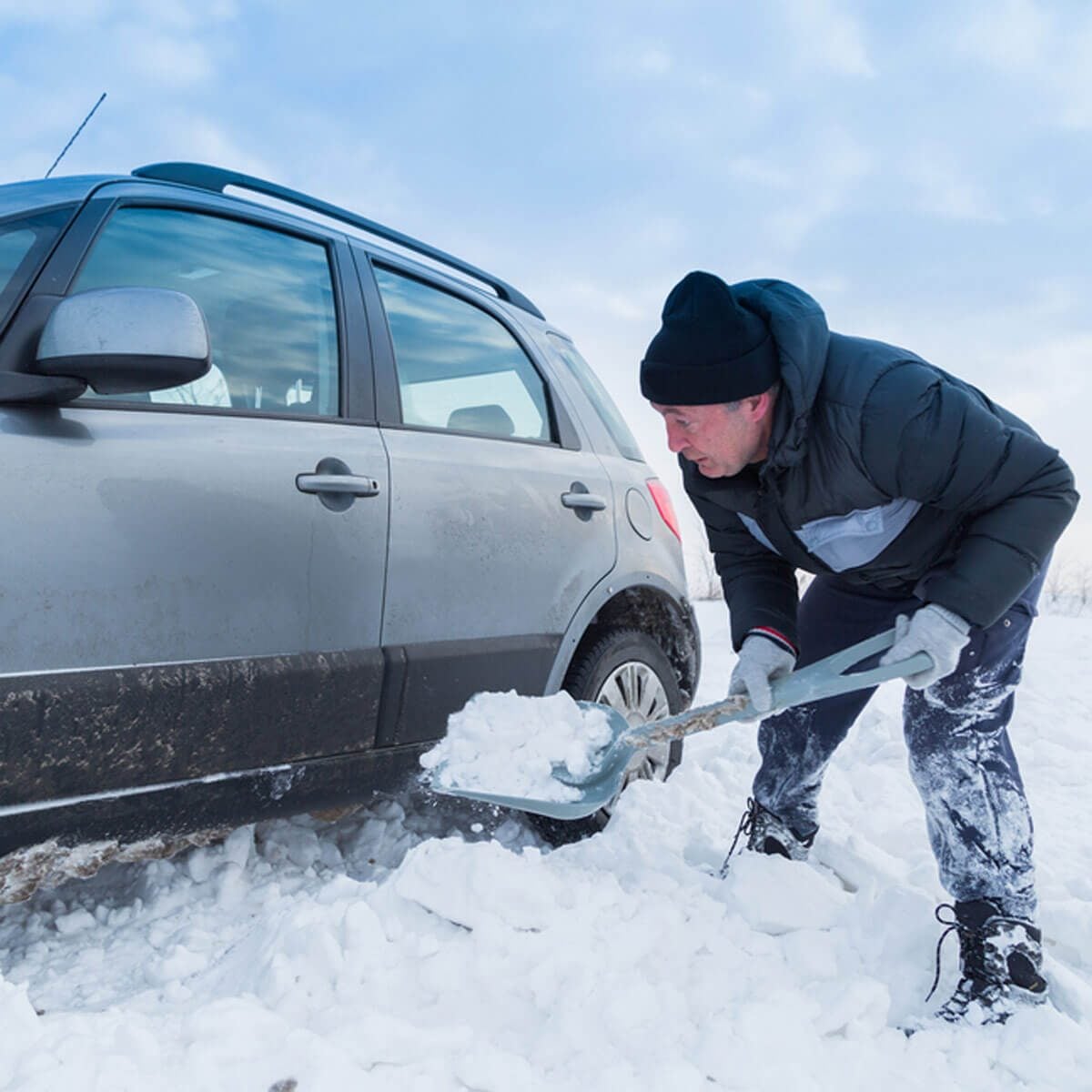
If the car is stuck but not damaged, you may be able to free itbut only if conditions are safe. First, clear snow from around the tires and tailpipe. Turn off traction control only if your vehicle manual recommends it for rocking out of snow. Use sand, cat litter, traction mats, or even floor mats under the drive wheels to improve grip.
Gently accelerate. Spinning the tires aggressively usually digs you in deeper and makes your car smell like frustration. If rocking the vehicle, shift carefully between drive and reverse, pausing between shifts. If it does not work after a few attempts, stop. Overheating the transmission or damaging the vehicle will not improve your afternoon.
If You Have a Flat Tire in Winter
A flat tire on a dry residential street is one thing. A flat tire on an icy highway shoulder is quite another. Do not change a tire if you are close to fast-moving traffic, visibility is poor, the ground is icy, or the vehicle is unstable. Call for roadside assistance and stay inside with your seat belt on if that is the safer option.
If you are in a safe, level location and know how to change the tire, use wheel wedges, keep passengers away from traffic, and follow your vehicle manual. Wear gloves if you have them; cold metal tools can be brutal on bare hands. After installing a spare, drive slowly and get the damaged tire repaired or replaced as soon as possible.
If the Battery Dies
Dead batteries are one of winter’s favorite pranks. If you have a portable jump starter, follow the manufacturer’s instructions carefully. If another driver helps with jumper cables, connect the cables in the proper order and keep both vehicles stable and away from traffic. Never lean over the battery while making connections.
After a successful jump, let the car run long enough to recharge, but remember the carbon monoxide rules if snow is around the exhaust. If the battery dies again soon after, the problem may be the battery, alternator, connections, or extreme cold. At that point, a tow or professional inspection is the smarter move.
How to Manage Food, Water, and Phone Battery
Eat small snacks periodically to help maintain energy, especially if you are waiting for hours. Choose calorie-dense foods such as nuts, granola bars, peanut butter crackers, dried fruit, or protein bars. Avoid alcohol because it can impair judgment and increase heat loss. Caffeine may be fine in moderation, but water matters more.
If water bottles freeze, thaw them gradually inside your coat or nearnot ona heat source. Do not eat large amounts of snow for hydration unless there is no other option; it can lower your body temperature. If you must melt snow, use a safe container and avoid collecting dirty roadside snow.
For your phone, lower screen brightness, close unnecessary apps, and use low-power mode. Send short text messages if calls fail; texts sometimes go through when voice calls do not. Keep a written list of emergency contacts in the car in case your phone dies or someone else needs to call for you.
Winter Driving Prevention: Avoid the Breakdown Before It Happens
The safest winter breakdown is the one that never occurs. Check the forecast before leaving, especially for long trips. Look at road condition maps, snow emergency alerts, chain requirements, and closure notices. Tell someone where you are going and when you expect to arrive.
Drive slower than usual, increase following distance, turn on headlights, and avoid cruise control on slick roads. Be patient around snowplows. They often create clouds of snow that can hide lane lines and road edges, so give them plenty of room. If officials advise against travel, take the hint. Your couch may not be exciting, but it has excellent traction.
Real-World Winter Breakdown Experiences and Lessons
Every winter breakdown story has its own plot twist, but most share a few familiar lessons. Picture the commuter who thinks, “It is only a 20-minute drive,” and leaves without gloves, a charger, or a full tank. Then traffic stops behind a crash, the heater runs longer than expected, and suddenly that short drive becomes a two-hour test of patience. The lesson is simple: winter does not care how close you are to home. Keep your kit in the car for every trip, not just mountain drives or holiday road trips.
Another common experience involves the driver who slides gently into a snowy shoulder and assumes walking to the nearest gas station will be faster. From inside the car, the lights look close. Outside, the wind is sharper, the snow is deeper, and passing vehicles throw slush like angry garden hoses. After a few minutes, the driver realizes the car was the shelter. The lesson: distance is deceptive in winter. If you cannot clearly see a safe building and conditions are rough, staying with the vehicle is usually the better choice.
Then there is the family road trip scenario. Everyone packed snacks for the kids but forgot the boring survival items: extra socks, a flashlight, reflective triangles, and a shovel. A tire loses pressure, the spare is buried under luggage, and the shoulder is dark. This is where organization matters. Keep emergency gear reachable, not trapped beneath suitcases. Put the flashlight, gloves, warning devices, and phone charger where you can grab them quickly. In a stressful moment, convenience becomes safety.
Pet owners learn their own winter lesson. A stranded dog may be excited, anxious, or determined to “help” by fogging every window in the car. Keep a leash, collapsible bowl, towel, and pet food in the vehicle. Do not let pets roam outside near traffic, and do not assume they can handle the cold just because they have fur. Small pets, older pets, and short-haired breeds may chill quickly.
One of the most overlooked lessons comes from people who prepared almost everythingbut forgot visibility. They had blankets and snacks, but their car blended into the whiteout like a marshmallow in a snowbank. A bright cloth, reflective vest, LED beacon, or hazard triangle can make a huge difference. Rescuers and tow drivers need to see you before they can help you.
The final experience is the humble “I should have checked the battery” story. Many winter breakdowns begin with warning signs: slow starts, dim lights, weak wipers, old tires, or a heater that barely works. Drivers often notice these clues but postpone repairs because the car still technically runs. Winter loves “technically.” If your vehicle is already struggling in mild weather, cold weather may finish the job. A pre-season checkup costs less than a tow, a missed flight, or a frozen evening on the shoulder.
The big takeaway from these experiences is not fear; it is respect. Winter driving rewards preparation and punishes optimism without supplies. Pack the kit, check the car, watch the forecast, slow down, and know what to do if your vehicle quits. You do not need to be dramatic about it. Just be ready.
Conclusion: Stay Calm, Stay Visible, Stay Alive
A winter car breakdown can feel frightening, but a clear plan makes it survivable. Prepare your vehicle before the season starts. Keep a winter emergency kit within reach. If you break down, move away from traffic if possible, call for help, make the vehicle visible, and usually stay with the car. Use the engine carefully, keep the exhaust pipe clear, crack a window when idling, and watch for signs of hypothermia or frostbite.
Winter roads can be unpredictable, but your response does not have to be. With the right supplies and a little calm thinking, you can turn a frozen roadside mess into a story that ends safelyand maybe with a hot chocolate afterward, because frankly, you will have earned it.