Most forecasts arrive dressed for a job interview. They come with polished charts, carefully chosen adjectives, and enough disclaimers to protect a small nation. Real-time betting markets take a different approach: put a price on the prediction and let people trade it.
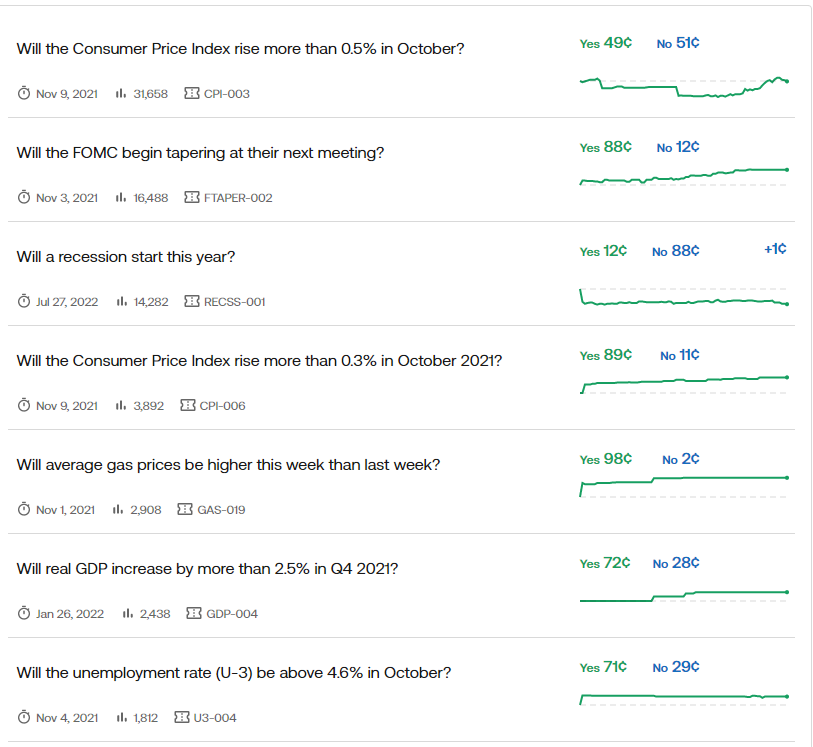
That simple idea powered the “Talk Your Book: Real-Time Betting Markets” conversation featuring Kalshi co-founder and CEO Tarek Mansour. The discussion explored markets built around binary outcomes, where participants buy “yes” or “no” contracts tied to measurable events. Instead of merely arguing about what might happen, traders must decide what that belief is worth.
The result is part financial exchange, part forecasting engine, and part public-opinion scoreboard with actual consequences. It can also resemble gambling, speculation, hedging, or all three before breakfast. Understanding the difference requires looking beyond the colorful probability numbers and examining how event contracts actually work.
What Are Real-Time Betting Markets?
A real-time betting market allows participants to trade contracts based on whether a specified event will occur. The event might involve an economic report, election result, temperature reading, sports outcome, product launch, regulatory decision, or another objectively verifiable question.
Many of these contracts use a binary structure:
- A “yes” contract pays $1 if the event happens.
- A “no” contract pays $1 if the event does not happen.
- The losing side expires at $0.
Suppose a contract asks, “Will the Federal Reserve cut interest rates at its next meeting?” If “yes” contracts trade at 62 cents, the market is roughly expressing a 62% probability of a rate cut. A buyer who pays 62 cents can receive $1 if the cut occurs, producing a gross profit of 38 cents per contract before fees.
If the probability changes, the contract price can move before the event is resolved. That is the “real-time” part. Traders do not necessarily have to wait until settlement. They may sell their positions when new information changes the price.
The Price Is a Forecast, Not a Prophecy
A 62-cent contract does not mean the market has received a fax from the future. It means buyers and sellers have reached a current price based on available information, competing beliefs, liquidity, risk tolerance, and occasionally pure chaos wearing a necktie.
Market prices are often interpreted as probabilities because of the contract’s payout structure. However, that interpretation is only an approximation. Bid-ask spreads, transaction fees, thin trading, emotional behavior, and contract design can all create distortions.
A heavily traded contract may provide a useful real-time forecast. A nearly empty market with three participants and someone’s enthusiastic uncle is less persuasive.
Why the “Talk Your Book” Conversation Mattered
When the original discussion appeared in 2021, regulated event markets were still unfamiliar to many American investors. Traditional financial markets offered exposure to stocks, interest rates, commodities, currencies, and volatility, but many everyday risks remained difficult to trade directly.
A restaurant owner worried about new dining restrictions could buy restaurant stocks, sell hospitality shares, or purchase complicated derivatives. None of those instruments would precisely address the question: “Will indoor dining be restricted again?”
An event contract could target that question directly. This ability to isolate a specific outcome was central to Mansour’s argument that prediction markets could democratize hedging.
The episode also highlighted several ideas that remain important:
- Markets can aggregate dispersed information.
- Prices show how expectations change after news.
- Participants can speculate or hedge using the same contract.
- Simple yes-or-no structures make probabilities easier to understand.
- Continuous trading could turn prediction markets into live information systems.
News Is Not the Same as the Market’s Reaction
Financial television frequently treats headlines as though they arrive with instructions attached. “Inflation falls” sounds positive. “Unemployment rises” sounds negative. Markets are annoyingly less cooperative.
The effect of news depends on what participants expected before the announcement. A disappointing economic report may cause little movement if everyone anticipated something worse. A seemingly good report may hurt markets if it reduces the likelihood of interest-rate cuts.
Prediction markets make this distinction visible. The important question is not only what happened, but how much the probability changed.
Imagine an event contract tied to whether annual inflation will exceed 3%. It trades at 70 cents before a new report. The report shows inflation cooling slightly, and the contract falls to 52 cents. The headline contains the data; the price movement reveals how traders revised their expectations.
This real-time response can be more informative than a parade of commentators saying “uncertainty” every nine seconds.
How Prediction Markets Aggregate Information
Prediction markets are built around the idea that people possess different pieces of information. One trader may understand economic indicators. Another may follow legislation closely. A third may have developed an excellent weather model and an unhealthy relationship with radar maps.
When participants trade, their information and beliefs become part of the price. People who believe the market probability is too low can buy “yes.” Those who believe it is too high can buy “no” or sell an existing position.
Financial incentives matter because participants must risk something when expressing confidence. A survey respondent can predict a moon landing, a recession, and a surprise championship without consequence. A trader paying for those views has a reason to think more carefully.
Research on prediction markets has found that they can incorporate new information quickly and produce useful forecasts, particularly when markets have clear rules, diverse participants, adequate liquidity, and reliable settlement data.
That does not make crowds magically wise. Crowds can become overconfident, politically biased, distracted, or very excited about an unverified social media post. Markets aggregate beliefs; they do not automatically sterilize them.
Prediction Markets as Hedging Tools
The most economically interesting use of event contracts may not be betting for entertainment. It may be hedging risks that traditional financial products address only indirectly.
Weather Risk
A landscaping company could be harmed by unusually heavy rainfall. A ski resort could suffer during a warm winter. A delivery business might face higher costs during severe storms. Weather contracts could provide payouts when specified measurements cross predetermined thresholds.
Economic Risk
A company sensitive to inflation, unemployment, or interest rates might use event contracts tied to government data releases or central-bank decisions. These contracts would not replace established futures and options, but they could address smaller or more specific exposures.
Regulatory and Business Risk
Organizations can be affected by court decisions, agency approvals, policy changes, and legislative deadlines. Properly structured event contracts could offer a more direct hedge than buying or selling shares of companies that merely appear related to the event.
The challenge is basis risk: the contract must closely match the user’s actual financial exposure. A café may lose money even if a contract’s official definition of “restaurant restrictions” is not triggered. The hedge looked perfect until reality read the fine print.
Is It Investing, Speculation, or Gambling?
The uncomfortable answer is that the same event contract can serve different purposes for different participants.
A business owner buying protection against an event that would damage revenue is hedging. An analyst trading because her research suggests the market probability is wrong is speculating. A person clicking contracts for excitement without understanding the rules may be gambling.
Traditional markets contain the same overlap. A wheat farmer can use futures to reduce risk, while a trader with no wheat, no farm, and possibly no idea what a bushel looks like can use the identical contract to speculate.
Event markets differ from traditional sportsbooks in several ways. Prediction-market participants generally trade against other market participants rather than accepting odds established solely by a bookmaker. Prices can change continuously, positions may be sold before settlement, and regulated contracts may operate under commodities law instead of state gaming rules.
Yet the economic experience may still feel similar to wagering. Money is risked on an uncertain outcome, and a participant can lose the entire amount committed to a contract. Changing the vocabulary from “bet” to “trade” does not install a seat belt.
The Risks Behind the Probability Screen
Liquidity Risk
A displayed price is useful only when someone is willing to trade at or near it. In a thin market, a small order can move the price sharply. Traders may also struggle to exit without accepting an unfavorable price.
Settlement Risk
Every contract needs precise rules explaining what data source will determine the outcome, when the measurement occurs, how revisions are treated, and what happens if the source becomes unavailable.
“Will unemployment rise?” sounds simple until someone asks which unemployment measure, which month, which data release, and whether later revisions count. Suddenly the yes-or-no question has developed a law degree.
Pricing and Calibration Risk
Market prices are not always perfectly calibrated. Traders may overpay for dramatic long shots, underestimate rare events, chase momentum, or behave differently as expiration approaches. Complex combinations such as parlays may also be priced differently from the probabilities implied by their individual components.
Information Advantages
People with specialized knowledge may improve a market’s forecast, but material nonpublic information creates serious fairness and enforcement concerns. Markets involving government actions, corporate decisions, medical trials, or entertainment outcomes require surveillance and clear rules against insider trading and manipulation.
Behavioral Risk
Real-time prices can encourage constant checking, impulsive trading, and the illusion that activity equals intelligence. A flashing number is not an invitation from destiny. Sometimes the most sophisticated position is closing the app and making a sandwich.
The Regulatory Debate in the United States
U.S. event contracts offered on designated contract markets fall under the oversight of the Commodity Futures Trading Commission. The CFTC designated Kalshi as a contract market in 2020, establishing an important path for federally regulated prediction markets.
However, regulation becomes complicated when event contracts resemble sports betting, election wagering, or other forms of gaming traditionally governed by states and tribal authorities. Supporters argue that standardized contracts traded on regulated exchanges provide transparency, monitoring, and federally supervised market infrastructure.
Critics contend that describing sports wagers as derivatives can bypass state consumer protections, gaming taxes, responsible-gambling programs, tribal agreements, and local licensing requirements. Legal disputes have therefore centered on where federal commodities authority ends and state gaming authority begins.
The debate is not merely semantic. Classification affects who may participate, which events may be listed, how platforms advertise, what protections apply, and which regulator gets the privilege of receiving angry letters.
Will Event Markets Trade Around the Clock?
Real-world events do not respect traditional exchange hours. Elections are called at night. Storms change direction on weekends. Geopolitical developments occur while traders are sleeping, eating dinner, or pretending not to check their phones.
Prediction markets naturally support extended or continuous trading because their underlying events unfold continuously. A 24/7 structure can help prices incorporate information sooner, but it also introduces operational challenges.
Liquidity may be weak during off-hours. Sudden news can produce extreme volatility. Market surveillance must operate continuously. Traders need clear procedures for outages, erroneous data, disputed results, and contracts affected by rapidly developing emergencies.
The future may resemble a global probability dashboard where markets update constantly across politics, economics, weather, sports, science, and culture. Useful? Absolutely. Relaxing? Not even slightly.
A Practical Framework for Evaluating a Market
Before trading a real-time event contract, consider five questions.
- Is the contract unambiguous? Read the resolution rules and identify the official data source.
- Is the market liquid? Check trading volume, order-book depth, and the spread between buying and selling prices.
- Do you have an actual edge? Being interested in a topic is not the same as possessing better information.
- What are the total costs? Include fees, spreads, slippage, and the cost of tying up capital.
- What happens if you are wrong? Position size should reflect the possibility of losing the full amount paid.
It is also helpful to write down your estimated probability before viewing the market price. Otherwise, the displayed number can anchor your opinion. Once you see 72%, your brain may produce an impressively detailed explanation for why 72% was obviously correct all along.
Experience With Real-Time Betting Markets: What Trading One Feels Like
Consider a hypothetical user named Alex who wants to explore a contract asking whether the next monthly inflation report will exceed a specified level. Alex is not trying to become a hedge-fund legend before lunch. The goal is to understand the mechanics while limiting risk.
Before opening the market, Alex reviews recent inflation data, economists’ forecasts, energy prices, rent trends, and the contract’s resolution language. Alex estimates a 45% chance that inflation will exceed the threshold.
The “yes” side is trading at 58 cents. That difference matters. Alex believes the event has a 45% probability, while the market implies approximately 58%. Based on that analysis, “yes” appears expensive and “no” appears more attractive.
Then the practical complications begin.
The best visible price for “no” is not exactly 42 cents because buyers and sellers have posted orders at different levels. The spread makes entry more expensive than the headline probability suggests. Alex also notices that trading volume is modest. A large order could move the market, so Alex chooses a small position and uses a limit order rather than accepting any available price.
Two days later, an energy-price report is released. Oil prices have risen, and the probability of higher inflation increases. The “yes” contract moves from 58 cents to 66 cents. Alex’s “no” position loses value.
This is the first emotional lesson: a thoughtful trade can move against you immediately. Markets are not obligated to reward homework on your preferred schedule.
Alex reviews the original thesis. The new energy data matters, but one report does not completely change the inflation outlook. Rather than doubling the position out of irritation, Alex leaves it unchanged. That decision is less exciting than pressing a giant “buy more” button, which is precisely why it may be sensible.
On release morning, the market becomes highly active. Prices jump with every rumor, leaked estimate, and breathless television segment. Alex watches “yes” trade between 61 and 70 cents within minutes. The movement illustrates a central feature of real-time betting markets: the price is not simply predicting the final number. It is continuously processing new information and changing perceptions.
The official report eventually comes in below the contract threshold. “No” wins and settles at $1. Alex earns a profit, but the result does not prove the original 45% estimate was perfect. One correct outcome cannot validate a forecasting process. A contract with a genuine 58% probability will still resolve “no” 42% of the time.
That lesson is easy to forget because winning feels like evidence of genius. Losing feels like evidence of market manipulation, bad luck, suspicious data, Mercury retrograde, or all four.
The more useful experience is reviewing the process. Alex identified a probability difference, read the settlement rules, accounted for liquidity, limited position size, and avoided changing the thesis solely because the price moved. Those habits matter more than the result of one contract.
A second experience might be completely different. Alex could trade a thinly traded entertainment contract, misunderstand the resolution source, and discover that being directionally correct is not enough. Perhaps the predicted event occurs informally but fails to meet the contract’s exact definition. The position settles at zero.
That frustration highlights why real-time betting markets reward precision. Traders are not purchasing a general opinion. They are purchasing a contract governed by specific language.
Over time, the most practical approach is to keep records. Note the estimated probability, market price, reason for trading, expected holding period, fees, exit plan, and final result. After dozens of trades, patterns emerge. The trader may discover strong performance in economic markets but terrible judgment in awards shows. That is useful informationand a polite suggestion to stop predicting the Grammys.
Conclusion: A Live Price for an Uncertain Future
“Talk Your Book: Real-Time Betting Markets” captured an idea that has grown far beyond one podcast conversation: future events can become tradable instruments, and their prices can provide constantly updated forecasts.
Binary event contracts are simple on the surface. Buy yes, buy no, and receive a defined payout when the event is resolved. Underneath that simplicity sit familiar market complicationsliquidity, spreads, fees, behavioral biases, information advantages, regulatory conflicts, and settlement details.
The best prediction markets can transform scattered information into useful probabilities. They can also help organizations hedge narrowly defined risks that traditional assets do not match well. The weakest markets may offer little more than speculation wrapped in financial terminology.
The essential question is not whether an event contract should always be called investing, trading, betting, or gambling. The better question is what purpose the position serves, how the probability was estimated, and whether the potential loss is understood.
Real-time markets cannot reveal the future with certainty. They can reveal what informedand occasionally overexcitedparticipants currently believe. Used carefully, that is valuable information. Used carelessly, it is merely a faster way to discover that confidence and accuracy are not the same thing.
Note: Event contracts involve significant financial risk and may not be available in every jurisdiction. Market prices are not guaranteed probabilities. This article is educational and does not constitute financial, investment, legal, or gambling advice.