Halloween is usually stocked with the familiar seasonal crew: pumpkins with suspicious grins, plastic skeletons who have clearly skipped leg day, and neighbors who consider fake cobwebs a competitive sport. But underneath the candy wrappers and costume glitter is an older, deeper tradition. Halloween is All Hallows’ Eve, the evening before All Saints’ Day, which means the holiday has always had one foot in the graveyard and the other in the church calendar.
That is where eerie saints enter the story. The lives of the saints are not always soft-focus portraits with perfect halos and gentle background music. Many saint stories include prisons, plagues, strange relics, impossible courage, and the kind of dark humor that makes you laugh nervously while checking the shadows behind you. They are not “scary” because they celebrate horror. They are eerie because they face fear, pain, injustice, and death without letting those things have the final word.
This list looks at ten saints whose stories fit the Halloween mood while still pointing toward hope. Think of it as a candlelit tour through Christian history: a little spooky, surprisingly inspiring, and absolutely not recommended for anyone who thinks holiness is boring.
1. St. Denis: The Headless Bishop of Paris
Why he belongs on a Halloween list
St. Denis is one of the most famous “cephalophore” saints, a term used for holy figures traditionally depicted carrying their own heads. That alone earns him a front-row seat at any Halloween-themed saint celebration. According to tradition, Denis was the first bishop of Paris and was martyred in the third century. The most famous legend says that after his beheading, he picked up his head and walked several miles while preaching.
Historically, the details are difficult to verify, and many medieval saint legends grew richer over time. But the image of Denis walking calmly through death became a powerful symbol: the Gospel keeps moving even when earthly power tries to silence it. It is dramatic, strange, and visually unforgettable. If Halloween had a patron of “calmly refusing to be intimidated,” Denis would be a top candidate.
2. St. Lucy: The Saint of Light With Eyes on a Plate
A bright name, a chilling image
St. Lucy, a young Christian martyr from Syracuse, is associated with light; her name is connected to the Latin word lux, meaning light. That makes her especially fitting for the dark edge of winter and the candlelit atmosphere of All Hallows’ Eve. Yet her traditional artwork often gives people a jolt: she is frequently shown holding a plate with two eyes.
The eye imagery comes from later legends surrounding her martyrdom and from her association with sight. She became known as a patron saint of the blind and those with eye troubles. The result is one of the most startling symbols in Christian art: a saint of light whose iconography looks like it walked straight out of a gothic painting. Still, Lucy’s story is not about shock value. It is about spiritual vision: seeing what matters even when the world goes dark.
3. St. Lawrence: The Martyr With a Dark Sense of Humor
The saint of cooks, comedians, and courage
St. Lawrence was a deacon in third-century Rome, remembered for serving the poor and managing the Church’s material goods. When Roman officials demanded the “treasures of the Church,” Lawrence reportedly gathered the poor, the sick, and the vulnerable and presented them as the Church’s true riches. It was a bold answer, and the authorities were not exactly amused.
Tradition says Lawrence was killed on a gridiron, which is why he became associated with cooks, chefs, and even comedians. His famous line about being “done” on one side has traveled through centuries as an example of holy courage with a wink. That does not make the suffering trivial; it makes the faith behind it astonishing. Lawrence is the kind of saint who reminds Halloween fans that gallows humor can be more than sarcasm. Sometimes it is defiance dressed as a punchline.
4. St. Bartholomew: The Apostle With the Most Unsettling Artwork
When sacred art gets intense
St. Bartholomew was one of the Twelve Apostles, and Christian tradition associates him with missionary work after the Resurrection. His death is remembered in several ways, but the most famous tradition says he was flayed and then killed for preaching the faith. Because of this, artists often depict him holding his own skin, a visual symbol that is both disturbing and deeply theological.
In Christian art, Bartholomew’s image is not meant to be a cheap scare. It shows total witness: a person stripped of everything except faith. For a Halloween article, he is impossible to ignore. His iconography is eerie, but the meaning behind it is not despair. It is endurance. Bartholomew’s story says that a person’s dignity is deeper than the worst thing that can happen to the body.
5. St. Rita of Cascia: The Saint of Impossible Cases
The holy woman with a thorn-wound
St. Rita of Cascia is often called the patron saint of impossible causes, and her life gives that title serious emotional weight. She lived through family conflict, loss, and grief before entering religious life as an Augustinian nun. In prayer, she asked to share in Christ’s suffering, and tradition says she received a wound on her forehead associated with a thorn from the crown of Christ.
That detail gives Rita’s story a haunting atmosphere. Unlike Halloween fear, however, Rita’s “eerie” quality comes from compassion. She does not seek darkness for its own sake. She enters suffering with a desire to forgive, intercede, and heal. Her life is a reminder that some of the most frightening places are not haunted houses but wounded heartsand that grace can meet people there, too.
6. St. Polycarp: The Bishop Who Faced the Flames
An ancient martyr with unshakable calm
St. Polycarp, bishop of Smyrna, is one of the most important early Christian martyrs. Ancient accounts describe him as an elderly leader pressured to deny Christ and swear loyalty in a way that violated his conscience. He refused. The story of his martyrdom became famous because of his composure and the miraculous elements later associated with his death.
Tradition says Polycarp faced fire with remarkable peace. Whether readers approach the story devotionally or historically, its effect is powerful. The elderly bishop appears not as a helpless victim but as someone who has already placed his fear in a larger story. For Halloween, Polycarp offers a different kind of fright: the unnerving courage of a person who cannot be bullied into betraying what he loves.
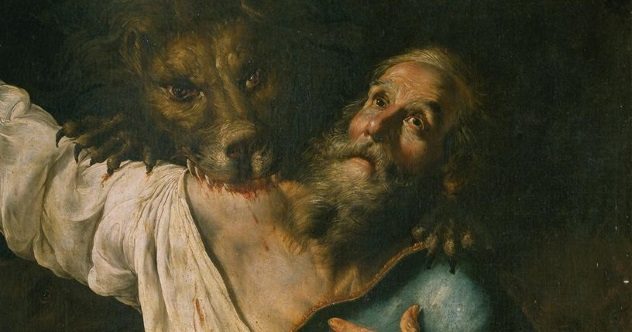
7. St. Ignatius of Antioch: The Bishop and the Beasts
Letters written on the road to martyrdom
St. Ignatius of Antioch was an early Christian bishop taken to Rome under guard, where tradition says he was martyred in the arena. Along the way, he wrote letters to Christian communities, urging unity, faithfulness, and courage. The eerie part is not only the image of the arena but the clarity with which Ignatius faced what awaited him.
Many people, given a final journey under armed escort, would spend the trip bargaining, panicking, or asking everyone to please find a loophole. Ignatius wrote theology. That is impressive in the same way a person calmly doing homework during a thunderstorm is impressive, except the thunderstorm is ancient Rome. His story suits Halloween because it brings together danger, darkness, and a soul fiercely fixed on heaven.
8. St. Damien of Molokai: The Saint Who Entered the Colony of Exiles
Holiness in a place people feared
St. Damien of Molokai, born Jozef De Veuster, was a Belgian missionary priest who served people with Hansen’s disease in the Hawaiian settlement of Kalaupapa on Molokai. At the time, those with the disease were isolated from society, and the colony carried a reputation of fear, abandonment, and sorrow. Damien chose to live among the people there, not as a visitor with an exit strategy, but as a pastor and neighbor.
He helped build houses, organize community life, provide care, and restore dignity to people others had pushed away. Eventually, he contracted the disease himself and died after years of service. Damien’s story is eerie because it takes place in a landscape of isolation and illness, but it is also profoundly human. He turned a place associated with dread into a place where people could be seen, loved, and remembered.
9. St. Thomas More: The Saint Who Kept His HeadUntil He Didn’t
A lawyer, a conscience, and a very sharp ending
St. Thomas More was a brilliant English lawyer, writer, and statesman who served under King Henry VIII. When the king broke with Rome and claimed supreme authority over the Church in England, More refused to approve what his conscience could not accept. His silence and resistance eventually cost him his life. He was executed at Tower Hill in 1535.
More’s story is eerie in the old Tudor way: towers, trials, political pressure, and the shadow of the executioner. Yet he is also remembered for his wit. Even near death, accounts preserve his calm humor and famous final loyalty to God above royal power. For Halloween, More is the candle in the courtroom: a reminder that conscience can be terrifyingly costly, especially when the person asking you to compromise owns the axe.
10. St. Isaac Jogues: The Missionary Who Returned
The courage to go back
St. Isaac Jogues was a French Jesuit missionary in seventeenth-century North America. He worked among Native peoples during a period of intense conflict involving French colonists, the Huron, and the Iroquois Confederacy. Captured by Mohawk warriors, Jogues suffered greatly and eventually escaped. What makes his story so striking is that he later returned to the mission field.
Jogues’ life should be handled with historical care. The world he entered was complex, marked by colonial pressures, disease, warfare, cultural misunderstanding, and sincere religious conviction. Still, his personal courage is undeniable. He went back not because danger had vanished, but because he believed his mission required it. For a Halloween reflection, Jogues represents one of the most unsettling questions of all: what would you return to, even after it had terrified you?
Why Eerie Saints Fit Halloween Better Than You Think
Modern Halloween often treats fear like entertainment, and there is nothing wrong with a harmless plastic skeleton named Gary on the front porch. But the older Christian meaning of Halloween points toward All Saints’ Day and the “last things”: death, judgment, heaven, and hell. In that context, eerie saint stories are not random creepy trivia. They are reminders that holiness does not avoid darkness; it walks through it carrying a light.
These saints also complicate our idea of courage. Courage is not always loud. St. Lucy’s courage looks like fidelity. St. Rita’s looks like forgiveness. St. Damien’s looks like staying when others leave. St. Thomas More’s looks like refusing to sign away conscience. St. Lawrence’s looks like serving the poor while making one final joke sharp enough to survive centuries.
The best Halloween saint celebration does not need to be gloomy. It can be thoughtful, funny, candlelit, and just spooky enough to make history feel alive. Read a saint story aloud. Create a costume based on traditional iconography. Host an All Hallows’ Eve dinner with foods connected to saints’ feast days. Put a small card beside each dessert explaining the saint behind it. Suddenly your party has more personality than another bowl of candy corn trying its best.
Experience Notes: How to Celebrate Eerie Saints Without Losing the Fun
If you want to build a Halloween celebration around eerie saints, start with atmosphere. You do not need to transform your living room into a medieval crypt, although a few candles and moody music will do wonders. Keep it warm rather than grim. Think “old library during a thunderstorm,” not “basement nobody should enter.” The goal is to make people curious, not to make your guests text their parents for rescue.
One great experience is a “saint story circle.” Choose three or four saints from this list and tell their stories in short, dramatic versions. Give each person a card with a saint’s name, symbol, feast day, and one question for discussion. For example, St. Denis can spark a conversation about speaking truth after being silenced. St. Lucy can lead to a reflection on what it means to bring light into dark places. St. Damien can open a discussion about caring for people society avoids. This turns Halloween storytelling into something meaningful without making it feel like a lecture wearing a fake mustache.
Food can also make the theme memorable. For St. Lawrence, serve something grilled or toasted, but keep the joke gentle. For St. Lucy, use candles, golden pastries, or bright citrus flavors to echo her connection with light. For St. Denis, a French cheese board or Paris-inspired dessert fits the theme without getting too literal. For St. Damien, tropical fruit can nod respectfully to Hawaii, while a short note can explain his work among people isolated at Kalaupapa.
Costumes are another fun option, especially if you keep them symbolic rather than graphic. A St. Lucy costume might include a white dress, a red sash, and a lantern. St. Lawrence could carry a small prop gridiron or chef’s spoon. St. Thomas More might wear a dark robe and carry a rolled document labeled “conscience.” St. Denis is trickier, because headless costumes can go from clever to chaotic very quickly. If you try it, please make sure you can still see the stairs. Holiness is admirable; falling into the snack table is less so.
For families, classrooms, or parish groups, the best approach is to balance the eerie details with the virtue behind each saint. Do not linger on suffering. Focus on what the saint did with fear. Did they forgive? Serve? Speak truth? Stay faithful? Protect the vulnerable? That is where the real story lives. Halloween gives you the dramatic doorway, but All Saints’ Day gives you the destination.
You can also create a “Hall of Hallows” display. Print small saint profiles and arrange them with simple symbols: a lamp for Lucy, a dog for Roch if you add him as a bonus saint, a book for Thomas More, a palm branch for martyrs, a small paper flame for Polycarp, and a seashell or walking staff for pilgrim saints. Visitors can walk through, read, and vote for the “most surprising,” “most courageous,” or “most Halloween-ready” saint. It is interactive, educational, and much easier to clean up than carved pumpkins that have entered their swamp era.
Finally, end the evening with a simple reflection: Halloween is not only about being scared by shadows. It can also be about remembering people who carried light into them. The eerie saints are not eerie because they loved darkness. They are eerie because darkness could not defeat them. That is a celebration worth havingwith candles, laughter, reverence, and maybe just one more piece of chocolate for courage.
Conclusion
The stories of eerie saints remind us that Christian history is full of courage, mystery, humor, and dramatic symbols that fit naturally with the atmosphere of Halloween. From St. Denis carrying his head in legend to St. Lucy shining as a patron of sight, from St. Lawrence’s fearless wit to St. Damien’s compassion among the abandoned, these saints show that holiness is not fragile. It can stand in prisons, courts, colonies, arenas, and dark nights.
For a web reader looking for something deeper than another list of costume ideas, these saints offer a memorable bridge between spooky-season curiosity and the meaning of All Hallows’ Eve. They prove that the most haunting stories are not always about ghosts. Sometimes they are about real people whose faith, courage, and love still refuse to stay buried.