Before Hawaii became a postcard, a vacation dream, a U.S. territory, and eventually the 50th state, it was already home to one of the most sophisticated island civilizations in the Pacific. Life in ancient Hawaii was not a simple “beach, coconut, nap” situationalthough, to be fair, the beaches were doing excellent work even then. Native Hawaiians built complex systems of farming, fishing, law, religion, navigation, art, social organization, and environmental stewardship long before American political power entered the islands.
To be historically accurate, “before the U.S. arrived” can mean several things. Polynesian settlers reached Hawaii centuries before European contact. Captain James Cook arrived in 1778, American missionaries came in 1820, and the United States annexed Hawaii in 1898. This article focuses mainly on pre-contact Hawaiian life and the cultural systems that remained influential before U.S. control reshaped the islands.
So let’s step beyond the souvenir aisle and into the world of ahupuaʻa, kapu, waʻa, kalo, hula, fishponds, chiefs, farmers, storytellers, and navigators who could cross thousands of miles of ocean without GPS. Yes, without GPS. Some of us still get lost in a grocery store.
1. Hawaii Was Settled by Master Ocean Navigators
Long before airplanes made island-hopping feel casual, Polynesian voyagers crossed the Pacific in double-hulled canoes called waʻa kaulua. These were not lucky drifters bobbing around until land appeared. They were trained wayfinders who read the stars, ocean swells, winds, clouds, birds, and currents with extraordinary precision.
The first settlers brought with them plants, animals, tools, stories, religious practices, and knowledge systems. They traveled from other parts of Polynesia, including island groups such as the Marquesas and Tahiti, over many generations. Imagine packing for a voyage across open ocean and deciding what matters most: food plants, water, animals, seeds, tools, and enough courage to make your modern carry-on anxiety look adorable.
This voyaging heritage shaped ancient Hawaiian culture. The sea was not a barrier; it was a road, a classroom, and a living ancestor. Navigation was science, spirituality, memory, and discipline woven together.
2. The Ahupuaʻa System Organized Life From Mountain to Sea
One of the most fascinating facts about ancient Hawaii is the ahupuaʻa, a traditional land division that often stretched from the uplands to the ocean. Instead of drawing borders as random lines on a map, Hawaiians organized communities around natural resources: forests, streams, valleys, farmland, fishponds, reefs, and nearshore waters.
This system allowed people within an ahupuaʻa to access nearly everything they needed. The upper forests provided timber, medicinal plants, bird feathers, and watershed protection. The middle lands supported crops such as kalo, banana, sweet potato, and sugar cane. The lowlands and shoreline offered fishponds, reefs, salt, seaweed, and canoe landings.
In modern terms, the ahupuaʻa was a sustainability plan, zoning system, food network, water policy, and community identity all rolled into one. Except it did not require a 94-page PDF with a confusing appendix.
3. Land Was Treated as a Living Relative, Not Just Property
In traditional Hawaiian thought, ʻāina means land, but it carries a deeper meaning than dirt, acreage, or real estate. ʻĀina is that which feeds. Native Hawaiian relationships with land were spiritual, genealogical, practical, and emotional. People belonged to the land as much as the land belonged to a community.
The phrase mālama ʻāina means to care for the land. It reflects a worldview in which humans are responsible for protecting the resources that sustain them. Forests, streams, taro patches, fishponds, and reefs were not separate “departments.” They were connected parts of one living system.
This relationship shaped daily behavior. Overharvesting could harm the whole community. Polluting water could damage crops and fish. Ignoring seasonal rhythms could threaten survival. In ancient Hawaii, environmental care was not a trendy lifestyle choice; it was how dinner kept showing up.
4. Society Had Clear Roles, Ranks, and Responsibilities
Ancient Hawaiian society was highly organized and hierarchical. At the top were the aliʻi, the chiefs and chiefly families who held political and spiritual authority. The kahuna were skilled experts, including priests, healers, canoe builders, navigators, architects, and specialists in ritual knowledge. The makaʻāinana, often translated as commoners, were the people of the land. They farmed, fished, built walls, maintained fishponds, made tools, produced food, and supported the broader social system.
This was not a loose collection of beach villages. It was a complex society with leadership, labor systems, religious obligations, law, taxation, warfare, diplomacy, and specialized professions. A canoe builder, for example, needed technical skill, knowledge of trees, ritual protocol, and community support. A farmer needed deep understanding of water flow, soil, seasons, and crop varieties.
Everyone had kuleana, or responsibility. The word is still powerful in Hawaii today because it suggests duty, privilege, accountability, and care all at once.
5. The Kapu System Regulated Daily Life
The kapu system was a sacred code of laws and restrictions that governed ancient Hawaiian life. Kapu could apply to people, places, foods, seasons, activities, and social interactions. Some rules protected chiefly authority. Others regulated fishing, farming, harvesting, religious observance, and gendered behavior.
From a modern perspective, some kapu rules may seem strict. In many cases, breaking kapu could bring severe punishment. But the system also helped organize society and manage resources. If certain fish were not to be caught during a season, that restriction could allow populations to recover. If certain places were sacred, they were treated with caution and respect.
Kapu was law, religion, ecology, and social order in one system. It was not casual etiquette. This was not “please use a coaster.” This was the rulebook for keeping the physical and spiritual world in balance.
6. Food Was Built Around Canoe Plants and Brilliant Farming
Early Hawaiian voyagers brought essential “canoe plants” with them, including kalo (taro), ʻulu (breadfruit), ʻuala (sweet potato), maiʻa (banana), niu (coconut), sugar cane, bamboo, and other useful plants. These were not decorative garden items. They were survival technology with leaves.
Kalo held special cultural importance. Its root was cooked and pounded into poi, a staple food that nourished generations. In Hawaiian tradition, kalo is also connected to genealogy and family, making it much more than a carbohydrate. It was food, identity, and ancestor on the same plate.
Different landscapes supported different crops. Wetland areas were ideal for irrigated taro patches called loʻi kalo. Dryland areas supported sweet potatoes, dryland taro, breadfruit, and other crops. Ancient Hawaiian farmers understood microclimates, rainfall patterns, soil conditions, and irrigation. They were not simply “living off the land”; they were engineering food systems within it.
7. Hawaiian Fishponds Were Aquaculture Marvels
Ancient Hawaiians developed impressive fishpond systems known as loko iʻa. These ponds used rock walls, natural shorelines, freshwater flow, brackish water, and carefully designed gates to manage fish. Small fish could enter through openings, feed and grow inside the pond, and later be harvested when mature.
Loko iʻa were not just clever fishing spots. They were cultural, ecological, and engineering achievements. Many were integrated into ahupuaʻa systems, linking upland water, coastal management, and community food security. Building and maintaining them required collective labor, expert knowledge, and long-term stewardship.
Today, many Hawaiian communities are restoring ancient fishponds, and the work reveals just how advanced these systems were. The old technology still has something to teach the modern worldespecially a world that has somehow invented both satellites and overfished dinner.
8. Hula, Mele, and Moʻolelo Preserved Knowledge
Before Hawaiian became a written language in the 19th century, knowledge was carried through memory, performance, and oral tradition. Moʻolelo are stories and histories. Mele are songs or chants. Oli are chants often performed without dance. Hula expresses story, genealogy, place, emotion, and spiritual meaning through movement.
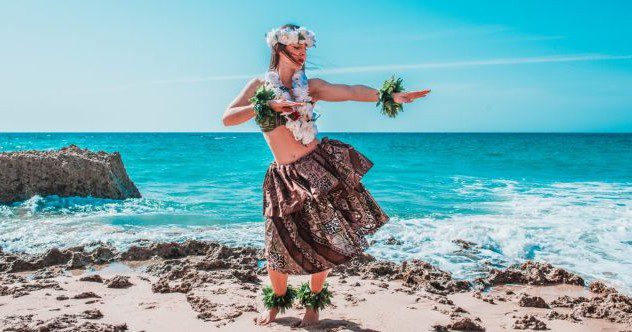
Hula was not merely entertainment for visitors in matching floral shirts. In traditional Hawaiian culture, hula could preserve historical events, honor chiefs, praise places, recount genealogies, and connect people to akua, or deities. It was literature in motion and archive in rhythm.
This matters because oral traditions can carry detailed cultural memory across generations. A chant might name winds, rains, ancestors, battles, migrations, or sacred landscapes. In a world without printed books, the human body, voice, and memory became the library.
9. Hawaiian Craftsmanship Was Highly Specialized
Daily life in ancient Hawaii involved remarkable craftsmanship. People made tools from stone, bone, shell, wood, and fiber. They built hale, or houses, from local materials. They created canoes, fishing gear, weapons, bowls, mats, nets, and ornaments. Each object reflected function, artistry, and environmental knowledge.
One famous craft was kapa, a barkcloth made from plant fibers, especially wauke, or paper mulberry. The process involved harvesting, soaking, beating, drying, decorating, and sometimes scenting or dyeing the cloth. Kapa could be used for clothing, bedding, wrapping, ceremony, and chiefly display.
Featherwork was another extraordinary art. Skilled bird catchers gathered feathers, often from native forest birds, and artisans used them to create cloaks, helmets, lei, and other chiefly items. These pieces were not just beautiful. They expressed rank, mana, and political power. In short: ancient Hawaiian fashion could absolutely dominate a royal runway.
10. Makahiki Was a Season of Peace, Games, and Renewal
The Makahiki season was an important annual period dedicated to Lono, a god associated with fertility, agriculture, rainfall, music, and peace. It began around the time the Pleiades, known in Hawaiian as Makaliʻi, appeared in the evening sky, usually in late October or early November. The season lasted about four months.
During Makahiki, war was kapu. Communities rested from certain labors, offered tribute, held ceremonies, feasted, danced, and competed in games. Athletic contests tested strength, balance, speed, and skill. Traditional games could include footraces, spear throwing, wrestling, sledding, and strategic games such as kōnane.
Makahiki was not just a party with better organization than most modern office holiday events. It reinforced political relationships, celebrated abundance, honored the gods, gave communities time to breathe, and marked the turning of the agricultural year. Peace itself became part of the calendar.
Bonus Fact: Places of Refuge Offered a Powerful Form of Sanctuary
One of the most striking features of ancient Hawaiian life was the puʻuhonua, or place of refuge. A person who broke kapu, a defeated warrior, or a noncombatant during war could seek sanctuary at designated sacred sites. If the person reached the puʻuhonua and received ritual absolution from a priest, they could return to society.
Puʻuhonua o Hōnaunau on Hawaii Island is one of the best-known examples. It reminds us that ancient Hawaiian law was strict, but it also contained pathways for protection, ritual cleansing, and return. This idea of refuge adds depth to our understanding of justice, spirituality, and survival in old Hawaii.
Why These Facts Matter Today
Learning about life in Hawaii before U.S. control helps correct a common misunderstanding. Hawaii was not an empty paradise waiting to be discovered. It was a thriving homeland with political authority, spiritual traditions, ecological systems, food production, architecture, navigation, art, and law.
Native Hawaiians created a society adapted to island life with extraordinary intelligence. Their systems were not perfectno society isbut they were deeply rooted in place. They balanced hierarchy with responsibility, food production with resource limits, and cultural memory with daily practice.
Many of these traditions continue today through Hawaiian language revitalization, hula, voyaging, fishpond restoration, loʻi kalo farming, cultural education, and movements to protect ʻāina. The past is not locked behind museum glass. It is alive in communities, ceremonies, classrooms, farms, canoes, and coastlines across Hawaii.
Experiences That Bring Ancient Hawaiian Life Into Focus
For readers who want to understand this topic beyond facts on a screen, the best approach is to experience Hawaii with respect, curiosity, and patience. Ancient Hawaiian life was tied to place, so learning becomes more meaningful when you connect each idea to an actual landscape. Standing beside a fishpond, walking through a valley, visiting a heiau site, or seeing kalo growing in water can make history feel less like a paragraph and more like a pulse.
One powerful experience is visiting Puʻuhonua o Hōnaunau National Historical Park on Hawaii Island. The coastal setting is beautiful, but the deeper meaning is not “nice place for photos.” It was a sacred refuge, a royal center, and a place shaped by kapu, aliʻi, priests, and ceremony. Visitors who slow down can imagine the urgency of someone fleeing across lava rock toward sanctuary, or the solemnity of rituals performed near the ocean. The lesson is clear: landscapes in Hawaii often hold stories that are older than the roads leading to them.
Another meaningful experience is learning about loko iʻa restoration. Fishponds show how traditional Hawaiian knowledge can speak directly to modern problems such as food security, coastal resilience, and community-based resource management. Watching volunteers rebuild rock walls by hand or remove invasive growth from a pond makes ancient aquaculture feel surprisingly current. It is hard not to admire a system that fed communities for centuries without needing plastic packaging, refrigerated trucks, or a coupon code.
Spending time in a loʻi kalo can also change the way people think about food. Taro farming is muddy, physical, careful work. It requires water management, patience, and cooperation. When people learn that kalo is connected to Hawaiian genealogy and identity, poi stops looking like a simple side dish and starts looking like a cultural relationship served in a bowl.
Museums and cultural centers offer another doorway. Bishop Museum, Hawaiian language resources, canoe gardens, hula festivals, and voyaging organizations help explain the tools, chants, plants, and vessels that shaped Hawaiian life. Seeing kapa, featherwork, stone tools, or canoe models up close reveals the skill behind everyday objects. These were not primitive crafts; they were highly refined technologies made from local materials and generations of observation.
For travelers, the most important experience may be learning how to behave. Respect posted signs, do not climb on sacred structures, avoid removing rocks or sand, support Native Hawaiian-led tours and organizations, and learn the meanings of words like aloha, mahalo, kuleana, and mālama before using them like decorative confetti. Hawaii’s past is not a theme park. It is the living heritage of Kānaka Maoli, the Native Hawaiian people.
The more you learn about life in Hawaii before the U.S. arrived, the more the islands become layered with meaning. A mountain is not just scenery. A stream is not just water. A reef is not just a snorkeling spot. Each can be part of a larger story about survival, responsibility, beauty, and belonging.
Conclusion
Life in Hawaii before the U.S. arrived was rich, organized, and deeply connected to land and sea. Ancient Hawaiians navigated vast oceans, cultivated canoe plants, built sustainable fishponds, divided land through the ahupuaʻa system, preserved history through hula and chant, honored sacred laws through kapu, and celebrated renewal during Makahiki. Their world was not a simple tropical fantasy. It was a complex civilization built through intelligence, discipline, spirituality, and environmental knowledge.
Understanding this history helps us see Hawaii more clearly. The islands are not just a destination; they are a homeland. Behind every postcard view is a deeper story of people who knew how to live with their environment, remember their ancestors, and organize society around responsibility. That story deserves attention, respect, and a permanent place in how we talk about Hawaii today.
SEO Tags
Note: This web-ready article is written in original language and synthesized from reputable U.S. cultural, historical, educational, and government sources without copying source text.