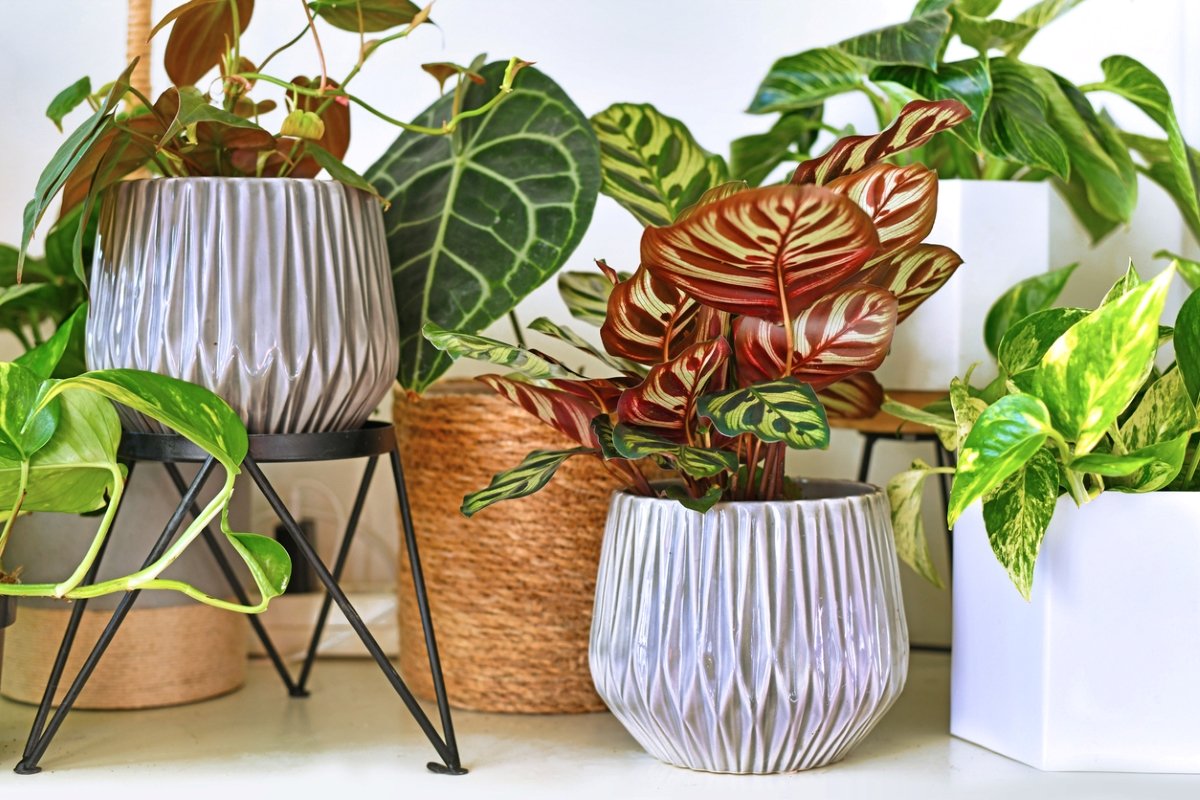
Plain green foliage is dependable, calming, and always welcome. But sometimes a room needs a plae guest who arrives wearing a fabulous patterned jacket. That is where variegated plants shine.
With stripes, speckles, marbling, colored veins, creamy borders, and occasional splashes of pink, variegated houseplants create visual interest even when they are not flowering. Some look hand-painted. Others resemble miniature abstract art. A few appear as though the plant accidentally wandered through a paint store and had a wonderful time.
The following 10 variegated plants offer an impressive mix of color, form, and texture. Some are nearly indestructible, while others expect filtered water, precise lighting, and emotional support. This guide explains what makes each plant special, where it looks best, and how to keep its patterned foliage healthy.
What Is a Variegated Plant?
A variegated plant has foliage containing two or more colors or visibly different shades of the same color. Its leaves may feature cream-colored margins, silver streaks, yellow bands, red veins, pink patches, dark green spots, or irregular white sectors.
Some patterns result from cells that contain less chlorophyll, the green pigment plants use during photosynthesis. Other plants have natural markings created by differences in pigments, leaf structure, or genetics. Because pale portions of a leaf generally contribute less energy than green tissue, heavily variegated specimens often grow more slowly than their solid-green relatives.
This also explains why proper light is so important. Too little light may weaken growth or encourage certain plants to produce greener leaves. Too much direct sun, however, can scorch delicate pale tissue. For many indoor variegated plants, bright, indirect light provides the happiest compromise.
Research basis: Bob Vila’s variegation overview and University of Minnesota Extension guidance on indoor plant lighting. n>
Quick Comparison of the Best Variegated Houseplants
| Plant | Best Light | Watering Style | Difficulty | Best Display |
|---|---|---|---|---|
| Variegated String of Hearts | Bright, indirect light | Allow most soil to dry | Easy to moderate | Hanging planter |
| Snake Plant | Low to bright indirect light | Let soil dry thoroughly | Easy | Floor pot or modern shelf |
| Red Congo Philodendron | Bright, filtered light | Water after top layer dries | Moderate | Tabletop centerpiece |
| Variegated Monstera | Bright, indirect light | Water when upper soil dries | Moderate | Large floor planter |
| Prayer Plant | Medium to bright indirect light | Keep lightly and evenly moist | Moderate | Desk or hanging basket |
| Watermelon Peperomia | Bright, indirect light | Let surface dry slightly | Easy to moderate | Small shelf or side table |
| Variegated String of Pearls | Bright, indirect light | Water sparingly | Moderate | High shelf or hanging pot |
| Rattlesnake Plant | Filtered light or bright shade | Keep consistently moist | Moderate | Bathroom or humid room |
| Variegated English Ivy | Bright, indirect light | Water when surface begins drying | Moderate | Topiary or hanging planter |
| Variegated White Bird of Paradise | Very bright light | Moist but well-drained soil | Moderate to advanced | Large statement planter |
10 Variegated Plants With Outstanding Visual Appeal
1. Variegated String of Hearts
Ceropegia woodii is already charming in its standard form, but variegated string of hearts turns the adorableness dial almost irresponsibly high. Its small, heart-shaped leaves combine soft green, silver, cream, and occasional pink or purple tones. Thin trailing stems can cascade several feet from a hanging basket.
This semi-succulent plant prefers bright, indirect light and a fast-draining potting mixture. Allow most of the soil to dry before watering again. Constantly wet roots can rot, while insufficient light may produce stretched stems and weaker coloration. Place it near an east-facing window or a few feet back from a brighter southern exposure.
2. Variegated Snake Plant
Few plants combine architectural form and low-maintenance care as successfully as the snake plant. Cultivars such as ‘Laurentii’ produce upright, sword-shaped leaves with mottled green centers and bold yellow margins. It is basically living sculpture that also tolerates forgotten watering appointments.
Snake plants survive in low light, but brighter filtered light usually supports stronger growth and more vivid markings. Use a highly draining soil mixture and wait until it dries before watering. Overwatering is the main villain in this particular houseplant drama. During winter, a snake plant may need water only occasionally.
Research basis: NC State Extension information on Dracaena trifasciata, including light tolerance, cultivars, drainage, and winter watering. . Red Congo Philodendron
Red Congo philodendron brings multiple colors to the room through changing foliage rather than conventional white-and-green variegation. New leaves may emerge in coppery red, burgundy, or reddish-orange shades before maturing toward deep green. Red petioles add another layer of contrast.
Because nursery labels can be inconsistent, verify the cultivar before paying a premium for a “variegated Red Congo.” Philodendron ‘Birkin,’ believed to be associated with a mutation of Red Congo, is the better-known option when white pinstriping is the main goal. Both appreciate warm temperatures, bright filtered light, good drainage, and moderate humidity. Keep them away from harsh afternoon sun, which can scorch the foliage.
Research basis: NC State Extension description of Philodendron ‘Birkin,’ its possible relationship to ‘Rojo Congo,’ and its indoor care requirements. . Variegated Monstera
Variegated monstera is the celebrity of the patterned plant world. Its large, split leaves may display cream-colored marbling, yellow speckles, white sectors, or constellation-like markings. Popular forms include ‘Thai Constellation,’ yellow-variegated Aurea types, and white-variegated Albo plants.
Give a variegated monstera bright, indirect light so its green tissue can produce enough energy. A moss pole or sturdy support encourages larger, more mature leaves. Water when the top portion of the potting mixture has dried, but do not allow the root ball to remain waterlogged. Highly white leaves are dramatic but fragile, so avoid buying a plant with almost no green tissue. It may photograph beautifully while quietly running out of fuel.
Research basis: Bob Vila’s cultivar overview and University of Minnesota Extension material on Monstera growth and propagation. . Prayer Plant
The prayer plant, Maranta leuconeura, offers oval leaves decorated with symmetrical blotches, contrasting veins, and colorful undersides. Red-veined cultivars look as though someone drew a tiny road map across every leaf. At night, the foliage rises and folds upward, inspiring the plant’s common name.
Prayer plants prefer medium to bright indirect light, warm rooms, moderate to high humidity, and soil that stays lightly moist without becoming swampy. Dry indoor air often causes crispy margins. A humidifier usually helps more than enthusiastic misting, which provides only a brief humidity increase. These low-growing plants work beautifully on shelves, tables, or in hanging containers.
Research basis: Missouri Botanical Garden information on Maranta leuconeura foliage, growth habit, and nightly leaf movement. . Watermelon Peperomia
Watermelon peperomia earns its name honestly. Its rounded leaves feature alternating silver and dark green bands that resemble the rind of a miniature watermelon. Red leaf stems create additional contrast, while the compact growth habit makes this plant ideal for a desk, nightstand, or narrow shelf.
Provide bright, indirect sunlight and let the soil surface dry slightly between waterings. Although its leaves feel succulent, watermelon peperomia should not remain bone-dry for extended periods. It also dislikes saturated soil, cold drafts, and oversized containers. A small pot with drainage is usually preferable to a decorative bathtub masquerading as a planter.
For pet-conscious households, the ASPCA lists watermelon peperomia as non-toxic to dogs and cats, although chewing any plant material can still cause digestive discomfort.
Research basis: NC State Extension and ASPCA profiles for Peperomia argyreia. . Variegated String of Pearls
Variegated string of pearls produces bead-like leaves patterned with green, cream, and sometimes blush-pink tones. Its trailing growth looks particularly striking in a simple hanging pot where the foliage can spill freely over the edge.
This succulent needs bright, indirect light across the top of the planter, not merely on the dangling stems. Poor overhead light commonly leaves the crown thin or bare. Use cactus soil or another coarse, fast-draining mixture, and water only after much of the pot has dried. The spherical leaves store moisture, so frequent “little sips” can cause more trouble than an occasional thorough watering.
String of pearls is toxic if eaten and should be positioned beyond the reach of pets and young children.
Research basis: NC State Extension guidance on Curio rowleyanus, including its trailing habit, lighting, drainage, propagation, and toxicity. . Rattlesnake Plant
The rattlesnake plant, now classified as Goeppertia insignis, produces long, wavy leaves marked by alternating dark green ovals. The undersides are a rich purple, creating a dramatic display whenever the foliage shifts position throughout the day.
This plant likes bright shade or diffused sunlight, evenly moist soil, warmth, and high humidity. It dislikes full sun, cold drafts, sudden temperature swings, prolonged dryness, and questionable tap water. In other words, it has standards. Filtered or rainwater can help when brown leaf tips are linked to mineral buildup.
A bright bathroom can provide an excellent environment, provided the room is warm and has enough natural light. The ASPCA categorizes rattlesnake or prayer plants as non-toxic to dogs and cats.
Research basis: NC State Extension, New York Botanical Garden, and ASPCA information on Goeppertia care and pet safety. . Variegated English Ivy
Variegated English ivy offers small, lobed leaves edged or marbled in cream, yellow, silver, or pale green. Its flexible vines can trail from baskets, wrap around a small indoor topiary, or soften the edge of a bookcase.
Indoors, place it in bright, indirect light and water when the top of the growing medium begins to dry. Good air circulation helps reduce disease problems, while regular inspection is important because spider mites and scale insects can hide among the dense foliage.
Keep English ivy contained as a houseplant or closely managed patio specimen. It is invasive in numerous parts of the United States and can smother ground vegetation, climb trees, spread into natural areas, and damage certain exterior surfaces. Pretty leaves are not a permission slip for botanical hooliganism.
Research basis: NC State and University of Maryland Extension warnings regarding Hedera helix as an invasive outdoor vine. 0. Variegated White Bird of Paradise
A genuine variegated white bird of paradise is an uncommon collector plant with large, paddle-shaped leaves marked by cream, yellow, or white areas. Its scale alone makes it impressive. Add irregular variegation, and it becomes less of a houseplant and more of a leafy architectural installation.
Names vary in the nursery trade, so specimens may be labeled as variegated Strelitzia nicolai, Strelitzia alba, or simply variegated white bird of paradise. Confirm the identification and inspect the newest growth before paying a collector-level price.
Provide very bright light, generous growing space, well-drained soil, and regular water during active growth. Avoid leaving the roots constantly soggy. White bird of paradise can eventually become enormous outdoors in warm climates, so even indoor plants should be given a heavy pot and enough room to spread their leaves without slapping everyone who walks past.
Research basis: UF/IFAS guidance on white bird of paradise size, light, drainage, growth habit, and cold sensitivity. n>
How to Keep Variegated Foliage Colorful
Match the Plant to the Available Light
Do not select a highly variegated monstera for a dim hallway and then negotiate with it. Evaluate the light first. Most patterned tropical plants perform best near a bright window with protection from intense midday sun. A grow light can supplement dark rooms or short winter days.
Water According to the Plant, Not the Calendar
Snake plants and string plants need substantial drying time. Prayer plants and rattlesnake plants prefer more consistent moisture. Check the growing medium with a finger, wooden skewer, or moisture meter before watering. A rigid Sunday watering schedule is convenient for people, not necessarily for roots.
Watch for Reversion
Some variegated plants may begin producing solid-green shoots. Because greener growth contains more chlorophyll, it can grow faster and eventually dominate the plant. Pruning reverted growth back to a variegated node may help preserve the desired pattern, depending on the species and type of variegation.
Choose a Pot With Drainage
A beautiful container cannot compensate for trapped water. Use a nursery pot with drainage inside a decorative cachepot, or select a container with an open drainage hole. Empty collected water after irrigation so the root ball is not left soaking.
Inspect Before Buying
Look under leaves and around stems for mites, scale, mealybugs, sticky residue, webbing, or suspicious discoloration. Check that the plant is firmly rooted and that its variegation appears on multiple leaves or growth points. One unusually pale leaf does not always indicate a stable variegated specimen.
Research basis: University of Maryland Extension guidance on selecting healthy indoor plants and identifying common houseplant pests. n>
Experience Notes: What Living With Variegated Plants Teaches You
Experience with variegated plants quickly teaches one important lesson: the most expensive specimen is not automatically the most satisfying one. A rare plant may arrive with enormous visual promise, but a healthy snake plant or watermelon peperomia can create just as much impact when it is placed well and grown successfully.
One common beginner experience involves moving a patterned plant repeatedly in search of the “perfect” location. It starts on a dark bookshelf because the leaves look fantastic against the wall. Growth slows, so the plant moves directly into a sunny window. Two days later, the pale sections develop scorch marks. Eventually, the plant settles a few feet from the window behind a sheer curtain, where it should probably have been from the beginning. Variegated foliage rewards careful observation more than dramatic intervention.
Watering offers another memorable lesson. Thick-leaved plants such as snake plants, strings of hearts, and strings of pearls often suffer from excessive attention. Their leaves store moisture, and their roots need oxygen. A grower may see one wrinkled pearl, panic, and pour in a full pitcher of water even though the lower soil remains wet. The better habit is checking the entire pot, learning how light it feels when dry, and watering thoroughly only when the plant actually needs it.
Humidity-loving plants create the opposite challenge. Prayer plants and rattlesnake plants may produce brown tips even while generating healthy new growth. This does not always mean the plant is dying. Heated or air-conditioned rooms can dry leaf margins, and mineral-heavy water can contribute to discoloration. Moving the plant away from vents, using filtered water, and running a nearby humidifier usually accomplish more than spraying the leaves every few hours like an overworked weather system.
Variegated plants also teach patience. Pale tissue contains less chlorophyll, so heavily patterned plants may grow slowly. A monstera cutting can spend weeks developing roots before producing a new leaf. When that leaf finally unfurls, its pattern may be beautifully balancedor mostly green. Variegation is partly predictable and partly a botanical lottery ticket.
Placement makes an enormous practical difference. A single bold plant often looks more impressive than ten small plants crowded together. A variegated monstera can anchor an empty corner, while a trailing string of hearts adds movement above a desk. Watermelon peperomia works best where its striped leaves can be seen from above. Snake plants emphasize vertical lines beside a low cabinet or sofa.
The most useful experience is learning to buy for health before color. Strong roots, active growth, clean foliage, and an appropriate plant structure matter more than one spectacularly white leaf. Extremely pale plants can be weaker, and unstable patterns may change. Choosing a vigorous specimen with balanced green and colored tissue usually leads to a better long-term display.
Finally, not every damaged leaf requires a rescue operation. Older leaves eventually decline. Minor tears, brown edges, and cosmetic blemishes are normal in real homes. Plants do not live under studio lighting with a full-time styling team. Consistent care, realistic expectations, and restraint usually produce better results than constant repotting, fertilizing, trimming, and relocating.
Final Thoughts
The best variegated plants combine memorable foliage with care requirements that fit your home. Snake plants provide bold structure with minimal fuss. Prayer plants and rattlesnake plants offer intricate patterns for growers who can provide humidity. Variegated monstera and white bird of paradise deliver room-dominating drama, while strings of hearts and pearls create graceful vertical movement.
Choose a plant based on your available light, watering habits, space, and household needsnot merely the most dramatic photograph online. With the right placement and a little restraint, variegated foliage can remain colorful, healthy, and far less temperamental than its social-media reputation suggests.
SEO Tags
Research synthesis also consulted Missouri Botanical Garden indoor-plant guidance and the ASPCA toxic and non-toxic plant database.