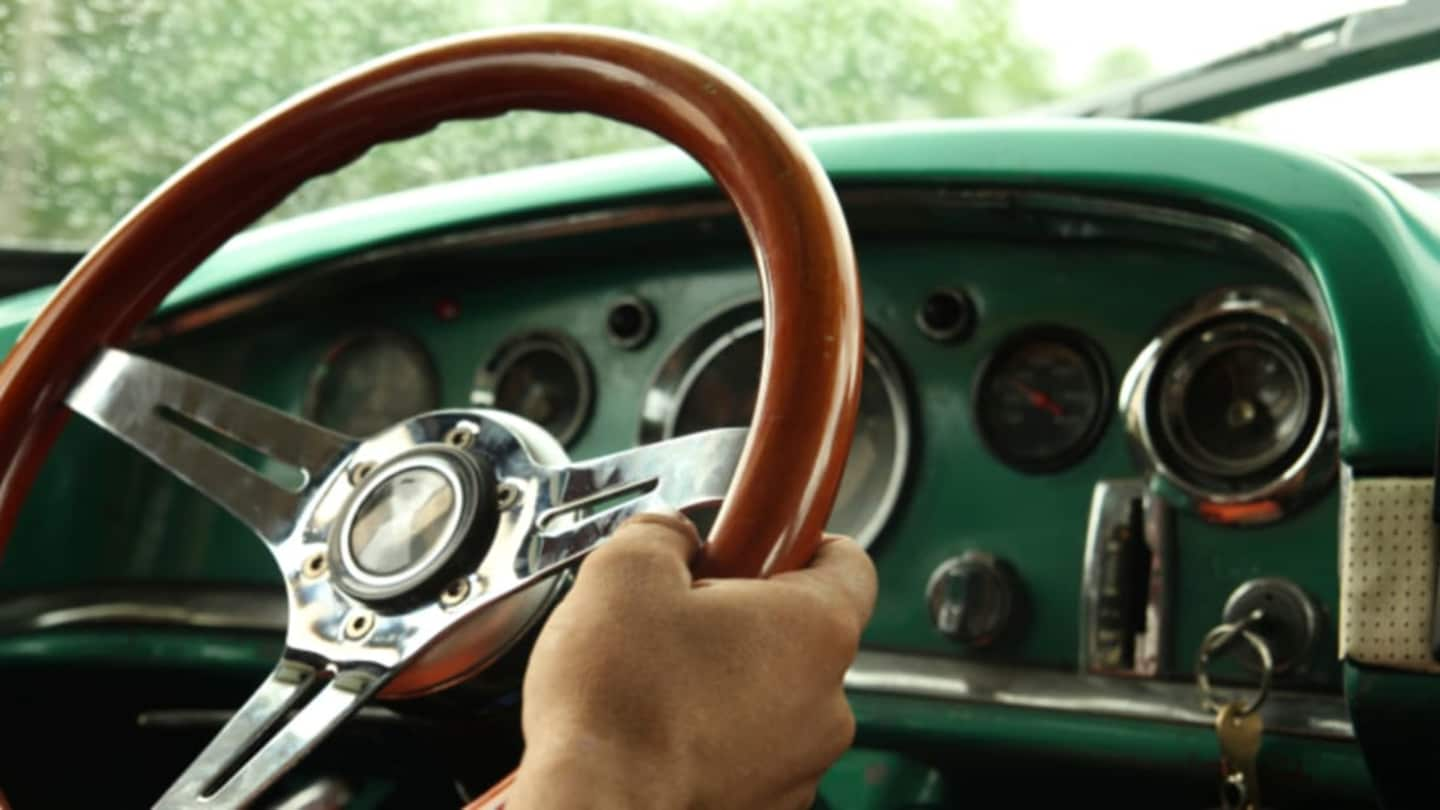
Modern cars are rolling computers with heated everything, giant touchscreens, backup cameras, and enough driver-assistance tech to make your grandpa’s sedan look like a lawn chair with wheels. But for all the progress, plenty of familiar old-school features have quietly vanished. Some disappeared because safety rules got stricter. Some got kicked out by emissions laws. Others lost a cage match against aerodynamics, packaging, smartphones, or simple buyer demand.
That does not mean every old feature was better. Some were charming but flawed. Some were wonderfully simple until they leaked, rattled, or required the upper-body workout of a rowing machine. And a few deserve to stay in the museum where they can no longer inconvenience innocent commuters. Still, these features helped define the driving experience for generations. They changed how cars looked, felt, and even smelled. Yes, smelled. If you know, you know.
Here are 11 features you no longer see in carsor at least no longer see in ordinary, everyday new carsand why they mostly disappeared.
1. Vent Windows
Before air conditioning became common and powerful, vent windows were the poor driver’s climate-control system. These little triangular panes at the front of the side windows could pivot outward and funnel a direct blast of air into the cabin. They were brilliant in a very mechanical, low-tech way. Want wind in your face without fully dropping the whole window? Flip the vent window open and enjoy instant budget aviation.
So why did they disappear? Better air conditioning played a big role, but design did too. As cars became more aerodynamic, quieter, and tighter sealed against rain and wind noise, vent windows became harder to justify. One-piece side glass looked cleaner, leaked less, and helped engineers improve efficiency and cabin refinement. In other words, vent windows lost the battle because modern cars stopped being drafty metal rectangles.
2. Front Bench Seats
There was a time when the front seat of a car was less “driver-focused cockpit” and more “rolling sofa.” Bench seats stretched from door to door and let three people squeeze across the front if they were friendly, related, or deeply committed to discomfort. They gave old sedans and wagons a laid-back, lounge-like vibe that bucket seats simply cannot match.
But bench seats started losing ground when car interiors became more specialized. Bucket seats offer better support, safer positioning, and room for a center console full of cupholders, controls, charging ports, and everyone’s emotional support coffee tumbler. Safety systems also changed the equation. Airbags, seatbelt geometry, side bolsters, and crash packaging all work better with more defined seating positions. The result is a cabin that is safer and more ergonomic, but far less likely to make you feel like you are piloting a mobile living-room couch.
3. Crank Windows
Manual crank windows were simple, cheap, and oddly satisfying. You rotated a handle, the window went up or down, and nobody needed to consult a software update. In stripped-down economy cars and off-roaders, crank windows hung on for years as a badge of cheerful simplicity.
Now they are basically gone. Power windows became so common, so affordable, and so expected that manual cranks finally lost the war. Automakers also prefer reducing build complexity, and standardizing door hardware helps. That is why crank windows have become the stuff of nostalgia and rental-car trauma stories from another era. For modern buyers, pressing a button is the baseline. For old-school drivers, the disappearance of crank windows feels like one more tiny mechanical ritual sent into retirement.
4. Pop-Up Headlights
Pop-up headlights were automotive theater. Flip a switch, and the car suddenly looked awake, dramatic, and faintly smug. Sports cars from the 1980s and 1990s wore them like eyeliner for speed demons. They made even an ordinary coupe feel like it had arrived from a more glamorous timeline.
Unfortunately, they also added cost, weight, complexity, and one more thing to break. More important, changing safety expectations and pedestrian-impact concerns made exposed, fixed lighting far easier to engineer. Modern headlight technology also became far more compact and sculptural, so designers no longer needed hidden lamps to get a sleek nose. Pop-up headlights did not vanish because people stopped loving them. They vanished because modern engineering priorities took one look at those moving parts and said, “Absolutely not.”
5. Hood Ornaments on Mainstream Cars
Once upon a time, a hood ornament was not just decoration. It was branding, swagger, and sometimes a tiny chrome monument to excess. Cars used to wear mascots, crests, rockets, birds, and abstract sculptures right on the tip of the hood as if modesty had not yet been invented.
Today, most mainstream cars are content with a flat badge in the grille. Why? Cleaner aerodynamics, changing design tastes, theft concerns, and pedestrian-safety thinking all helped push hood ornaments toward extinction. A raised ornament is one more object sticking into the airflow and one more part that can be damaged, stolen, or regulated into irrelevance. They still survive on a few luxury holdouts, but on ordinary cars, the hood ornament has largely gone the way of formal hats and phone booths.
6. Carburetors
Carburetors used to be the heart of the gasoline engine’s fuel system. They mixed air and fuel mechanically, and when they were working well, they had a kind of analog magic to them. When they were not working well, they had a kind of analog menace to them. Cold starts, tuning issues, and fuel-delivery quirks were part of the package.
Fuel injection replaced carburetors because it is far more precise. That precision matters for emissions, fuel economy, drivability, power delivery, and reliability. Carburetors became increasingly outmatched as emissions regulations tightened and engines demanded finer control. In practical terms, fuel injection made cars easier to start, easier to live with, and better at meeting modern standards. Carburetors are beloved by hobbyists, restorers, and anyone who thinks tuning should involve screwdrivers and mystery. But in modern production cars, their era is over.
7. Built-In Ashtrays and Cigarette Lighters as Standard Equipment
Old cars treated smoking like it was just another part of transportation, right up there with turn signals and mediocre speakers. Ashtrays were tucked into doors, dashboards, and armrests. Cigarette lighters sat proudly in the dash, ready for duty. It was a whole ecosystem of rolling vice management.
That ecosystem shrank as smoking rates declined, health attitudes changed, and cabin priorities shifted. Automakers replaced cigarette lighters with 12-volt outlets, then added USB ports, wireless charging pads, and more cubbies for cables than anyone has the emotional energy to organize. Ashtrays did not entirely disappear overnight, but they became optional, hidden in “smoker packages,” or vanished from most models altogether. The car interior stopped assuming drivers wanted a place for ashes and started assuming they wanted to charge three devices and a smartwatch.
8. In-Dash CD Players
Few things scream “peak road trip” like a visor stuffed with CDs or a giant binder riding shotgun like an unpaid intern. For years, in-dash CD players were standard, convenient, and respectable. They replaced cassettes, improved sound quality, and made mixtape culture look more polished, even if half the discs were still labeled in questionable handwriting.
Then smartphones, Bluetooth, USB media, and streaming services bulldozed the whole format. Once dashboards needed more space for bigger screens, smartphone integration, and cleaner center stacks, the CD slot started looking like a relic. Automakers followed buyer behavior. Most people no longer carried physical discs, so the hardware made less sense. The CD player did not die because it stopped working. It died because the world decided invisible music was more convenient than a stack of scratched albums in the glovebox.
9. Full-Size Spare Tires
Older cars often came with a real spare tirean honest, full-size backup that let you get back on the road without feeling like you were wearing a temporary shoe. It was reassuring. You had a flat, you swapped the tire, and life continued with minimal drama.
Modern cars increasingly replace that confidence with donuts, run-flats, or tire repair kits. Automakers save weight, free up cargo space, and squeeze out efficiency gains by ditching the full-size spare. From an engineering and packaging perspective, that makes sense. From the perspective of someone stranded on a dark shoulder with a shredded sidewall and a can of sealant, it feels a little less heroic. Full-size spares still exist in some trucks and SUVs, but in passenger cars, they have become rare enough to count as an endangered species.
10. Floor-Mounted High-Beam Switches
If you ever drove an older car, you may remember the little foot-operated switch on the floor that controlled the high beams. You tapped it with your shoe and toggled between low and high beams like you were starting a secret machine. It was simple, tactile, and deeply of its time.
Then automakers moved the function to the steering-column stalk, where it remains today. Why? Convenience, packaging, and durability. A floor switch lives in a dirty, wet, muddy environment where shoes, snow, and moisture do their worst. Moving the control to the stalk made it easier to operate and easier to protect. Floor dimmer switches are one of those features that feel delightfully mechanical in memory and slightly ridiculous when you imagine explaining them to a first-time driver in 2026.
11. Traditional Manual Handbrake Levers
The classic handbrake lever had personality. You pulled it up with a firm ratcheting motion, felt the mechanism engage, and knew exactly what the car was doing. In manuals, it was part of the hill-start ritual. In movies, it was part of the dramatic slide into a parking spot that only looks cool when someone else pays for the tires.
Today, electronic parking brakes have taken over much of the market. They save space, work neatly with center-console designs, and integrate with modern features like auto hold. For everyday driving, they are efficient and tidy. For enthusiasts, they can feel a little sterile. A switch is practical. A lever is an event. And that is the broader theme of this whole list: many missing car features were not necessarily better, but they made driving feel more physical, more mechanical, and sometimes more memorable.
Why These Features Vanished in the First Place
If you step back, a pattern appears. The lost features above did not all disappear for the same reason, but most fell into one of five categories: safety, emissions, packaging, efficiency, or changing habits. Pop-up headlights and hood ornaments struggled against modern safety thinking. Carburetors could not compete with fuel injection in an emissions-conscious world. Bench seats, full-size spares, and manual handbrakes gave up ground to better interior packaging. Vent windows lost their purpose when air conditioning and sealing improved. CD players and ashtrays simply stopped matching the way people used cars.
That is why automotive nostalgia can be tricky. We miss the charm, but we do not always miss the compromises. A crank window is quaint until it is raining. A carburetor is romantic until the engine refuses to behave on a cold morning. A full-size spare is comforting until engineers point out the weight penalty. Progress usually wins because it solves real problems. It just does not always throw a better party.
Final Thoughts
The features you no longer see in cars tell the story of how driving changed in America. Cars became safer, cleaner, quieter, more efficient, and more digitally connected. That is real progress, and most drivers would not trade modern reliability for the privilege of hand-cranking every window in July. Still, the old features had character. They turned ordinary actions into physical little rituals. Crack the vent window. Slide across the bench seat. Tap the floor switch. Yank the handbrake. Feed in a CD. They made the car feel less like an appliance and more like a machine with habits.
So yes, modern cars are objectively better in many ways. But old features left behind a texture that technology has not fully replaced. And maybe that is why drivers still talk about them with such affection. Not because they were perfect, but because they made every trip feel a little more alive.
The Experience of Driving a Car From the Lost-Features Era
Driving an older car with these vanished features is a different sensory experience from driving a modern vehicle. The difference begins before the car even moves. You do not just get in and go. You interact with things. You make little decisions with your hands and feet. You notice textures, sounds, and mechanical feedback that newer cars often smooth away in the name of refinement.
Take vent windows, for example. Open one on an older car and the airflow does not politely “circulate.” It arrives. Suddenly. Directly. It messes with your hair, flutters old receipts, and announces itself like an overconfident weather system. It is not refined, but it feels wonderfully immediate. The same goes for crank windows. Pressing a modern switch is efficient, but twisting a manual crank makes you part of the process. You are not requesting that the car do something. You are doing it yourself.
Bench seats create an entirely different mood inside the cabin. Bucket seats define everyone’s personal space with modern efficiency. A bench seat, by contrast, makes the front row feel open, communal, and slightly lawless. The posture is different too. You sit in it more than you sit on it. It encourages a kind of relaxed, broad-shouldered cruising that feels tied to old American roads, old AM radio, and the belief that every drive could somehow become a story.
Then there is the soundtrack of the old-feature era. A CD player clicks and whirs before music starts. A handbrake ratchets. A carbureted engine might need a little patience and a little personality before it settles into idle. Floor-mounted high-beam switches ask your foot to do something modern cars ask your fingertips to handle. None of these sounds are especially glamorous on paper, but together they create a cabin with character. You hear the machine. You feel the machine. It does not disappear beneath software.
Even inconvenience had its own strange flavor. A full-size spare in the trunk was heavy and took up room, yet it gave you confidence on a long trip. An ashtray and lighter made the cabin feel like a miniature lounge from another century, even if the smell alone would horrify modern detailers. Pop-up headlights transformed a nighttime drive into a tiny stage performance. They turned lighting into drama. Today’s LED systems are far brighter and far smarter, but they do not wink at you when they wake up.
That is the real emotional difference. Older cars asked more from the driver, but they also gave more feedback in return. They were less seamless. Less invisible. Less determined to hide the machinery. A drive felt like a sequence of actions, not just a smooth digital experience between point A and point B. For some people, that sounds exhausting. For others, it sounds like the whole point.
And that is why these features are still remembered so fondly. They were not merely equipment. They were part of the rhythm of driving. They made the car feel specific. Quirky. Human, even. Modern cars may do everything faster, cleaner, and more efficiently, but those lost features remind us that convenience is not the only thing drivers ever loved. Sometimes what we miss most is the ritual.