A home library is no longer reserved for mansions with rolling ladders, leather chairs, and a mysterious portrait that may or may not hide a secret passage. Today, a beautiful home library can fit into a spare bedroom, hallway, living room wall, dining room corner, office, attic, landing, or even that awkward nook currently holding one lonely basket of “miscellaneous things.” The best home library ideas combine smart shelving, comfortable seating, layered lighting, and personal style so your books feel less like clutter and more like the soul of the room.
Whether you own 40 books or 4,000, the right home library design can make your collection easier to enjoy and more beautiful to display. Built-in shelves create a custom, polished look. Floating shelves help small rooms feel airy. A window seat turns unused wall space into a dreamy reading nook. Moody paint can make paperbacks look cinematic. And yes, a ladder still adds instant drama, even if you mostly use it to feel like the main character.
Below are 11 stunning home library ideas filled with home library design and shelving inspiration for every style, budget, and square footage situation. Consider this your permission slip to turn “I need more storage” into “Welcome to my private literary retreat.” Much classier, right?
1. Create a Floor-to-Ceiling Library Wall
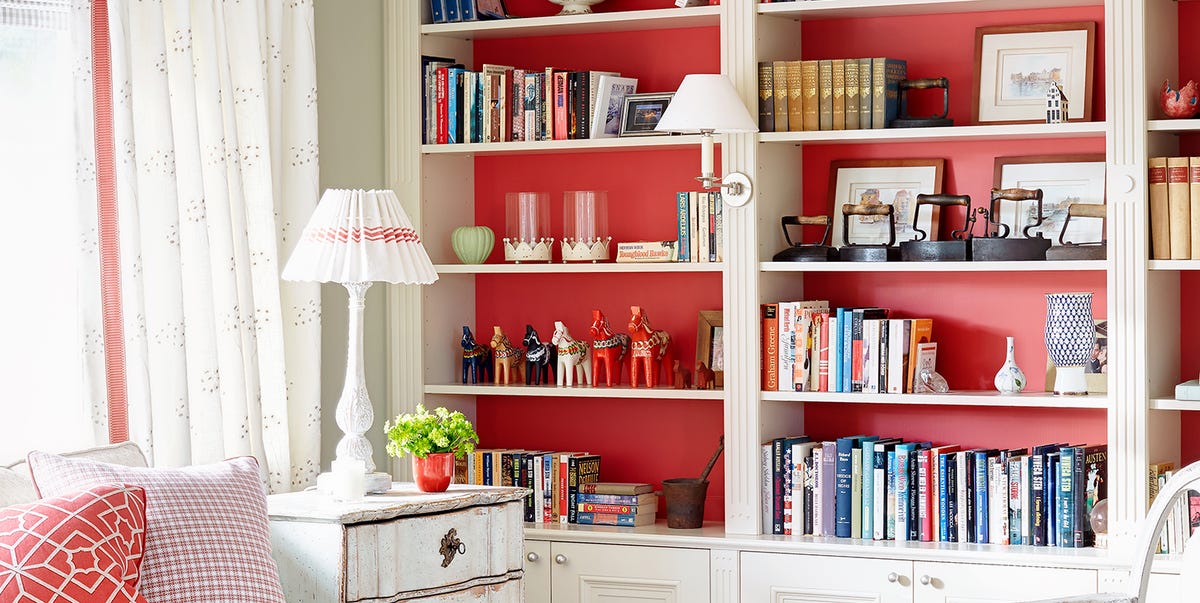
If you want maximum impact, few home library ideas are as striking as a floor-to-ceiling library wall. This design turns one wall into a dramatic focal point while adding serious storage. It works especially well in living rooms, home offices, dining rooms, and wide hallways where vertical space often goes underused.
Why it works
Floor-to-ceiling shelves draw the eye upward, making the room feel taller and more architectural. They also allow you to organize books by category, author, color, or mood. Add closed cabinets along the bottom for board games, office supplies, chargers, or the chaotic pile of things you do not want guests to see.
Design tip
Paint the shelves the same color as the wall for a seamless built-in effect, or choose a rich contrasting shade such as navy, forest green, charcoal, or oxblood for a boutique-library feel. Add picture lights or library sconces above the shelves to highlight favorite books and objects.
2. Build Around a Window Seat
A window seat framed by bookshelves is one of the most charming home library design ideas because it combines storage, natural light, and a dedicated reading spot. It is practical, cozy, and just fancy enough to make drinking coffee feel like a lifestyle choice instead of a caffeine emergency.
How to make it comfortable
Use deep drawers or lift-up storage beneath the bench for blankets, seasonal decor, or children’s books. Add a thick cushion, washable pillows, and a throw blanket. For evening reading, install a wall sconce or place a small table lamp nearby.
Best for
This idea is perfect for bedrooms, bay windows, landings, and family rooms. It is especially useful in small homes because one feature does three jobs: seating, storage, and style.
3. Turn a Spare Bedroom Into a Reading Retreat
If you have a guest room that only sees action twice a year, consider turning it into a home library that can still host overnight visitors. A daybed, sleeper sofa, or Murphy bed lets the room serve as both a library and guest space. Your visitors get a cozy place to sleep, and you get a room that is not waiting around like an unused hotel suite.
Shelving inspiration
Line one or two walls with built-in or freestanding bookcases. If the room is small, keep shelves shallow so they do not crowd the walking path. Use baskets on lower shelves for magazines, journals, or hobby supplies.
Style idea
Choose a calming palette with warm neutrals, soft blues, muted greens, or deep earthy tones. Add an area rug, upholstered chair, and layered lighting to make the space feel intentional rather than “we put extra furniture in here and hoped for the best.”
4. Add Moody Paint for a Dramatic Library Look
Dark colors are a home library’s secret weapon. Deep green, inky blue, espresso brown, aubergine, and charcoal can make a room feel intimate and sophisticated. Instead of making a space feel smaller, a moody color can make the walls visually recede, creating a cozy cocoon effect.
Where to use it
Try a dark color on built-ins, the back of bookcases, or the entire room. A small office, den, or reading nook is a great place to experiment because enclosed spaces often benefit from a bold, enveloping palette.
Balance the look
Keep the room from feeling heavy by adding warm metals, wood furniture, textured fabrics, and plenty of soft light. Brass sconces, a caramel leather chair, linen curtains, and a patterned rug can keep a dark library feeling elegant rather than cave-like.
5. Use Floating Shelves for a Small Home Library
Not every home has room for built-ins, and that is where floating shelves come to the rescue. Floating shelves provide flexible book storage without the bulk of full bookcases. They are ideal for apartments, condos, narrow rooms, and awkward wall sections.
How to style floating shelves
Mix vertical rows of books with horizontal stacks. Add small framed art, ceramics, plants, and sculptural bookends. Leave a little breathing room so the shelves look curated instead of crammed. Books are wonderful, but even books need personal space.
Safety note
Books are heavier than they look. Always use proper anchors, brackets, and wall studs when possible. For larger collections, choose sturdy wood shelves and hardware rated for the weight you plan to store.
6. Design a Home Office Library Combo
A home office library is one of the smartest dual-purpose room ideas. It gives you a productive workspace and surrounds you with reference books, personal favorites, and decorative objects that make the room feel less like a cubicle and more like a thoughtful command center.
Layout idea
Place a desk in front of built-ins for a polished, designer look. If space is tight, use a wall-mounted desk with shelves above it. Add file drawers or cabinets at the bottom of the bookcase to hide paperwork and tech accessories.
Make it Zoom-friendly
A styled bookshelf behind your desk creates an attractive video-call background. Keep it neat with a mix of books, art, and a few personal objects. Avoid overcrowding the shelves unless your desired professional vibe is “archaeologist trapped in a paper avalanche.”
7. Install a Corner Library
Corners are often wasted, but they can become some of the best home library spaces. An L-shaped bookshelf or two tall bookcases placed at a right angle can turn an empty corner into a cozy reading zone.
What to include
Add a comfortable armchair, a small side table, a floor lamp, and a soft rug. If the corner is near a window, even better. Natural light makes the space feel inviting during the day, while a warm lamp keeps it usable at night.
Best design styles
Corner libraries work with nearly every aesthetic. Use painted shelves and a floral chair for cottage charm, walnut shelves and a leather chair for classic style, or white oak shelves and boucle seating for a modern organic look.
8. Try Arched Bookshelves for Architectural Character
Arched bookshelves are having a major design moment because they instantly add softness and architectural interest. The curve breaks up the straight lines of books and shelves, making the room feel more custom and elevated.
How to get the look
If custom built-ins are in the budget, ask a carpenter about arched openings or curved trim. For a budget-friendly approach, use arched freestanding bookcases or add painted arch details behind existing shelves.
Styling tip
Place your most beautiful books, art, or sculptural objects in the center of each arch. The shape naturally creates a frame, so use it to spotlight pieces you love.
9. Add a Rolling Ladder for Classic Library Drama
A rolling ladder is practical for tall shelves, but let’s be honest: it is also wildly charming. It gives a home library that classic, old-world feeling even in a modern space. You do not need a ballroom-sized library to use one, but you do need enough wall length and ceiling height for it to function safely.
Where it works best
Rolling ladders are ideal for floor-to-ceiling built-ins in living rooms, studies, and dining room libraries. Choose a wood ladder for a traditional look or a metal version for a more industrial edge.
Practical reminder
Make sure the ladder system is professionally installed or carefully mounted according to manufacturer instructions. A library ladder should make you feel elegant, not airborne.
10. Use Bookshelves as Room Dividers
Bookshelves can divide a room without blocking light, making them perfect for open layouts, studios, lofts, and multipurpose spaces. A bookcase divider can separate a sleeping area from a living area, create an entryway, or define a reading corner in a larger room.
Open vs. closed shelving
Open-backed shelves keep the room feeling airy and allow light to pass through. Closed-back bookcases provide more visual separation and privacy. For safety, tall dividers should be anchored whenever possible, especially in homes with children or pets.
Design idea
Style both sides of the shelves because they will be visible from multiple angles. Use books, baskets, plants, and art objects to create a balanced look from every side.
11. Style Your Shelves With Personality
The most stunning home libraries are not perfect showrooms. They look collected, layered, and personal. Books should be the star, but art, family photos, travel souvenirs, vintage finds, ceramics, plants, and small lamps can make shelves feel warm and lived in.
Easy bookshelf styling formula
Start with books, then add height, texture, and negative space. Stack some books vertically and others horizontally. Use decorative objects as bookends. Add framed artwork leaning against the back of the shelf. Include a plant or two if the light allows. Repeat colors and materials throughout the shelves so the display feels connected.
What to avoid
Do not style every shelf the same way. A row of identical objects can feel stiff. Also, avoid filling every inch. Empty space is not wasted space; it gives the eye a place to rest and makes your favorite pieces stand out.
Home Library Design Details That Make a Big Difference
Once you choose your main home library idea, the finishing details will determine whether the room feels average or unforgettable. Start with lighting. A good library needs more than one overhead fixture. Combine ambient lighting, task lighting, and accent lighting. A ceiling fixture can brighten the room, while floor lamps, table lamps, sconces, and picture lights create warmth and help with reading.
Next, think about shelf depth and spacing. Standard books do not need extremely deep shelves, but oversized art books and storage baskets may require extra room. Adjustable shelves are useful because your collection will change over time. Today it is novels and cookbooks; tomorrow it may be design books, vinyl records, board games, or a suspiciously large collection of vintage bird figurines. No judgment.
Seating is equally important. The prettiest library in the world will not get used if the chair feels like a decorative punishment device. Choose a seat with good support, a comfortable depth, and fabric that suits your lifestyle. Leather, performance fabric, velvet, linen blends, and slipcovered upholstery can all work depending on the mood of the room.
Finally, consider acoustics and texture. Rugs, curtains, upholstered furniture, and fabric lampshades help absorb sound and make a library feel quieter. Wood tones, woven baskets, stone accessories, and textured pillows bring depth to the design. A home library should feel like an invitation to slow down, not a storage unit with alphabetization.
How to Choose the Right Shelving for Your Home Library
The best shelving depends on your space, budget, book collection, and design goals. Built-in bookshelves are ideal if you want a custom look and permanent storage. They can be designed around windows, fireplaces, desks, doors, and sloped ceilings. They also add architectural character and can make a room feel finished.
Freestanding bookcases are more flexible and often more affordable. They are a smart choice for renters or anyone who likes to rearrange furniture regularly. To make freestanding shelves look more custom, place several units side by side, add trim, paint them the wall color, or install lights.
Floating shelves work best for smaller collections, decorative displays, and compact spaces. Modular shelving is great for growing collections because you can add units over time. Corner shelves, ladder shelves, and wall-mounted ledges can solve very specific storage problems without overwhelming a room.
Before buying or building anything, measure your books. Paperbacks, hardcovers, coffee-table books, binders, and magazines all need different shelf heights. It is also wise to leave space for future books because book lovers are famously optimistic about “not buying any more books this month.” We all know how that story ends.
My Experience Creating a Home Library That Actually Gets Used
The most important lesson I have learned from designing a home library is that beauty alone is not enough. A library has to feel easy to use. In one project, the homeowner had a beautiful wall of shelves, but the room felt cold because every book was arranged with showroom precision and there was nowhere comfortable to sit. It looked impressive, but nobody stayed in the room longer than five minutes. Once we added a deep chair, warmer bulbs, a small drink table, and a softer rug, the space changed completely. Suddenly, it became the room everyone drifted toward after dinner.
Another experience involved a small apartment where the owner thought a home library was impossible. The living room had one blank wall, but it was narrow and close to a walkway. Instead of using deep bookcases, we installed slim floating shelves and a low storage bench. The shelves held favorite novels, small art prints, and a few plants, while the bench stored extra books in baskets underneath. A plug-in wall sconce added reading light without requiring electrical work. The result was not a grand library, but it felt personal, warm, and surprisingly spacious.
I have also seen how much paint can transform ordinary shelving. A basic bookcase painted the same color as the wall can suddenly look built-in. A dark green shelf in a white room can become the focal point. A soft blue back panel can make children’s books look cheerful and organized. Paint is one of the most budget-friendly tools in home library design, especially when custom carpentry is not realistic.
One of my favorite tricks is to style shelves in stages. First, place the books where they make sense. Put frequently used books at eye level, heavy books lower down, and delicate or decorative books higher up. Second, add practical storage such as baskets or boxes. Third, layer in personal items. This order keeps the library functional instead of turning it into a decorative obstacle course.
Comfort matters more than people expect. A chair may look perfect online, but if it is too stiff, too low, or too shallow, the library will become a very attractive room you avoid. I always recommend testing seating when possible and adding a table within arm’s reach. A reading space needs a landing spot for tea, glasses, bookmarks, and the phone you promised yourself you would not check.
Finally, the best home libraries evolve. They do not need to be finished in one weekend. Start with good shelves, comfortable light, and a place to sit. Add art, rugs, lamps, and objects slowly. Let the room collect your life. A stunning home library is not just about shelving inspiration; it is about creating a space that makes reading, thinking, working, and relaxing feel irresistible.
Conclusion: Build a Home Library That Feels Like You
A beautiful home library does not require a mansion, a massive budget, or a first edition collection guarded by a butler named Winston. It requires thoughtful shelving, comfortable seating, good lighting, and a clear sense of how you want the space to feel. You can create drama with floor-to-ceiling built-ins, charm with a window seat, flexibility with floating shelves, or personality with collected decor.
The best home library ideas are both stylish and useful. They make books easy to find, rooms more inviting, and everyday life a little richer. Whether your dream is a moody study, a sunny reading nook, a family-friendly book wall, or a small apartment library, the right design can turn unused space into one of the most loved areas of your home.
So measure the wall, choose the chair, rethink that empty corner, and let your books come out of hiding. Your future self, curled up with a great novel and a very smug cup of coffee, will be grateful.