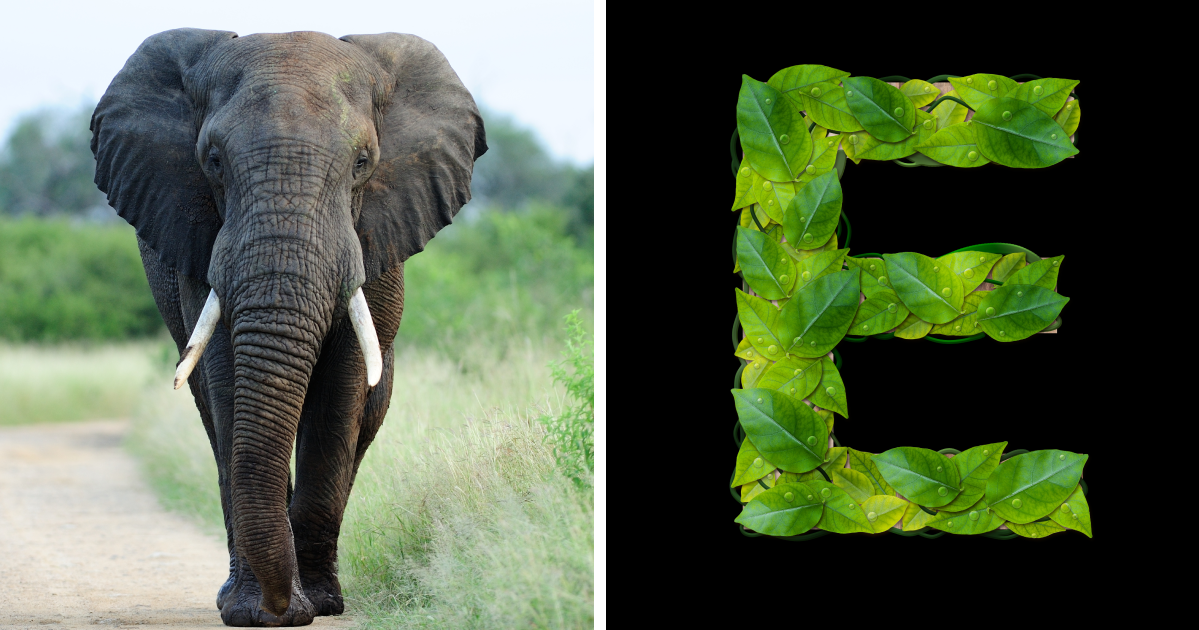
Animals that start with E are surprisingly dramatic. One can shock prey with electricity, another wears built-in armor made of spines, and one looks like it was assembled from leftover bird parts after nature had a very long day. From African elephants to tiny earwigs, the letter E gives us a wild little passport across deserts, forests, oceans, frozen ice, backyards, and muddy river systems.
This guide explores 15 real animals beginning with E, where they live, what makes them special, and why their habitats matter. Whether you are building an animal alphabet list, helping a student with homework, planning a wildlife trivia night, or simply trying to sound clever at dinner, these E animals are ready for their close-up.
Quick List: Animals That Start With E
| Animal | Animal Type | Where It Lives |
|---|---|---|
| Elephant | Mammal | Africa and Asia, depending on species |
| Eagle | Bird | Near lakes, rivers, coasts, forests, and mountains |
| Echidna | Mammal | Australia, Tasmania, New Guinea, and nearby regions |
| Emu | Bird | Australia |
| Emperor Penguin | Bird | Antarctica |
| Electric Eel | Fish | Amazon and Orinoco river basins in South America |
| Elephant Seal | Marine mammal | North Pacific and Southern Ocean regions |
| Elk | Mammal | North America and parts of Asia |
| Ermine | Mammal | Northern North America, Europe, and Asia |
| Eastern Gray Squirrel | Mammal | Eastern North America, forests, parks, and neighborhoods |
| Eastern Screech-Owl | Bird | Eastern North America, especially wooded areas |
| European Hedgehog | Mammal | Europe, especially fields, hedgerows, parks, and gardens |
| Earwig | Insect | Moist soil, leaf litter, mulch, bark, and garden debris |
| Earthworm | Invertebrate | Soil in temperate regions worldwide |
| Eland | Mammal | Eastern and southern Africa |
15 Animals That Start With E and Where They Live
1. Elephant
Elephants are the heavyweight celebrities of the animal kingdom. African savanna elephants live across eastern, central, and southern Africa in habitats such as savannas, woodlands, floodplains, and forests. African forest elephants prefer the dense rainforests of central and western Africa, while Asian elephants live in parts of South and Southeast Asia.
These intelligent mammals are famous for their trunks, tusks, memory, and family bonds. Their habitats must provide huge amounts of food and water, because an elephant does not politely nibble like a houseplant enthusiast. It eats a lot, walks a lot, and reshapes the landscape as it goes.
2. Eagle
Eagles are powerful birds of prey found across many parts of the world. The bald eagle, one of the best-known examples in North America, typically lives near large bodies of water such as lakes, rivers, marshes, and coasts. That makes sense because fish are a major part of its diet, and eagles are not above choosing waterfront property.
Eagles build large nests, often high in trees or on cliffs. Their habitats usually need open hunting space, sturdy nesting areas, and reliable prey. With sharp eyesight and strong talons, eagles are built for life at the top of the food chain.
3. Echidna
The echidna looks like a hedgehog that secretly studied engineering. This spiny mammal lives in Australia, Tasmania, New Guinea, and nearby regions. Echidnas can be found in scrublands, deserts, montane forests, and other land habitats where they can dig for shelter and food.
Echidnas eat ants, termites, and grubs using a long sticky tongue. They are also monotremes, meaning they are mammals that lay eggs. Yes, egg-laying mammals exist, and yes, nature occasionally submits very strange paperwork.
4. Emu
The emu is a tall, flightless bird native to Australia. It lives in eucalyptus forests, woodlands, heathlands, shrublands, grasslands, and sand plains. Emus generally avoid dense forests and heavily settled areas, but they are widespread across much of mainland Australia.
Emus cannot fly, but they can run impressively fast on long, powerful legs. They travel in search of food and water, eating seeds, fruits, plants, and insects. Basically, they are giant walking feather dusters with athletic ambition.
5. Emperor Penguin
The emperor penguin lives in Antarctica, one of the coldest and harshest habitats on Earth. These penguins breed on sea ice and hunt in the surrounding Southern Ocean. While many animals complain about winter by growing extra fur, emperor penguins simply form tight groups and survive conditions that would make a freezer feel tropical.
They are the largest penguin species and are excellent divers. Their habitat depends heavily on stable sea ice, which gives them a place to breed, molt, rest, and raise chicks. Few animals are more closely linked to ice than the emperor penguin.
6. Electric Eel
The electric eel lives in slow-moving freshwater habitats in northern South America, especially the Amazon and Orinoco river basins. It prefers murky streams, pools, oxbow lakes, and flooded forests. Despite the name, electric eels are not true eels; they are knifefish. Apparently, the animal kingdom also has branding issues.
Electric eels produce electric charges to navigate, communicate, and stun prey. Their muddy, low-visibility habitat makes electricity useful, especially when eyesight is not enough. They must surface regularly to breathe air, which adds another twist to their already unusual lifestyle.
7. Elephant Seal
Elephant seals are massive marine mammals named for their size and, in males, their large trunk-like noses. Northern elephant seals live in the eastern North Pacific Ocean and breed on beaches along the Pacific coast, including California and Mexico. Southern elephant seals live in sub-Antarctic and Antarctic waters.
These seals spend much of their lives at sea, diving deep for fish and squid. When they haul out on beaches, males can be loud, dramatic, and enormous. Imagine a wet sleeping bag with opinions, and you are getting close.
8. Elk
Elk, also known as wapiti, live in North America and parts of Asia. In North America, many wild elk depend on forests, grasslands, alpine meadows, valleys, and national forest habitats. They often move seasonally to find food, shelter, and safer conditions.
Male elk are known for their impressive antlers and bugling calls during the breeding season. The sound is part whistle, part roar, and part haunted trombone. Elk need large landscapes, which makes habitat protection especially important for healthy herds.
9. Ermine
The ermine, also called a stoat in some regions, is a small carnivorous mammal with a long body, short legs, and serious predator energy. Ermines have a circumpolar distribution across northern parts of North America, Europe, and Asia. They often live in riparian woodlands, marshes, shrubby fencerows, and open areas near forests.
In colder regions, some ermines turn white in winter, except for the black tip of the tail. This seasonal coat helps them blend into snowy habitats. Small as they are, ermines are skilled hunters that use burrows, logs, roots, and stone walls for shelter.
10. Eastern Gray Squirrel
The eastern gray squirrel is one of the most familiar animals in eastern North America. It lives in mature forests, especially areas with oaks, walnuts, and other nut-producing trees. It also does extremely well in parks, suburbs, college campuses, and backyards, where it treats bird feeders as personal buffets.
These squirrels build leafy nests called dreys and also use tree cavities for shelter. They bury nuts for later, sometimes forget them, and accidentally help plant trees. That is productivity with a fluffy tail.
11. Eastern Screech-Owl
The eastern screech-owl lives east of the Rocky Mountains in North America. It is common in woods, parks, suburbs, orchards, and places with trees. Despite its name, its call is often more of a trill or whinny than a dramatic horror-movie scream.
This small owl nests in cavities, including old woodpecker holes and nest boxes. Its excellent camouflage helps it hide during the day. At night, it hunts insects, small mammals, birds, amphibians, and other prey. Tiny owl, big appetite.
12. European Hedgehog
The European hedgehog lives across much of Europe. It often prefers temperate fields, field edges, hedgerows, scrubland, parks, gardens, cemeteries, and other places with cover and food. Hedgehogs are especially associated with gardens because they eat insects and other small invertebrates.
When threatened, a hedgehog rolls into a spiny ball. It is a simple but effective message: “No thank you, please bother someone softer.” Hedgehogs need connected habitats, because roads, fences, and fragmented landscapes can make life harder for these nocturnal wanderers.
13. Earwig
Earwigs are insects that often live in moist, sheltered places. The European earwig is native to Europe, western Asia, and northern Africa, but it has been introduced to North America, Australia, and New Zealand. You may find earwigs in leaf litter, mulch, soil, under bark, beneath rocks, and inside decaying wood.
Despite the creepy old myth, earwigs are not trying to move into your ears and redecorate. Their pincers look intimidating, but earwigs usually prefer dark, damp hiding places and feed on plant material, decaying matter, and small insects.
14. Earthworm
Earthworms live in soil, especially in temperate regions where moisture and organic matter are available. The common earthworm, also known as the nightcrawler, is native to Europe but is now widespread in North America and western Asia. Earthworms avoid extremely dry, acidic, frozen, or unsuitable soils.
These humble invertebrates are incredibly important for soil health. They tunnel through the ground, mix organic material, and help aerate soil. Earthworms do not look glamorous, but they are working underground like tiny soil engineers with no lunch break.
15. Eland
The eland is a large African antelope found mainly in eastern and southern Africa. Common elands live in grasslands, woodlands, open plains, semi-arid regions, and savanna landscapes. They are the largest antelope species in the world, which means they are basically antelope royalty with spiral horns.
Elands are strong, surprisingly agile, and adapted to environments where food and water may vary by season. They browse on leaves, shoots, and grasses, and they can travel long distances when conditions change. Their size makes them impressive, but their ability to survive in challenging habitats makes them even more remarkable.
Why Habitat Matters for E Animals
Learning where animals live is more than a fun alphabet game. Habitat explains almost everything about an animal’s body, behavior, diet, and survival strategy. An emperor penguin needs sea ice. An electric eel needs slow, muddy freshwater. A bald eagle needs open water and tall nesting sites. An earthworm needs moist soil. Put any of these animals in the wrong environment, and the story gets uncomfortable fast.
Habitats provide food, shelter, breeding space, migration routes, and protection from predators. When forests are cleared, wetlands drained, rivers polluted, or ice disappears, animals do not simply shrug and open a tiny animal real estate agency. They must move, adapt, compete, or decline. That is why habitat conservation is central to wildlife protection.
Experience Section: Seeing E Animals in Real Life
One of the best ways to appreciate animals that start with E is to imagine meeting them in their own environments, or at least in places designed to teach visitors about those environments. Seeing an elephant in a wildlife reserve or a spacious conservation-focused zoo habitat is very different from simply reading the word “elephant” on a list. You notice the slow confidence of its walk, the careful motion of its trunk, and the way a herd seems to communicate without needing a group chat.
A bald eagle experience feels completely different. You might spot one near a lake or river, perched high above the water like it owns the entire shoreline. Then it launches into the air, and suddenly every pigeon you have ever seen seems underqualified. Watching an eagle hunt makes habitat feel obvious: open water, tall trees, and healthy fish populations are not decorative details. They are the whole system.
Smaller E animals can be just as memorable. An eastern gray squirrel in a city park may not seem exotic, but watch one for five minutes and you will see athletic problem-solving in action. It leaps, digs, freezes, twitches, and somehow looks both guilty and proud. Nearby, an earthworm after rain tells a quieter story. It reminds us that wildlife is not only lions, whales, and dramatic documentaries. Sometimes it is a soft-bodied soil worker making the lawn healthier one tunnel at a time.
If you ever visit a cool-climate aquarium, museum, or wildlife center with penguin exhibits, emperor penguins or their penguin relatives can make Antarctica feel less abstract. Their upright posture gives them the look of tiny formal dinner guests, but their biology is built for extreme survival. Likewise, learning about electric eels in an aquarium setting turns a muddy South American river into a living science lesson. Their electric abilities are not party tricks; they are adaptations to dark, complex habitats where sensing the world takes more than eyesight.
Even the less glamorous animals deserve attention. Earwigs under mulch, ermines in northern woodlands, hedgehogs in European gardens, and echidnas digging through Australian soil all show that every habitat has specialists. Some are cute, some are strange, and some look like they were designed during a thunderstorm. But each one fits its environment in a specific way.
The real experience of studying animals that start with E is realizing how connected everything is. A single letter can take you from Antarctica to the Amazon, from African savannas to suburban backyards, from underground soil tunnels to Pacific beaches crowded with elephant seals. The alphabet becomes a map, and the animals become reminders that the planet is much bigger, weirder, and more wonderful than any vocabulary list can fully capture.
Conclusion
Animals that start with E are far more than a classroom vocabulary category. They include giants like elephants, speed-walking birds like emus, icy survivors like emperor penguins, tiny soil heroes like earthworms, and shocking freshwater hunters like electric eels. Each animal’s habitat helps explain how it eats, moves, breeds, hides, hunts, and survives.
From forests and grasslands to oceans, rivers, gardens, and frozen sea ice, E animals prove that wildlife comes in every size and style imaginable. Some are majestic. Some are adorable. Some are a little unsettling before breakfast. Together, they show why learning animal names is only the beginning. The real adventure starts when we ask: where do they live, and what does that place teach us about them?
Note: This article is written for web publishing and educational use. It summarizes real wildlife habitat information in original language without copying source text.