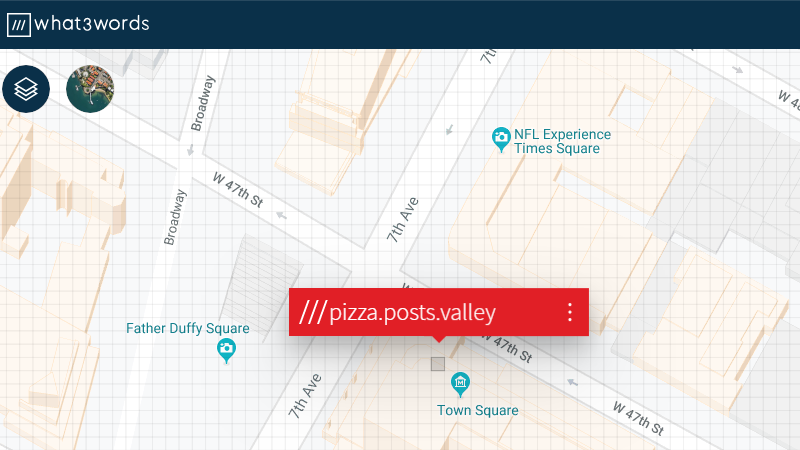
Imagine telling a friend exactly where you are on a hiking trail, at a music festival, in a giant parking lot, or beside the “third palm tree near the coffee cart” without sending a confusing pin, typing latitude and longitude, or saying, “No, not that entrancethe other other entrance.” That is the simple promise behind what3words: a location system that turns any tiny square on Earth into three ordinary words.
What Does “3 Words To Describe Any Spot On Earth” Mean?
The phrase “3 Words To Describe Any Spot On Earth” refers most directly to what3words, a geocoding system that divides the entire world into small squares, each measuring about 3 meters by 3 meters, or roughly 10 feet by 10 feet. Every square is assigned a unique combination of three dictionary words. Instead of sharing a long GPS coordinate like 40.6892° N, 74.0445° W, a person can share a simple three-word address.
That may sound like a magic trick performed by a very organized librarian, but the idea is practical. Traditional street addresses work well when streets are named clearly, buildings are numbered sensibly, and everyone agrees which entrance is the “front.” Unfortunately, real life is less tidy. Apartments have side gates. Parks have 14 picnic areas. Beaches have no mailboxes. Rural roads can stretch for miles. Stadiums, campuses, farms, construction sites, trailheads, and festival grounds can all be difficult to describe with standard addresses.
what3words attempts to solve that problem by giving every spot a short, memorable verbal label. It does not replace GPS; rather, it sits on top of GPS coordinates and makes them easier for humans to read, say, remember, and share. In other words, GPS speaks in numbers. what3words gives those numbers a nickname.
How what3words Works
The system begins with a global grid. The entire surface of Earth is divided into tiny squares. Each square receives a unique three-word address such as a format like word.word.word. These words are not meant to describe the actual landscape. A desert square will not necessarily get words like “hot.sandy.camel,” although that would be adorable. The words are assigned by an algorithm, which means the combination is a label, not a poetic review of the scenery.
Three Words Instead of Long Coordinates
Latitude and longitude are incredibly precise, but they are not exactly party-friendly. One wrong digit can send someone blocksor even milesaway. A three-word address is designed to be easier to communicate by voice, text, or writing. This matters in ordinary situations, such as meeting a rideshare driver at the right gate, and in serious situations, such as telling emergency responders where help is needed.
Small Squares, Big Practical Value
A 3-meter square is small enough to identify a specific doorway, delivery drop-off point, campsite, trail junction, parking space, or beach umbrella. That level of precision is much better than a typical street address when the destination is not a house, store, or office. It can also help when a building has multiple entrances and the official address points to the wrong side.
Works With Maps and Navigation Apps
The what3words app can work with common mapping and navigation tools. A user can look up the three-word address for a location, share it, and then open directions through a compatible navigation app. The system is also used in some automotive navigation systems, delivery workflows, travel planning, emergency dispatch, outdoor recreation, and business logistics.
Why Three Words Can Be Easier Than a Street Address
Street addresses were built for buildings. Modern movement is built for everything else. People now order food to parks, meet friends at pop-up events, wait for rideshare pickups at crowded airports, receive equipment at construction sites, and explore places where “turn left after the big rock” is considered a legitimate navigation strategy.
Three-word addressing helps because it separates “where something officially is” from “where someone actually needs to go.” A hotel may have one postal address, but the valet entrance, lobby door, service entrance, restaurant patio, and conference loading bay may all be in different places. A three-word address can point to the exact spot.
This is especially useful for:
- Emergency situations: A caller can describe a precise location when no street address is nearby.
- Outdoor activities: Hikers, campers, cyclists, anglers, and boaters can share exact meeting or rescue points.
- Deliveries: Couriers can find the correct gate, entrance, or drop-off zone.
- Events: Festival organizers can label stages, medical tents, parking zones, and meeting points.
- Travel: Tourists can save exact scenic viewpoints, trailheads, or hidden entrances.
- Large properties: Farms, campuses, warehouses, resorts, and industrial parks can mark precise locations without inventing internal address systems.
The Technology Behind the Simplicity
The beauty of what3words is that the user experience feels almost too simple. Open the app, find the three words, share them. Behind that simplicity is geocoding: the process of converting between human-readable location references and geographic coordinates.
GPS provides the location data. The what3words system converts that coordinate into a three-word address. When someone enters those three words, the system converts them back into a coordinate that a map can understand. It is a translation layer between humans and machines. Humans get words. Machines get coordinates. Everyone goes home happy, except maybe the person who still refuses to update their maps app.
Does It Work Offline?
One of the most useful features is that the what3words app can identify a user’s current three-word address without cellular data, as long as the phone can receive a GPS signal. That makes it valuable for hiking, road trips, rural areas, and places where mobile coverage is unreliable. However, calling, texting, or sending that location still requires some way to communicate. The app can help identify where you are; it cannot magically deliver your message through a mountain. Mountains remain stubborn.
Why GPS Still Matters
GPS is the foundation. It is a satellite-based positioning system that enables phones, vehicles, watches, and other devices to estimate location. what3words does not replace the satellite system or improve the raw GPS signal. If your phone cannot determine your location accurately because you are indoors, underground, surrounded by tall buildings, or under dense tree cover, the three-word address may reflect that uncertainty. The words are only as useful as the location reading behind them.
Real-World Uses of Three-Word Addresses
Emergency Response
Emergency services in several regions have promoted or accepted what3words as a way for callers to communicate hard-to-describe locations. This can be helpful when someone is lost on a trail, stranded on a roadside, injured in a park, or unsure of the nearest formal address. In high-stress moments, reading three words may be easier than reading a long coordinate.
Still, emergency use should be handled carefully. A three-word address should be spoken clearly, checked on the screen, and repeated if needed. If possible, callers should also provide nearby landmarks, road names, mile markers, trail names, or any other context. The safest location report is not “one tool only”; it is “as much accurate information as possible.”
Delivery and E-Commerce
Delivery drivers lose time when addresses are vague, apartment complexes are confusing, or a map pin points to the center of a building instead of the entrance. Three-word addresses can help customers specify the exact delivery point. For businesses, that can reduce failed deliveries, wrong-door drop-offs, and the classic “your package is by the blue door” mystery when the building has six blue doors.
Automotive Navigation
Several automakers and navigation platforms have explored or integrated what3words to support voice-friendly destination entry. This makes sense because saying three words aloud can be easier than dictating a full address or spelling a road name while the car’s voice assistant confidently misunderstands you as asking for a sandwich shop in another state.
Travel and Tourism
Travelers often care about exact spots, not just official addresses. A viewpoint, mural, trailhead, food truck corner, beach access path, or meeting point outside a museum may not have a normal address. Three-word addresses can help travelers save and share those locations. For tour operators, hotels, and guides, this can reduce confusion and improve the guest experience.
Remote and Rural Areas
In places where formal addressing is incomplete or unreliable, a three-word address can provide a simple way to describe where someone lives, works, farms, receives supplies, or needs assistance. This is one reason the concept has attracted attention in countries and regions with large rural areas, informal settlements, nomadic communities, or limited street-address infrastructure.
The Benefits of Using Three Words for Location
1. It Is Human-Friendly
Most people are better at remembering words than strings of numbers. A three-word phrase can be shared in a phone call, written on a note, or sent in a message. It lowers the barrier between advanced mapping technology and everyday communication.
2. It Can Be Very Precise
Because each square is small, a three-word address can identify a specific entrance, tent, gate, signpost, or drop-off point. That is more practical than a traditional address when the actual destination is only one part of a larger site.
3. It Works Across Many Types of Places
Houses, parking lots, forests, beaches, mountain trails, farms, marinas, stadiums, and food festival booths can all be labeled. The system does not care whether a place has a mailbox. It simply assigns a three-word address to the square.
4. It Can Improve Coordination
Teams working in logistics, events, construction, emergency planning, and field operations often need to coordinate people in places with no clean address. Three-word addresses can act as shared location shorthand.
5. It Reduces “Almost There” Confusion
Everyone has had a conversation like this: “I’m here.” “Where?” “By the entrance.” “Which entrance?” “The one near the thing.” “What thing?” Three-word addresses do not eliminate all human confusion, but they can reduce the amount of interpretive dance required to find someone.
Limitations and Criticism: What Users Should Know
No location system is perfect, and what3words has received criticism from technologists, mapping experts, and safety researchers. A balanced article should not treat it like a magical compass blessed by cartographic angels. It is useful, but it has limits.
Similar-Sounding Words Can Cause Mistakes
One concern is that some word combinations may be misheard, mistyped, pluralized, or autocorrected. A tiny change in wording can point to a completely different place. That is why users should verify the address on a map before relying on it, especially in urgent situations.
The Words Do Not Reveal Geography
A normal address often gives clues. “1600 Pennsylvania Avenue NW, Washington, DC” tells you something about the city and street. A three-word address does not naturally tell you what country, region, or neighborhood it belongs to. The words are labels, not geographic descriptions. Without the app or database, the words are not meaningful on their own.
It Is a Proprietary System
Another criticism is that what3words is not an open public addressing standard. Businesses that integrate it may need licensed access to the company’s tools. Some critics argue that essential location infrastructure should be open, transparent, and freely reusable. Supporters respond that the system is easy for consumers to use and valuable in practical settings. Both points matter.
It Depends on Device Accuracy
If your phone’s location estimate is off, your three-word address can also be off. This matters near cliffs, roads, rivers, property lines, or emergency scenes. Users should zoom in, check the map, and use visual confirmation when possible.
It Should Complement, Not Replace, Common Sense
The best approach is to use what3words alongside other location details. Share the three words, but also mention the trail name, road, landmark, building, nearest intersection, or visible sign. Think of three-word addressing as a helpful tool in the navigation toolbox, not the entire toolbox.
How to Use what3words Effectively
Step 1: Open the App or Website
Use the app or website to find your current location or search for a destination. The app will display the three-word address for the selected square.
Step 2: Check the Pin Carefully
Zoom in and make sure the selected square matches the exact spot you mean. For example, choose the correct entrance, not just the building. Choose the trailhead, not the road nearby. Choose the picnic table, not the lake. Unless you are meeting a duck, in which case the lake may be fine.
Step 3: Share the Words Exactly
Copy the full three-word address and send it by text, email, messaging app, or voice. Do not paraphrase it. Do not substitute synonyms. “Happy,” “cheerful,” and “emotionally caffeinated” are not interchangeable in a location system.
Step 4: Confirm Before Traveling
Before you follow a three-word address, open it on a map and confirm that it points to the expected area. If someone sends you a location for a wedding venue in Ohio and the words open in the ocean, do not wear formal shoes into the Atlantic. Ask for confirmation.
Step 5: Use Extra Context for Important Situations
For emergencies, deliveries, fieldwork, or remote travel, include backup details. A strong location message might say: “I’m at these three words, near the north trailhead, beside the wooden bridge, wearing a red jacket.” That gives people multiple ways to find you.
Examples: Where Three Words Are More Useful Than an Address
A Music Festival
A festival may have one official venue address, but that does not help your friends find your blanket near the left speaker tower by the taco stand. A three-word address can mark your exact meeting spot. This is especially useful when everyone says, “I’m by the stage,” and there are seven stages.
A National Park Trail
Many trail locations have no street address. If someone is tired, injured, or separated from a group, a three-word address can help identify a precise location. It should be shared with trail name, direction of travel, and nearby landmarks for better accuracy.
A College Campus
Campuses are small cities disguised as educational institutions. A building may have multiple doors, courtyards, bike racks, and confusing paths. A three-word address can point visitors to the exact entrance for an admissions tour, lecture hall, event check-in, or dorm move-in zone.
An Apartment Complex
Delivery drivers often struggle with apartment communities where building numbers are hidden behind trees or placed by someone with a deep suspicion of visibility. A three-word address can mark the correct gate, staircase, elevator, or package drop-off shelf.
A Roadside Breakdown
If a car breaks down on a rural road, the nearest street address may be useless. A three-word address can help roadside assistance or a friend locate the vehicle more accurately, especially when combined with route number, mile marker, direction of travel, and vehicle description.
Is what3words Good for SEO, Local Business, and Customer Experience?
For businesses, the concept of “3 words to describe any spot on Earth” is more than a clever technology story. It can support local SEO, customer service, and operational efficiency when used correctly.
A restaurant with a hidden courtyard entrance can include a three-word address on its contact page. A wedding venue can provide three-word addresses for parking, ceremony space, reception entrance, and vendor loading areas. A farm store, campground, marina, outdoor rental company, or event space can use it to reduce confusion before customers arrive.
However, businesses should not replace their standard address, Google Business Profile, Apple Maps listing, directions page, or accessibility instructions. A three-word address should be an additional convenience. Search engines still rely heavily on traditional location data, structured business information, consistent NAP details, map listings, reviews, and local relevance signals. Three words can improve the customer journey, but they are not a magic ranking button. If someone sells you “instant SEO domination through three-word addresses,” please back away slowly while maintaining eye contact.
The Bigger Idea: Making Location More Human
The deeper story is not just about one app. It is about the gap between how machines understand the world and how people talk about it. Machines love coordinates. People love landmarks, stories, shortcuts, and phrases like “the good parking lot, not the weird one.” what3words is one attempt to bridge that gap.
As digital maps become part of everythingshopping, transportation, emergency response, travel, logistics, smart cities, and outdoor recreationprecise location communication becomes more important. The world is already mapped. The challenge is helping people communicate exact places without needing to become surveyors.
Three-word addressing is not the only answer. Plus Codes, GPS coordinates, traditional addresses, map pins, and local landmark descriptions all have a role. The best system depends on the situation. But the popularity of what3words shows that people want location tools that feel less technical and more conversational.
of Experience: What It Feels Like to Use Three Words in Real Life
The first time you use a three-word address, it feels slightly strangelike Earth has suddenly been turned into a giant board game and every square has a secret password. Then, after a few minutes, it becomes surprisingly natural. You stop thinking, “This is futuristic,” and start thinking, “Why did I ever try to describe a parking lot entrance using interpretive geography?”
Imagine arriving at a crowded outdoor market. Your friend texts, “I’m near the coffee truck.” Wonderful. There are four coffee trucks, because civilization runs on caffeine and optimism. You call. They say they are “by the tree.” Nature, being unhelpful, has provided many trees. Now imagine they send a three-word address. You tap it, open the map, and walk directly to the exact corner where they are standing, holding your iced latte like a tiny trophy. That is the everyday charm of the system.
The usefulness becomes even clearer in large public spaces. Airports, hospitals, stadiums, theme parks, college campuses, and convention centers often have official addresses that are technically correct and practically vague. A map may bring you to the property, but not to the door you actually need. Three-word addresses help answer the more human question: “Where should my feet go?”
On road trips, the experience is even better. There are scenic overlooks, roadside diners, quiet lakeside pullouts, trailheads, and photo spots that do not have neat addresses. Saving those exact places with three words can feel like leaving breadcrumbs for your future self. Instead of saying, “Remember that amazing view after the bend, near the sign, before the road got weird?” you can save the exact square and find it again.
For outdoor activities, the system can provide peace of mind. It is not a substitute for preparation, offline maps, first-aid gear, weather awareness, or telling someone your plan. But it gives hikers, cyclists, campers, and paddlers another way to communicate location. When you are tired, cold, lost, or trying to explain where a trail splits, simple words can feel friendlier than coordinates.
There is also a small emotional pleasure in it. Three-word addresses make places feel named. A random corner of a field, a bench overlooking the water, a quiet spot in a park, or the exact place where you watched a sunset can suddenly have an identity. It may not be a poetic identity, because the algorithm is not trying to win a literature prize, but it is still memorable. A location becomes shareable, repeatable, and easier to return to.
Of course, the experience is best when users stay careful. Always check the map. Always copy the words exactly. Always use extra context when the location matters. The tool is simple, but the world is complicated. Still, for many everyday moments, three words can turn “Where are you?” from a minor comedy routine into a solved problem.
Conclusion: Three Words, One More Way to Understand the World
“3 Words To Describe Any Spot On Earth” is a simple phrase with a powerful idea behind it. By assigning every small square on the planet a unique three-word address, what3words makes precise location sharing more human, more memorable, and often more useful than a traditional address alone.
Its best uses are practical: finding friends at events, guiding deliveries to the right entrance, helping travelers save exact places, supporting outdoor recreation, and giving emergency callers another way to describe where they are. Its limitations are also real: words can be misheard, the system is proprietary, and it depends on accurate device location. Smart users treat it as a helpful tool, not a replacement for maps, landmarks, official addresses, or common sense.
The larger lesson is clear: the future of location is not only about better satellites and smarter maps. It is also about better language. Sometimes, the easiest way to describe a spot on Earth is not a coordinate, a ZIP code, or a paragraph of directions involving “the weird tree.” Sometimes, it is just three words.
SEO Tags
Note: This article is based on synthesized real-world information from reputable technology, mapping, GPS, transportation, emergency-services, travel, and location-infrastructure sources.