Law school has a reputation for creating attorneys, judges, and people who can argue about parking signs with alarming confidence. But a law degree can also become a launchpad for presidents, performers, bestselling novelists, journalists, athletes, activists, and even one very famous opera singer. The truth is simple: legal education teaches people how to read carefully, think critically, challenge assumptions, speak persuasively, and stay calm when everyone else is emotionally tap-dancing on the conference table.
This list of 30 famous people with law degrees proves that a J.D., LL.B., Bachelor of Laws, or other legal qualification does not lock someone into one career path forever. Some of these law school graduates practiced law for decades. Others ran from the courtroom toward comedy clubs, movie sets, campaign trails, baseball dugouts, recording studios, and global human rights work. In every case, their legal training became part of the story, whether obvious or quietly working behind the scenes like a well-dressed paralegal with excellent coffee.
Below are 30 well-known public figures who earned law degrees and used that training in surprising, powerful, and sometimes wonderfully unexpected ways.
30 Famous People With Law Degrees
1. Barack Obama
Before becoming the 44th president of the United States, Barack Obama earned his law degree from Harvard Law School in 1991. He became the first Black president of the Harvard Law Review, practiced civil rights law, and taught constitutional law in Chicago. His legal background shaped his calm speaking style, careful reasoning, and ability to explain complicated issues without making listeners feel as if they had accidentally enrolled in a three-hour seminar.
2. Michelle Obama
Michelle Obama received her law degree from Harvard Law School in 1988 and later worked at the Chicago law firm Sidley & Austin, where she met Barack Obama. But her career soon moved beyond corporate law into public service, nonprofit leadership, higher education, and health advocacy. Her story shows that a law degree can be a foundation, not a fence.
3. Hillary Rodham Clinton
Hillary Rodham Clinton graduated from Yale Law School in 1973. Her legal career included work with the Children’s Defense Fund, service on the House Judiciary Committee during the Watergate era, and a partnership at the Rose Law Firm in Arkansas. She later became First Lady, U.S. senator, Secretary of State, and the first woman nominated for president by a major U.S. political party.
4. Bill Clinton
Bill Clinton also earned a law degree from Yale Law School in 1973. After graduation, he taught law at the University of Arkansas before entering politics. His legal education helped support a long public career that included service as Arkansas attorney general, governor, and the 42nd president of the United States.
5. Joe Biden
Joe Biden earned his law degree from Syracuse University College of Law in 1968. He worked briefly in law, including as a public defender, before entering politics at a young age. His decades in the U.S. Senate, especially on the Senate Judiciary Committee, reflected a career deeply connected to legal issues, constitutional debates, and the mechanics of government.
6. Kamala Harris
Kamala Harris graduated from the University of California, Hastings College of the Law. She built a career as a prosecutor, district attorney of San Francisco, attorney general of California, U.S. senator, and vice president of the United States. Her legal training was not a footnote; it was the engine of her early public career.
7. Ruth Bader Ginsburg
Ruth Bader Ginsburg attended Harvard Law School and later transferred to Columbia Law School, where she earned her law degree in 1959. She became one of the most influential legal minds in American history, especially through her work on gender equality. Long before she became a Supreme Court justice, she used legal strategy to change how courts understood discrimination.
8. Sonia Sotomayor
Sonia Sotomayor earned her J.D. from Yale Law School in 1979. She worked as an assistant district attorney in New York, practiced commercial litigation, and became a federal judge before joining the U.S. Supreme Court. Her journey from the Bronx to the nation’s highest court is one of the clearest examples of law school as a ladder of opportunity.
9. Elena Kagan
Elena Kagan graduated from Harvard Law School in 1986. She later served as a law professor, dean of Harvard Law School, U.S. Solicitor General, and associate justice of the Supreme Court. Kagan’s career shows the academic side of legal fame: teaching, scholarship, administration, advocacy, and judging all in one very impressive résumé.
10. Ketanji Brown Jackson
Ketanji Brown Jackson earned her J.D. from Harvard Law School in 1996. She worked as a law clerk, public defender, attorney, sentencing commissioner, federal judge, and eventually U.S. Supreme Court justice. Her experience as a public defender made her professional background especially notable among modern justices.
11. Clarence Thomas
Clarence Thomas graduated from Yale Law School in 1974. Before joining the Supreme Court, he worked in state government, private industry, the U.S. Department of Education, and the Equal Employment Opportunity Commission. His legal career has made him one of the most discussed and influential conservative jurists in modern American law.
12. Samuel Alito
Samuel Alito earned his J.D. from Yale Law School in 1975. His career included work as a federal prosecutor, assistant to the U.S. Solicitor General, U.S. attorney for New Jersey, federal appeals judge, and Supreme Court justice. His legal path is a classic example of the prosecutor-to-judge pipeline.
13. Stacey Abrams
Stacey Abrams earned her J.D. from Yale Law School. She worked as a tax attorney before becoming a Georgia state legislator, voting rights advocate, entrepreneur, and bestselling author. Abrams is also a novelist, proving that legal minds can draft legislation by day and fiction by nightbecause apparently one demanding career was not enough.
14. John Grisham
John Grisham earned his J.D. from the University of Mississippi School of Law in 1981 and practiced law for about a decade. Then he turned courtroom experience into bestselling fiction. Novels such as A Time to Kill, The Firm, and The Pelican Brief made him one of the most famous legal thriller writers in the world.
15. Megyn Kelly
Megyn Kelly earned her J.D. from Albany Law School in 1995 and worked as a corporate attorney before moving into journalism. Her legal background helped shape her sharp interviewing style, especially when covering politics, public policy, and high-profile controversies. Cross-examination skills, it turns out, translate very well to television.
16. Geraldo Rivera
Geraldo Rivera received his J.D. from Brooklyn Law School in 1969. He worked in legal services and represented community activists before journalism pulled him into the spotlight. His early legal work helped lead to television reporting, where he became known for investigative stories, talk shows, and a media career that lasted decades.
17. Jerry Springer
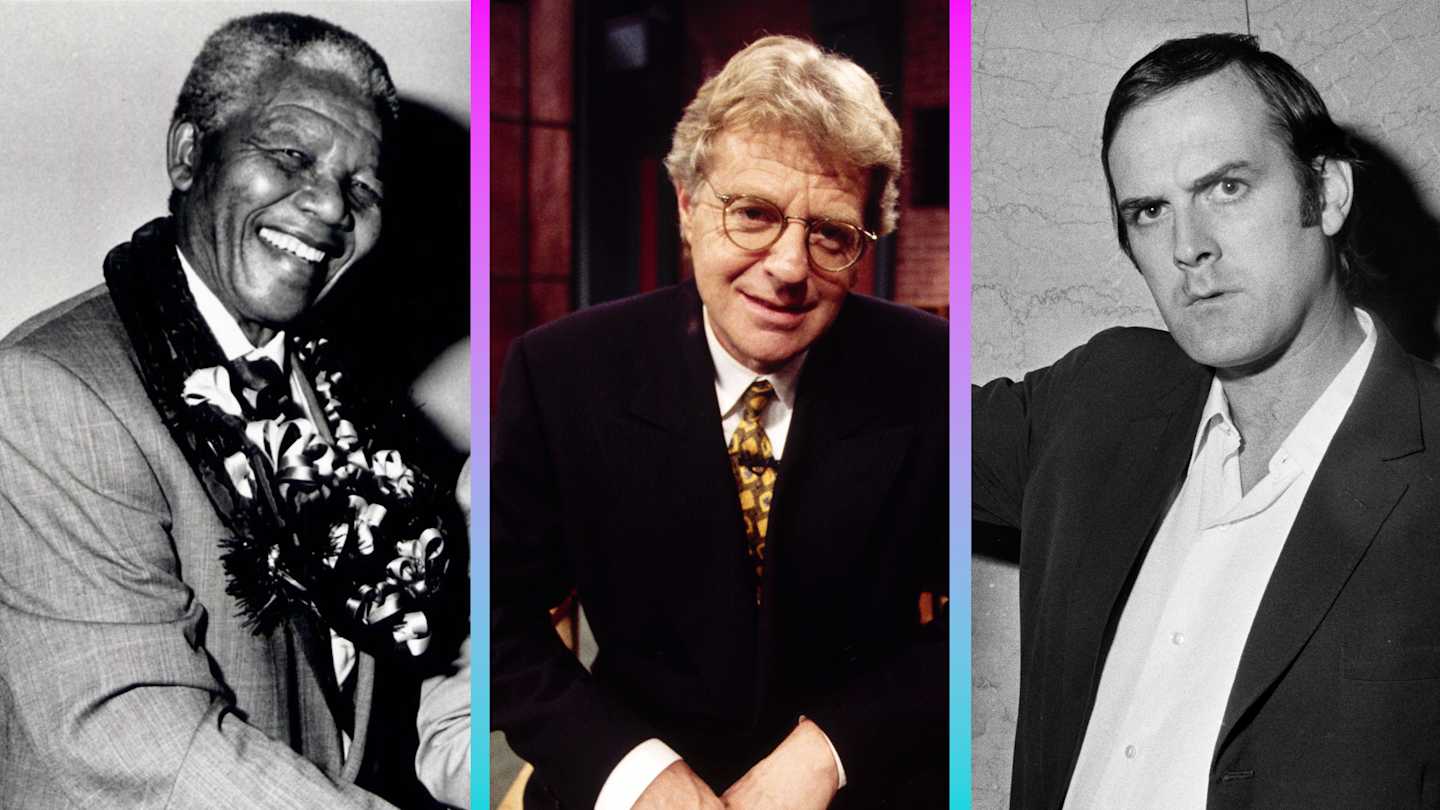
Jerry Springer earned his law degree from Northwestern University School of Law in 1968. Before becoming the king of chaotic daytime television, he practiced law, worked in politics, served on the Cincinnati City Council, and became mayor of Cincinnati. His career took several sharp turns, most of them televised at high volume.
18. Ben Stein
Ben Stein earned his J.D. from Yale Law School in 1970. He worked as a lawyer, law professor, presidential speechwriter, commentator, actor, and game show host. Many people know him from Ferris Bueller’s Day Off, but behind that famously dry delivery was a serious legal and economic education.
19. John Cleese
John Cleese studied law at Downing College, Cambridge, and earned a law degree before becoming a comedy legend. As a member of Monty Python and co-creator of Fawlty Towers, Cleese built a career on logic pushed to absurdity. That may not sound like law school, but anyone who has read a dense contract knows the connection is closer than it appears.
20. Gerard Butler
Gerard Butler studied law at the University of Glasgow and even trained for a legal career before becoming an actor. Eventually, he left law behind and found fame in films such as 300, The Phantom of the Opera, and Olympus Has Fallen. His legal past adds an unexpected layer to his action-star image.
21. Rebel Wilson
Rebel Wilson holds a double degree in Arts and Law from the University of New South Wales. She originally considered a legal or political career before comedy took over. Her success in Pitch Perfect, Bridesmaids, and other projects shows that a legal education can coexist nicely with perfect comic timing.
22. Gemma Chan
Gemma Chan earned a law degree from Oxford University before choosing acting. She was reportedly offered a training contract with a major law firm but instead pursued drama. Roles in Crazy Rich Asians, Humans, and Marvel’s Eternals made her internationally known, while her legal education still reflects her thoughtful approach to advocacy and public issues.
23. Andrea Bocelli
Andrea Bocelli earned a law degree from the University of Pisa before becoming one of the world’s most beloved tenors. He even worked briefly as a court-appointed lawyer while performing music on the side. Eventually, the music won. Humanity is grateful, and probably so were a few relieved courtroom clients.
24. Nelson Mandela
Nelson Mandela studied law for many years and obtained an LL.B. through the University of South Africa in 1989, during the final months of his imprisonment. He had earlier co-founded South Africa’s first Black law firm with Oliver Tambo. His legal education supported his lifelong fight against apartheid and his later leadership as South Africa’s president.
25. Fidel Castro
Fidel Castro studied law at the University of Havana and graduated as a Doctor of Law in 1950. His legal studies overlapped with political activism, and he later became the revolutionary leader who ruled Cuba for decades. Whether admired or criticized, Castro remains one of the most historically significant law graduates of the 20th century.
26. Amal Clooney
Amal Clooney earned a degree in Jurisprudence from Oxford and an LL.M. from New York University School of Law. Unlike some people on this list, she stayed firmly inside the legal world, becoming a prominent international human rights barrister. Her career includes work involving freedom of speech, war crimes, political prisoners, and international justice.
27. Jeff Cohen
Jeff Cohen is best remembered by many movie fans as Chunk from The Goonies. After leaving acting, he earned a J.D. from UCLA School of Law and became an entertainment attorney. In a delightful twist, the former child star now negotiates deals in the same industry that made him famous.
28. Josh Saviano
Josh Saviano, known for playing Paul Pfeiffer on The Wonder Years, earned a J.D. from the Benjamin N. Cardozo School of Law. After child stardom, he built a career as a lawyer and business adviser. His life also disproved the long-running internet rumor that he grew up to be Marilyn Manson, which is perhaps the strangest legal-adjacent footnote on this list.
29. Charlie Korsmo
Charlie Korsmo appeared in films such as Hook, Dick Tracy, and What About Bob? before stepping away from acting. He later earned a J.D. from Yale Law School and became a law professor. His career path feels like a movie plot: child actor leaves Hollywood, studies physics, goes to Yale Law, and teaches corporate law.
30. Tony La Russa
Baseball Hall of Fame manager Tony La Russa earned a J.D. from Florida State University College of Law in 1978. He chose baseball management over legal practice and went on to win multiple World Series titles. Still, the legal training likely helped with contracts, rules, strategy, and the fine art of arguing with umpires without turning it into a full courtroom drama.
Why So Many Famous People Have Law Degrees
One reason so many famous people have law degrees is that legal education trains flexible thinkers. Law students learn to analyze facts, separate emotion from evidence, find weaknesses in arguments, and communicate under pressure. Those skills are valuable in politics, journalism, business, entertainment, writing, sports management, activism, and public speaking.
Law school also attracts ambitious people who are comfortable with difficult reading, long hours, and competition. Not everyone who earns a law degree wants to spend life drafting contracts or preparing for trial. Some discover that their real talent is storytelling, performing, negotiating, leading, or organizing people around a cause. A legal background gives them structure, discipline, and credibilityeven when they move into fields that look completely unrelated.
The most interesting pattern is not that these famous law graduates left law. It is that law never fully left them. John Grisham turned legal procedure into page-turning fiction. Megyn Kelly used courtroom-style questioning in journalism. Michelle Obama used legal training in public leadership. Tony La Russa applied strategic thinking to baseball. Rebel Wilson and John Cleese took logic, timing, and argumentthree things law students know welland transformed them into comedy.
Experiences and Lessons From Famous People With Law Degrees
The biggest experience this topic reveals is that a law degree often works like a professional Swiss Army knife. It may not always be the tool someone uses every day, but when a difficult situation appears, it is extremely handy. Many famous law school graduates did not follow a straight line. In fact, their paths look more like a subway map drawn during a thunderstorm. Yet each turn shows how legal education can sharpen judgment and create confidence.
For students, the first lesson is that studying law does not mean surrendering every other dream. A person can earn a J.D. and still become a writer, performer, policymaker, entrepreneur, or media figure. The degree may open doors in traditional legal settings, but it can also help people understand contracts, protect their creative work, advocate for themselves, and spot bad deals before signing them with a fancy pen and instant regret.
For professionals considering a career change, these stories are encouraging. Gerard Butler, Gemma Chan, Rebel Wilson, Jeff Cohen, and Charlie Korsmo all show that reinvention is possible. Leaving one path does not erase the value of the skills gained there. A former lawyer can become an actor. A former child actor can become an attorney. A prosecutor can become a broadcaster. A baseball manager can use legal discipline without ever wearing a robe or shouting “objection” at second base.
Another important experience is that legal training often strengthens public communication. Courtrooms demand clarity. Judges dislike vague answers. Clients need practical advice. These habits can make a person more persuasive in interviews, speeches, books, campaigns, and negotiations. Barack Obama’s constitutional explanations, Hillary Clinton’s policy fluency, Amal Clooney’s courtroom advocacy, and John Grisham’s legal storytelling all reflect the power of organized thought.
There is also a humbling lesson here: a law degree is not magic. It does not guarantee wisdom, success, wealth, or universal admiration. Some people on this list are beloved, some are controversial, and some are both depending on the room. What the degree offers is training. What people do with that training depends on character, opportunity, courage, timing, and occasionally the ability to survive extremely awkward networking events.
For anyone researching famous people with law degrees, the takeaway is inspiring but practical. Law school can lead to the courtroom, but it can also lead to the White House, the Supreme Court, Hollywood, publishing, music, activism, sports, and television. The legal mind is not limited to legal jobs. It is a way of approaching problems: read closely, think deeply, ask better questions, and never assume the first answer is the final answer.
Conclusion
The world of law graduates is much bigger than law firms and courtrooms. These 30 famous people with law degrees prove that legal education can support many kinds of success: public leadership, creative work, social justice, journalism, entertainment, sports strategy, and global advocacy. Some became attorneys in the traditional sense. Others used law as a springboard into completely different careers. Either way, the degree mattered.
So, if you have a law degreeor are thinking about getting onedo not assume your future has only one script. Your legal training might help you argue a case, write a bestselling novel, negotiate a film deal, lead a movement, manage a championship team, or simply read the fine print before everyone else realizes there is fine print. In other words, law school may not make life easy, but it can make you dangerously useful.
Note: This article is based on real biographical information from reputable public sources, including presidential libraries, university profiles, official biographies, legal history references, and established biography publishers. No source links are displayed because the article is formatted for clean web publication.