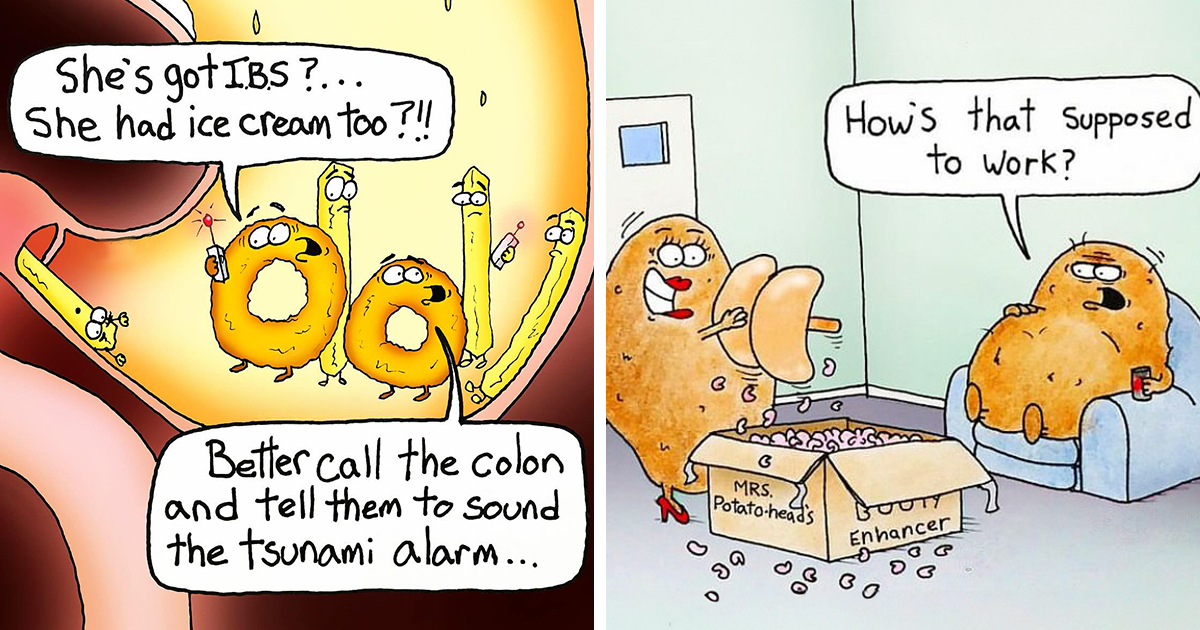
Some comics politely knock on the door of your sense of humor. Fruit Gone Bad kicks the door open, throws a banana peel on the floor, and waits for your dignity to slip. Created by New York-based cartoonist John King, this cheeky one-panel comic series turns fruits, vegetables, snacks, pantry staples, and household objects into tiny troublemakers with big personalities. Apples get dramatic. Bananas get suspicious. Corn gets a little too confident. And somehow, a cucumber can deliver more awkward tension than an entire dinner party.
The appeal of “33 Funny And Slightly Inappropriate Comics From ‘Fruit Gone Bad’” is not just that the jokes are naughty. It is that the jokes are simple, sharp, visual, and surprisingly human. King’s produce characters are not just food with faces; they are little stand-ins for our own jealousy, embarrassment, desire, laziness, confusion, and occasional bad decision-making. In other words, the fruit bowl is judging us, and honestly, it has evidence.
What Is “Fruit Gone Bad”?
Fruit Gone Bad is a one-panel comic series by cartoonist John King. The concept sounds wonderfully simple: take ordinary foods and everyday objects, give them faces, drop them into awkward or mischievous situations, and finish the scene with a pun, a dark twist, or a slightly inappropriate punchline. The result is a style of humor that feels quick, snackable, and perfectly built for social media scrolling.
Instead of long story arcs or complicated lore, the comics usually work like tiny comedy traps. You look at the image, recognize the object, read the line, and then your brain does a quick double take. That pause is where the joke lives. A piece of fruit is suddenly acting like a person with bad habits. A vegetable becomes the star of a relationship problem. A kitchen item says something that makes you laugh and immediately check whether anyone saw you laughing.
Why These Comics Work So Well
The strongest “Fruit Gone Bad” comics are built on a classic comedy engine: surprise. The drawing sets up one expectation, and the caption or speech bubble swerves into another. The humor often comes from wordplay, visual puns, double meanings, and everyday social awkwardness. This is why the series can be funny without needing a large cast or a complicated universe.
Single-panel comics have to do a lot with very little. There is no room for slow setup. The character design, facial expression, object choice, and wording all need to land at once. Fruit Gone Bad understands this rhythm. The joke is usually immediate, but it also rewards a second look. You may laugh at the pun first, then notice the tiny expression on a tomato’s face and laugh again because, somehow, that tomato looks like it has a lawyer.
The Magic of Slightly Inappropriate Humor
The phrase “slightly inappropriate” is important. These comics are not usually shocking just for the sake of being shocking. Their edge comes from taking innocent-looking characters and placing them in adult, awkward, or mildly taboo situations. A peach, a banana, or a loaf of bread is visually harmless, which makes the punchline feel even more unexpected.
That contrast is the secret sauce. Cute drawings lower your defenses. Then the joke tiptoes in wearing sunglasses and carrying a questionable alibi. This blend of innocence and mischief gives the comics their personality. They are playful rather than cruel, cheeky rather than mean-spirited, and absurd enough to keep the humor light.
John King’s Style: Simple Drawings, Big Reactions
John King’s art style has an old-school cartoon charm. The characters are not overdesigned. They do not need dramatic backgrounds or cinematic lighting. A few expressive lines, a strong pose, and a clean setup are enough. That simplicity helps the punchline shine.
One of the clever parts of the series is how the food items retain their identity while becoming emotional characters. A banana still looks like a banana, but it may also look nervous, smug, romantic, or guilty. A vegetable can look offended. A slice of bread can look disappointed in your life choices. This character-first approach makes the jokes feel more alive than basic food puns.
Food Puns With Bite
Food puns are everywhere online, but Fruit Gone Bad gives them extra flavor by pairing the wordplay with visual storytelling. The jokes are rarely just “this word sounds like that word.” Instead, the pun becomes part of a scene. The comic asks: what would happen if this phrase were literally true? What would a jealous fruit look like? What would a snack say in a moment of panic? What would happen if the produce aisle had the emotional maturity of a reality show reunion?
That is where the series becomes more than a collection of dad jokes. It uses dad-joke energy, yes, but it adds attitude, timing, and just enough darkness to make the jokes feel fresh. Think of it as a fruit salad with a splash of hot sauce.
Why Readers Keep Sharing “Fruit Gone Bad” Comics
These comics are highly shareable because they are quick to understand. You do not need to know a backstory. You do not need to remember character names. You can see one panel and get the joke in seconds. That makes the series perfect for Instagram, Facebook, humor blogs, and group chats where someone always sends memes at 1:13 a.m. like they are performing a public service.
Another reason readers respond to the comics is relatability. The characters may be fruit, but the situations often mirror human behavior. They deal with embarrassment, flirting, misunderstandings, insecurity, workplace-style tension, and the eternal problem of saying the wrong thing at the worst possible time. The joke is wrapped in produce, but the feeling underneath is familiar.
Examples of the Humor Without Spoiling the Comics
A typical Fruit Gone Bad joke might take a familiar food shape and turn it into a personality flaw. A banana’s curve becomes part of the gag. A chili pepper’s heat becomes attitude. A carrot’s shape invites a punchline that is just innocent enough to deny in court. A loaf of bread might become needy, dramatic, or suspiciously romantic. The comedy often comes from the object’s real-world traits colliding with human behavior.
The series also enjoys putting characters into scenes that feel oddly serious for food. There may be relationship drama, awkward bedroom humor, therapy-style conversations, or noir-like setups where a fruit appears to have seen too much. The fun is in how quickly the comic moves from “cute kitchen item” to “why does this orange have emotional baggage?”
The Role of Dark Humor
Dark humor in Fruit Gone Bad is usually mild, cartoonish, and absurd. The stakes can sound dramatic, but the characters are still produce and pantry items. That distance makes the humor easier to enjoy. A joke that might feel heavy with human characters becomes silly when delivered by a vegetable with tiny eyes.
This is a long tradition in cartoons: using non-human characters to explore very human problems. Animals, objects, foods, and imaginary creatures can say things that feel too blunt coming from people. A talking strawberry can be rude in a way that feels funny rather than personal. A potato can be tragic without ruining your afternoon.
How “Fruit Gone Bad” Fits Into the One-Panel Cartoon Tradition
One-panel cartoons have a proud history in American humor. The format depends on the perfect marriage of image and caption. The best examples do not simply illustrate a joke; they create a tiny world where the joke feels inevitable. Fruit Gone Bad belongs to that tradition, but it updates the format for the fast-moving world of online comics.
Where classic magazine cartoons often focused on cocktail parties, offices, family rooms, and social manners, King’s comics drag the same kinds of human awkwardness into the kitchen. The setting changes, but the comic principle remains the same: a strange scenario plus a sharp line equals a laugh.
Why “33 Funny And Slightly Inappropriate Comics” Is a Strong SEO Topic
From an SEO perspective, the topic works because it combines several search-friendly elements: funny comics, inappropriate comics, dark humor comics, food puns, webcomics, single-panel cartoons, and the recognizable name Fruit Gone Bad. Readers searching for this title are likely looking for entertainment, visual humor, and commentary that helps them understand why the series is popular.
The title also has strong curiosity value. The number “33” suggests a list. “Funny” promises entertainment. “Slightly inappropriate” adds a little forbidden spice without sounding extreme. “Fruit Gone Bad” is memorable because it sounds both silly and suspicious. It is the kind of title that makes readers think, “I should not click this at work,” then click it at work anyway.
What Makes the Characters So Memorable?
The characters are memorable because they are instantly readable. A pear, a banana, a pepper, or a slice of pizza already comes with built-in associations. King uses those associations as comedy shortcuts. A hot pepper can be spicy in more than one way. A banana can be suggestive without saying much. An onion can make people cry emotionally and literally. The audience brings half the joke with them before reading the caption.
This is efficient storytelling. Instead of spending panels explaining who a character is, the comic lets the object do the setup. Then the expression, posture, and dialogue deliver the punchline. It is comedy with the peel still on.
The Balance Between Naughty and Nice
The best thing about Fruit Gone Bad is that it does not lose its playfulness. The comics can be adult, but they are usually not aggressive. The humor feels like a wink, not a shove. That balance helps the series reach a broad audience: people who enjoy puns, fans of dark humor, casual comic readers, and anyone who has ever looked at a banana and thought, “That fruit knows something.”
In a web culture full of loud jokes and recycled memes, the series stands out by being compact and personality-driven. It does not need a paragraph of explanation. It does not need a trending news event. It just needs a fruit, a face, and one line that makes the reader groan-laugh like a proud dad at a barbecue.
Reader Experience: Why These Comics Feel Like a Guilty Pleasure
Reading “33 Funny And Slightly Inappropriate Comics From ‘Fruit Gone Bad’” feels a little like sneaking dessert before dinner. You know it is not the most serious use of your time, but it improves the day anyway. The jokes are fast, silly, and occasionally rude enough to make you look over your shoulder. That is part of the fun.
There is also a strange comfort in seeing everyday objects behave badly. Real life can be exhausting. Bills arrive. Emails multiply. Someone always says “circle back” in a meeting when they could simply say “talk later.” Then along comes a cartoon vegetable with a terrible pun, and for five seconds the world becomes manageable again.
The series is especially enjoyable because it rewards low-effort reading. You do not have to sit down with a complicated plot. You can browse a few comics during a coffee break, while waiting for dinner, or while pretending to understand a software update. Each panel gives you a complete little joke. Some will make you laugh immediately. Some will make you groan. A few may make you whisper, “That was awful,” while saving it to send to a friend.
Another relatable experience is the way the comics change how you see your kitchen. After reading enough Fruit Gone Bad, produce stops looking innocent. A banana on the counter suddenly seems dramatic. A tomato looks like it is hiding gossip. A cucumber in the fridge appears to be minding its own business a little too loudly. Even a bag of carrots starts to feel like it has a group chat you are not invited to.
For readers who enjoy making jokes, the series can also be creatively inspiring. It shows how humor often begins with observation. Take something ordinary, notice its shape, name, texture, or reputation, then ask what human situation it could accidentally resemble. That process is simple, but not easy. The best puns feel obvious only after someone else has done the hard work. Before that, they are just lonely vegetables waiting for a punchline.
The slightly inappropriate side of the comics also teaches a useful lesson about tone. A joke can be edgy without being cruel. It can be adult without becoming mean. Fruit Gone Bad generally keeps the focus on absurdity, double meanings, and character reactions. That makes the humor feel mischievous rather than harsh. It is the comedy equivalent of putting googly eyes on a serious object and then giving it questionable dating advice.
In personal reading terms, this is the kind of comic collection that works best when shared. One person laughs, sends it to another person, and waits for the reply: “I hate that I laughed.” That sentence is basically the national anthem of pun-based humor. The comics create tiny social moments, which is one of the reasons they travel so well online.
Ultimately, the experience of reading Fruit Gone Bad is light, weird, and oddly refreshing. It reminds us that comedy does not always need a grand stage. Sometimes it just needs an apple, a bad attitude, and a punchline that should probably not be read aloud at a family dinner.
Conclusion
“33 Funny And Slightly Inappropriate Comics From ‘Fruit Gone Bad’” celebrates exactly what makes John King’s comic series so addictive: simple drawings, clever puns, expressive food characters, and a naughty little spark that keeps every panel unpredictable. The series works because it turns the most ordinary items in the kitchen into miniature comedy actors. Fruits, vegetables, and snacks become jealous, flirty, embarrassed, confused, dramatic, and occasionally unhinged.
Whether you love dark humor comics, food puns, one-panel cartoons, or just need a quick laugh that feels slightly wrong in the best way, Fruit Gone Bad delivers. It proves that even the produce aisle has secrets. And apparently, most of them are not safe for polite conversation.
Note: This article is an original SEO-focused rewrite based on publicly available information about John King’s Fruit Gone Bad comic series and general knowledge of single-panel gag cartooning. It does not reproduce comic panels, source text, or unnecessary citation placeholders.