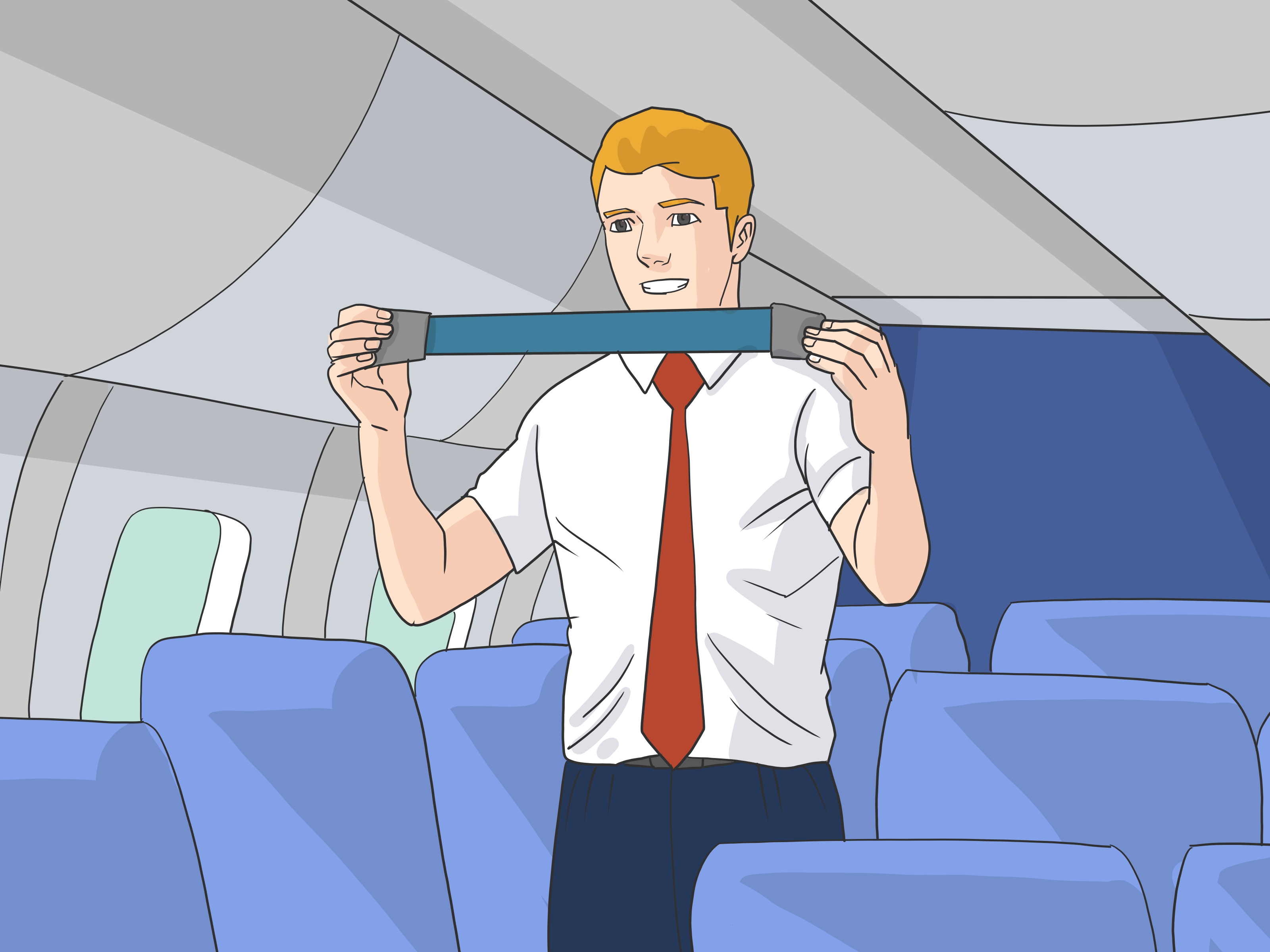
Becoming a flight attendant sounds glamorous from the outside: crisp uniforms, airport coffee, hotel views, and the ability to say “I’m heading to Denver” as casually as someone else says “I’m heading to the grocery store.” But behind the polished smile and perfectly timed beverage cart is a serious aviation safety career. Flight attendants are trained professionals responsible for passenger safety, emergency response, security procedures, customer service, and keeping calm when seat 18C decides turbulence is a personal insult.
The good news? You do not need a pilot’s license, a four-year aviation degree, or a childhood spent memorizing airport codes to start. Most U.S. airlines require a high school diploma or GED, legal authorization to work in the United States, English fluency, a valid passport, physical ability to perform cabin duties, and successful completion of airline-provided training. Some carriers prefer college coursework, customer service experience, second-language fluency, or hospitality backgrounds, but the path is more accessible than many people think.
This guide breaks down four practical ways to become a flight attendant, from building the right qualifications to applying strategically, passing interviews, and surviving training without turning into a human pretzel from stress. Whether your dream is working domestic routes, international flights, regional aviation, or a major U.S. airline, these steps will help you move from “I love travel” to “Welcome aboard.”
Way 1: Meet the Basic Flight Attendant Requirements First
Before you start applying, make sure you meet the minimum flight attendant requirements. Airlines are not simply hiring friendly travelers; they are hiring safety-sensitive crew members who must follow federal rules, pass screenings, complete training, and respond quickly in emergencies. Think of this as your preflight checklist. Skip it, and your application may never leave the gate.
Age, education, and work authorization
Most major U.S. airlines require candidates to be at least 20 or 21 years old, depending on the company. Delta, for example, lists 21 as the minimum age, while Southwest lists 20 at the time of application. A high school diploma or GED is usually required, and college coursework may be preferred but is rarely mandatory. You must also be legally authorized to work in the United States.
English fluency is essential because safety announcements, emergency commands, crew communication, and passenger interactions depend on clear language. If you are bilingual, even better. Airlines with international routes often seek language-qualified flight attendants for markets such as Spanish, French, German, Korean, Japanese, Italian, Portuguese, Mandarin, Arabic, and other high-demand languages. A second language can make your application more competitive, especially if you want international flying later.
Passport and travel documents
A valid, unexpired passport is one of the most important items for aspiring flight attendants. Even if you are hired for a U.S.-based airline, your schedule may eventually include international destinations, Canada, Mexico, or unexpected operational changes. Airlines need crew members who can legally enter and exit assigned destinations. If your passport is expired, missing, or close to expiration, renew it early. Passport delays are not a fun plot twist when your dream job is waiting.
For domestic travel, U.S. identification rules also matter. Since REAL ID enforcement began, adult travelers need a REAL ID-compliant license or another accepted form of identification to board domestic flights. While airline employees often travel using company systems and crew credentials, applicants still need reliable government-issued identification during interviews, onboarding, training travel, and background checks.
Physical and safety-related abilities
Flight attendants must be able to perform physical tasks in a narrow aircraft cabin. Airlines may require candidates to reach overhead compartments, lift or lower baggage, operate emergency equipment, sit securely in a jumpseat harness, stand for long periods, bend, squat, assist passengers, and participate in water evacuation drills. Southwest, for example, lists abilities such as lifting carry-on items, moving through aisles and exits, handling emergency equipment, and performing evacuation-related tasks.
Some airlines include reach requirements rather than height requirements. Alaska Airlines lists an 82-inch vertical reach requirement for certain roles, measured while standing on toes without shoes. The point is not runway-model height; the point is whether you can safely access equipment and perform duties on the aircraft.
Background checks, drug testing, and professionalism
Flight attendants are safety-sensitive aviation employees, so expect a serious pre-employment process. Airlines may require background checks, fingerprinting, drug testing, employment verification, and medical or functional assessments. DOT and FAA rules apply to safety-sensitive transportation roles, and airlines take compliance seriously.
Professional appearance standards also matter. Airlines vary, but many have rules about uniforms, visible tattoos, piercings, grooming, hair color, and presentation. This does not mean you need to look like a statue in an airport museum. It does mean you should read each airline’s standards before applying, because “surprise neck tattoo policy conflict” is not the kind of surprise anyone wants.
Way 2: Build Customer Service, Safety, and Communication Experience
You can become a flight attendant without previous airline experience, but you will have a stronger application if you can prove you already know how to handle people under pressure. Airlines love candidates who have worked in hospitality, restaurants, hotels, retail, healthcare, education, call centers, tourism, cruise lines, security, emergency services, or any job where humans occasionally behave like unsupervised raccoons.
Why customer service experience matters
Flight attendants spend much of their time helping passengers, answering questions, calming anxious travelers, solving seating issues, assisting families, and managing service in a space smaller than most studio apartments. A passenger may be nervous, tired, hungry, late, confused, or upset before you even say hello. Your job is to remain professional and helpful without absorbing everyone else’s chaos.
Use your work history to show patience, adaptability, and emotional control. If you worked in a restaurant, talk about handling rush-hour service. If you worked in retail, describe resolving complaints. If you worked in healthcare, mention compassion and safety awareness. If you were a teacher, highlight communication and crowd management. Airlines want evidence that you can stay composed when the cabin gets loud, the seatbelt sign is on, and someone wants to know why clouds exist.
Develop safety-first thinking
The public often sees flight attendants as service professionals, but aviation regulations define the role around safety. Flight attendants participate in preflight briefings, check emergency equipment, demonstrate safety procedures, monitor passenger compliance, respond to medical incidents, assist during evacuations, and communicate with pilots and other crew members.
To prepare, learn the safety mindset before training begins. Practice noticing details. Get comfortable following procedures exactly. Build habits around punctuality, personal responsibility, and clear communication. If you have CPR, first aid, lifeguard, emergency response, or security training, include it on your resume. These certifications do not replace airline training, but they show you can learn safety procedures and stay calm in serious situations.
Improve communication and conflict management
Communication is the secret engine of cabin crew work. Flight attendants must speak clearly, listen carefully, document issues, make announcements, coordinate with teammates, and de-escalate conflict. A great flight attendant can sound warm without being vague, firm without being rude, and calm without sounding like a robot reading a toaster manual.
Practice explaining rules in a professional tone. For example, instead of saying, “You can’t put that there,” try, “For takeoff, that bag needs to go fully under the seat or in an overhead bin so the aisle stays clear.” The difference is small, but the result is huge. Airlines notice candidates who can enforce rules while keeping passengers cooperative.
Way 3: Apply Strategically to the Right Airlines
Once your qualifications and resume are ready, it is time to apply. This is where many candidates make the same mistake: they treat every airline application like a lottery ticket. A better approach is to research airlines, understand their bases and culture, tailor your materials, and apply when you can fully commit to the process.
Research airline types and crew bases
Not all flight attendant jobs are the same. Major airlines such as Delta, United, American, Southwest, Alaska, and JetBlue may offer large route networks, strong travel benefits, and competitive long-term career paths. Regional airlines may offer a faster entry point, smaller aircraft, and opportunities to build experience before moving to a larger carrier. Charter and corporate aviation can involve different service expectations, schedules, and customer profiles.
Crew bases matter because they affect your commute and lifestyle. JetBlue, for instance, notes that inflight crewmembers train in Orlando and may be assigned to bases such as Boston, Newark, Fort Lauderdale, New York-JFK, Los Angeles, or Orlando. Other airlines have bases in cities such as Atlanta, Dallas, Chicago, Denver, Houston, Las Vegas, Seattle, Phoenix, San Francisco, Washington, and more. If you live far from your assigned base, commuting can become a second unpaid job with wings.
Understand the hiring process
Airline hiring usually includes an online application, assessments, video interviews, group or virtual exercises, in-person interview events, background checks, and a conditional job offer. Delta’s public hiring process includes an application, assessment, virtual job tryout, on-demand interview, in-person event day, conditional job offer, and then onsite training in Atlanta. United describes a path that includes pre-employment checks and a 6.5-week initial training program.
Because openings can attract large numbers of applicants, speed and accuracy matter. Create a clean resume before applications open. Prepare digital copies of your passport, work history, education details, and references. Use one profile per airline when instructed. Read every question carefully. A typo in your email address can turn your dream career into a missing-message mystery.
Tailor your resume for flight attendant keywords
Your resume should be simple, polished, and focused on transferable skills. Use flight attendant keywords naturally, such as passenger safety, customer service, emergency response, conflict resolution, hospitality, communication, teamwork, flexibility, compliance, problem solving, and multilingual skills. Do not overdo it. A resume that says “customer service” seventeen times begins to sound like it is trying to hypnotize the recruiter.
Use specific examples. Instead of “Handled customers,” write “Resolved guest concerns in a high-volume hotel while maintaining service standards.” Instead of “Good communicator,” write “Delivered clear instructions to groups of 30+ guests during daily operations.” Strong examples make your experience believable.
Prepare for video and group interviews
Flight attendant interviews often test personality, judgment, teamwork, and professionalism. You may be asked behavioral questions such as, “Tell me about a time you handled an angry customer,” “Describe a time you followed a rule you did not personally agree with,” or “How would you respond if a passenger refused to comply with safety instructions?”
Use the STAR method: Situation, Task, Action, Result. Keep answers concise and positive. Airlines are not looking for drama; they are looking for judgment. For video interviews, choose a quiet space, dress professionally, look at the camera, smile naturally, and avoid reading answers like a hostage note. For group interviews, participate without dominating. A cabin crew member must be confident, but also cooperative.
Way 4: Pass Airline Training and Earn Certification
A conditional job offer is exciting, but you are not fully ready to fly until you complete airline training. This is the part where the dream becomes very real. Training is intensive, structured, and safety-focused. It is not a casual orientation with muffins. It is closer to aviation boot camp with better luggage.
What flight attendant training includes
Under FAA-approved training programs, flight attendant training includes subjects such as emergency procedures, aircraft equipment, passenger handling, crew resource management, communication systems, evacuation procedures, fire fighting, first aid, security, service standards, aircraft-specific operations, and competence checks. Federal regulations require approved training curriculums and emergency training for crewmembers.
Airlines vary in training length. United describes initial training as 6.5 weeks. Delta lists a 7-week onsite training program in Atlanta. Alaska, Hawaiian, and Horizon describe intensive training programs lasting between 4 and 8 weeks. Training may include written exams, drills, aircraft door operation, evacuation commands, CPR, safety equipment, mock cabin scenarios, and supervised training flights or operating experience.
Certification of Demonstrated Proficiency
After successful completion of required training and operating experience, flight attendants working on qualifying aircraft receive an FAA Certificate of Demonstrated Proficiency. The airline’s Director of Operations applies for the certificate after the flight attendant completes the FAA-approved program. The certificate belongs to the individual flight attendant, not the airline.
This is important because it shows that becoming a flight attendant is not just about being hired. You must prove you can perform the duties. You need to study, pass checks, and demonstrate competence. The uniform is earned, not handed out like a souvenir T-shirt.
How to succeed in training
Training success depends on discipline. Arrive early. Study every night. Build flashcards for aircraft equipment, commands, airport codes, and emergency procedures. Practice announcements aloud. Take care of your sleep, hydration, and nutrition. You cannot memorize evacuation commands properly if your dinner was a vending machine cookie and panic.
Be a good teammate. Training classes often include group activities and partner drills. Instructors notice who helps others, who stays focused, and who creates unnecessary drama. Airlines want crew members who can work in a metal tube at 35,000 feet without turning minor disagreements into a reality show.
What the Flight Attendant Lifestyle Is Really Like
Before you chase this career, understand the lifestyle. Flight attendants often work nights, weekends, holidays, early mornings, red-eyes, delays, irregular operations, and multi-day trips away from home. Seniority usually affects schedules, routes, vacation, and base flexibility. New flight attendants may spend time on reserve, meaning they must be available to fly when called.
The job can be thrilling. You may wake up in Seattle, serve breakfast over the Rockies, land in Chicago, and sleep in a hotel room you did not have to book. You may meet coworkers from everywhere, build lifelong friendships, and learn how to pack three days of life into one carry-on with suspicious efficiency.
It can also be tiring. Passengers may be anxious or rude. Weather can disrupt schedules. Time zones can scramble your body clock. You may miss birthdays, holidays, and normal weekend routines. The best candidates are honest with themselves: they love people, safety, travel, and flexibility enough to handle the less glamorous parts.
Extra Experience: Real-World Lessons for Becoming a Flight Attendant
One of the most useful experiences for aspiring flight attendants is working any job that teaches you how to serve people while staying calm. Imagine a busy restaurant on a Friday night. A table is upset because the kitchen is behind, a child spills juice, someone wants a substitution that defies the laws of food science, and your manager is asking for updates. That environment teaches multitasking, patience, and professional communicationthe same muscles flight attendants use when boarding is delayed, overhead bins are full, and three passengers ask for three different things at the same time.
Another valuable experience is volunteering or working in roles that involve safety and care. Lifeguarding, first aid volunteering, caregiving, school supervision, event staffing, and community service can help you develop awareness. Flight attendants must notice when someone looks ill, when a bag blocks an exit path, when a passenger seems confused, or when a situation could escalate. The ability to observe quietly and act early is a powerful skill.
Travel experience can help too, but not in the way many people think. Airlines do not hire you because you like vacations. They hire you because you can function in airports, adapt to schedule changes, respect cultures, and stay organized away from home. If you have traveled internationally, studied abroad, moved between cities, or handled complicated logistics, use those stories carefully. Focus on adaptability and responsibility, not just how much you love beaches.
Practicing interview stories is another experience that pays off. Many candidates fail not because they lack talent, but because they cannot explain their talent clearly. Keep a list of five strong stories: handling conflict, helping a customer, following a rule, working on a team, and adapting to sudden change. Practice until your answers sound natural, not memorized. The goal is to sound like a prepared professional, not a speech robot wearing business casual.
Finally, talk to current or former flight attendants when possible. Ask respectful questions about reserve life, commuting, training, bases, pay structure, scheduling, and work-life balance. Do not ask only about free flights. Ask what surprised them, what they wish they had known, and what makes someone successful after the first year. Their answers may help you decide which airline fits your personality and lifestyle.
The best experience is not always aviation-specific. It is the experience of being dependable when things get messy. It is showing up on time, staying kind under pressure, following rules, and solving problems without needing applause. If you can do that on the ground, you are already building the foundation to do it in the air.
Conclusion: Your Flight Attendant Career Can Start Before You Board
Becoming a flight attendant is a realistic goal if you prepare wisely. Start by meeting the basic requirements: age, education, passport, work authorization, physical ability, and professional readiness. Then build customer service and safety-related experience that proves you can handle people, pressure, and procedures. Apply strategically to airlines that match your lifestyle goals, crew base preferences, and long-term career plans. Finally, take airline training seriously, because certification depends on competence, not charm alone.
The flight attendant career path rewards people who are flexible, calm, friendly, safety-focused, and willing to keep learning. It is not always glamorous, and the coffee may occasionally taste like it has filed a complaint against itself. But for the right person, it offers adventure, purpose, teamwork, travel benefits, and a front-row seat to the moving map of modern life. If you are ready to serve, protect, adapt, and smile through turbulence, your future may be waiting at the next gate.