Editorial note: This article is for educational, cultural, and safety-focused reading. A katana is a real weapon, not a wall-mounted personality test. Anyone interested in Japanese sword arts should train with a qualified instructor, use appropriate practice equipment, and follow all local laws.
Introduction: The Katana Is Not a Toy, a Prop, or a Shortcut to Looking Cool
The katana has a strange modern life. In museums, it is admired as a masterpiece of Japanese metalwork. In martial arts dojos, it is treated as a tool for discipline, posture, timing, respect, and self-control. In movies, it somehow solves every problem from zombies to bad dialogue. Online, unfortunately, it is often treated like a giant kitchen knife with dramatic lighting.
Using a katana properly does not mean waving it around in the backyard while wearing socks and confidence. Proper katana use begins with respect: respect for the blade, for the tradition behind Japanese swordsmanship, for the people around you, and for your own fingers, which are surprisingly useful in daily life.
Historically, a katana is a curved, single-edged Japanese sword associated with the samurai class. It is usually recognized by its long grip, guard, scabbard, and blade designed for controlled handling. But the real lesson of the katana is not “swing harder.” It is “control more.” In arts such as iaido, kendo, and related sword traditions, students spend years learning posture, timing, etiquette, breathing, awareness, and safe movement before anything looks effortless.
This guide explains four responsible ways to use a katana properly: choosing the right training path, handling the sword safely, practicing with discipline rather than drama, and maintaining the blade with care. Think of it as a beginner-friendly map, not a combat manual. The katana deserves better than chaos, and so does your living room furniture.
1. Use the Right Sword for the Right Purpose
Start with training equipment, not a sharpened blade
The first proper way to use a katana is to avoid starting with a live blade. That may sound disappointing if your imagination already has wind, moonlight, and heroic background music queued up. But in real Japanese sword training, beginners commonly start with safer practice tools such as a bokken, bokuto, shinai, or blunt iaito, depending on the martial art and instructor.
A bokken or bokuto is a wooden sword used to learn spacing, posture, and movement without the danger of a sharpened edge. A shinai is a bamboo practice sword used in kendo with protective equipment. An iaito is a blunt metal practice sword commonly used in iaido. A shinken, or sharpened sword, is not beginner gear. It is advanced equipment that requires supervision, maturity, and excellent control.
Using the wrong sword too early is like learning to drive in a race car during a thunderstorm while eating soup. Technically possible? Maybe. Wise? Absolutely not.
Understand what kind of katana you have
Not every sword-shaped object is meant for the same use. Some katanas are antique art objects. Some are modern reproductions. Some are decorative wall hangers. Some are designed for martial arts training. Some are blunt. Some are sharp. Some are poorly made and should not be swung at all, unless your goal is to turn “sword practice” into “emergency room storytelling.”
Before handling any katana, identify its purpose. A historical blade should be treated as a preserved cultural object. A decorative sword should stay decorative. A training sword should be used only in an appropriate setting. A sharp sword should be handled only by someone trained to do so safely.
Proper katana use begins with this simple question: “What is this sword actually made for?” If the answer is unclear, do not swing it. Ask a qualified instructor, collector, or sword specialist.
Train in a proper environment
A real training space matters. A dojo provides clear rules, room to move, supervision, and a culture of safety. A garage full of paint cans, a ceiling fan, two bicycles, and your uncle’s folding chair is not a dojo. It is a slapstick scene waiting to happen.
Good katana training also includes etiquette. Students learn when to bow, how to carry practice equipment, how to listen, how to move safely around others, and how to treat the sword as more than an object. These habits are not empty ceremony. They reduce accidents and build the kind of calm attention that sword arts demand.
2. Handle the Katana with Safety, Awareness, and Respect
Always assume the blade can hurt someone
Whether a katana is sharp, blunt, antique, modern, expensive, cheap, beautiful, ugly, or purchased after watching too many action scenes, the safest rule is simple: treat it as dangerous. Even a blunt practice sword can injure someone through impact. A sharp blade can cause severe harm with very little pressure.
Proper handling means keeping the sword pointed in a safe direction, staying aware of people nearby, and never showing off. The person who says, “Relax, I know what I’m doing,” is often the person who does not know what they are doing.
Carry and present the sword carefully
A katana should be carried in its scabbard when not in use. Do not walk around with a bare blade unless you are in a controlled training situation under instruction. When passing a sword to someone else, do so slowly and respectfully, making sure both people understand who has control of it at every moment.
Traditional sword-handling etiquette emphasizes controlled movement and awareness. This is not about looking fancy. It is about preventing accidents. A sword should never be tossed, flipped, pointed at people, or used as a gesture tool while explaining your weekend plans.
Respect personal space like your fingers depend on it
Because they do. A katana requires a clear safety zone. Before any practice movement, check the floor, walls, ceiling, nearby people, pets, furniture, and anything breakable. Cats, in particular, do not care about your martial arts journey and may enter the danger zone with the confidence of tiny landlords.
In a dojo, spacing is part of training. Students learn to move only when it is safe, to stop when instructed, and to remain aware of others. This type of awareness is one of the most valuable lessons of Japanese sword practice. The sword magnifies carelessness, so carefulness becomes the first skill.
3. Practice Form, Posture, and Control Before Power
Good katana use is boring before it is impressive
Many beginners want dramatic cuts, fast movements, and cinematic poses. Real sword training begins much quieter. Students work on stance, grip, posture, balance, breathing, timing, and awareness. These basics may not look exciting at first, but they are the foundation of proper katana use.
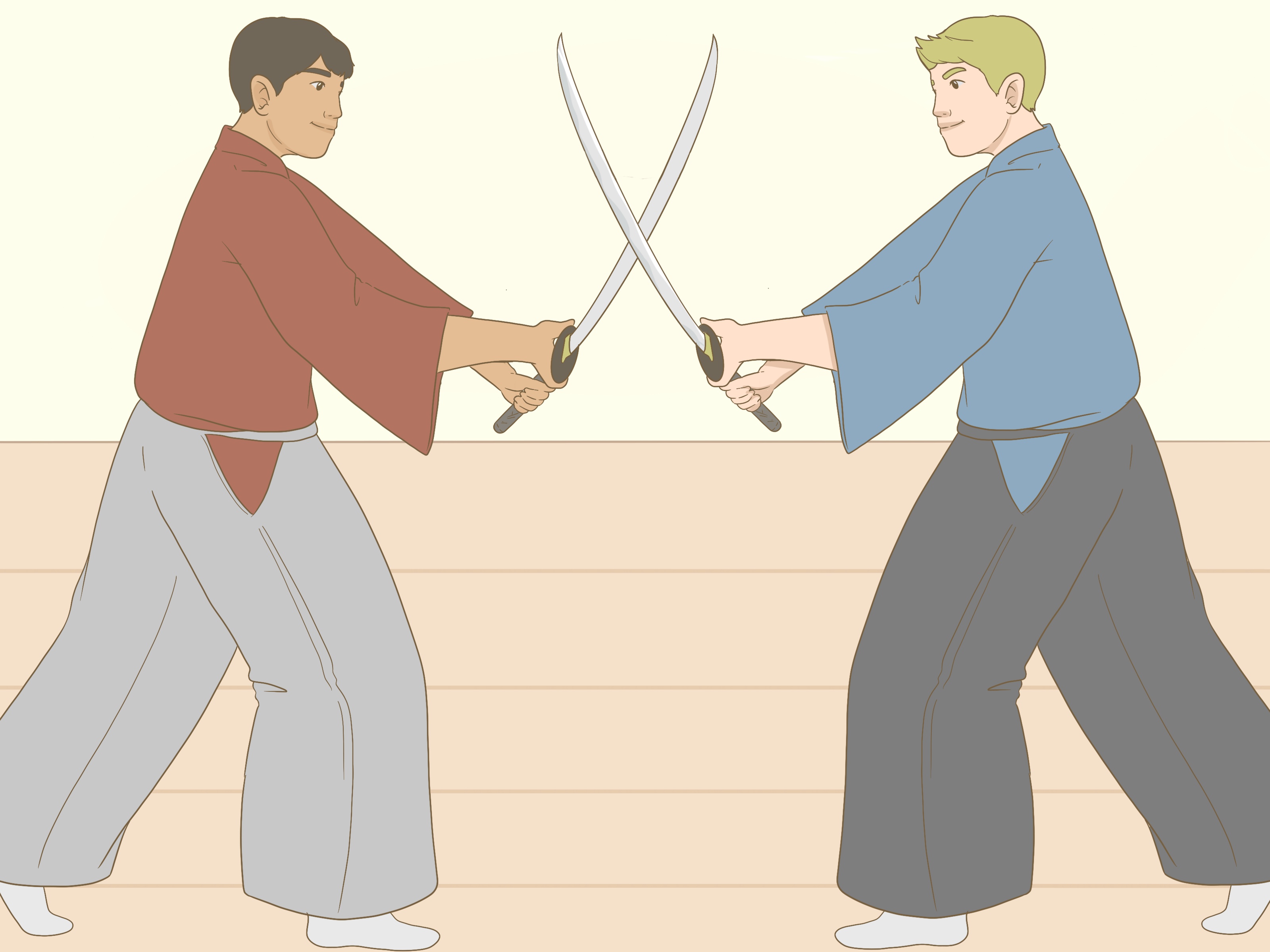
In iaido, for example, practice often centers on kata: set forms performed with careful attention. These forms are not random choreography. They teach controlled movement, mental presence, and respect for distance and timing. A beginner may spend a surprising amount of time learning how to stand, sit, move, and breathe correctly. That is normal. The sword is not the first thing being trained; the person is.
Use smooth movement, not brute force
A katana is not used properly by muscling it through the air. Proper movement depends on structure, alignment, relaxed control, and timing. If your shoulders are climbing toward your ears and your face looks like you are opening a stubborn pickle jar, you are probably forcing it.
Good sword movement should be deliberate and controlled. In formal training, instructors correct grip pressure, posture, foot placement, distance, and edge awareness. These corrections matter because small errors become big problems when a blade is involved.
One of the most useful beginner lessons is patience. You do not need speed first. You need accuracy, safety, and repeatable control. Speed without control is just panic wearing a black belt.
Do not imitate movies or online clips
Movies make sword use look dramatic because drama sells tickets. Real training looks more like careful repetition, correction, humility, and occasionally realizing your left foot has been freelancing. Online videos can introduce vocabulary or history, but they cannot safely correct your body mechanics, spacing, or judgment in real time.
If you want to learn katana handling, find a reputable dojo or instructor in iaido, kendo, kenjutsu, or another legitimate Japanese sword art. Ask about beginner equipment, safety expectations, and whether students start with wooden or blunt training swords. A good instructor will not rush you toward a sharp blade. That is a green flag.
4. Maintain, Store, and Respect the Katana Properly
Care is part of proper use
Using a katana properly includes what happens after practice. A sword is not finished being used when the movement ends. It still needs to be cleaned, inspected, stored, and protected from moisture, dust, mishandling, and curious hands.
Traditional Japanese swords are often cared for with specialized materials and methods. The exact process depends on the type of blade and its condition. Antique or valuable swords should not be experimented on. Over-cleaning, polishing incorrectly, touching the blade with bare hands, or using the wrong products can damage the surface and reduce historical value.
If you own a real Japanese sword, consult experienced collectors, preservation groups, or professional polishers before attempting maintenance. The internet is full of advice; not all of it deserves to touch steel.
Store the sword securely
A katana should be stored safely, legally, and away from children or unauthorized handling. Displaying a sword may look beautiful, but display must never compromise safety. A secure location, proper scabbard, stable rack, and controlled environment are all important.
Humidity can affect steel. Rough handling can damage fittings. Poor storage can invite rust or accidents. A katana is not a casual decoration like a poster or a decorative pillow that says “Live, Laugh, Duel.” It is an object that requires responsibility.
Know the law where you live
Legal rules about owning, carrying, transporting, displaying, or using swords vary by location. Some places treat swords differently depending on whether they are antiques, training tools, weapons, or decorative items. Before buying or transporting a katana, check your local and state regulations.
Proper use includes legal awareness. “I didn’t know” is rarely a satisfying legal strategy, and it looks especially weak when said while holding a sword.
Common Beginner Mistakes to Avoid
Mistake 1: Buying the sharpest sword first
A sharp blade is not a badge of seriousness. For beginners, it is often a sign of impatience. Serious students care about instruction, safety, and fundamentals. They understand that a blunt training sword or wooden sword can teach more than a sharpened blade in untrained hands.
Mistake 2: Practicing alone without feedback
Solo practice has a place after a student has received proper instruction. But practicing alone from the beginning can build unsafe habits. Without feedback, people often mistake enthusiasm for skill. A qualified instructor can see issues you cannot feel yet.
Mistake 3: Confusing collection with competence
Owning a katana does not mean knowing how to use one. Owning running shoes does not make someone a marathoner, and owning a whisk does not make someone a French pastry chef. Equipment is not skill. Practice, correction, patience, and respect build skill.
Mistake 4: Treating the katana like a fantasy object
The katana has been mythologized heavily in pop culture. While it is a remarkable sword, it is not magic. It will not cut through every material, defeat every weapon, or automatically grant wisdom. The real beauty of the katana is found in craftsmanship, history, discipline, and the relationship between tool and practitioner.
Why Proper Katana Use Is Really About Self-Control
The most important lesson in katana practice is not aggression. It is restraint. A beginner who learns to pause, check space, breathe, listen, and move carefully is already learning the heart of responsible sword use.
Japanese sword arts often connect physical training with character development. A student is expected to become more focused, respectful, balanced, and aware. That may sound lofty, but it shows up in practical ways: arriving on time, maintaining equipment, following instructions, controlling emotions, and not turning every object in the house into an imaginary opponent.
In this sense, the katana is a demanding teacher. It gives immediate feedback. Move carelessly, and the danger becomes obvious. Move with patience, and the practice becomes calmer, cleaner, and more meaningful.
Real-World Experiences: What Responsible Katana Practice Feels Like
For many beginners, the first experience with a katana or katana-style training sword is humbling. People often arrive expecting action. What they get first is posture. Then more posture. Then a reminder that their shoulders are tense. Then another reminder that their feet are doing something mysterious and unauthorized.
One common experience is realizing how heavy attention can feel. A practice sword may not be extremely heavy, but focusing on every movement makes it feel important. The student becomes aware of the grip, the line of the spine, the distance to others, the sound of the room, and the rhythm of breathing. Suddenly, “just holding a sword” is not simple at all.
Another experience is learning that slowness is not weakness. Beginners often want to move quickly because fast looks skilled. Instructors usually slow them down. Slow practice exposes mistakes. It reveals whether the body is balanced, whether the sword is controlled, and whether the student is paying attention. At first, this can feel frustrating. Later, it becomes satisfying, because clean movement begins to replace noisy effort.
There is also the surprise of etiquette. Bowing, waiting, listening, and handling equipment carefully may feel formal to newcomers. But after a while, these rituals make sense. They create a mental boundary between ordinary life and focused practice. They also remind everyone in the room that safety is shared. Nobody wants to train next to someone who treats a sword like a pool noodle with ambition.
Students who continue often describe katana practice as calming rather than wild. The discipline demands presence. You cannot scroll your phone, argue with your inbox, or mentally plan dinner while practicing safely. The sword pulls attention into the present moment. That is one reason iaido and related arts appeal to people who want both physical training and mental focus.
A responsible beginner also learns humility through maintenance. Cleaning, checking, and storing equipment teaches patience. You begin to understand that the sword is not only used during practice; it is cared for before and after practice. This changes the relationship from “cool object I own” to “tool I am responsible for.” That shift is important.
Perhaps the most valuable experience is discovering that proper katana use is less about becoming dangerous and more about becoming dependable. A good student becomes safer, calmer, and more respectful over time. They learn to ask questions, accept correction, and avoid shortcuts. They understand that the goal is not to impress friends at a barbecue. In fact, if a sword appears at a barbecue, something has gone badly wrong in the party planning.
The best katana experiences are guided, controlled, and rooted in respect. They leave students with better posture, sharper attention, and a deeper appreciation for Japanese sword culture. They also leave the furniture intact, which is an underrated sign of progress.
Conclusion: Proper Katana Use Begins Before the Blade Moves
To use a katana properly, start with the right mindset. Choose appropriate training equipment. Learn from a qualified instructor. Handle every sword with safety and respect. Practice form and control before power. Maintain and store the blade responsibly. Follow the law. Above all, remember that the katana is not a shortcut to looking impressive; it is a discipline that rewards patience.
The four proper ways to use a katana are simple in theory but deep in practice: train safely, handle carefully, move with control, and care for the sword responsibly. That is the difference between a serious student and someone who should probably stick to watching samurai movies with both hands safely in the popcorn bowl.