Note: This article is written as original, publish-ready editorial content based on publicly available information from the International Pet Photography Awards, photography media coverage, pet photography best practices, and real award details.
There are dog photos, and then there are dog photos that make you pause your scrolling, tilt your head like a confused Labrador, and whisper, “Okay, this deserves a tiny museum with velvet ropes.” That is the magic behind the collection of 40 of the best dog photos in the world, as chosen by the International Pet Photography Awards. These images are not just cute snapshots of fluffy facesalthough, yes, the fluff is absolutely doing overtime. They are polished examples of canine portraiture, action photography, documentary storytelling, humor, emotion, technical skill, and the glorious unpredictability of dogs being dogs.
The International Pet Photography Awards, established in 2019, has grown into one of the most respected global stages for professional pet photographers. The competition celebrates not only visual beauty but also ethical image-making, originality, technical excellence, animal behavior, and emotional impact. In other words, a winning dog photo has to do more than show a handsome pup. It has to tell a story, respect the animal, and make viewers feel somethingjoy, tenderness, awe, curiosity, or the urgent need to adopt three more dogs and buy a better camera.
Why These Dog Photos Stand Out
The best dog photos in the International Pet Photography Awards collection succeed because they understand one simple truth: dogs are never just subjects. They are comedians, athletes, soulmates, chaos gremlins, philosophers, snack detectives, and occasionally muddy missiles with ears. A strong dog photograph captures that personality before it disappears in a blur of paws.
Across the featured images, several styles shine. Some photos lean into action, freezing dogs mid-splash, mid-leap, or mid-run with crisp timing. Others focus on portraiture, using soft light, strong composition, and eye contact to reveal character. Creative images introduce color, props, studio lighting, or conceptual storytelling. Documentary-style photos capture real-life moments, where the scene feels honest rather than arranged. Together, the 40-photo selection becomes a kind of love letter to dogs in every mood: elegant, goofy, brave, shy, dramatic, sleepy, heroic, and suspiciously interested in whatever you are eating.
The International Pet Photography Awards: More Than a Cute Contest
At first glance, a pet photography competition might sound like a fancy excuse to look at adorable animals. To be clear, it is thatand society thanks it for its service. But the International Pet Photography Awards is also a serious professional competition. Recent award cycles have attracted thousands of entries from dozens of countries, with dogs often leading the submissions. The awards include categories such as Action, Canine Portrait, Creative, Documentary, Pets and People, Studio, Feline Portrait, Equine Portrait, Open Portrait, Phone, In-Camera Artistry, and Commissioned Portfolio.
The judging process looks at much more than cuteness. Judges evaluate visual impact, technical excellence, emotional response, originality, creativity, and animal body language. That last point matters. A dog may look adorable to an untrained viewer, but a professional pet photographer must understand whether the animal is relaxed, excited, stressed, curious, or uncomfortable. A truly great image respects the dog’s welfare while still creating visual magic.
The competition also places importance on ethical practice. Images should not promote unsafe handling, irresponsible pet ownership, or harmful staging. This is one reason award-level pet photography feels different from random viral content. The goal is not to force a dog into a strange situation for a dramatic shot. The goal is to work with the animal’s natural behavior and create something memorable without turning the dog into an unpaid intern in a fur coat.
Memorable Examples From the 40 Best Dog Photos
One of the standout images in the collection is by Bridget Davey, featuring a small dog with enormous ears and an expression that practically screams, “I heard the treat bag from another zip code.” The charm is immediate. It is a reminder that successful dog photography often starts with personality. The lighting, pose, background, and timing all matter, but the emotional hook is the dog’s character.
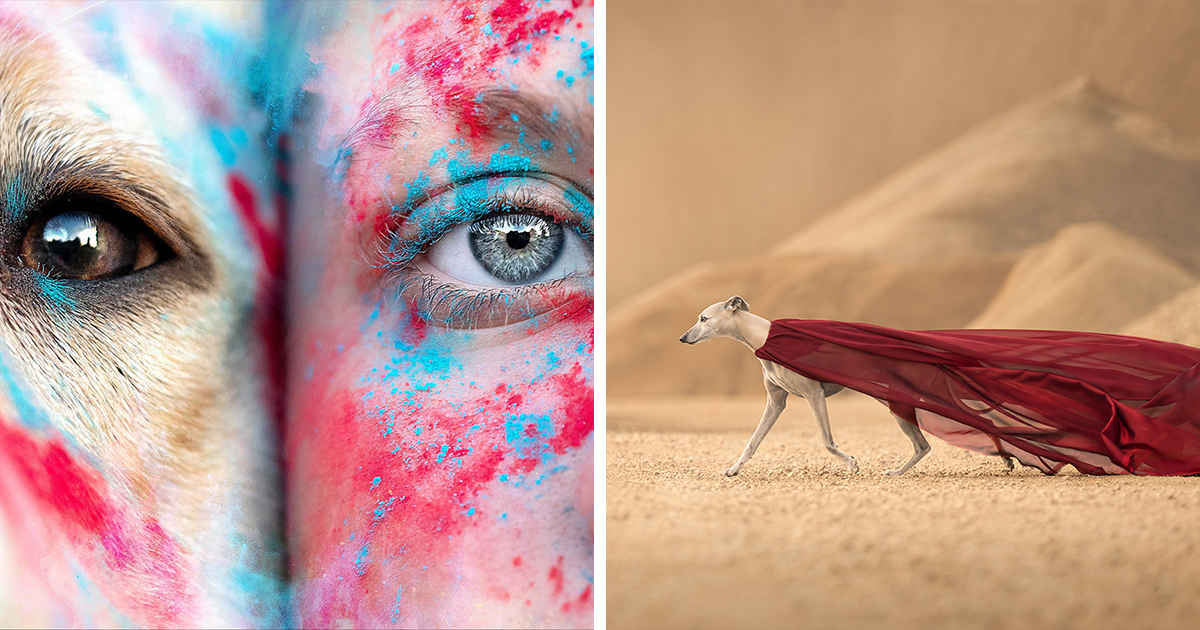
Sabina Weber’s image, showing a dog and a person close together with colorful paint, brings a different kind of energy. It feels intimate, expressive, and slightly mischievous, like a friendship portrait after an art class got wonderfully out of hand. This type of pet photography works because it does not separate the dog from the human story. It celebrates the bond between them.
Regine Jensen’s image of a sleek dog wearing a flowing red cape in a desert-like landscape turns a canine subject into a cinematic figure. The photo feels part superhero poster, part fashion editorial, part “my dog has better dramatic range than most actors.” It demonstrates how styling and environment can elevate a dog portrait when handled with care and imagination.
Celine Robel’s water-action image captures a dog running through splashing water at sunset. These photos look effortless to viewers, but they require careful preparation: fast shutter speed, strong focus, anticipation, safe location planning, and a dog who is having a genuinely good time. When action photography works, the viewer can almost hear the splash.
Alicja Zmysłowska’s black-and-white portrait of a long-haired dog shows how simplicity can become powerful. Without bold color, the viewer focuses on texture, shape, contrast, and expression. Black-and-white dog photography can be especially effective when the subject has striking fur, soulful eyes, or a silhouette strong enough to carry the frame.
Veronika Šandorová’s image of a dog gently interacting with magnolia flowers offers a soft, poetic mood. It proves that dog photos do not need explosive action to be unforgettable. Sometimes the strongest image is quiet: a nose near petals, a relaxed expression, delicate focus, and a sense that the dog is discovering the world one sniff at a time.
Other featured photographers, including Katie Brockman, Janneke De Graaf, Anne Geier, Elke Vogelsang, Renate Zuidema, Emma Boyle, and many more, show just how wide the creative range of modern pet photography has become. Some images are playful and polished. Some are tender. Some are funny enough to qualify as emotional cardio. Others have a documentary edge, reminding viewers that dogs are part of real streets, homes, shelters, families, sports, and daily life.
What Makes an Award-Worthy Dog Photo?
1. Personality Comes First
A technically perfect photo can still feel flat if the dog looks bored, stiff, or disconnected. The best dog photos reveal something recognizable: curiosity, confidence, trust, excitement, patience, mischief, or that very specific look dogs give when they know they are not supposed to be on the couch but have chosen diplomacy through silence.
2. The Eyes Need to Speak
In pet photography, sharp eyes often carry the emotional weight of the image. Whether the dog is staring into the lens, looking toward a handler, or watching a ball fly through the air, the eyes give the viewer a place to connect. Many professional photographers use single-point focus or animal-eye autofocus to keep attention exactly where it belongs.
3. Light Sets the Mood
Soft natural light, golden hour glow, controlled studio lighting, and dramatic shadows can all work beautifully. Harsh midday sun, however, can create squinting, blown highlights, and shadows that make a dog look like it is being interrogated by a detective lamp. Award-level photographers know how to use light to flatter fur, shape the face, and support the story.
4. Composition Guides the Emotion
Composition is not just about placing the dog in the frame. It is about deciding what the viewer should feel. A low angle can make a dog appear heroic. Negative space can create calm or loneliness. Tight framing can emphasize expression. A wider scene can show adventure, environment, or human connection.
5. Safety Is Non-Negotiable
Responsible pet photography protects the animal first. That means safe locations, patient handling, breaks, water, comfortable temperatures, and no dangerous props or harmful materials. Many professional dog photos that appear “off-leash” may actually involve leashes or handlers removed carefully in post-production. The final image may look magical, but behind the scenes, safety should be the real superstar.
Why Dog Photography Has Become So Popular
Dog photography has exploded because dogs are no longer seen as “just pets” in many homes. They are family members, emotional support systems, hiking buddies, couch companions, and unpaid kitchen-floor inspectors. People want professional images of their dogs for the same reason they want family portraits: time moves fast. Puppies grow. Senior dogs gray around the muzzle. Everyday moments become memories before we are ready.
Social media has also changed the way people view pet photography. A great dog portrait can reach thousands or millions of viewers because it communicates instantly. You do not need to speak the same language to understand a delighted retriever launching into a lake or a tiny dog looking outrageously proud in a studio portrait. Dogs are universal content ambassadors, and frankly, they have better engagement rates than most corporate newsletters.
At the same time, professional pet photographers bring skills that casual snapshots often lack. They understand timing, lighting, editing, animal behavior, client communication, and visual storytelling. They know when to wait, when to make a silly noise, when to stop, and when the dog has officially decided the session is over and all humans should respect the union rules.
How These 40 Photos Inspire Everyday Dog Owners
You do not need a professional studio or award-winning camera to learn from these images. The biggest lesson is attention. Watch your dog’s habits. Does your dog tilt its head when hearing a certain sound? Does it leap over puddles, nap in dramatic sunbeams, press its nose to windows, or carry one ridiculous toy everywhere? Those details are the beginning of meaningful photos.
Start by choosing a familiar, comfortable location. Dogs photograph best when they feel safe. Use treats or toys, but do not overdo it unless you want every image to feature a tongue, a blur, or a face that says, “Payment first, art later.” Shoot at the dog’s eye level to create intimacy. Try soft light near a window or outdoors in the early morning or late afternoon. Keep sessions short and fun. If the dog checks out, let the dog check out. A relaxed dog is always more photogenic than a pressured one.
Action shots require speed and patience. Use burst mode, focus on the eyes or head, and leave space in the frame for movement. Portraits need calm, clean backgrounds, and a moment of connection. Documentary images require observation. Sometimes the best photo happens between poses: a glance at the owner, a shake after a swim, a paw resting on a knee, or the solemn expression of a dog who just realized the vet is not, in fact, a bakery.
Experience Section: What Viewing These 40 Dog Photos Teaches Us
Looking through a collection like “40 Of The Best Dog Photos In The World, As Chosen By The International Pet Photography Awards” feels less like browsing a gallery and more like meeting 40 tiny stories with paws. The experience is surprisingly emotional. At first, you notice the obvious things: the beautiful lighting, the funny expressions, the dramatic action, the silky fur, the splashes, the studio polish, the colors. Then, after a few minutes, you start noticing something deeper. Every image is really about trust.
A dog does not pose like a human model. A dog participates when it feels safe, curious, excited, or connected to the person behind the camera. That is what makes these photos so appealing. They are not merely demonstrations of equipment. They are the result of patience, timing, and emotional intelligence. The photographer has to understand when the dog is ready, when it needs a break, when the moment is about to happen, and when the best plan is to throw the plan into the nearest bush and follow the dog’s lead.
One practical lesson from the collection is that great dog photography does not require making dogs look “perfect.” In fact, the imperfections are often the best part. A crooked ear, a muddy paw, a goofy tongue, a suspicious side-eye, or a windblown coat can carry more charm than a flawless pose. The best images honor the real animal. They do not erase personality for polish. They refine the scene just enough so that personality becomes impossible to miss.
Another experience from studying these photos is realizing how important environment can be. A dog in water feels energetic and free. A dog framed by flowers feels gentle and curious. A dog in a studio can look sculptural, humorous, or regal. A dog on a street can become part of a larger documentary story. Background is not decoration; it is context. It tells viewers whether the moment is playful, intimate, wild, theatrical, peaceful, or bittersweet.
For anyone trying to take better dog photos at home, the collection encourages a more thoughtful approach. Instead of chasing a perfect image, look for the dog’s natural rhythm. Photograph the morning window stretch, the post-bath zoomies, the serious face before a treat, the sleepy chin on the couch, or the heroic backyard patrol. Keep the camera ready, but keep expectations flexible. Dogs are not interested in your shot list. They are interested in squirrels, snacks, smells, and why you are lying on the floor making duck noises.
The emotional takeaway is simple: the best dog photos last because they feel personal. They remind us that dogs are funny without trying, loyal without speeches, expressive without words, and beautiful in ways that are often wonderfully unserious. The International Pet Photography Awards collection celebrates dogs not as accessories, but as individuals. That is why these images stick. They capture the split second when a dog’s inner world becomes visibleand for a moment, we get to see what love looks like with fur, paws, and possibly a little drool.
Conclusion
The 40 best dog photos chosen by the International Pet Photography Awards show why pet photography deserves serious artistic respect. These images combine technical excellence with humor, emotion, storytelling, and ethical care. They remind us that dogs can be athletes, comedians, companions, models, adventurers, and quiet little philosophers with muddy feet.
Whether the photo features a dog sprinting through water, wearing a dramatic cape, peeking through leaves, posing in a studio, or simply staring into the camera with impossible sweetness, the best dog photography does one thing beautifully: it makes us feel closer to animals we already love. And honestly, in a world full of noise, a gallery of extraordinary dog photos is not just entertainment. It is a very furry public service.