There is a peculiar social phenomenon in which a woman can be buying groceries, presenting a quarterly report, recovering from surgery, or quietly existing at a bus stop when a man suddenly appoints himself chairman of the Department of Unrequested Opinions.
Hair too short? He has thoughts. Makeup too noticeable? Emergency meeting. Not enough makeup? Apparently, that also requires a public statement. From clothing and weight to tattoos, facial expressions, body hair, and signs of aging, nearly every part of a woman’s appearance can become material for an evaluation she never requested.
Not every appearance-related remark is malicious. Some are thoughtful compliments, and some are simply clumsy attempts at conversation. The problem begins when a comment treats a woman’s body as a public productsomething strangers, coworkers, relatives, customers, and dates are entitled to review.
Why Unsolicited Appearance Comments Are Not “Just Words”
A national study conducted with Stop Street Harassment found that verbal sexual harassment was among the most commonly reported forms of harassment experienced by women. Pew Research Center has also documented that young women are disproportionately exposed to sexualized harassment online. These findings help explain why an apparently small remark may arrive with a much larger history attached to it.
Psychologists use the term objectification to describe situations in which a person is treated primarily as a body, an image, or a source of visual pleasure rather than as a complete human being. Research reviewed by the American Psychological Association connects repeated objectification with body surveillance, appearance anxiety, shame, and other psychological pressures. Studies of appearance commentary on social media have similarly found that even positive-looking remarks can keep attention centered on how women look.
The National Eating Disorders Association notes that negative body image can involve shame, anxiety, and self-consciousness about weight, skin, hair, physical features, disability, and gender expression. This is why praising weight loss without knowing its causeor joking about someone’s body because it seems harmlesscan touch a wound the speaker knows nothing about.
The workplace adds another complication: power. Federal guidance recognizes that unwanted sexual comments and offensive sex-based remarks can contribute to workplace harassment, although legal conclusions depend on the seriousness, frequency, and context of the conduct. Research and professional analysis also show that women’s hair, clothing, age, and conformity to gender expectations can affect how their competence is perceived.
40 Women Recall the Appearance Reviews Nobody Requested
The following accounts are original paraphrases and generalized retellings based on recurring themes in publicly shared women’s experiences. Identifying details have been removed or altered, and no entry should be read as a direct quotation.
Hair, Makeup, and the Imaginary Beauty Committee
-
The “natural beauty” expert: One woman spent nearly an hour applying foundation, concealer, eyeliner, mascara, and lipstick. At a party, a man congratulated her for being brave enough to wear absolutely no makeup. She thanked him for his advanced investigative work.
-
The sunburn mistaken for cosmetics: A stranger informed a woman that she was wearing too much blush. She was not wearing makeup; she had spent too long outside without sunscreen. Apparently, dermatology was also included in his résumé.
-
The unauthorized pixie-cut veto: After cutting her long hair into a pixie style, a woman entered her office and immediately heard a male coworker announce that the haircut was “not her.” They had barely spoken before, but he had somehow become her personal branding consultant.
-
The long-hair requirement: A friend’s boyfriend repeatedly told one woman that attractive women should have long hair. She kept her short bob and eventually shortened the amount of time she spent around him, too.
-
The glasses forecast: A teenage girl was warned that boys would not like her glasses. This was presented as terrible news, although it sounded suspiciously like a free screening service for shallow boys.
-
The natural-hair interrogation: A Black professional arrived at work wearing her natural curls and was asked whether she planned to make them look “more polished.” Her presentation slides were polished. Her hair was simply growing out of her head.
-
The gray-hair emergency: When silver strands appeared at her temples, a woman’s male acquaintance helpfully explained that coloring them would make her look younger. She had not requested youth, dye recommendations, or a public countdown to menopause.
-
The facial-hair advice desk: A woman with a hormonal condition received frequent instructions to shave, wax, or bleach her facial hair. The commenters behaved as though she had somehow lived in her body for years without noticing her own chin.
-
The “you would be prettier” formula: One woman was told she would be prettier with softer makeup. Another man later said she would look better with more makeup. Together, they proved that the approval game has no winning setting.
-
The brows under review: A customer told a cashier that her eyebrows were too bold. She continued scanning his frozen pizza, courageously resisting the urge to review his mustache in return.
Clothing, Piercings, Tattoos, and Other Personal Decisions
-
The scarf that concealed a neck: During winter, a classmate told a short woman that her scarf made her neck disappear. She chose warmth over maintaining a flattering neck-to-torso ratio for a man seated three desks away.
-
The jeans inspection: An older man decided a woman’s ordinary jeans were too tight. She asked why he was examining them closely enough to reach that conclusion. The fashion seminar ended ahead of schedule.
-
The provocative socks: A teenage guest at a party was told by an adult man that her knee-high socks looked provocative. She had arrived expecting snacks and music, not a reminder that some adults can sexualize almost any item sold in a department store.
-
The septum-ring referendum: Several men told a woman that men did not like septum piercings. This was useful information because the piercing had been installed exclusively to decorate her own face, not to improve national approval ratings.
-
The tattoo tragedy: A customer informed a tattooed employee that she had ruined a beautiful body. She resisted explaining that her body was not a historic building requiring approval from the preservation committee.
-
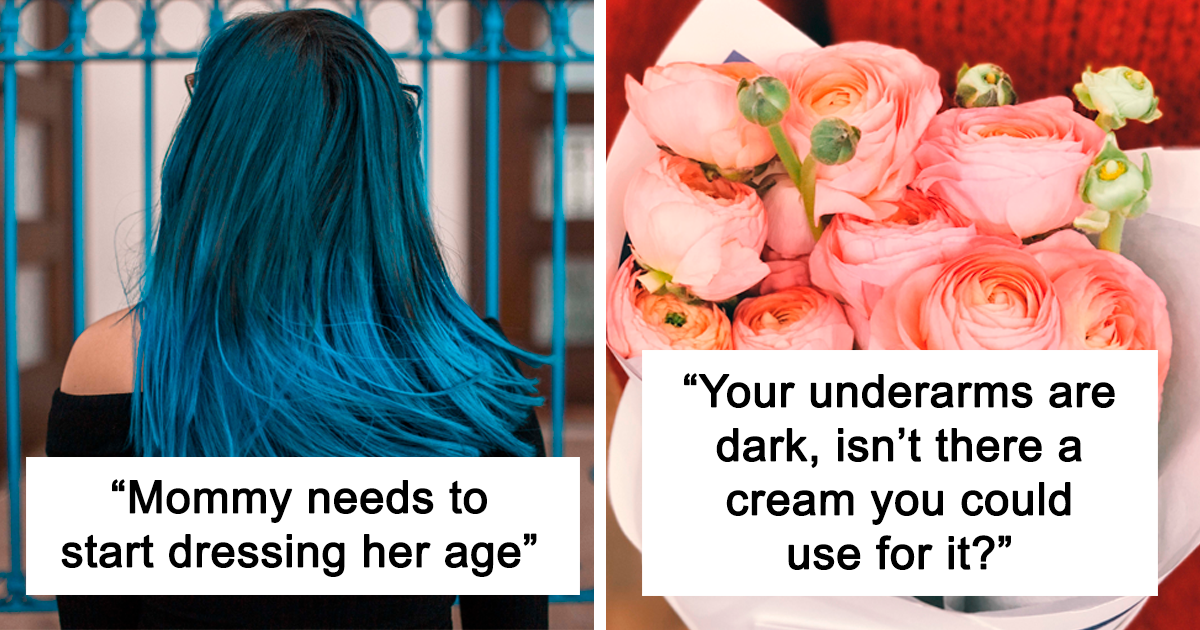
The age-appropriate clothing lecture: A stranger saw a woman walking with her young nephew and told the child that “Mommy” needed to dress her age. He was wrong about the relationship, uninvited into the conversation, and remarkably confident anyway.
-
The funeral dress review: A teenager attending a family funeral received a comment about how long her legs looked. The setting made the remark especially disturbing: she was grieving, underage, and very clearly not attending a fashion audition.
-
The uniform was somehow suggestive: A restaurant worker was told that her standard company shirt revealed too much. The shirt had been issued by management. Her body, apparently, had failed to follow the employee handbook.
-
The gym-clothes announcement: A man told a woman that leggings left nothing to the imagination. She had gone to the gym to exercise her quadriceps, not his imagination, which seemed active enough already.
-
The dress compliment done correctly: One stranger briefly said that a woman’s dress looked fantastic and continued walking without demanding her name, number, gratitude, or attention. She remembered it because it felt like a gift rather than an invoice.
Weight, Health, Pregnancy, and Comments That Land Hard
-
The compliment after loss: A woman recovering from a miscarriage was told that she looked great because she had lost weight. The speaker knew about the miscarriage. His determination to locate a silver lining somehow led directly to her waist.
-
The illness diet: After months of digestive problems, one woman became noticeably thinner. Men praised her “discipline” and asked for her secret. Her secret was pain, medical appointments, and being unable to eat without becoming sick.
-
The pregnancy body audit: A pregnant woman was told she looked too small to be nourishing her baby properly. Another person later told her she looked enormous. Neither commenter had examined her, reviewed her medical records, or been invited to participate.
-
The postpartum deadline: Weeks after giving birth, a relative asked when a new mother planned to get her old body back. She was still recovering, sleeping in short installments, and caring for an infant. Her body had not gone missing.
-
The burger prescription: A thin woman was repeatedly advised to eat a burger. When she ate a burger, the same people treated it as a fascinating event, proving that women can be observed during both starvation and lunch.
-
The weight-loss prescription: A plus-size woman shopping for household supplies received diet advice from a stranger. She had asked where the lightbulbs were. Somehow, the directions included a complete nutritional assessment.
-
The muscularity warning: A woman who enjoyed strength training was told that too much muscle would intimidate men. She considered this an unexpected bonus feature of the workout program.
-
The dark-underarm solution: A boyfriend suggested that his partner use a cream to lighten her underarms. She explained that her skin tone was not a household stain requiring removal. He later apologized, having finally located the boundary he had crossed.
-
The tired-face diagnosis: A coworker told a woman she looked tired every morning for a week. She eventually replied that repeated observations about her face were, coincidentally, making her more tired.
-
The “healthy glow” after treatment: A woman returning from medical leave was told she looked better than expected. She knew the comment was intended kindly, but it reminded her that colleagues had apparently been imagining a more visibly tragic version of her.
Work, Dating, Public Spaces, and the Right to Exist Unrated
-
The executive mistaken for support staff: A senior manager was congratulated on having such a nice office “for a secretary.” Her credentials, leadership role, and name on the door were all available, but the commenter trusted his visual assumptions instead.
-
The attractive-engineer surprise: At an industry event, a man told a woman that she was too pretty to be an engineer. She wondered whether engineering licenses were now issued according to cheekbone structure.
-
The designer’s entrance exam: A new male coworker asked a woman how she had succeeded in a creative profession without being especially attractive or having a wealthy father. It was his first attempt at workplace friendship. There was no second attempt.
-
The performance review detour: During a conversation about her promotion, an employee’s manager mentioned that she should dress more femininely when meeting clients. No one explained how earrings would improve revenue forecasts.
-
The customer’s improvement plan: An older customer told an 18-year-old cashier that she would look sexier without her facial piercing. She was trapped behind the register, required to remain polite, and unable to charge him an unsolicited-consulting fee.
-
The dating-app body score: A match opened the conversation by rating a woman’s body and identifying what she could improve. His profile had requested “good communication,” which was technically accurate if communication included immediate self-disqualification.
-
The comparison nobody needed: At a family gathering, a brother announced which of his sisters he considered more conventionally beautiful. Nobody had started a contest, but he still arrived with rankings, criteria, and the confidence of a televised judge.
-
The two-women-at-once insult: A male friend told a woman that combining her personality with his girlfriend’s body would create the perfect partner. In one sentence, he reduced two women to interchangeable spare parts.
-
The roadside command to smile: A driver slowed down to tell a woman walking home that she should smile. She had been thinking about groceries. She was now thinking about how quickly a normal walk can become a performance for strangers.
-
The confidence compliment: A street musician once told a college student that he admired the confidence in her stride. He did not block her path, sexualize her, or expect a conversation. Years later, she remembered the compliment because it recognized how she moved through the world, not how well her body pleased him.
What These Experiences Reveal Beyond the Awkward Moment
Many women describe the same initial response to an intrusive comment: a brief mental freeze. The brain searches for the correct category. Was that supposed to be flattering? Was it an insult? Is this person dangerous? Should I laugh, object, leave, or remain pleasant because he is a customer, supervisor, relative, doctor, or stranger standing between me and the exit?
That calculation is one reason unwanted compliments can feel different from welcome ones. A respectful compliment offers appreciation without creating an obligation. It is specific, brief, and easy to leave behind. “Great jacket” can be perfectly pleasant. “Your body looks incredible in that jacket, and you should give me your number” converts praise into pressure. The decisive factor is not whether the speaker thinks he is nice. It is whether the recipient is treated as a person with boundaries.
Context matters just as much as wording. A romantic partner commenting on an outfit during a mutually affectionate moment is not the same as a manager evaluating an employee’s body during a performance meeting. A close friend checking whether someone wants honest feedback is different from a stranger announcing that her tattoos, weight, makeup, or hair will discourage men. Consent is not only relevant to physical contact; it also improves ordinary conversation.
Repeated appearance commentary can also produce self-monitoring. A woman who is told to smile may begin wondering whether her neutral expression looks hostile. Someone criticized for dressing “too young” may reconsider clothes she previously enjoyed. A professional whose hair is repeatedly labeled unpolished may spend extra time, money, and emotional energy making other people comfortable. The individual remark lasts seconds, but the internal editing can continue much longer.
The pressure is not distributed equally. Black women may receive comments shaped by racism, colorism, and Eurocentric standards of professionalism. Disabled women can be treated as either invisible or publicly available for invasive questions. Transgender women may face appearance policing that challenges their identity or safety. Older women are told to conceal aging, while younger women are often sexualized before they are old enough to understand what is happening. Appearance-based bias rarely operates alone.
Women also described the frustration of being expected to respond perfectly. A sharp comeback may be called rude. Silence may be mistaken for permission. Nervous laughter may be interpreted as encouragement. Reporting a workplace comment can invite accusations of overreacting. There is no universally safe or satisfying response because the burden should never have been placed on the target in the first place.
What Can Someone Say in the Moment?
A response can be direct without becoming a debate: “Please do not comment on my body.” “My appearance is not part of this discussion.” “That was inappropriate.” “I did not ask for feedback.” In a workplace, documenting repeated incidentsincluding dates, witnesses, exact language, and reports to managementmay be important. RAINN and the EEOC both distinguish unwanted comments from welcome social interaction and provide guidance for recognizing and addressing harassment.
Safety comes first, however. Nobody owes a clever comeback to a stranger who appears aggressive, intoxicated, or unpredictable. Walking away, finding another person, contacting security, or pretending not to hear can be smarter than delivering the perfect line that arrives in the shower three hours later.
How to Give a Compliment Without Becoming the Story
Compliments work best when they focus on choices, achievements, creativity, or energy rather than intimate body evaluation. Praise the presentation, color combination, haircut, artwork, confidence, or sense of humor. Keep it brief. Avoid comparisons. Do not explain how the person could look better. Most importantly, allow the compliment to end without demanding attention in return.
A compliment is not a vending machine into which someone inserts praise and expects a phone number to fall out. When kindness comes without pressure, it usually feels like kindness.
Conclusion: Women Are Not Public Comment Sections
The stories are funny in places because humor is one way people reclaim an uncomfortable moment. Beneath the jokes, however, is a serious pattern: women are regularly reminded that strangers and acquaintances may consider their appearance open for discussion.
Most people occasionally say something awkward. The goal is not to criminalize every clumsy compliment or eliminate friendly conversation. It is to develop the social awareness to pause before commenting. Is the remark necessary? Is it appropriate for the relationship and setting? Does it recognize a person, or merely rate a body? Would the same observation be offered to a male colleague, customer, doctor, or stranger?
Women do not need to earn the right to move through workplaces, stores, sidewalks, family events, medical appointments, and online spaces without being scored. Sometimes the most respectful comment on a woman’s appearance is the one that remains safely inside the commentator’s head.
Note: This article presents original commentary and generalized, independently rewritten experiences. Its analysis was informed by research and educational material from Pew Research Center, the American Psychological Association, PubMed and the National Institutes of Health, RAINN, Stop Street Harassment, the U.S. Equal Employment Opportunity Commission, Harvard Business Review, the American Bar Association, Cornell University, the National Eating Disorders Association, and public first-person discussions collected by Bored Panda.