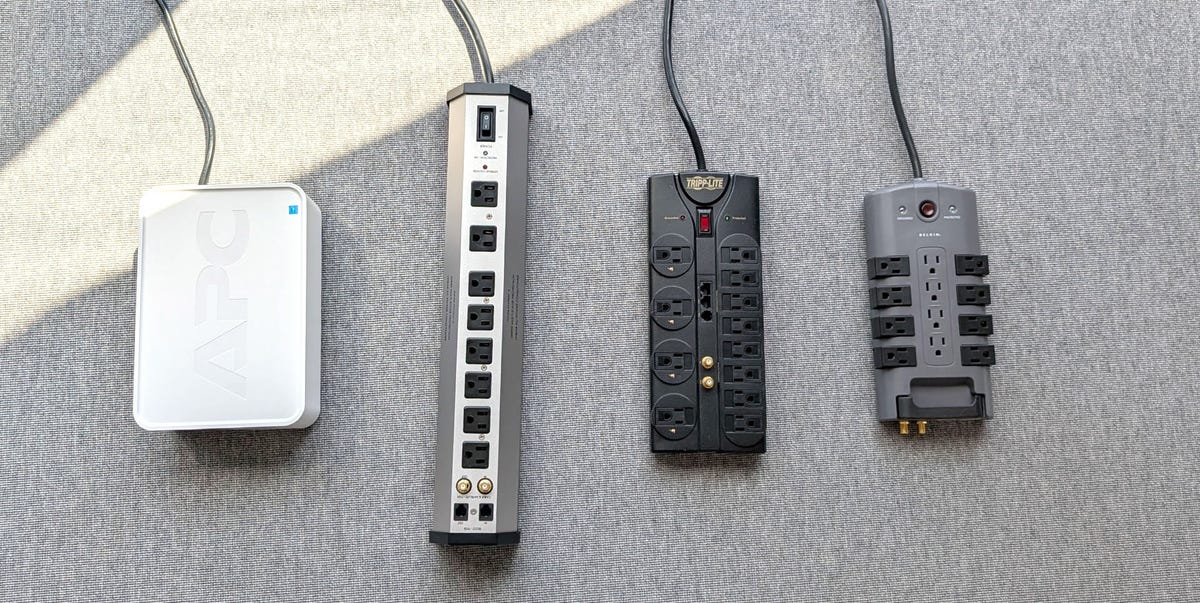
A good surge protector is one of those boring-looking home products that becomes extremely exciting the moment it saves your TV, laptop, router, gaming console, or entire home office from an electrical tantrum. It is not glamorous. It will not make your desk look like a spaceship command center. But when a power spike hits, that humble strip on the floor suddenly becomes the unpaid bodyguard for your expensive electronics.
The best surge protectors of 2025 are not just power strips with confidence issues. They combine smart outlet layouts, meaningful joule ratings, safety certifications, indicator lights, warranties, and practical cord designs. Some are made for everyday family electronics, some are better for office desks, and one or two are built for people whose home theater costs more than their first car.
After reviewing expert recommendations, manufacturer specifications, safety guidance, and real-world usability factors, these five surge protectors stand out for different homes and different types of users.
Quick Comparison: Best Surge Protectors of 2025
| Rank | Surge Protector | Best For | Key Strength |
|---|---|---|---|
| 1 | Tripp Lite TLP1208TELTV 12-Outlet Surge Protector | Best Overall | Strong protection, 12 outlets, auto-shutoff, long cord |
| 2 | Belkin PivotPlug 12-Outlet Surge Protector | Best Value | Rotating outlets and high joule rating |
| 3 | APC Back-UPS BE600M1 | Best Compact Battery Backup | Surge protection plus short-term backup power |
| 4 | Furman PST-8 Advanced Surge Protector | Best for Audio and Home Theater | Power conditioning, filtering, and premium protection |
| 5 | Anker 351 Power Strip | Best Power Strip With USB | 12 AC outlets plus USB-C and USB-A charging |
How Experts Choose the Best Surge Protectors
Before we crown any plastic rectangle as the king of the outlet jungle, it helps to understand what actually matters. A surge protector is designed to absorb or redirect excess voltage before that energy reaches your electronics. A basic power strip simply gives you more outlets. That is useful, but it is not protection. It is more like giving the lightning more chairs at the dinner table.
The first number many shoppers notice is the joule rating. In simple terms, joules measure how much surge energy the unit is designed to absorb before its protective parts wear out. Higher is generally better, especially for computers, TVs, gaming systems, networking gear, and home theater equipment. For valuable electronics, a model rated around 2,000 joules or higher is a smart starting point.
Safety certification matters too. Look for recognized safety marks such as UL 1449 certification or clear compliance language from trusted manufacturers. Indicator lights are also useful because they show whether the unit is grounded and whether surge protection is still active. Even better, some models include automatic shutoff, meaning they stop powering devices when protection is no longer available.
Finally, outlet spacing is more important than it sounds. A 12-outlet strip is less impressive if one chunky laptop brick blocks half the neighborhood. Wide spacing, rotating plugs, side-facing outlets, and flat wall plugs all make a surge protector easier to live with.
1. Tripp Lite TLP1208TELTV 12-Outlet Surge Protector: Best Overall
Why it stands out
The Tripp Lite TLP1208TELTV is the most balanced pick for most households because it checks the boxes that matter: strong surge protection, 12 outlets, an 8-foot cord, diagnostic lights, data-line protection, and automatic shutoff. It is not trying to be trendy. It is trying to keep your electronics alive, which is a more useful personality trait.
This model offers 2,880 joules of surge suppression and includes 12 outlets with enough layout flexibility for common home office and entertainment setups. Four outlets are spaced for bulkier adapters, while the remaining outlets work well for standard plugs. The 8-foot cord gives you more placement freedom, especially behind desks, media consoles, and furniture that was clearly assembled by someone who enjoys suffering.
Another advantage is protection for phone, modem, and coaxial connections. Many people focus only on AC outlets, but surges can also travel through cable or phone lines. If you have a cable box, modem, satellite setup, or older phone equipment, that extra protection adds real value.
Best use case
Choose the Tripp Lite TLP1208TELTV if you want one dependable surge protector for a home office, TV stand, router area, or family electronics zone. It is especially useful for people who need many outlets and want a model that clearly tells them when protection is still active.
Potential drawbacks
It does not include USB ports, so phone and tablet charging still require separate adapters. It is also not the prettiest accessory in the room, but neither is a fire extinguisher, and we still respect it.
2. Belkin PivotPlug 12-Outlet Surge Protector: Best Value
Why it stands out
The Belkin PivotPlug 12-Outlet Surge Protector is a favorite for messy desks, crowded entertainment centers, and anyone who owns at least one charger shaped like a small brick. Its clever rotating outlet design makes it easier to plug in large adapters without blocking neighboring outlets.
Belkin lists this model with 4,320 joules of surge protection, 12 surge-protected outlets, an 8-foot heavy-duty cord, and a connected equipment warranty. The eight rotating outlets are the star of the show. They swing outward, giving large plugs more breathing room and reducing the classic power-strip problem where one charger behaves like it paid rent for three outlets.
It also includes phone line and coaxial protection, overload protection, power safety shutdown, and EMI/RFI noise filtering. For the price, that is a very respectable package. It feels especially practical for home offices where you might have a monitor, desktop computer, printer, lamp, speakers, router, phone charger, and one mystery plug nobody in the house can identify but everyone is afraid to unplug.
Best use case
Choose the Belkin PivotPlug if you need many outlets and frequently deal with oversized adapters. It is a smart value pick for workstations, media consoles, dorm rooms, and shared family charging spaces.
Potential drawbacks
Some expert roundups note that durability can vary more than with heavier-duty premium units. It is still a strong value, but if your setup includes very expensive audio or video equipment, the Furman PST-8 may be a better long-term investment.
3. APC Back-UPS BE600M1: Best Compact Battery Backup
Why it stands out
The APC Back-UPS BE600M1 is not just a surge protector; it is a small uninterruptible power supply, also known as a UPS. That means it can provide short-term battery backup during an outage while also protecting connected electronics from surges. In plain English, it gives you a few precious minutes to save your work, keep your Wi-Fi alive, or shut down devices properly instead of yelling at the ceiling.
This model is rated at 600VA and 330 watts, with seven NEMA outlets: five battery backup plus surge-protected outlets and two surge-only outlets. It also includes a USB charging port and a 5-foot power cord. For a compact home office, router, modem, or small workstation, that combination is extremely useful.
The biggest reason to buy a UPS-style surge protector is not convenience; it is continuity. If your neighborhood has brief outages, brownouts, or power flickers, a UPS can keep essential devices running long enough to prevent data loss or internet interruptions. For remote workers and students, that can be the difference between calmly saving a document and delivering a dramatic monologue to a blank screen.
Best use case
Choose the APC Back-UPS BE600M1 for routers, modems, desktop computers, NAS devices, security cameras, and small workstations. It is ideal if your area has frequent power blips or if losing internet for five minutes feels like being sent back to the Stone Age.
Potential drawbacks
Battery backup outlets are limited, and runtime depends heavily on what you plug in. It is not designed to keep a full gaming rig, printer, heater, and mini-fridge running during a blackout. Also, like all UPS batteries, the internal battery will eventually need replacement.
4. Furman PST-8 Advanced Surge Protector: Best for Audio and Home Theater
Why it stands out
The Furman PST-8 is for people who do not merely “watch TV” but have opinions about black levels, speaker placement, and whether a subwoofer should be felt in the furniture. It is a premium surge protector and power conditioner built for audio, video, studio, and home theater equipment.
This model features eight filtered and surge-protected outlets, an 8-foot captive power cord, Furman’s Series Multi-Stage Protection technology, Linear Filtering Technology, and Extreme Voltage Shutdown. In practical terms, it is designed not only to protect equipment from major voltage events but also to reduce AC line noise that may affect sensitive audio and video gear.
The PST-8 is larger and more expensive than a standard surge protector, but that is the point. If your entertainment system includes a receiver, amplifier, powered speakers, projector, turntable, media streamer, or other sensitive components, this is a more serious protection layer than a typical budget strip.
Best use case
Choose the Furman PST-8 for home theaters, hi-fi systems, recording gear, DJ setups, and expensive audiovisual equipment. It is also a good fit for anyone who has already invested heavily in electronics and does not want a single voltage spike to turn that investment into modern art.
Potential drawbacks
It is bulky, has no USB charging ports, and costs more than everyday surge protectors. For a basic laptop-and-lamp setup, it may be overkill. For serious audio and video gear, however, overkill can be another word for sleeping peacefully.
5. Anker 351 Power Strip: Best Power Strip With USB
Why it stands out
The Anker 351 Power Strip is the modern desk-friendly pick. It offers 12 AC outlets, two USB-A ports, one USB-C port, a 5-foot cord, and 2,100 joules of surge protection. If your desk has a laptop, monitor, lamp, phone, earbuds, tablet, webcam, and one tiny gadget that charges with a cable from 2014, the Anker 351 understands your lifestyle.
The 20W USB-C port is especially convenient for fast-charging many phones and smaller devices without needing another wall adapter. The slim design also makes it easier to place on or under a desk. Compared with older power strips, it feels more suited to today’s mixed setup of AC plugs and USB-powered devices.
Its 2,100-joule protection rating is strong enough for many everyday electronics, and expert reviewers have praised its versatility for workspaces, gaming setups, and entertainment centers. It is not the absolute highest-joule option here, but it offers one of the best combinations of outlet count, charging convenience, price, and layout.
Best use case
Choose the Anker 351 for home offices, dorm desks, gaming setups, family charging stations, and entertainment areas where USB charging matters. It is one of the easiest picks to recommend for people who want one strip that handles both traditional plugs and modern charging cables.
Potential drawbacks
The 5-foot cord may be short for some rooms, and the outlet spacing may still feel tight with very bulky adapters. If you need an 8-foot cord or rotating outlets, the Tripp Lite or Belkin models may be more practical.
What to Look for When Buying a Surge Protector in 2025
1. Joule rating
A higher joule rating usually means the surge protector can absorb more energy before its protective components wear out. For inexpensive lamps or clocks, a lower rating may be acceptable. For computers, TVs, consoles, routers, and home theater systems, look for stronger protection.
2. UL listing or recognized safety certification
Do not buy mystery-brand surge protectors that look like they were assembled during a thunderstorm. Choose well-known brands with clear safety listings and compliance information. Certification does not make a product magical, but it helps separate real protection from plastic optimism.
3. Automatic shutoff
Surge protection wears down over time. A model with automatic shutoff can stop powering connected devices when it can no longer provide protection. That is much better than a dead protector continuing to act useful, like a smoke alarm with no batteries.
4. Indicator lights
Grounded and protected indicator lights are small but helpful. They let you know whether the unit is properly connected and whether surge protection is active.
5. Outlet layout
Count the outlets, but also study the spacing. If you use large adapters, choose rotating, wide-spaced, or side-facing outlets. A smart layout can matter more than the raw outlet count.
6. Cord length and plug shape
An 8-foot cord is useful for media centers and larger desks. A flat or right-angle plug helps behind furniture. Just remember: a surge protector should be plugged directly into a wall outlet, not daisy-chained into another strip.
What You Should Never Plug Into a Surge Protector
Surge protectors are excellent for electronics, but they are not meant for every appliance in the house. Avoid plugging in space heaters, refrigerators, freezers, microwaves, air conditioners, hair dryers, toaster ovens, or other high-wattage appliances. These devices should generally go directly into a properly rated wall outlet.
Also avoid daisy-chaining power strips or surge protectors. Plugging one strip into another may look like a clever outlet expansion strategy, but it can overload circuits and create a fire hazard. Your electronics deserve protection, not a power-strip conga line.
Real-World Experience: What Living With Surge Protectors Teaches You
After years of using surge protectors in home offices, bedrooms, entertainment centers, and router corners that collect dust like tiny museums, one lesson becomes obvious: the best surge protector is the one that fits your real setup. Specs matter, but daily convenience matters too.
For example, a 12-outlet surge protector sounds perfect until you try to plug in three oversized laptop chargers, a monitor brick, a router adapter, and a lamp. Suddenly, half the outlets are blocked, and you are doing cable yoga under your desk. That is why rotating or widely spaced outlets are more than a design gimmick. They save frustration every single day.
Cord length is another detail people underestimate. A short cord may look tidy in product photos, but real rooms have inconvenient outlets, furniture, baseboards, and desks that refuse to cooperate. An 8-foot cord can turn a difficult setup into a clean one, especially behind a TV console or office desk. On the other hand, if you only need a strip on top of a desk, a shorter cord may reduce clutter.
Indicator lights are also surprisingly reassuring. When a storm rolls through or the power flickers, being able to glance down and see that protection is still active is useful. Without that light, you are left guessing whether the protector is still doing its job or simply cosplaying as one.
In home offices, UPS models like the APC Back-UPS BE600M1 can be lifesavers. They are not designed to run everything forever, but they can keep a modem and router alive through brief outages. That can be enough to finish a video call, save a file, or avoid the emotional damage of losing work because the lights blinked for two seconds.
For living rooms, the ideal surge protector depends on the gear. A basic TV and streaming stick may be fine with a strong 12-outlet model from Tripp Lite, Belkin, or Anker. But if the setup includes a receiver, subwoofer, projector, game consoles, and premium speakers, a more serious unit like the Furman PST-8 starts to make sense. The more expensive the equipment, the less you should rely on the cheapest strip in the drawer.
Another experience-based tip: label your plugs. It sounds painfully organized, but future you will be grateful. When every black cord looks identical, labels can prevent you from unplugging the router when you meant to unplug a lamp. This is especially helpful behind entertainment centers, where cables multiply like raccoons after midnight.
Finally, replace old surge protectors. They do not last forever. If a unit is damaged, discolored, buzzing, hot to the touch, missing its protection light, or several years old after heavy use, it is time to retire it. Surge protectors are cheaper than replacing a fried laptop, TV, console, or router. Think of them as inexpensive insurance with outlets.
Final Verdict
The best surge protector of 2025 for most people is the Tripp Lite TLP1208TELTV because it offers a strong mix of protection, outlet count, cord length, automatic shutoff, and practical features. The Belkin PivotPlug is the best value for bulky adapters, while the Anker 351 is the easiest recommendation for modern desks that need USB charging. The APC Back-UPS BE600M1 is the smarter choice when short-term backup power matters, and the Furman PST-8 is the premium pick for serious audio and home theater setups.
A surge protector is not the most exciting purchase, but it is one of the smartest. Buy the right one once, plug it in correctly, avoid overloading it, and your electronics can keep living their quiet, expensive little lives.