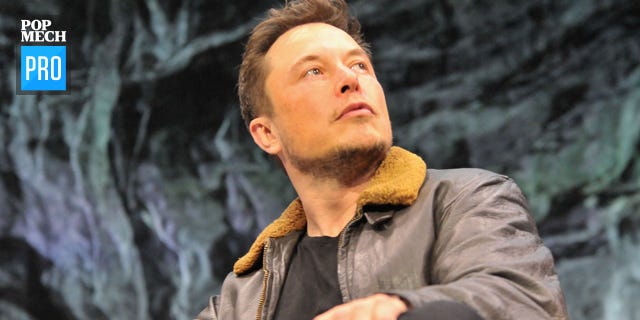
An Elon Musk interview is rarely just an interview. It is usually a product teaser, a philosophy seminar, a market-moving headline machine, and, occasionally, a live demonstration of why public-relations teams keep antacids in the top drawer. Whether Musk is talking about Tesla robotaxis, SpaceX rockets, xAI, Neuralink, X, politics, or the future of humanity, the conversation tends to orbit one central question: is this a bold preview of tomorrow or an overcaffeinated trailer for a movie still being written?
The answer, as with most things involving Elon Musk, is complicated. Musk is the co-founder and CEO of Tesla and leads or has led a constellation of companies associated with electric vehicles, rockets, artificial intelligence, brain-computer interfaces, tunneling, and social media. Tesla’s own profile describes him as leading product design, engineering, and global manufacturing for the company’s vehicles, battery products, and solar energy products. Tesla filings have also noted that Musk holds major roles beyond Tesla, which makes every interview partly a business update and partly a juggling act with flaming bowling pins.
Why Every Elon Musk Interview Becomes a News Event
The phrase “Elon Musk interview” attracts search traffic because Musk does not speak like a typical Fortune 500 executive. He does not always arrive with polished corporate phrases dipped in legal varnish. Instead, he often thinks aloud, jumps between industries, compresses timelines, and makes predictions that sound either visionary or wildly optimistic depending on your coffee intake.
That unpredictability is the hook. A traditional CEO interview might produce three carefully approved talking points. A Musk interview can produce a discussion of autonomous cars, Mars colonization, artificial general intelligence, humanoid robots, government efficiency, free speech, and whether civilization is headed toward abundance or chaos. It is like opening a business podcast and discovering that someone accidentally uploaded a sci-fi writers’ room.
For readers, the key is not to treat every statement as a finished product roadmap. Musk interviews are better understood as windows into priorities: what he is pushing, what he is worried about, what he wants investors and engineers to believe, and where he thinks the next technological bottleneck sits.
The Musk Interview Pattern: Big Vision, Hard Deadlines, Blunt Language
1. Start With the Civilizational Mission
Musk usually frames his companies around huge missions. Tesla is not merely about selling cars; it is about accelerating sustainable energy and, increasingly, autonomy and robotics. SpaceX is not merely a rocket company; it is working toward reusable launch systems and long-term human settlement beyond Earth. SpaceX describes Starship as the most powerful launch vehicle ever developed, designed for full reusability and capable of carrying more than 100 metric tons to orbit. Its Starlink network is positioned as a low-Earth-orbit satellite constellation for broadband internet.
This “mission first” style makes interviews feel bigger than quarterly business news. It also helps explain why fans find Musk inspiring and critics find him exhausting. He often discusses technical problems as if they are temporary inconveniences standing between humanity and a better future. That is motivational if you are an engineer; it is terrifying if you are a compliance officer.
2. Turn Technical Bottlenecks Into Storylines
A strong Elon Musk interview often revolves around bottlenecks: batteries, chips, launch cadence, data centers, compute, safety validation, manufacturing speed, regulatory approval, or talent. Musk tends to reduce the drama of entire industries into a few constraints. That can be useful. It gives listeners a mental map. It can also oversimplify. Real-world technology does not always behave like a spreadsheet that simply needs more rows.
3. Make Deadlines Public
Musk is famous for aggressive timelines. Some deadlines are missed; others eventually arrive after detours. In interviews, those deadlines serve a purpose: they pressure teams, excite investors, and keep public attention locked on the next milestone. The downside is obvious. When expectations run faster than execution, critics collect receipts. And the internet has become extremely good at receipt storage.
Tesla Interviews: Robotaxis, Optimus, and the Future of Driving
No Elon Musk interview is complete without Tesla, and in recent years the focus has increasingly shifted from electric vehicles to artificial intelligence, autonomous driving, robotaxis, and humanoid robots. Tesla’s robotaxi strategy has become a central test of Musk’s broader claim that cars can learn to drive at scale through cameras, software, and neural networks.
Reports in 2026 described Tesla’s robotaxi rollout expanding from Austin to Miami, with the company positioning autonomous ride-hailing as a major part of its future. Reuters reported that the Miami launch followed Tesla’s unsupervised robotaxi service in Austin and came as Tesla faced competition from Alphabet’s Waymo and Amazon’s Zoox. Earlier AP coverage of Tesla’s Cybercab event noted that the company unveiled a long-awaited robotaxi concept, though commercial availability was expected to take time.
This is why Tesla interviews matter beyond car enthusiasts. Musk is not just selling vehicles; he is selling a future in which cars become software platforms, transportation becomes more automated, and manufacturing scale becomes the moat. The challenge is that autonomy is not a magic button. It involves safety performance, regulators, edge cases, public trust, insurance, mapping, weather, and that one unpredictable human who crosses the street while staring at a sandwich.
SpaceX Interviews: Mars, Starship, and the Engineering of Impossible Things
SpaceX gives Musk interviews their most cinematic material. Rockets launch. Boosters land. Starship towers over the conversation like a stainless-steel exclamation point. When Musk talks about SpaceX, he usually emphasizes reusability, launch frequency, and the long-term goal of making life multiplanetary.
The strength of these interviews is that they translate aerospace engineering into a simple narrative: reduce the cost of access to space, reuse more hardware, launch more often, build larger systems, and eventually move cargo and people far beyond Earth orbit. That narrative is powerful because it links technical details to a mythic goal. Not many CEOs can talk about engine chamber pressure and the future of civilization in the same answer without sounding like they wandered into the wrong meeting. Musk does it regularly.
Still, the gap between vision and delivery matters. Starship development is ambitious, expensive, and technically brutal. Interviews can make the destination sound inevitable, but every launch program is a negotiation with physics. Physics, unlike social media, does not care about engagement.
xAI and Grok: The New Center of Musk’s Interview Universe
Artificial intelligence has become one of the most important themes in recent Elon Musk interviews. xAI describes Grok as a family of frontier AI models for reasoning, code, voice, images, and video, and its public product updates show the company pushing Grok into developer tools and workplace software.
For Musk, AI connects almost everything: Tesla’s self-driving systems, humanoid robots, X as a real-time information platform, and future computing infrastructure. In interviews, he often talks about AI with a mix of excitement and warning. He sees enormous upside, but he has also repeatedly raised concerns about safety, alignment, and the concentration of AI power.
Recent reporting also shows how quickly AI rumors can become headlines. Reuters reported in July 2026 that Musk denied a Wall Street Journal report claiming SpaceX had shown investors a prototype AI handset, calling the claim “utterly false.” That episode illustrates a recurring Musk interview lesson: when one person is tied to multiple futuristic companies, even unconfirmed product speculation can grow legs, put on sneakers, and sprint through the news cycle.
Neuralink Interviews: Sci-Fi With a Medical Disclaimer
Neuralink is the part of the Elon Musk interview universe that sounds most like science fiction, but it is also one of the areas where caution is most important. Reuters reported in January 2024 that the first human patient had received a Neuralink implant and was recovering well, according to Musk. Follow-up Reuters coverage said the patient could control a computer mouse with thought, and later reporting showed the first patient using the implant to play online chess.
AP later reported that Musk said a third person had received a Neuralink implant, while also noting that brain-computer interface technology is part of a broader field with many researchers and companies working on similar goals. That distinction matters. Musk’s interviews can bring enormous attention to Neuralink, but medical progress requires clinical evidence, safety reviews, peer scrutiny, and regulatory patience. In medicine, “move fast and break things” is not a slogan; it is a lawsuit wearing running shoes.
X, Free Speech, and the Interview as Public Combat
Musk’s acquisition of Twitter, later renamed X, changed the tone of many interviews. Instead of only discussing engineering, he became a central figure in debates over free speech, moderation, advertisers, misinformation, and platform economics.
One of the most famous examples came at the 2023 DealBook Summit, where Musk responded angrily to advertisers that had paused spending on X. Axios reported that he told advertisers trying to pressure him not to advertise, using language that instantly became a global headline. That moment showed why Musk interviews are so different from standard executive appearances: they can be candid, combative, and commercially risky all at once.
Earlier, Musk’s 2018 appearance on Joe Rogan’s podcast also generated intense attention after he briefly smoked marijuana during the show, an episode Reuters reported triggered a storm of reaction and rattled Tesla investors. Whether one views that moment as harmless, reckless, funny, or all three, it reinforced the same point: Musk interviews do not stay in the media lane assigned to them. They jump the curb.
Politics and the CEO-as-Public-Figure Problem
Modern Elon Musk interviews cannot be separated from politics. Musk’s work with the Department of Government Efficiency during the Trump administration became a major public issue. Reuters reported that Musk later described DOGE as only “somewhat successful” and said he would not do it again, while AP similarly reported that he said he would not repeat the effort.
The political dimension also affected Tesla’s brand. Reuters reported on research estimating that Musk’s increasingly partisan political actions cost Tesla more than one million U.S. vehicle sales between October 2022 and April 2025. Whether every consumer decision can be traced cleanly to politics is debatable, but the broader lesson is clear: when a CEO becomes a political symbol, the company can inherit the applause and the backlash.
What Makes a Good Elon Musk Interview?
A good Elon Musk interview does not merely ask, “What is the future?” That question is too easy. Musk can answer it for hours, probably while designing a rocket nozzle on a napkin. The better questions are specific, measurable, and grounded.
Ask for Milestones, Not Vibes
Instead of asking whether robotaxis will change transportation, ask how many vehicles are operating, in which cities, under what safety conditions, and with what disengagement data. Instead of asking whether AI will transform society, ask what model capabilities improved, how safety is measured, and what failure modes worry the company most.
Ask About Trade-Offs
Every Musk company faces trade-offs. Tesla must balance affordability, autonomy, manufacturing complexity, and regulatory trust. SpaceX must balance launch speed with reliability. xAI must balance fast deployment with accuracy and safety. Neuralink must balance ambition with clinical caution. Great interviews make those tensions visible.
Ask What Changed
Musk’s views evolve. Sometimes the market changes. Sometimes technical reality pushes back. Sometimes regulators, customers, or advertisers change the equation. A strong interviewer asks what Musk believed three years ago, what he believes now, and what evidence changed his mind.
What Entrepreneurs Can Learn From Elon Musk Interviews
For founders, marketers, engineers, and business leaders, Elon Musk interviews offer several useful lessons even if you do not plan to build rockets or rename your company with a single letter.
First, mission matters. Musk’s companies are memorable because they are tied to large stories: sustainable energy, space access, artificial intelligence, human-machine interfaces, and digital speech. A company with a clear mission is easier to explain, recruit for, and defend during hard times.
Second, technical depth matters. Musk is often at his strongest when discussing engineering constraints. Even critics acknowledge that he can dive into product and manufacturing details in a way many executives cannot. For leaders, that is a reminder: charisma is useful, but knowing how the machine works is better.
Third, communication style has consequences. Musk’s bluntness creates attention, but attention is not always an asset. A viral quote can inspire employees, move markets, anger customers, alarm regulators, or become a meme before lunch. The same microphone that builds a brand can also dent it.
Experience Section: Watching an Elon Musk Interview Without Falling Into the Hype Machine
The best way to experience an Elon Musk interview is to watch it like a curious analyst, not like a fan club president or a professional hater. Both extremes miss the interesting part. A fan hears “Mars city” and starts packing freeze-dried snacks. A critic hears “robotaxi” and immediately opens a folder labeled “broken promises.” A smarter viewer listens for patterns.
Start with the topic Musk returns to most often. If he keeps circling back to autonomy, that tells you Tesla’s future narrative depends on self-driving more than on ordinary car sales. If he spends extra time on compute, data centers, and model training, that signals AI infrastructure is becoming central. If he talks about manufacturing, the bottleneck may not be invention; it may be producing millions of units cheaply and reliably.
Next, separate prediction from proof. Musk may describe a future where robotaxis are everywhere, humanoid robots work in factories, Starship flies frequently, Grok becomes deeply integrated into daily software, and Neuralink restores capabilities to people with paralysis. Those are bold claims. Some may become real. Some may take longer than promised. Some may change shape completely. The viewer’s job is not to cheer or boo immediately. The viewer’s job is to ask: what evidence exists today?
Then listen for what is missing. Does the interview mention regulatory approval? Safety data? Cost curves? Production volume? Independent validation? Customer adoption? Competitor progress? Musk interviews can be thrilling because they leap toward the future, but the future still has paperwork. Very boring paperwork, yes, but paperwork with veto power.
Finally, notice the emotional rhythm. Musk often speaks as if urgency itself is a moral duty. That can be energizing. It can also create pressure that leads to overpromising. The productive takeaway is not “copy everything Musk does.” Please do not announce a Mars colony at your Monday staff meeting unless your company at least owns a ladder. The better takeaway is to combine ambition with measurable execution. Dream big, but bring receipts.
That is why Elon Musk interviews remain valuable even when they are messy. They show the raw collision between vision, engineering, capital, personality, risk, media, and public trust. Few business figures reveal that collision so openly. Whether you admire him, question him, or do both before breakfast, the interviews are a case study in how modern leadership works when the CEO is also the headline.
Conclusion
An Elon Musk interview is compelling because it sits at the intersection of innovation and controversy. It offers a glimpse into Tesla’s autonomy ambitions, SpaceX’s reusable rocket strategy, xAI’s race in artificial intelligence, Neuralink’s medical frontier, X’s public-speech battles, and the risks of turning a CEO into a cultural symbol. The smartest way to read or watch one is with balanced skepticism: appreciate the ambition, examine the evidence, track the milestones, and remember that the future is not proven by a great quote. It is proven by working products, safe systems, satisfied users, and results that survive contact with reality.
Note: This original article synthesizes publicly reported information from reputable U.S. news organizations, company materials, and regulatory filings to provide a current, publication-ready overview.