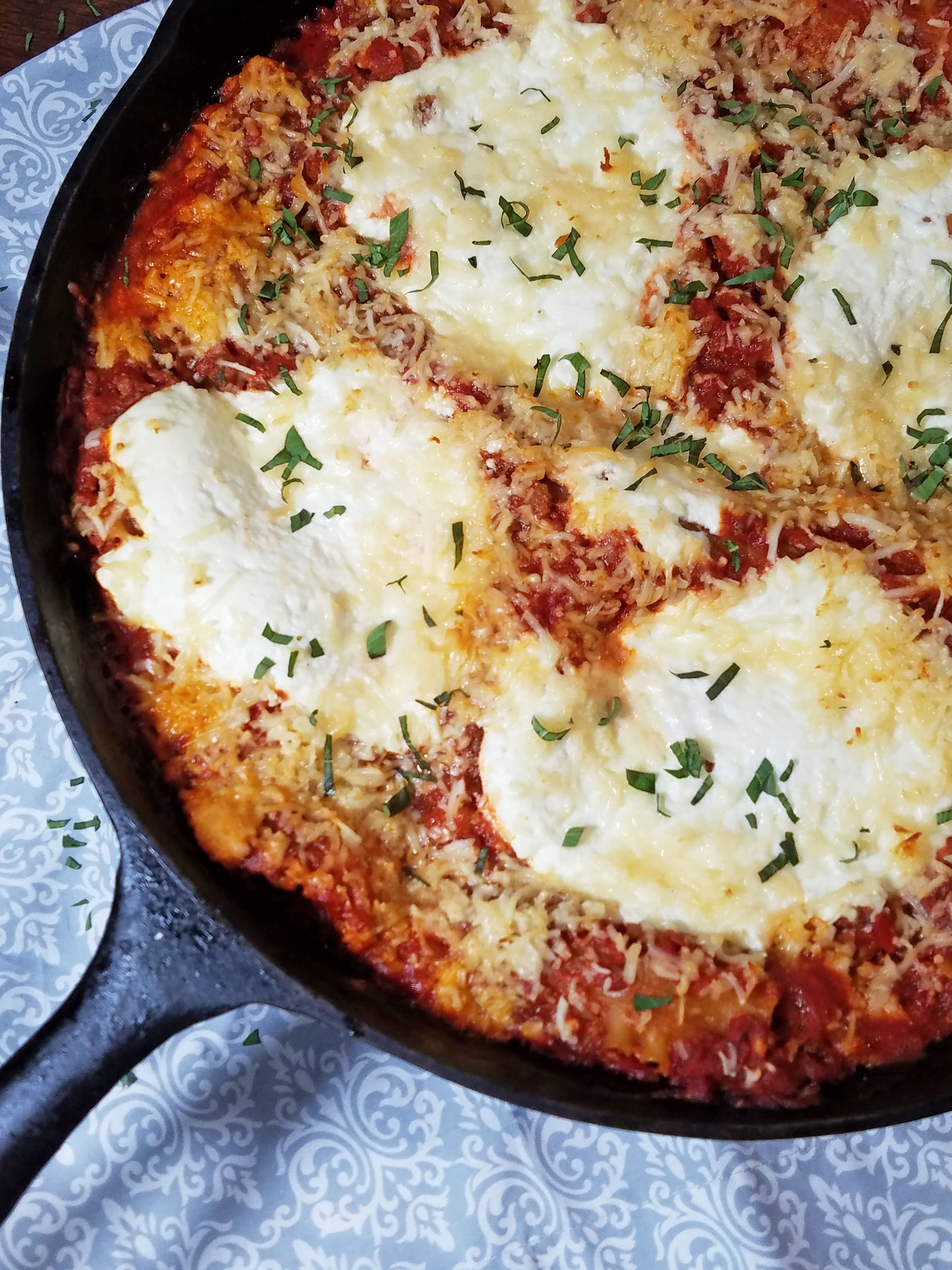
Traditional lasagna is magnificent, but it can behave like a home-renovation project: multiple containers, several construction phases, and a kitchen that looks suspiciously different when you finish. This melt-in-your-mouth skillet lasagna keeps the rich meat sauce, tender noodles, creamy ricotta, and bubbling mozzarella while removing most of the architectural work.
Everything comes together in one deep skillet. The noodles cook directly in the sauce, the cheeses are added in generous pockets, and a quick trip under the broiler creates the browned, stretchy top everyone tries to claim first. It is saucy enough to stay tender, sturdy enough to serve with a spatula, and easy enough for an ordinary weeknight.
Why Skillet Lasagna Is a Weeknight Hero
A classic baked lasagna often requires a pot for noodles, a pan for sauce, a bowl for the cheese filling, and a casserole dish for assembly. Skillet versions streamline the process by browning the meat, building the sauce, and cooking the pasta in the same pan. Similar one-pan methods appear across major American recipe publications because they reduce layering, shorten preparation, and preserve the familiar flavors of lasagna.
The secret is not merely tossing ingredients into a pan and hoping the cheese sorts out everyone’s problems. Successful skillet lasagna depends on three things: enough liquid to soften the pasta, controlled simmering so the bottom does not scorch, and cheese added at the right time so it stays creamy rather than disappearing into the sauce.
What Makes This Version Melt in Your Mouth?
This recipe combines several textures rather than relying on cheese alone. Italian sausage provides savory depth, finely chopped onion melts into the tomato base, and tomato paste contributes a slow-cooked flavor without demanding a slow-cooked schedule. Whole-milk ricotta forms creamy pockets, low-moisture mozzarella supplies the cheese pull, and Parmesan adds a salty, nutty finish.
The noodles are broken into irregular pieces before cooking. That may offend the lasagna-layering committee, but the pieces nestle into the sauce, cook evenly, and make every serving pleasantly messy in the best possible way.
Melt-in-Your-Mouth Skillet Lasagna Recipe
Yield: 6 servings
Preparation time: 15 minutes
Cooking time: 35 to 40 minutes
Total time: About 55 minutes
Ingredients
- 1 tablespoon extra-virgin olive oil
- 8 ounces mild or hot Italian sausage, casings removed
- 8 ounces lean ground beef
- 1 medium yellow onion, finely chopped
- 4 garlic cloves, minced
- 2 tablespoons tomato paste
- 1 teaspoon dried Italian seasoning
- 1/4 teaspoon crushed red pepper flakes, optional
- 1/2 teaspoon kosher salt, plus more as needed
- 1/4 teaspoon freshly ground black pepper
- 1 jar tomato-basil marinara sauce, 24 ounces
- 1 can crushed tomatoes, 14 to 15 ounces
- 1 1/2 cups low-sodium beef or chicken broth
- 9 regular dried lasagna noodles, broken into 2-inch pieces
- 1 cup whole-milk ricotta cheese
- 1 large egg
- 1/3 cup finely grated Parmesan cheese, divided
- 2 cups shredded low-moisture mozzarella cheese, divided
- 2 tablespoons chopped fresh basil or parsley
- Extra basil, Parmesan, and black pepper for serving
Equipment
- A deep 12-inch oven-safe skillet with a lid
- A wooden spoon or heat-resistant spatula
- A medium mixing bowl
- An instant-read food thermometer, recommended
Step 1: Make the Creamy Ricotta Mixture
In a medium bowl, combine the ricotta, egg, half of the Parmesan, 1/2 cup of mozzarella, and the chopped basil or parsley. Season with a small pinch of salt and black pepper. Stir just until blended, then place the bowl in the refrigerator while you prepare the sauce.
The egg helps the ricotta hold together in soft, creamy pockets. Seasoning it separately is important because plain ricotta can taste surprisingly shy once surrounded by meat, tomatoes, and mozzarella. Some lasagna guidance also recommends enriching and seasoning ricotta to reduce its tendency to become dry or chalky during cooking.
Step 2: Brown the Meat Properly
Heat the olive oil in the skillet over medium-high heat. Add the sausage and ground beef. Break the meat into small pieces and cook for 6 to 8 minutes, stirring occasionally, until browned and no pink remains.
Do not stir constantly. Leaving the meat alone for short intervals allows it to develop browned edges, and browned edges are tiny flavor investments with an excellent return. If the pan contains more than a tablespoon or two of rendered fat, carefully spoon out the excess.
Step 3: Build the Flavor Base
Reduce the heat to medium. Add the onion and cook for about 4 minutes, until softened. Stir in the garlic, tomato paste, Italian seasoning, red pepper flakes, salt, and black pepper. Cook for 60 to 90 seconds.
The tomato paste should darken slightly and coat the meat. Cooking it briefly removes its raw, metallic edge and concentrates its sweet-savory character. The garlic goes in near the end so it becomes fragrant without turning bitter.
Step 4: Add Sauce, Broth, and Noodles
Pour in the marinara sauce, crushed tomatoes, and broth. Stir thoroughly, scraping the bottom of the skillet to release any browned bits. Bring the mixture to a lively simmer.
Add the broken lasagna noodles gradually, pressing them beneath the sauce as you go. The pieces may overlap, but they should not form one solid stack. Cover the skillet, reduce the heat to medium-low, and simmer for 18 to 22 minutes.
Stir carefully every 4 to 5 minutes, lifting noodles from the bottom and redistributing them without smashing them. If the sauce becomes very thick before the noodles are tender, add broth or hot water 1/4 cup at a time. Uncooked pasta absorbs substantial moisture, so a sauce that initially appears slightly loose is desirable. Skillet and no-boil lasagna methods commonly rely on extra sauce or broth to hydrate the noodles as they cook.
Step 5: Add the Cheese Without Losing It
When the noodles are tender but still hold their shape, remove the lid. Taste the sauce and adjust the seasoning. Dollop the ricotta mixture across the surface in tablespoon-sized portions. Do not stir it completely into the sauce; visible pockets produce a creamier eating experience.
Sprinkle the remaining mozzarella and Parmesan evenly over the top. Cover the skillet again and cook over low heat for 3 to 5 minutes, until the cheese begins to melt.
Step 6: Broil for a Bubbling Top
For the golden finish, place the oven-safe skillet under a preheated broiler for 2 to 4 minutes. Watch continuously. The difference between attractively browned mozzarella and a small dairy-based emergency can be less than a minute.
Remove the skillet when the cheese is bubbling and browned in scattered spots. If your skillet is not oven-safe, skip the broiler, keep the pan covered, and allow the cheese to melt gently on the stovetop.
Step 7: Let It Rest
Rest the lasagna for 8 to 10 minutes before serving. This pause allows the sauce to thicken, the cheese to settle, and the noodles to absorb a final bit of flavor. Traditional lasagna recipes often recommend a longer rest because a full casserole must stabilize before slicing; the shallower skillet version needs less time but still benefits from patience.
Finish with fresh basil, Parmesan, and cracked black pepper. Serve directly from the skillet, preferably after warning everyone that the handle is hot.
How to Prevent Dry, Watery, or Mushy Skillet Lasagna
Use Regular Lasagna Noodles
Standard dried lasagna noodles are the most predictable choice. Break each sheet into roughly 2-inch pieces, accepting that some will be rectangles while others resemble geographically questionable islands.
No-boil noodles can work, but they are thinner and may soften more quickly. Begin checking them several minutes earlier and be conservative when stirring.
Keep Enough Liquid in the Pan
The pasta cooks by absorbing liquid from the sauce. If the mixture looks nearly dry halfway through cooking, the noodles will probably remain tough or stick to the skillet. Add small amounts of warm broth rather than pouring in a large quantity all at once.
Conversely, a soupy skillet at the end usually needs only a few uncovered minutes. The sauce will also thicken during the resting period, so avoid reducing it until it resembles cement.
Simmer Gently
A violent boil can break the noodles while scorching the sauce at the bottom. Once the sauce begins bubbling, lower the heat and maintain a gentle, steady simmer. A heavy-bottomed stainless-steel or enameled cast-iron skillet distributes heat more evenly than a very thin pan.
Shred Your Own Mozzarella
Pre-shredded cheese is convenient and perfectly usable, but it is commonly coated to reduce clumping. Freshly shredded low-moisture mozzarella generally melts more smoothly and produces a silkier top. Avoid fresh mozzarella packed in water unless you drain and blot it thoroughly, because excess moisture can thin the sauce.
Do Not Bury All the Ricotta
Stirring ricotta completely into the tomato sauce gives the dish a uniform pink color but removes the contrast that makes lasagna satisfying. Dollops create creamy bites between tangy tomato, seasoned meat, and stretchy mozzarella.
Easy Variations
Vegetarian Skillet Lasagna
Replace the meat with 16 ounces of chopped mushrooms. Brown them in batches so they sear instead of steaming. Add chopped zucchini, baby spinach, or roasted red peppers, keeping in mind that watery vegetables may require a few extra uncovered minutes.
Chicken and Spinach Lasagna
Use ground chicken or turkey instead of beef and sausage. Add 3 packed cups of baby spinach during the final five minutes of simmering. A small pinch of fennel seed helps lean poultry imitate the aromatic character of Italian sausage.
Spicy Skillet Lasagna
Choose hot Italian sausage, double the red pepper flakes, and stir in a spoonful of chopped Calabrian chiles. Finish with basil rather than parsley for a fresh contrast to the heat.
Extra-Creamy Cottage Cheese Version
Blend small-curd cottage cheese until mostly smooth and use it in place of ricotta. Cottage cheese retains moisture well and can produce an especially soft filling. Add a little more Parmesan if you prefer a stronger savory flavor.
Ravioli Lasagna Shortcut
Substitute refrigerated cheese ravioli for the broken lasagna noodles. Reduce the broth to approximately 1/2 cup and simmer according to the ravioli package directions. This creates an exceptionally fast dinner with pasta and filling already bundled together.
What to Serve with Skillet Lasagna
Because skillet lasagna is rich, the best side dishes provide freshness, crunch, or acidity. A simple salad with romaine, cucumber, red onion, and lemon vinaigrette cuts through the cheese. Roasted broccoli, green beans, or asparagus add color without competing with the main dish.
Garlic bread is the obvious companion, especially when the skillet contains sauce that refuses to be abandoned. For a lighter option, toast slices of sourdough and rub them with a cut garlic clove rather than covering them with butter and cheese.
For entertaining, serve the lasagna with an antipasto platter containing olives, marinated artichokes, peppers, and sliced vegetables. Guests can snack while the skillet rests, which is much more elegant than six people standing over the stove asking whether dinner is ready.
Storage, Reheating, and Make-Ahead Tips
Refrigerating Leftovers
Transfer leftovers to shallow airtight containers and refrigerate them within two hours. Ground beef should reach 160°F during cooking, and perishable leftovers should not remain at room temperature for more than two hours, or one hour when the surrounding temperature exceeds 90°F.
Properly chilled skillet lasagna is generally best within three to four days. Store individual portions when possible so you can reheat only what you plan to eat.
Reheating Without Drying It Out
For the stovetop, place a portion in a small covered skillet with one or two tablespoons of water or marinara. Warm over low heat until hot throughout.
For the microwave, cover the serving loosely and heat at medium power in intervals. A spoonful of sauce on top helps protect the noodles. For a larger quantity, cover the dish and reheat it in a 350°F oven, uncovering near the end if you want the cheese to brown again.
Freezing
Cool the lasagna completely and freeze portions in airtight containers for up to two months for the best texture. Thaw overnight in the refrigerator before reheating. The noodles may soften slightly, but the sauce and cheese usually remain deeply comfortingwhich is the scientific unit used to measure frozen lasagna.
Preparing Components Ahead
The ricotta mixture can be prepared one day ahead and refrigerated. The meat sauce can also be made in advance, but add the noodles and broth only when you are ready to cook. Allowing dry noodles to sit in cold sauce for hours may create uneven, gummy patches.
The Real Experience of Making Melt-in-Your-Mouth Skillet Lasagna
The first surprise when making skillet lasagna is how quickly the kitchen begins to smell like a much more ambitious dinner is underway. Once the sausage hits the hot pan, the fennel, garlic, and browned meat create the aroma of a sauce that has supposedly been simmering all afternoon. Nobody needs to know that the jar of marinara was opened eight minutes ago. The skillet is discreet like that.
The second surprise is the noodle situation. Breaking dry lasagna sheets feels slightly rebellious, especially if you grew up watching someone assemble perfectly aligned layers in a large baking dish. Yet those irregular pieces become one of the skillet version’s best qualities. Some curl around pockets of ricotta. Others develop ruffled edges that catch sauce and Parmesan. Instead of producing identical squares, the pan produces servings with personalities.
The most important hands-on lesson is to remain nearby while the noodles simmer. This is not a dish that needs constant attention, but it does appreciate occasional supervision. Lifting the pasta from the bottom every few minutes prevents sticking and reveals how rapidly the sauce changes. At first, it looks loose enough to serve as soup. Then the noodles begin drinking, the starch thickens the tomatoes, and the mixture transforms into a glossy, cohesive sauce.
There is usually a moment when the cook becomes nervous and wonders whether too much broth was added. Resist the urge to attack the pan with extra cheese or aggressive heat. The noodles are still absorbing liquid, and the resting period will tighten everything further. A skillet lasagna that looks perfectly firm while boiling may become disappointingly dry by the time it reaches the table.
Adding the ricotta is arguably the most satisfying stage. Small white dollops sit across the red sauce like delicious clouds, though considerably heavier and less meteorological. Leaving them mostly undisturbed creates creamy centers that stay distinct from the tomatoes. When a spoon passes through one of those pockets at dinner, it carries ricotta, meat sauce, pasta, and melted mozzarella in the same bitethe promised melt-in-your-mouth effect.
The broiler provides the dramatic finale. For two minutes, not much seems to happen. Then the mozzarella suddenly bubbles, the Parmesan darkens, and small toasted spots appear. This is the stage when walking away to answer a message is a poor life choice. Stand by the oven and watch. Pull the skillet as soon as the top becomes golden in scattered areas.
Resting may be the hardest step because the finished lasagna looks ready, smells ready, and has probably attracted people who were previously “not that hungry.” Serving immediately, however, sends thin sauce across the plate and exposes diners to cheese hot enough to challenge their decision-making abilities. After eight or ten minutes, the portions hold together better while remaining soft and saucy.
The final experience is communal. Skillet lasagna does not have the formal geometry of a layered casserole. It is spooned, scooped, and shared. Someone gets an extra-crispy edge; someone finds the largest ricotta pocket; someone uses garlic bread to clean the pan. It feels generous rather than precise, which is exactly what weeknight comfort food should feel like.
Conclusion
Melt-in-your-mouth skillet lasagna delivers the hearty tomato sauce, seasoned meat, tender pasta, creamy ricotta, and browned mozzarella of traditional lasagna without turning dinner into a multi-pan endurance event. Keep the sauce slightly loose while the noodles cook, simmer gently, preserve those ricotta pockets, and give the finished skillet time to rest.
The result is an approachable one-pan lasagna that works for family dinners, casual entertaining, and cold evenings when only bubbling cheese will do. It may not arrive in perfectly stacked layers, but after the first creamy, saucy bite, nobody will be requesting a ruler.