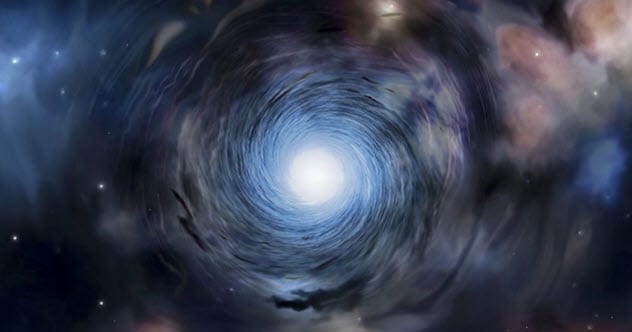
The edge of the universe is not a glowing fence with a sign reading, “Nothing Beyond This Point.” In modern astronomy, the phrase usually refers to the farthest regions we can observe and, therefore, the earliest chapters of cosmic history. Because light takes time to travel, looking billions of light-years away is also looking billions of years into the past.
Powerful observatories such as the James Webb Space Telescope, Hubble, Chandra, and ground-based instruments have turned that ancient darkness into a surprisingly busy neighborhood. Astronomers are finding galaxies that grew faster than expected, black holes that became enormous absurdly early, and chemical elements that apparently arrived before theoretical models had finished setting the table.
These discoveries do more than break distance records. They challenge our understanding of how the universe formed, how matter assembled, and what may happen as cosmic expansion continues. Here are ten amazing discoveries from the observable frontier.
1. The Cosmic Microwave Background: The Oldest Light We Can See
A baby picture covering the entire sky
The cosmic microwave background, or CMB, is the oldest electromagnetic radiation astronomers can observe. It was released roughly 375,000 to 380,000 years after the Big Bang, when the universe cooled enough for electrons and atomic nuclei to combine. Before that moment, space was filled with hot plasma that repeatedly scattered light, making the cosmos effectively opaque.
Once atoms formed, photons could finally travel freely. Those photons have been crossing space ever since, stretched by cosmic expansion into faint microwave radiation. Satellites such as COBE, WMAP, and Planck mapped tiny temperature differences in this glow. The variations are extremely small, but they represent the early density fluctuations that eventually grew into galaxies, clusters, planets, and people arguing about whether Pluto deserves an apology.
The CMB is not a physical wall at the end of space. It is a visibility limit: the oldest light capable of reaching our telescopes. Its patterns help scientists estimate the universe’s age, composition, geometry, and early development.
2. The Universe Is Expanding Faster and Faster
Distant supernovas revealed a cosmic accelerator
During the late 1990s, two research teams studied distant Type Ia supernovas, stellar explosions whose brightness can be used to estimate cosmic distances. Astronomers expected gravity to be slowing the expansion of the universe. Instead, the observations showed that expansion had accelerated.
The unknown cause was labeled dark energy, a convenient name meaning, more or less, “something is pushing the universe apart, and we would very much like to know what it is.” The discovery transformed cosmology and earned the 2011 Nobel Prize in Physics.
The mystery has only become more interesting. The Dark Energy Spectroscopic Instrument, or DESI, has created the largest high-resolution three-dimensional map of the universe, measuring more than 47 million galaxies and quasars during its original five-year survey. Results from its first three years strengthen hints that dark energy may change over time rather than behaving as a perfectly constant property of space. That possibility is not yet confirmed, but it could force physicists to revise the standard cosmological model and rethink the universe’s ultimate fate.
3. MoM-z14: The Most Distant Confirmed Galaxy
A bright galaxy only 280 million years after the Big Bang
In 2026, astronomers announced the spectroscopic confirmation of MoM-z14, currently the most distant confirmed galaxy. Its redshift of 14.44 places it approximately 280 million years after the Big Bang. Its light traveled through expanding space for about 13.5 billion years before reaching the James Webb Space Telescope.
The distance record is impressive, but the galaxy’s brightness is the greater puzzle. Pre-Webb theoretical studies predicted far fewer bright galaxies at this extremely early time. MoM-z14 belongs to a growing population suggesting that the first galaxies may have assembled stars more rapidly and efficiently than many models anticipated.
Astronomers also detected unusual nitrogen enrichment and evidence that the galaxy was affecting the neutral hydrogen around it. Such findings suggest that early galaxies were not merely dim collections of newborn stars. Some were already chemically active, luminous, and capable of changing their surroundings.
MoM-z14 is essentially a postcard from cosmic dawn, except the postcard took 13.5 billion years to arrive and contains several complaints about our equations.
4. Heavy Elements Appeared Earlier Than Expected
Young galaxies were already making oxygen, nitrogen, and dust
The earliest universe contained mostly hydrogen and helium, with small amounts of lithium. Heavier elements had to be manufactured inside stars and scattered through space when those stars died. Astronomers therefore expected the first galaxies to be chemically simple.
Webb observations have complicated that tidy story. JADES-GS-z14-0, observed less than 300 million years after the Big Bang, showed evidence of dust and bright emission associated with ionized hydrogen and oxygen. Oxygen’s presence means that at least one generation of massive stars had already formed, lived short but dramatic lives, and distributed newly created elements into the galaxy.
MoM-z14 presents another chemical surprise with its elevated nitrogen. Researchers have proposed that unusually dense early environments may have produced supermassive stars capable of generating nitrogen more quickly than ordinary stellar populations.
These galaxies suggest that cosmic chemical evolution could proceed at extraordinary speed. The early universe may have behaved less like a slowly warming kitchen and more like a restaurant during the dinner rush, with stars forming, exploding, and enriching their surroundings almost immediately.
5. A Tiny Galaxy Was Clearing the Primordial Fog
JADES-GS-z13-1 opened an unexpected window
After the cosmic microwave background was released, the universe entered a period known as the cosmic dark ages. Space was filled with neutral hydrogen, which absorbed much of the energetic ultraviolet light produced by early stars. Eventually, radiation from the first stars and galaxies ionized that hydrogen, making the universe transparent again during the epoch of reionization.
Webb detected strong Lyman-alpha hydrogen emission from JADES-GS-z13-1, a galaxy seen just 330 million years after the Big Bang. The signal was surprising because the surrounding neutral hydrogen should have absorbed it.
One explanation is that the galaxy produced an ionized bubble around itself, allowing the light to escape. Another possibility is that nearby faint galaxies helped create a larger transparent region. Either way, the observation indicates that reionization may have begun locally around energetic galaxies earlier than some models predicted.
This discovery gives astronomers a direct glimpse of the process that transformed the universe from a dark hydrogen fog into the transparent cosmos we observe today.
6. Earendel: A Single Star Seen Across Cosmic Time
Nature supplied the biggest magnifying glass imaginable
Galaxies containing billions of stars can be detected at enormous distances, but identifying one individual star is much harder. Earendel changed that. Located in the gravitationally lensed Sunrise Arc galaxy, it remains the most distant individual star detected, observed as it appeared within the universe’s first billion years.
Earendel became visible because a foreground galaxy cluster warped space-time and magnified the background star by a factor of at least 4,000. Webb observations indicate that Earendel is a massive B-type star, more than twice as hot as the Sun and roughly one million times more luminous. Its colors may also reveal a cooler companion.
The star offers researchers an opportunity to study stellar physics during an era when the universe contained fewer heavy elements. It also demonstrates the remarkable value of gravitational lensing. Einstein’s theory effectively allows galaxy clusters to serve as natural telescopes, magnifying objects that even our most advanced instruments could not detect alone.
In other words, Webb found the star, but gravity kindly provided the zoom button.
7. A Supermassive Black Hole May Have Formed Before Its Galaxy
QSO1 reverses the expected order of construction
Astronomers generally expect galaxies to form stars first, with black holes growing gradually through mergers and the consumption of surrounding matter. Abell2744-QSO1, commonly shortened to QSO1, suggests that the sequence may sometimes have worked in reverse.
Webb mapped gas rotating around QSO1 and produced the first direct measurement of a black hole’s mass within the universe’s first billion years. The black hole contains approximately 50 million solar masses and accounts for roughly two-thirds of the object’s total mass. The surrounding environment contains mostly hydrogen and helium, with very few heavy elements and surprisingly little evidence of a substantial stellar population.
The result suggests that this black hole may have begun as an unusually massive seed. Possibilities include the direct collapse of a giant gas cloud or a more exotic primordial origin. Researchers have not yet confirmed which explanation is correct, but conventional growth from an ordinary stellar-mass black hole appears difficult.
QSO1 may represent a black hole beginning to build a galaxy around itselfcosmic architecture performed backward, apparently without consulting the manual.
8. J0313-1806: A Quasar With a Monster Black Hole
An enormous engine was operating 670 million years after creation
Quasars are intensely luminous galactic centers powered by supermassive black holes consuming matter. J0313-1806 is observed as it existed only about 670 million years after the Big Bang. Its central black hole contains approximately 1.6 billion solar masses, and the quasar shines around 1,000 times more brightly than the Milky Way.
Researchers also detected a powerful wind traveling at roughly 20 percent of the speed of light. Such an outflow can heat or remove gas from the host galaxy, affecting both future star formation and the black hole’s food supply. The observation therefore captures an early example of black-hole feedback, the process through which a relatively compact central object can influence an entire galaxy.
The black hole’s enormous mass remains difficult to explain. Even if it fed continuously near its theoretical limit, it would have needed a substantial starting mass or periods of exceptionally rapid growth. J0313-1806 is another reminder that the young universe had already produced objects behaving like seasoned cosmic giants.
9. JADES-ID1: A Massive Protocluster Formed Surprisingly Early
The cosmic web was organizing itself ahead of schedule
Galaxy clusters are the largest structures held together by gravity, containing galaxies, immense clouds of hot gas, and large quantities of dark matter. Scientists once expected clusters of substantial size to require several billion years to develop.
JADES-ID1 challenges that assumption. Located about 12.7 billion light-years away, it is observed roughly one billion years after the Big Bang. Webb detected at least 66 potential member galaxies, while Chandra identified a surrounding cloud of hot X-ray-emitting gas. Together, the observations indicate a protocluster with a total mass of about 20 trillion Suns.
Models suggested that the early universe might not have had enough time or sufficiently dense concentrations of galaxies to produce such a structure. Its discovery means that matter may have collapsed along the cosmic web more efficiently than anticipated.
JADES-ID1 shows that the universe was already building metropolitan areas while many astronomers expected it to be working on small villages.
10. A Fast Radio Burst Traveled for Eight Billion Years
A millisecond flash became a tool for weighing invisible matter
Fast radio bursts are brief, powerful flashes of radio energy whose exact origins remain under investigation. FRB 20220610A traveled for approximately eight billion years before reaching Earth. Although the event lasted only milliseconds, it released an extraordinary amount of energy and was traced to a compact group of merging galaxies.
The burst is important for more than its distance. As radio waves travel through intergalactic space, free electrons delay lower frequencies slightly more than higher frequencies. Measuring this dispersion allows astronomers to estimate how much ionized matter the signal encountered.
Much of the universe’s ordinary matter is extremely hot, diffuse, and difficult to detect between galaxies. Fast radio bursts can act as cosmic probes, revealing electrons in regions that appear almost empty through conventional telescopes. A sufficiently large collection of distant bursts could help map this missing baryonic matter and test models of the cosmic web.
A mysterious split-second flash may therefore function as an eight-billion-year-old receipt showing how much material it passed on the journey.
What These Discoveries Tell Us About the Cosmic Frontier
There may be no literal cliff at the edge of the universe, but there is an observational frontier. Every new instrument pushes that frontier deeper into space and farther back in time. The discoveries found there repeatedly show that cosmic evolution was faster, richer, and stranger than expected.
Galaxies became bright within a few hundred million years. Stars manufactured heavy elements with remarkable speed. Black holes grew to millions or billions of solar masses before they should have had sufficient time. Enormous structures began assembling while the universe was still young, and distant signals now allow scientists to examine matter that cannot be seen directly.
The most exciting conclusion is not that current theories have failed. Science advances when observations expose where models are incomplete. The observable frontier is doing exactly that, delivering evidence that helps researchers replace simplified stories with better ones.
Experiencing the Edge of the Universe Without Leaving Earth
Turning distant discoveries into a personal cosmic journey
Reading that a galaxy existed 280 million years after the Big Bang can feel abstract. The number is too large for ordinary intuition, rather like being told that a sandwich is several trillion inches wide. One way to make the discovery meaningful is to begin with an ordinary night sky.
Find the darkest safe location available, allow your eyes to adjust, and look for the faint band of the Milky Way. Nearly every visible star belongs to our own galaxy and lies relatively close in cosmic terms. Even the Andromeda Galaxy, which appears as a dim smudge under good conditions, is only about 2.5 million light-years away. Its light began traveling toward Earth long before modern humans existed, yet Andromeda is practically next door compared with MoM-z14.
A small backyard telescope cannot reveal the first galaxies, but it can establish the visual vocabulary of astronomy. Observing the Moon’s crater shadows, Jupiter’s moons, Saturn’s rings, or the hazy center of the Orion Nebula makes professional observatory images feel less like digital wallpaper. You begin to understand that every image is a measurement of real photons collected from a physical object.
The next step is exploring deep-field images from Webb and Hubble. Select one image and zoom in slowly. The bright objects with diffraction spikes are usually foreground stars, while many tiny patches are entire galaxies. Some are distorted into arcs by gravitational lensing. Those curved shapes demonstrate the same natural magnification that made Earendel visible.
Try building a simple cosmic timeline on paper. Place the Big Bang at the beginning of a one-meter line and the present day at the end. The cosmic microwave background appears only a few millimeters from the starting point. MoM-z14, early black holes, and reionization all crowd into the line’s opening centimeters. Earth and the solar system arrive much later. Human civilization occupies a segment too small to draw accurately without an enthusiastic microscope.
Planetariums and science museums provide another powerful experience. A well-designed cosmic evolution show surrounds visitors with the growth of structure, making the relationship between redshift, look-back time, and expansion easier to grasp. Public observing nights also offer opportunities to speak with astronomers who can explain how raw telescope data becomes a scientific conclusion.
Citizen-science projects take the experience further by letting volunteers classify galaxies, identify gravitational lenses, or examine unusual light curves. Participants are not simply looking at polished pictures; they are helping researchers process real observations. A faint dot that appears unimpressive on a computer screen may represent an object whose light began traveling before the Sun existed.
The most memorable experience, however, may be a quiet thought experiment. Look at any patch of apparently empty sky and imagine extending your vision deeper. More stars appear, followed by galaxies, then increasingly red and ancient galaxies, until ordinary visible light gives way to infrared observations and finally the microwave glow of the young universe. Empty space becomes a layered archive.
That is the emotional power of studying the observable edge. We cannot travel there, and the objects we see today may have changed beyond recognition. Yet their ancient light has reached Earth carrying information about the first stars, the growth of black holes, and the formation of cosmic structure. By collecting a few photons at a time, humanity has learned to read the autobiography of the universe.