Editor’s note: This article synthesizes factual information from reputable marine science, conservation, museum, and educational references, including NOAA Fisheries, Florida Museum, Smithsonian Ocean, National Geographic, Aquarium of the Pacific, Oceana, PBS, MarineBio, and Cousteau resources.
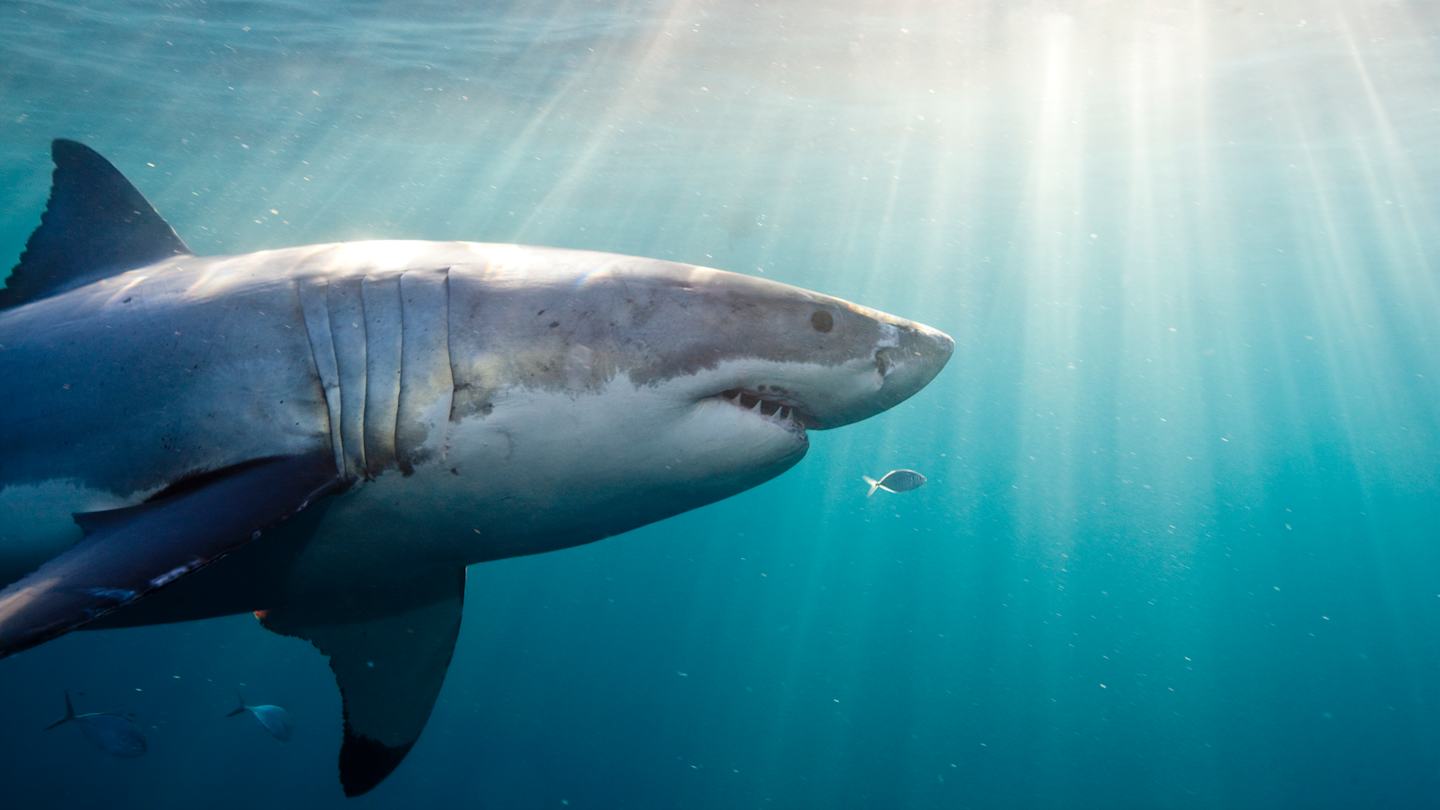
Great white sharks have white bellies for one very clever reason: camouflage. Not the “wearing sunglasses and pretending not to be famous” kind of camouflage, but a natural visual trick called countershading. Their dark gray backs blend with the deeper ocean when viewed from above, while their pale white undersides blend with the bright surface light when viewed from below. In other words, the great white shark is basically wearing the ocean’s most effective two-tone hoodie.
This color pattern helps great white sharks hunt, hide, and move through their environment with surprising stealth. For an animal that can grow to impressive lengths, weigh a great deal, and carry a smile that looks like a steak knife convention, disappearing into the water is a serious evolutionary advantage. The white belly is not random decoration. It is a survival tool shaped by millions of years of life in the ocean.
So, why do great white sharks have white bellies? The short answer is countershading. The deeper answer involves sunlight, shadows, prey behavior, ocean physics, shark skin, hunting strategy, and the wonderfully sneaky way nature solves problems without ever needing a design meeting.
What Is Countershading?
Countershading is a type of animal camouflage where the top of the body is darker and the underside is lighter. This pattern appears in many ocean animals, including sharks, tuna, dolphins, penguins, and rays. It is also found in land animals, but it is especially useful in the water, where light behaves differently than it does on land.
In the ocean, sunlight comes from above. The surface is bright. The deeper water below is darker. A marine animal that is dark on top and pale underneath can blend into both directions at once. Seen from above, a great white shark’s gray back fades into the darker ocean depths. Seen from below, its white belly blends with the sunlit surface. National Geographic describes this strong contrast in great white coloration as countershading, a pattern that helps many fish species blend with their surroundings.
Think of it like this: if you were floating below a shark and looking upward, you would mostly see brightness, ripples, and scattered sunlight. A white belly is harder to spot against that glowing background. If you were above the shark looking down, the dark back would blend into the deeper blue-gray water. The shark becomes visually “flattened” into its surroundings. That is bad news for seals and very impressive news for biology.
Why the Belly Is White Instead of Gray
The great white shark’s belly is white because pale coloration helps reduce contrast when the animal is viewed from underneath. The underside of a swimming animal normally falls into shadow. If a shark had the same dark color all over, its belly would create a clear silhouette against the bright water surface. That silhouette would practically shout, “Large predator arriving from below!” Nature, being slightly more subtle than a movie trailer, went with a better option.
A white or very pale underside reflects more light and visually softens the shadow under the body. PBS describes countershading as a widespread visual trick that helps animals erase their own shadows or blend into different backgrounds. In great white sharks, the pale underside makes the animal harder to distinguish when it is swimming beneath prey or moving through bright surface waters.
This is especially important because great white sharks often hunt from below. When targeting seals, sea lions, fish, or other prey, they may approach from deeper water and rise upward. A white belly helps reduce the chance that prey will notice the incoming shark before it is too late. For the prey, the moment of realization is often extremely brief. For the shark, that brief window is dinner.
How Great White Shark Camouflage Works in the Ocean
The View from Above
From above, a great white shark’s gray dorsal surface blends with the darker water below. The exact shade can vary from pale gray to darker gray, sometimes appearing brownish or bluish depending on lighting, water color, and visibility. MarineBio notes that the shark’s dorsal coloring can vary tremendously depending on environmental conditions.
This darker back is useful when birds, other marine animals, or even potential prey look down through the water. Instead of seeing a clean shark-shaped outline, they see something that blends into the moving, shadowy ocean. The shark’s body becomes part of the background.
The View from Below
From below, the white belly works in the opposite direction. The bright underside blends with the sunlight filtering through the water’s surface. The Cousteau Society explains that the white underbelly blends with sunlight when viewed from below, while the darker dorsal side provides camouflage from above.
This double-sided disguise is why countershading is so effective. The shark does not need to choose one background. It is dressed for both. Dark ocean below? Covered. Bright surface above? Also covered. It is the marine equivalent of a reversible jacket, except the jacket has rows of serrated teeth.
Why Countershading Matters for Hunting
Great white sharks are apex predators, meaning they sit near the top of the marine food chain. NOAA Fisheries describes white sharks as large, wide-ranging apex predators that play an important ecological role in the ocean. Their camouflage is not just for looking mysterious in documentaries. It helps them survive as hunters.
Great whites often rely on surprise. Their prey can include fish, rays, smaller sharks, seals, and sea lions. Many marine mammals are fast, alert, and highly maneuverable. A seal is not exactly sitting around waiting to become lunch. To catch agile prey, a shark benefits from approaching unseen.
Countershading helps the shark get close before launching a fast attack. In places where great whites hunt seals, they may rise from below, using speed and stealth to close the distance. National Geographic has reported that at some locations, great whites use natural countershading to hide their outline while looking upward for seals.
When a great white shark attacks from below, the white belly reduces its visibility against the bright surface. The prey may not notice the shark until the final seconds. Those seconds matter. In predator-prey relationships, survival often comes down to reaction time. Countershading gives the shark a head start.
Is the Great White Shark Actually White?
Despite the name, a great white shark is not entirely white. In fact, calling it a “great white” is a little like calling a tuxedo “great black pants.” The belly is white, but the upper body is usually gray, brownish gray, or bluish gray. The Florida Museum notes that white sharks are identifiable by a sudden color change on their flanks, shifting from grayish-black above to a very pale underside.
The name “white shark” likely comes from the conspicuous white underside. When fishermen, sailors, or early observers saw dead or rolled sharks, the pale belly was one of the most obvious features. MarineBio also notes that the name is thought to come from the shark’s universal all-white belly.
So no, the great white shark is not a giant swimming marshmallow. It is more like a carefully shaded torpedo: dark above, pale below, and designed for movement through a world of light and shadow.
The Science Behind the Shark’s Two-Tone Look
Great white shark coloration is controlled by pigments in the skin, and the body is covered not with ordinary fish scales but with tiny tooth-like structures called dermal denticles. Aquarium of the Pacific notes that great white shark skin is made of dermal denticles and that their countershading helps them blend into the water column from above or below.
Dermal denticles help reduce drag, protect the skin, and support efficient swimming. While the white belly is mostly about camouflage, the shark’s entire exterior is part of its high-performance design. A great white shark is not just big. It is streamlined, sensory-rich, muscular, and built to move efficiently through a demanding environment.
Some research has even suggested that great white sharks may be able to make subtle changes in the tone of their dorsal coloration. National Geographic reported on experiments suggesting that great whites may switch between darker and lighter gray in a matter of hours. Scientists are still exploring how much this ability matters in the wild, so it should not be exaggerated. Still, it adds another fascinating layer to the shark’s already impressive camouflage system.
Why White Bellies Are Common in Marine Animals
Great white sharks are not the only animals using this trick. Countershading appears across the ocean because it works. Many fish have dark backs and pale bellies. Penguins are black above and white below. Dolphins often have lighter undersides. Even some smaller sharks use similar coloring.
The ocean rewards animals that can avoid being seen. Predators need stealth to catch prey. Prey need camouflage to avoid predators. Countershading is useful on both sides of the food chain. That is why it has evolved repeatedly across many unrelated species. When nature finds a good idea, it tends to reuse it. Nature is not above copying its own homework.
For great white sharks, this pattern is especially valuable because they operate in different parts of the water column. They may cruise near the surface, patrol deeper waters, or move between habitats across long distances. Their two-tone coloring helps them remain difficult to detect in a variety of lighting conditions.
Does the White Belly Protect Great White Sharks from Predators?
For adult great white sharks, the main survival threat is not usually another shark. Smithsonian Ocean notes that great whites are top predators and identifies humans as their major threat. However, young sharks are more vulnerable than adults, and camouflage can help reduce risk while they grow.
Juvenile white sharks often spend time in coastal nursery areas where they feed and develop. The CSULB Shark Lab has studied juvenile white sharks off Southern California for many years to better understand their behavior, migration, and biology. For younger sharks, blending into the environment may help them avoid larger predators and improve their hunting success.
Even for adults, camouflage is not useless defensively. Remaining visually subtle can help a shark move through its environment without drawing unnecessary attention. The ocean is not a quiet office. It is a moving, competitive, sensory-rich world. Looking less obvious is almost always helpful.
Does the White Belly Help With Heat or Body Temperature?
Great white sharks are often described as regionally endothermic, meaning they can maintain parts of their body warmer than the surrounding water. This helps support powerful swimming and activity in cooler environments. However, the white belly itself is not primarily a heating system. Its main purpose is visual camouflage.
That said, color can affect light reflection and absorption. A darker back absorbs more light than a pale underside, but in the case of great whites, the camouflage function is the most important explanation for the color pattern. The dark top and white belly match the visual structure of the ocean: darker below, brighter above.
Common Myths About Great White Shark White Bellies
Myth 1: Great White Sharks Are White Because They Live Near the Surface
Not exactly. Plenty of surface-dwelling marine animals are not white underneath, and many animals that dive deeply still have pale bellies. The white underside is better understood as part of countershading, not simply a surface-living feature.
Myth 2: The White Belly Means the Shark Is Old
No. Adult great white sharks are typically gray above and white below, but the white belly is not a sign of age by itself. Young white sharks also show pale coloration, though coloration can vary. Reports of unusually pale young sharks can attract scientific interest, especially when researchers are trying to understand birth and early life stages.
Myth 3: The White Belly Is for Attracting Mates
There is no strong evidence that the white belly evolved mainly as a mating signal. It is much more clearly explained by camouflage and visual blending in the water column.
Myth 4: Great Whites Are Easy to See Because They Are Huge
Size helps, but visibility underwater is complicated. Light scatters. Water clarity changes. Shadows move. A large animal with countershading can still be surprisingly difficult to spot, especially from certain angles. Ask any seal, assuming you can find one willing to discuss the matter.
Why This Adaptation Makes Great White Sharks So Successful
The white belly is only one part of the great white shark’s survival toolkit. Smithsonian Ocean describes great white sharks as highly adapted animals with refined senses, including smell, hearing, touch, taste, sight, and electroreception. Add countershading to that sensory package, and you get an animal beautifully suited to its environment.
Great whites can detect prey, move efficiently, approach with stealth, and strike with speed. Their coloration supports their hunting strategy by making them harder to see at the exact moment when visibility matters most. The white belly is not flashy. It is functional. It is the quiet detail that helps the whole system work.
This is what makes the great white shark so fascinating. Popular culture often presents it as a mindless monster, but the real animal is far more interesting. It is a product of evolutionary refinement. Every curve, sense, tooth, fin, and color pattern has a role. The white belly is not a spooky accessory. It is a brilliant biological solution.
What Humans Can Learn From the Great White’s White Belly
Countershading has inspired military camouflage, underwater design, wildlife education, and visual science. It reminds us that survival is often about perception. In nature, being seen or unseen can decide who eats and who escapes.
The great white shark’s white belly also offers a useful lesson in looking closer. At first glance, the answer seems simple: “It has a white belly because it is a white shark.” But science asks better questions. Why is only the underside white? Why is the top darker? Why does the color change sharply along the side? Why do so many marine animals share a similar pattern?
Those questions reveal the real story. The shark’s belly is white because the ocean is bright above. Its back is dark because the ocean is dark below. Its body is shaded to match a world of shifting light. That is elegant. That is efficient. And yes, it is also slightly terrifying if you happen to be shaped like a seal.
Real-World Experiences Related to Great White Shark White Bellies
People who see great white sharks in real life often describe the same surprise: the shark does not always appear as clearly as expected. From a boat, the first sign may be a dark shape moving beneath the surface, not a dramatic fin slicing through the water like a movie poster. The gray back can fade into the surrounding ocean, especially when the water is deep or choppy. Then, as the shark turns, the white underside flashes into view. For a moment, the animal looks almost illuminated from below.
This experience can completely change the way people understand shark camouflage. In photos, a great white shark often looks obvious because the camera freezes the moment and frames the animal perfectly. In real water, everything moves. Sunlight breaks into glittering patterns. Bubbles, kelp, waves, and shadows distort the scene. A shark’s countershading works inside that visual confusion. The white belly is not meant to make the shark invisible in a studio portrait. It is meant to make the shark harder to detect in a living ocean.
Wildlife photographers often notice how difficult it can be to expose images of great whites correctly. The dark upper body and pale underside create a strong contrast. When sunlight hits the belly, it can appear bright and clean, while the back remains muted and shadowed. That dramatic difference is exactly the point. The shark is built for a world where light comes from one direction and danger or opportunity may come from any direction.
For divers and cage-diving observers, the white belly can become one of the most memorable features. When a great white passes overhead, the pale underside may blend into the glowing surface above. The shark can seem to appear suddenly, even though it was there moments before. This is not magic. It is optics. The white belly reduces the hard outline that would otherwise make the shark easier to track from below.
Beachgoers sometimes imagine that large sharks must be easy to spot from shore, but drone footage and field observations have shown that sharks can move through coastal water with remarkable subtlety. Juvenile white sharks off Southern California, for example, may spend time in areas also used by people. In many cases, the sharks are simply moving, feeding on small prey, and avoiding trouble. Their coloration helps them blend with the water, which is good for the shark but also a reminder that the ocean is a wild habitat, not a swimming pool with better scenery.
Teachers and aquarium educators often use the great white’s white belly as a simple way to explain adaptation. Children immediately understand the “dark above, light below” idea when shown a picture or model. It is one of those science concepts that clicks quickly because it is visual and practical. The shark is not colored randomly. It is colored in a way that solves a problem.
Even for people who never see a great white in person, understanding the white belly adds depth to documentaries, museum exhibits, and nature articles. Instead of seeing a shark as just a frightening animal, readers begin to see it as an ecological specialist. Its belly tells a story about sunlight, hunting, evolution, and survival. That is the best kind of science fact: simple on the surface, fascinating underneath.
Conclusion: The White Belly Is a Brilliant Ocean Disguise
Great white sharks have white bellies because countershading helps them blend into the bright ocean surface when seen from below. Their darker backs blend with deeper water when seen from above. Together, these colors help break up the shark’s outline, reduce shadows, support stealthy hunting, and make one of the ocean’s most famous predators even better adapted to its environment.
The white belly is not just a naming feature. It is a survival advantage. It helps a large predator move through a bright, shifting, three-dimensional world without being too easy to spot. Great white sharks may have a fearsome reputation, but their coloration shows something more interesting than fear: precision. Nature painted them with purpose.
So the next time someone asks, “Why do great white sharks have white bellies?” you can answer confidently: because the ocean is brighter above than below, and great whites evolved one of the best camouflage tricks in the sea. Also, because apparently being huge, fast, toothy, and mysterious was not already impressive enough.