Some home accessories try very hard to look rustic. Woven ash baskets do not have to try at all. They arrive with the kind of credibility that only real materials, real skill, and real history can bring. They are practical, beautiful, and quietly dramatic in the way a handwoven object always is. Put one by the fireplace, in an entryway, beside a sofa, or on a kitchen shelf, and suddenly the room looks less like a catalog page and more like a place where people actually live.
But woven ash baskets are more than handsome storage. They are part of a living basketmaking tradition rooted in Indigenous communities across the Northeast and Great Lakes, especially in Wabanaki and Anishinaabe basketry. They are built from black ash, often called brown ash in Maine, a tree whose annual growth rings can be separated into long, flexible splints. That unusual quality is what gives ash baskets their strength, fine texture, and signature crisp geometry. In other words, this is not random wood pretending to be useful. Ash came ready for the job.
Today, woven ash baskets sit at the intersection of art, utility, ecology, and cultural continuity. They can be heirlooms, workhorses, design statements, or all three at once. The best of them carry the marks of the maker’s hand while still feeling fully at home in modern spaces. If you are curious about what makes these baskets special, why they still matter, and how to choose one worth keeping for years, this guide will walk you through it.
What Are Woven Ash Baskets?
Woven ash baskets are baskets made from splints prepared from black ash wood. In many parts of the Northeast, especially in Maine, basketmakers refer to this material as brown ash. Once a suitable tree is harvested, the log is pounded so the annual growth rings separate. Those rings are then peeled away, split, shaved, and smoothed into strips that can be woven into baskets ranging from rugged utility forms to highly refined decorative pieces.
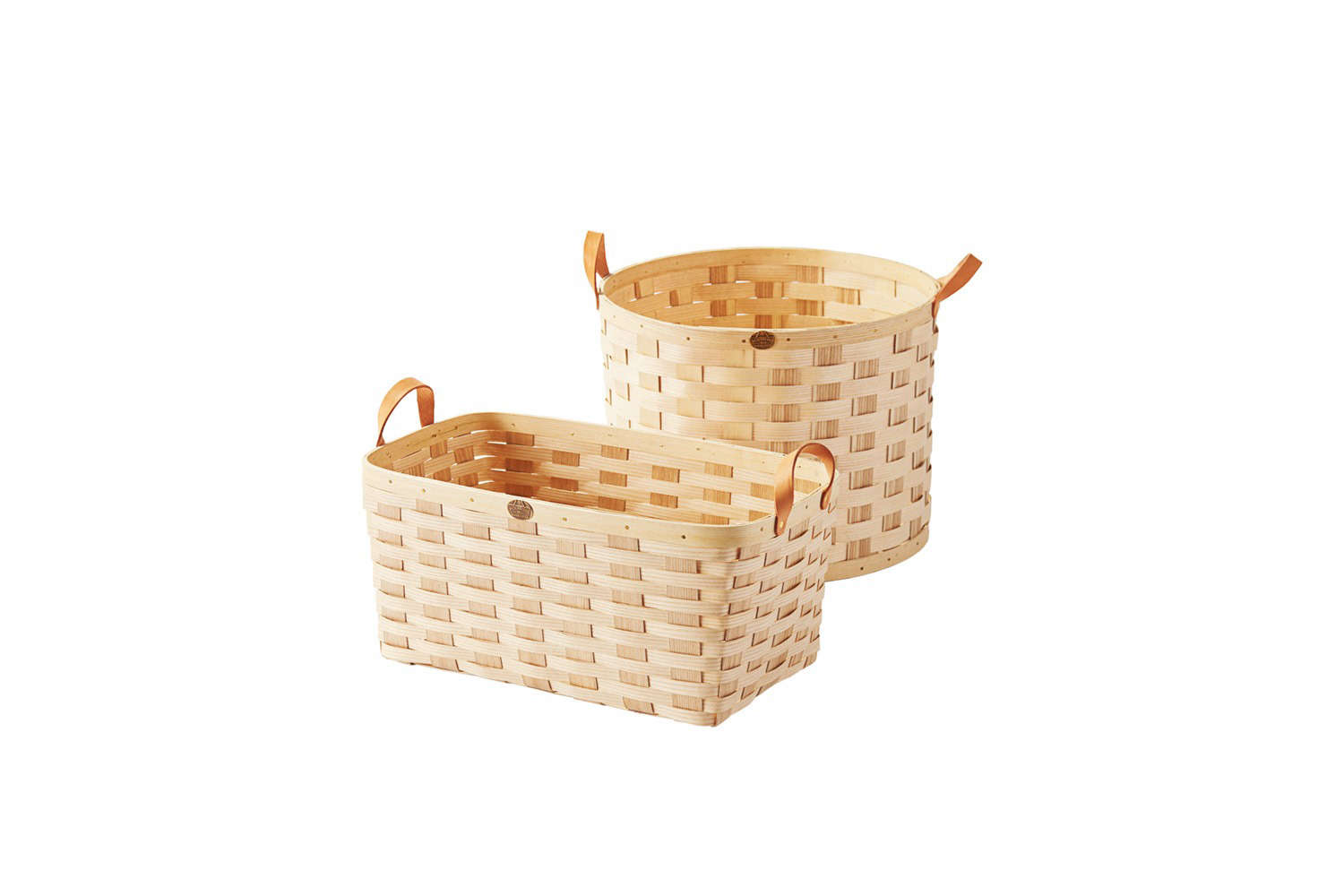
The result is a basket that feels both sturdy and elegant. Ash splints hold shape beautifully, which is one reason woven ash baskets often have a clean, architectural look. Even a simple market basket can appear almost sculptural because the material creates crisp corners, strong ribs, and a beautiful rhythm in the weave. A good ash basket can carry kindling, apples, yarn, laundry, books, or picnic gear without looking like it is about to file a complaint with human resources.
These baskets come in many forms, including pack baskets, potato baskets, work baskets, market baskets, and fancy baskets. Historically, some fancy ash baskets were made for sale to visitors in New England and featured intricate decorative curls known as cowiss. Others were designed for daily use and built with durability in mind. That range is part of the charm: woven ash baskets are not a single “look.” They are a whole language of form and function.
Why Ash Works So Well for Basketry
A material with natural flexibility
Not every tree is basket-friendly. Black ash is prized because its growth rings separate in long, workable layers. Basketmakers can turn those layers into splints that are flexible enough to weave and strong enough to hold weight. This combination of pliability and toughness makes ash especially well suited for storage baskets and carrying baskets that need to do more than sit pretty.
Strength without bulk
Woven ash baskets often feel surprisingly light for how strong they are. That is one of their secret weapons. A basket can be substantial enough to haul produce or firewood, yet refined enough to display on open shelving. Ash splints also create a smooth surface and consistent texture that make the finished work feel polished even when the design is simple.
Beauty that improves with age
Like good leather, wood tables, and your favorite denim jacket, woven ash baskets tend to age gracefully. Over time, they can develop a richer tone and a more settled character. Small shifts in color, polish from handling, and the soft memory of use are not flaws. They are the basket equivalent of laugh lines.
The Cultural Roots of Ash Basketry
Any serious conversation about woven ash baskets has to begin with respect for the communities that have sustained the tradition. In the Northeast, Wabanaki basketry has long been tied to brown ash and sweetgrass. Basketmaking has served practical needs, supported families, preserved knowledge, and maintained ties between generations. In many communities, ash basketry is not simply a craft hobby or a design trend. It is a cultural practice with deep meaning.
That history is not frozen in the past. Contemporary Indigenous basketmakers continue to teach, innovate, harvest materials, and adapt forms while honoring tradition. Some artists focus on highly functional baskets for everyday use. Others push basketry into contemporary art, creating pieces that belong as comfortably in museums as they do in homes. This is one reason woven ash baskets feel so alive as objects: they come from a living tradition, not a dead style resurrected by a mood board.
In Maine, the revival and strengthening of Wabanaki basketry in the last few decades has been closely connected to the work of artists, elders, teachers, and organizations such as the Maine Indian Basketmakers Alliance. Their efforts helped sustain knowledge about harvesting, pounding, weaving, teaching, and marketing baskets at a time when the tradition faced serious decline. That ongoing work matters because a basket is never just the finished object. It is also the knowledge system that made the object possible.
How Woven Ash Baskets Are Made
1. Finding the right tree
Basket-grade ash does not come from just any tree standing around looking available. Makers typically seek straight black ash growing in wet or lowland areas, often near streams and swampy ground. The quality of the log matters enormously because the finished splints depend on the structure of the wood.
2. Pounding the log
This is the step that fascinates nearly everyone, because it sounds slightly impossible until you see it explained. The log is pounded, traditionally with the back of an ax or a heavy tool, to loosen the annual growth rings. Those rings separate into layers that can then be peeled away. It is a physically demanding process and one of the clearest reminders that woven ash baskets begin long before the weaving itself.
3. Splitting and shaving the splints
After the rings are removed, the material is split and shaved into strips of the needed width and thickness. The exact preparation varies by maker and by tribal tradition. Some pieces call for broad, sturdy splints; others require fine, delicate strips capable of much more intricate work.
4. Weaving, shaping, and finishing
Only then does the basket begin to look like a basket. The base is formed, the sides are raised, and the weave creates the structure. Handles, rims, lids, and decorative elements may be added depending on the style. In some traditions, sweetgrass appears alongside ash, introducing fragrance, softness, and contrast. In fancy baskets, decorative curls or layered surface details turn the basket into something joyfully extra, which is design-speak for “impossible to ignore.”
Popular Styles of Woven Ash Baskets
Pack baskets
Pack baskets are among the most iconic ash forms. Built for carrying weight, they are practical, durable, and wonderfully handsome. In a modern home, they work well for blankets, shoes, gardening tools, or wood near a hearth. They also make a striking decorative statement because their shape feels both historical and current.
Potato and utility baskets
These baskets were designed for work, not applause, though they deserve both. Their open form and sturdy weave make them great for produce, pantry storage, or general household organization. They are the kind of pieces that can move from farmers market to mudroom without losing dignity.
Fancy baskets
Fancy baskets often showcase the artistry of the maker through finer weaving, ornament, carved or curled details, and more elaborate forms. They are excellent examples of how woven ash baskets can move beyond utility into collectible art. A fancy basket on a table does not whisper. It enters the room with confidence.
Contemporary art baskets
Many contemporary makers are experimenting with scale, silhouette, surface, and meaning. Some create baskets with dramatic points, layered textures, sculptural contours, or unexpected combinations of materials. These works expand the definition of basketry while still remaining rooted in ash traditions.
Why Woven Ash Baskets Still Matter in Modern Homes
We live in an age of flimsy storage solutions that crack, warp, collapse, or emotionally give up after one season. Woven ash baskets offer the opposite experience. They are reusable, repairable in many cases, and made from natural material through skilled labor. That alone makes them appealing in a world overflowing with disposable stuff.
They also solve a common decorating problem: how to add warmth without adding clutter. A woven ash basket brings texture, pattern, and visual structure to a room while still earning its keep. Use one for magazines, rolled towels, toys, knitting supplies, dog leashes, or entryway catch-all duty. Suddenly your storage is part of the design instead of a thing you are trying to hide under the bed.
There is also an emotional difference between mass-produced decor and a handmade basket. A handmade ash basket carries intention. You can sense the time in it. You can see decisions in the thickness of the splints, the tension of the weave, the finish of the rim. That presence changes the way you live with the object. It feels less like inventory and more like company.
The Ecological Challenge Facing Ash Basketry
It would be impossible to discuss woven ash baskets honestly without mentioning the emerald ash borer, the invasive insect that has devastated ash trees in many regions. For basketmakers and communities who depend on black ash, this is not an abstract conservation issue. It is a direct threat to material, livelihood, and cultural practice.
That is why so much current work around ash basketry involves stewardship as well as artistry. Communities, artists, researchers, and environmental organizations have been involved in education, seed collection, monitoring, treatment efforts, and restoration planning. In some places, people are working to protect specific trees and stands. In others, the focus is on teaching the next generation while there is still access to quality ash. The story of woven ash baskets today is therefore not just about beauty. It is also about resilience.
This challenge has sharpened public appreciation for authentic ash basketry. When people buy and value these baskets thoughtfully, they are not simply purchasing decor. They are supporting an art form and a broader ecosystem of knowledge, stewardship, and cultural continuity.
How to Buy a Woven Ash Basket Wisely
Know what you are buying
Look for information about the maker, the material, and the basket’s intended use. Is it black ash or brown ash? Is it a utility basket, a pack basket, or an art piece? Handmade baskets vary widely, and that variation is part of the value.
Respect the source
Whenever possible, buy directly from artists, tribal markets, museums, respected galleries, or organizations that clearly identify makers. Woven ash baskets are not generic “cabin chic.” They come from specific traditions and deserve to be represented accurately.
Check construction
A well-made basket should feel balanced, intentional, and sturdy. The weave should be even where evenness matters, and purposeful where variation is part of the design. Handles, rims, and corners should feel secure. A basket made for carrying weight should not feel nervous about a loaf of bread.
Choose for real life
The best basket for you is the one you will actually use and enjoy. A large ash basket by the door, a medium one on open shelving, or a smaller decorative basket on a table can all work beautifully. Practicality and beauty are not enemies here. In fact, they are dating.
Caring for Woven Ash Baskets
Woven ash baskets are durable, but they appreciate basic care. Keep them in a stable indoor environment, avoid prolonged dampness, and do not leave them baking in harsh sunlight for long periods. Dust them gently with a soft cloth or brush. If you use one heavily, let it rest occasionally and avoid stuffing it past the point where the basket looks personally offended.
For collectible or older baskets, gentler handling is best. The beauty of ash is its strength, but even strong materials can become brittle over time if neglected. Good care is simple: keep the basket clean, dry, and respected. Honestly, that is better treatment than many houseplants receive.
The Experience of Living With Woven Ash Baskets
There is a particular pleasure in living with woven ash baskets that is hard to fake with factory-made storage. First, there is the sound. An ash basket does not flop. It lands with a dry, confident little knock when you set it down. It has a presence. Pick it up by the rim or handle and you feel the structure immediately. It is light enough to move around, yet solid enough to trust. That tiny moment of trust matters more than people realize. It is the difference between “this looks nice” and “this belongs in my life.”
Then there is the texture. The splints feel smooth but not slick, refined but not precious. Run your fingers over the weave and you notice rhythm: over, under, over, under, a pattern so old and so useful that it still feels fresh. In a home full of glass, metal, laminate, and glowing screens, an ash basket can feel wonderfully grounded. It reminds you that beauty does not always need to be shiny to be convincing.
People often discover that woven ash baskets change the way they organize a room. A throw blanket tossed in a plastic bin looks like a task waiting to happen. A blanket folded into an ash basket looks intentional, cozy, and weirdly competent. Toys become easier to gather. Firewood looks rustic in the good way, not the “I accidentally started a pile” way. Even mail looks more respectable when it lands in something handwoven.
There is also the experience of noticing the basket over time. At first, you may admire the pattern or shape. Later, you begin to notice how the basket catches late afternoon light, how the color deepens, or how it starts to feel inseparable from the room. Handmade objects age into our routines. They stop being purchases and start becoming landmarks. “Put the keys in the basket.” “Grab the extra towels from the basket.” “The apples are in the basket.” That repetition is part of how objects become intimate.
For many people, the most meaningful experience comes from knowing that the basket was made by a real person with real knowledge. That changes the emotional temperature of ownership. The object carries a story of material, place, labor, and tradition. If you bought it directly from a maker or from a trusted market, you may remember the conversation, the setting, or the moment you chose it. Those memories attach themselves to the basket and make it harder to treat as disposable. Good. Disposable culture has had a suspiciously long winning streak.
Woven ash baskets also make powerful gifts because they feel both useful and memorable. They are practical enough to earn daily use, but distinctive enough to be remembered years later. A wedding gift, housewarming gift, or family piece can move through generations if cared for well. That is not a romantic fantasy. It is one of the quiet strengths of ash basketry. These baskets were never designed for one season of trendiness and a dramatic exit. They were designed to work, endure, and carry meaning along with whatever else you put inside them.
Final Thoughts
Woven ash baskets remain compelling because they bring together everything people say they want from their homes: authenticity, usefulness, natural materials, craftsmanship, and character. Yet they also ask for something in return. They ask us to slow down enough to notice where objects come from, who makes them, and what traditions they carry forward.
At their best, woven ash baskets are not simply storage pieces or decorative accents. They are examples of living artistry shaped by forest knowledge, community memory, and extraordinary hand skill. They deserve admiration for their beauty, yes, but also respect for the cultural and ecological story woven into every strip of ash.
So whether you are shopping for a handwoven storage basket, learning about black ash basketry, or trying to make your home feel warmer without adding junk, woven ash baskets are worth serious attention. They are practical. They are soulful. And unlike that bargain bin from the big-box store, they have both backbone and a biography.