Note: This article is a safety-first guide focused on choosing, organizing, and expanding a soldering platform without turning your bench into a chaos festival. For installation, electrical setup, and heat-related procedures, always follow the manufacturer’s manual for your specific station and accessories.
A good soldering platform starts as one tool and, somehow, ends up looking like a tiny command center for electronics. One day you have a station and a spool of solder. A few months later you are eyeing fume extraction, hot tweezers, helping hands, magnification, ESD mats, tip organizers, desoldering tools, and maybe a handpiece that looks like it belongs on a spaceship. That is not a problem. That is progress.
The trick is adding modular tools without creating a bench that is crowded, confusing, or unsafe. The best soldering platforms grow in layers. Each add-on should solve a clear problem, work with your existing station, and make your workflow more comfortable, cleaner, or more precise. If a new accessory looks cool but mainly gives you one more thing to knock onto the floor, it is not an upgrade. It is décor with a power cord.
Why modular tools matter on a soldering bench
A modular soldering platform is built around flexibility. Instead of replacing your entire setup every time your work changes, you expand the platform with compatible tools. That might mean adding a higher-power handpiece for larger joints, a tweezer tool for fine surface-mount work, a dedicated desoldering option, or a better fume capture solution when your projects move from occasional repairs to regular bench sessions.
This approach has real advantages. It helps you spend smarter, preserve bench space, and match tools to the work instead of forcing one tool to do everything badly. It also keeps your setup future-friendly. Many modern platforms are built around families of compatible handpieces, cartridges, tips, rests, and extraction accessories. In other words, the bench can grow with you instead of guilt-tripping you into a full reset.
Start with the platform, not the accessories
Before adding anything new, define what platform you actually have. That means knowing the station model, supported handpieces, compatible tip series, power limits, and whether the system supports optional tools such as tweezers, desoldering modules, or heavy-load irons. This sounds obvious, but many bench mistakes begin with a shopping cart full of ambition and zero compatibility checks.
Some soldering ecosystems are designed to support multiple handpieces from one station. Others support only a narrower family of tools. Some platforms allow dual-port or multi-port operation so you can keep more than one handpiece ready. Others are built around single-output efficiency and require more selective upgrades. The difference matters because modular growth is only useful when the modules actually belong to the same universe.
Questions to ask before buying any add-on
- Does my station support this handpiece or accessory directly?
- Is the tool meant for my region’s compatible tip family or nozzle family?
- Will it improve a real task I do often, or is it just bench temptation?
- Do I have enough physical space for it without blocking airflow, lighting, or safe tool placement?
- Does it introduce new safety needs such as extraction, grounding, storage, or heat-resistant surfaces?
If you can answer those clearly, you are already upgrading better than most people on their third late-night “I probably need this” purchase.
The smartest modular tools to add first
1. A better work-holding solution
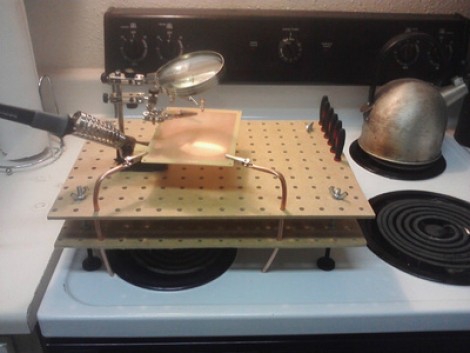
One of the most practical upgrades is also one of the least glamorous: holding the work still. Helping hands, board vises, PCB holders, and adjustable clamps can make a huge difference in comfort and consistency. They reduce wobble, free up your hands, improve angles, and help you inspect the work without contorting yourself into a human pretzel.
For many benches, this is the first modular tool that pays for itself in sanity. If you regularly work on small boards, connectors, wires, or odd-shaped assemblies, a stable holding tool creates a cleaner workflow than trying to balance the workpiece, the iron, the solder, and your patience at the same time.
2. Task lighting and magnification
Adding magnification and focused lighting is one of the most underrated ways to improve bench performance. Better visibility means cleaner inspection, fewer positioning errors, and less strain during longer sessions. A modular lamp with adjustable arms or a magnifier that does not dominate the entire desk can turn a frustrating bench into a genuinely comfortable one.
This is especially helpful if your work shifts between through-hole repairs, fine-pitch components, and visual inspection. Good lighting is not fancy. It is quality control you can actually see.
3. Fume extraction
If your soldering platform does not have effective fume management, that is one of the first serious gaps to address. A soldering bench should not rely on wishful thinking and a nearby window. Modular fume extraction options range from compact desktop units to under-bench systems, flexible-arm capture setups, and tip-extraction accessories that integrate more closely with the handpiece itself.
The best choice depends on how often you solder, how much bench space you have, and whether you need a single-user setup or something that scales. For occasional light work, a small bench unit may be enough. For more regular use, a system with proper filtration, compatible nozzles or arms, and easy filter replacement is usually the more durable investment. The goal is not simply moving fumes around the room like a bad roommate. The goal is capturing them effectively near the source.
4. ESD protection accessories
If you work with static-sensitive components, an ESD-safe bench setup is not just a nice touch. It is part of protecting the work. A modular ESD layer can include a grounding mat, wrist-strap system, grounded rests, and bench-friendly accessories made for static control. Even if your soldering station is ESD-safe, that protection works best when the surrounding workspace supports the same standard.
Think of it this way: a premium station on a random tabletop is like wearing a helmet while roller-skating into traffic. Helpful, yes. Complete, not exactly.
5. Tip and cartridge organization
As your platform becomes more modular, tip management matters more. A growing collection of cartridges, nozzles, and specialty tips can either improve efficiency or disappear into a drawer where they form their own civilization. Add a small organizer, labeled tray, or dedicated storage dock so the right tip is easy to find and the used one has somewhere safe to cool and rest.
This is a small upgrade that supports a bigger idea: the more modular your bench becomes, the more important organization becomes. Otherwise, every upgrade adds friction instead of reducing it.
Upgrade by workflow, not by impulse
The best way to add modular tools to a soldering platform is by looking at your actual work categories. What do you do most?
For repair benches
Repair-focused benches often benefit from board holders, magnification, precision tweezers, fine tips, flux management tools, and a compact extractor that does not eat the whole desk. Mobility, fast setup, and visibility matter more than building a bench that looks ready to launch satellites.
For prototyping benches
Prototype work often needs flexibility. That makes modular holders, mixed tip options, general-purpose extraction, and easy-access hand tools especially valuable. You may bounce between headers, wires, pads, jumpers, and quick rework, so your platform should support variety without constant reconfiguration.
For rework-heavy benches
If your soldering platform is doing more advanced rework, the next layer may include hot tweezers, desoldering options, higher-thermal-demand handpieces, specialty nozzles, and more capable extraction. Here, compatibility and safe bench layout become even more important because you are adding more heat, more accessories, and more opportunities for clutter to become a problem.
How to keep the bench modular without making it messy
Modular does not mean piling tools around the station like a dragon hoarding bench accessories. A clean platform has zones. Keep the hot zone for the station, stand, and active handpieces. Keep the support zone for holders, tweezers, cutters, and flux tools. Keep the visibility zone for lighting and magnification. Keep the air-management zone clear so extraction is not blocked by random boxes, half-open containers, or your snack from three hours ago.
Cable routing matters too. One of the fastest ways to ruin a smart workstation is creating a web of cords that catches on your wrist every time you move. Use clips, guides, or under-bench routing so add-ons feel integrated instead of improvised. If a tool needs to be moved every time you use another tool, your layout needs work.
Choose accessories that solve heat, precision, or comfort
When deciding which modular tools are worth adding, sort them into three practical categories.
Heat management tools
These include stronger handpieces, alternative tip families, desoldering attachments, heat-resistant mats, safe rests, and extraction systems. They help the platform handle a wider range of materials and jobs without pushing one basic tool beyond its limits.
Precision tools
These include magnifiers, tweezers, board holders, fine-tip options, and small-part organizers. They make intricate work easier and reduce error rates, especially when you switch between different board sizes or component densities.
Comfort tools
These include adjustable holders, better lighting, ergonomic handpieces, organized tip storage, and layouts that reduce awkward reach. Comfort is not fluff. A more comfortable bench can be a more accurate, more repeatable, and less fatiguing one.
Common mistakes when adding modular tools
- Buying for fantasy work: Do not build a production bench if you mainly fix the occasional keyboard or toy.
- Ignoring compatibility: A handpiece that looks right is not the same as one that is actually supported by your station.
- Overcrowding the desk: More tools are only better if they fit the workflow.
- Skipping extraction and ESD basics: Fancy modules do not replace foundational safety.
- Forgetting storage: Modular accessories without storage become modular clutter.
A practical roadmap for expanding your soldering platform
If you want a simple decision path, build in this order: first stability, then visibility, then air management, then specialty tools. In plain English, secure the work, improve what you can see, protect the air around the bench, and only then start adding advanced modules. That order tends to produce the biggest quality-of-life gains without turning the setup into an expensive puzzle.
Once those basics are in place, choose specialty tools based on repeat use. If you constantly swap between board sizes, add a better holder. If you inspect tiny pads all day, upgrade magnification. If your projects demand more than one handpiece style, invest within a compatible ecosystem instead of building a Frankenstein bench from random parts.
Experience: what expanding a soldering platform really feels like
In real life, most soldering platforms do not become modular all at once. They evolve because something starts to annoy you. Maybe the board keeps shifting. Maybe you are leaning too close to the work. Maybe every small job somehow takes twice as long because you are hunting for the correct tip or moving tools around like pieces in a board game. That is usually the moment people realize a bench is not just about the iron. It is about the system around the iron.
One common experience is discovering that the first “upgrade” is rarely the flashiest one. People often expect the biggest improvement to come from a more advanced station or a specialty handpiece. But in practice, many users notice the greatest difference after adding simple support tools: a reliable holder, better lighting, a decent mat, or a fume solution that stops the bench from feeling like a tiny weather event. Suddenly the work feels calmer. Cleaner. Less dramatic in all the wrong ways.
Another pattern is that modular benches tend to improve confidence as much as productivity. When your accessories have a place, your tools are compatible, and the platform is arranged logically, you waste less energy second-guessing the setup. You spend more time focusing on the task itself. That matters whether you are repairing a cable, assembling a kit, or doing careful board-level work. A bench that feels under control usually produces better habits.
There is also a funny emotional stage in every bench upgrade journey where the owner begins referring to accessories like they are trusted coworkers. “The holder is great.” “The lamp is doing heavy lifting.” “The extractor saved the day.” That sounds silly until you remember how much easier work becomes when your setup supports you instead of fighting you. A modular platform is not about owning more stuff. It is about reducing friction.
The best long-term experience usually comes from slow, deliberate expansion. Add one tool, live with it, and see whether it truly improves the bench. Then add the next. That approach reveals what your work actually needs. It also prevents the classic mistake of building a workstation that looks incredible in photos but feels awkward during everyday use.
Over time, a well-built soldering platform starts to feel less like a collection of accessories and more like a personalized workspace. Your most-used tips are easy to reach. Your board support feels natural. Your extraction no longer feels optional. Your bench layout makes sense to your hands without needing a second thought. That is the real goal. Not maximum gear. Maximum flow.
And that is why modular tools are worth adding carefully. The right upgrades do not just expand capability. They make the workbench feel smarter, safer, and more enjoyable to use. Which, for anyone who has ever spent ten minutes looking for a perfectly good tweezer sitting in plain sight, is a beautiful thing.
Conclusion
Adding modular tools to your soldering platform is less about collecting gadgets and more about building a bench that matches your real work. Start with compatibility. Prioritize support tools that improve stability, visibility, airflow, and organization. Then expand into specialty modules only when your projects genuinely call for them. Done well, a modular setup saves time, reduces frustration, protects both the work and the workspace, and helps your bench grow without losing control.
In other words, build a platform that works like a team, not a junk drawer with a heating element.