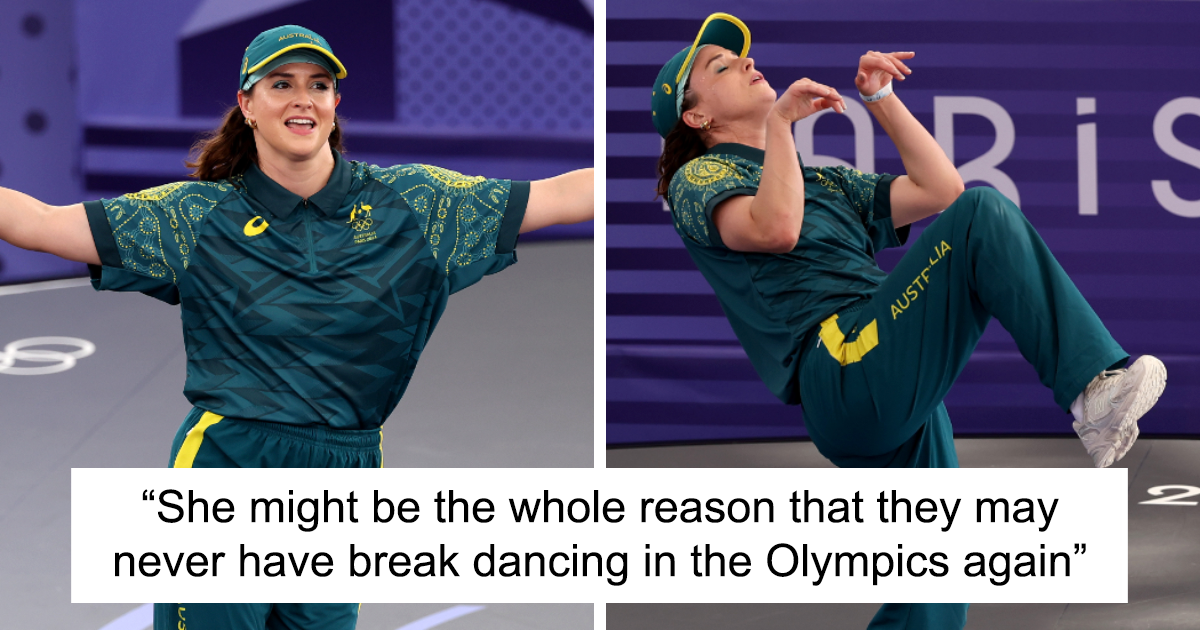
When Australian breaker Rachael Gunn, better known by her competition name Raygun, stepped onto the Olympic stage in Paris, she probably expected criticism, nerves, and maybe a few raised eyebrows. What she got instead was a full-blown internet weather event: memes raining sideways, hot takes flying like confetti, and a global audience suddenly acting as if it had earned a black belt in breaking overnight.
Her Olympic routine became one of the most talked-about moments of the 2024 Paris Games. The performance included distinctly unconventional movements, including the now-famous kangaroo-inspired steps that turned Raygun into a viral figure almost instantly. But as the jokes multiplied, so did curiosity about her background. Who was this Australian breakdancer? How did she qualify? And why was her academic career suddenly part of the story?
The answer is more interesting than the meme cycle suggests. Gunn is not just an Olympic breaker. She is also an academic with a PhD in cultural studies, a former lecturer at Macquarie University, and a researcher whose work has focused on breaking culture, gender politics, street dance, and the way movement can challenge social expectations. In other words, while the internet was busy turning her routine into reaction GIFs, it also discovered that Raygun had spent years studying the culture she performed within.
Who Is Rachael “Raygun” Gunn?
Rachael Gunn is an Australian dancer, researcher, and former competitive breaker. She competed under the name Raygun, a play on her real name. Before the Olympic spotlight found her, she was already known within Australia’s breaking scene and had represented the country at international competitions, including World Breaking Championships events.
Gunn’s path into breaking was not the stereotypical story of a teenager growing up in a hip-hop crew and battling every weekend from age 12. She came to breaking as an adult after earlier experiences with dance styles such as jazz, tap, ballroom, and contemporary movement. That later start became one of the key details in the public discussion around her Paris performance. Her supporters saw her as a performer with an individual style and a deep cultural interest in the art form. Critics saw a gap between her academic understanding and what they expected from an Olympic-level breaker.
That tensionbetween theory and execution, culture and competition, originality and technical scoringbecame the real story beneath the viral laughter.
The Olympic Routine That Launched a Thousand Memes
Breaking made its Olympic debut at the 2024 Paris Games, bringing a street-born art form into one of the most formal sporting arenas in the world. The event featured B-girls and B-boys battling one-on-one, with judges evaluating qualities such as technique, vocabulary, execution, musicality, and originality.
Raygun competed in the B-girls event but did not advance beyond the round-robin stage. She lost all three of her battles and did not receive votes from the judges. Her opponents included some of the most technically skilled breakers in the world, many of whom displayed explosive power moves, rapid footwork, freezes, and precise musical control.
Raygun chose a different lane. Rather than trying to out-spin, out-freeze, or out-power younger competitors, she leaned into originality and character. The result was a routine that included moves many viewers found unusual, including hopping, sliding, and gestures that were quickly nicknamed “kangaroo” movements. The internet did what the internet does best: it clipped, exaggerated, joked, argued, and moved on only after turning one athlete into a global symbol.
The problem with viral moments is that they flatten people. A few seconds of footage can swallow decades of context. In Raygun’s case, the simplified version became: “Australian breakdancer scores zero, has PhD in breakdancing.” That description was catchy, but not entirely accurate.
Raygun’s Academic Background: What Was Actually “Exposed”?
The headline-friendly phrase “academic background exposed” makes it sound as if someone uncovered a secret file in a locked university basement. In reality, Gunn’s academic background was public. She had long been associated with Macquarie University and had discussed her research openly before the Olympics.
Gunn holds a PhD in cultural studies from Macquarie University. Her doctoral thesis focused on gender and Sydney’s breaking culture, exploring how women participate in a scene that has historically been male-dominated. Her work looked at how breaking can both reinforce and challenge ideas about gender, bodies, performance, power, and identity.
That matters because breaking is not simply a checklist of acrobatic tricks. It is also a culture with roots in hip-hop, community battles, improvisation, style, musicality, and self-expression. Gunn’s academic work approached breaking as a social and cultural practice, not just a sport. She studied the scene from the inside, drawing on her own experience as a B-girl in Sydney.
The viral controversy turned that academic history into ammunition for critics. Some people mocked the idea of studying breaking in a university context. Others questioned whether an academic lens had shaped a routine that looked, to them, too conceptual for Olympic competition. But that reaction says as much about public attitudes toward the arts and humanities as it does about Raygun.
Why Her PhD Became Part of the Controversy
Raygun’s PhD became a talking point because it created an irresistible contrast. On one side was a scholar who had studied breaking culture deeply. On the other was an Olympic performance that judges did not reward. For critics, that contrast looked like irony wrapped in a tracksuit.
But the situation is more complicated. Academic expertise does not automatically make someone the best competitive performer, just as a film professor is not necessarily an Oscar-winning director and a sports historian may not be able to dunk over LeBron James. Studying a form and performing it at the highest level are related skills, but they are not the same skill.
At the same time, Raygun was not a random professor who wandered into the Olympic Village after taking a wrong turn at the library. She had competed before, won the Oceania Breaking Championships, and qualified through the official process. Her Olympic result was poor by the judges’ standard, but her presence at the Games was not the product of a secret academic shortcut.
That distinction is important. The controversy became messy because jokes about performance quickly blended with misinformation about qualification. Some online claims alleged that Gunn manipulated the selection process or benefited from inside connections. Those claims were rejected by the Australian Olympic Committee, which defended the qualifying process and described the attacks as misleading and harmful.
How Did Raygun Qualify for the Olympics?
Raygun qualified by winning the Oceania Breaking Championships, which served as a direct qualification pathway for the Paris Games. According to official statements from Australian Olympic authorities, the event used independent international judges, and Gunn was legitimately nominated after winning the qualifying competition.
This matters because one of the most persistent parts of the backlash was the idea that she somehow arranged her own selection. That claim spread widely online, despite being unsupported by verified evidence. In the age of viral sports commentary, a rumor can move faster than a windmill spin, and correcting it often feels like trying to sweep glitter out of carpet.
Raygun’s qualification does not mean she was destined to medal. It means she won the qualifying event available to her region. International breaking, like many Olympic sports, depends on qualification systems that balance geography, rankings, access, and event structure. Sometimes that produces competitors who dominate. Sometimes it produces athletes who are outmatched on the world stage. Both can be true without requiring a conspiracy board covered in red string.
The Scoring Debate: Was It Really “Zero Points”?
Many reports described Raygun as scoring zero points, and in plain public language, that is how the result was understood. In Olympic breaking, however, judges cast votes across rounds based on comparative performance. Raygun did not receive votes from judges in her battles, which is why the result was widely summarized as a zero-score performance.
The judging criteria included technique, vocabulary, execution, musicality, and originality. Some dancers and commentators argued that Raygun showed originality and personality but lacked the technical vocabulary and execution needed to compete with her opponents. Others defended her choice to emphasize creativity, noting that breaking has always valued individuality and character.
The debate revealed a deeper question: what happens when a culture rooted in community, improvisation, and self-expression is placed inside an Olympic scoring system? Once breaking entered the Games, it had to be judged. Once it was judged, viewers wanted clear winners and losers. But breaking has never been only about athletic difficulty. It is also about style, attitude, musical conversation, and identity. That tension did not begin with Raygun, but her routine made it impossible to ignore.
Internet Fame, Online Hate, and the Human Cost
The fun part of the Raygun story is easy to see: the memes, the jokes, the kangaroo references, the late-night comedy sketches, and the endless social media commentary. The less funny part is what happens to a real person when the entire internet decides she is the day’s main character.
Gunn later said the backlash was devastating and that the scrutiny affected her personal life. She also asked people to stop harassing her family, friends, and the broader Australian breaking community. That request is worth taking seriously. Criticism of an Olympic performance is fair. Harassment is not. Laughing at a move is one thing; turning an athlete into a target is another.
The reaction also spilled beyond Raygun herself. Australian breakers spoke about how the mockery affected local dancers, especially B-girls who had nothing to do with the Olympic selection. A viral joke can look harmless from the outside, but inside a small creative community, it can land like a dropped speaker.
Her University Role and the Post-Olympic Career Shift
After the Olympics, Gunn’s academic career remained part of public discussion. She had worked as a lecturer in media and cultural studies at Macquarie University. In 2026, reports said she had taken a voluntary redundancy and was no longer in that university role. Gunn later signaled a move toward public speaking, workshops, hosting, and events.
That transition makes sense in a very modern way. Few people understand viral fame as personally as Raygun does. She became a case study in media culture, sports criticism, online identity, misinformation, and public resiliencetopics she had spent years examining from an academic angle. Then, suddenly, she was not just studying the spotlight. She was standing directly under it, blinking.
Her next chapter may involve helping audiences understand creativity, confidence, public failure, and the strange emotional physics of becoming famous for something people mock. That is not a small subject. In fact, in a world where one awkward moment can become global content, it may be one of the most relevant subjects around.
Was Raygun’s Routine a Failure or a Cultural Moment?
Competitively, Raygun’s Olympic performance was unsuccessful. That is not controversial. She did not beat her opponents, did not advance, and did not receive judge support in her battles. But culturally, the routine became enormous. It introduced millions of people to Olympic breaking, even if many arrived through jokes rather than genuine curiosity.
The routine also sparked conversations about what audiences expect from women athletes, older competitors, academics, artists, and performers who do not fit the expected mold. Some of the criticism was technical and reasonable. Some of it was cruel. Some of it was clearly shaped by discomfort with a woman presenting herself with unusual confidence in a global arena.
Raygun’s defenders often point out that she tried something original. Her critics respond that originality without strong execution is not enough at the Olympics. Both arguments can exist together. The best analysis does not need to pretend the routine was secretly brilliant, nor does it need to treat Gunn as a villain. It can simply say: she took a risk, it did not score, and the internet turned the aftermath into something much bigger than the performance itself.
What the Raygun Story Reveals About Breaking
Breaking entered the Olympics with a challenge built into its DNA. It had to preserve its cultural roots while fitting into a sporting format designed for medals, rankings, broadcasts, and quick viewer comprehension. That is not easy. A casual viewer can understand a 100-meter sprint immediately: fastest person wins. Breaking is different. It asks viewers to understand rhythm, battle strategy, personal vocabulary, cultural reference, difficulty, flow, and response to music.
Raygun’s routine became controversial partly because many viewers did not know what they were watching. Some expected gymnastics. Some expected street dance battles like in movies. Some expected acrobatic spectacle from start to finish. When they saw something slower, stranger, and more character-driven, the gap between expectation and performance became a meme factory.
That does not mean all criticism was uninformed. Experienced breakers also questioned her fundamentals. But the public conversation often skipped over the difference between “I don’t understand this” and “this has no value.” Breaking deserves better than instant dismissal, even when a particular performance divides opinion.
What Content Creators Can Learn from the Raygun Controversy
For writers, publishers, and media watchers, the Raygun story is a masterclass in how viral narratives form. First, an unusual visual moment appears. Second, social platforms detach it from context. Third, audiences search for a simple explanation. Fourth, personal background becomes content. Finally, misinformation joins the party wearing sunglasses and pretending it was invited.
That pattern is not unique to Raygun. It happens whenever a person becomes famous faster than facts can catch up. A clip spreads. A nickname trends. A credential is exaggerated. A rumor becomes a headline. Before long, the public is arguing about a simplified character instead of a complicated human being.
Responsible coverage should separate verified facts from speculation. Raygun is an academic with a real background in cultural studies and breaking research. She did qualify through an official pathway. She did perform poorly by Olympic judging outcomes. She did become the target of intense mockery and misinformation. Those facts are enough. The story does not need invented scandal to be interesting.
Experiences and Reflections Related to Raygun’s Olympic Moment
One of the most relatable parts of the Raygun story is not the Olympics, the PhD, or the kangaroo move. It is the experience of trying something publicly and being judged for it. Most people will never compete at the Games, but almost everyone knows the stomach-drop feeling of being watched, misunderstood, or laughed at.
Think about a student giving a presentation in class, a creator posting a first video, a dancer entering a local showcase, or a young athlete stepping into a bigger competition than ever before. The setting changes, but the emotional stakes are familiar. You prepare. You hope your choices make sense. You put yourself out there. Then other people decide what your effort means.
Raygun’s story also shows the danger of confusing confidence with arrogance. When someone performs in a style that does not match expectations, audiences often assume they are delusional. But creative fields need people willing to risk looking unusual. Without that risk, every performance becomes a photocopy of the last one. Of course, risk does not guarantee success. Sometimes originality lands. Sometimes it belly-flops into the group chat. Still, the willingness to attempt something distinctive is part of how culture evolves.
There is also a lesson here for anyone who studies an art form. Knowing the history, politics, and theory of a practice can deepen your relationship with it, but it does not protect you from criticism when you perform. In fact, it may raise expectations. People may assume that because you can explain a culture, you must be able to dominate it competitively. That is not how expertise always works. A music critic may hear details others miss without being a concert pianist. A football analyst may understand tactics without playing in the NFL. A dance scholar may understand movement culture without being the strongest athlete on the floor.
At the same time, performers can learn from Raygun’s experience that intention and impact are not identical. You may intend to be creative, funny, expressive, or culturally specific. Audiences may receive it differently. That does not automatically make the audience right, but it does mean public performance is a conversation, not a private diary entry. Once the work leaves your body and enters the world, people respond based on their own knowledge, biases, expectations, and mood.
The healthiest takeaway is not “never be different.” It is “be different with preparation, humility, and resilience.” If the response is positive, wonderful. If the response is rough, learn what you can without letting strangers define your entire identity. Raygun’s Olympic routine may remain controversial, but her story has become a useful reminder that public failure is rarely the end of a life. Sometimes it becomes a strange doorway into the next chapter.
Conclusion
The controversy around the Australian breakdancer’s academic background is not really a story about a secret being exposed. It is a story about what happens when a scholar-performer enters the Olympic arena, makes an unconventional artistic choice, loses badly by competition standards, and becomes a global meme before the facts have finished tying their shoes.
Rachael “Raygun” Gunn’s academic background is real, public, and directly connected to breaking culture. Her Olympic performance was controversial, widely mocked, and competitively unsuccessful. Her qualification was defended by official bodies. Her backlash became a cautionary tale about online misinformation, viral cruelty, and the speed at which public judgment can outrun context.
Whether viewers remember her as a meme, an academic, an Olympian, or an example of fearless individuality, Raygun has already secured a strange place in Olympic pop culture. She may not have won a medal, but she did something few athletes manage: she made the world talk about breaking, culture, scoring, creativity, and failure all at once. Not bad for a routine the judges did not reward.