Note: This original article is based on publicly reported information and written for web publication in standard American English.
Hollywood loves a grand gesture. Trophies, speeches, standing ovations, gift baskets big enough to need their own zip code. But one of the sweetest thank-you stories in movie history was much smaller, weirder, and somehow far more John Candy. When Spaceballs wrapped, Candy did not go with the usual “great working with everybody” routine and vanish into the galaxy. Instead, he reportedly had special gifts made for the cast and crew: plaques topped with a gold-painted dog bone, personalized for the people who helped bring Mel Brooks’ cosmic comedy to life.
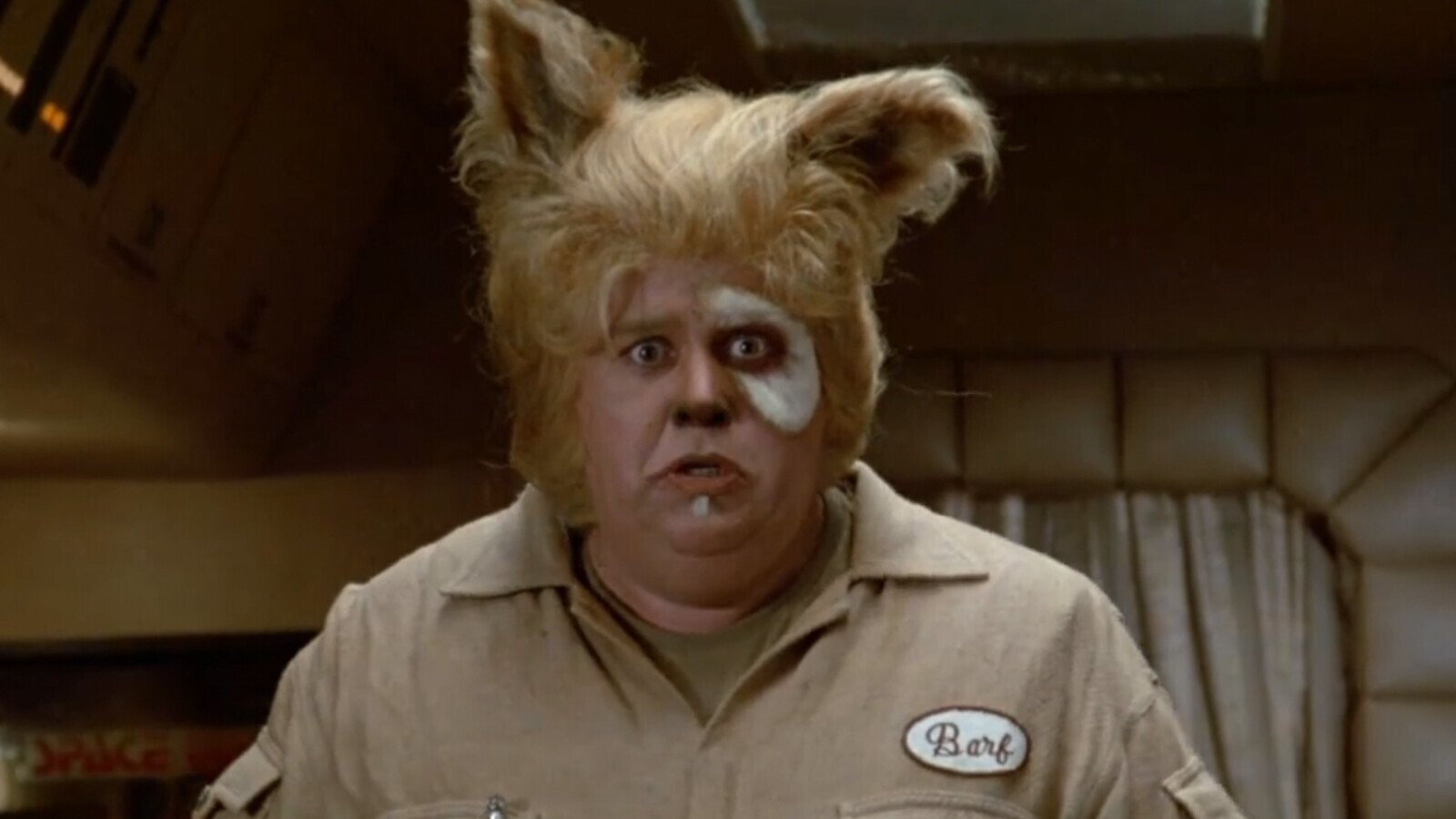
It is exactly the kind of thank-you that sounds ridiculous until you remember two things. First, Candy was playing Barf, the lovable “Mawg,” or half-man, half-dog sidekick. Second, John Candy had a gift for making ridiculous things feel warm, human, and oddly classy. He could wear a tail, a snout, and a giant grin and still come off like the kindest guy at the party. Maybe that was his superpower all along.
That little wrap gift says a lot about why people still talk about Candy with such affection. He was funny, yes. Instantly funny. Effortlessly funny. The sort of performer who could improve a scene with one tossed-off line and make it look like he had merely wandered into greatness by accident. But the deeper reason he lasted is that audiences and coworkers alike sensed something bigger beneath the jokes. Candy was not just a comic actor. He was a comfort presence. A human weighted blanket with punchlines.
And in the case of Spaceballs, he left behind more than a cult-favorite performance. He left behind a story that makes the whole production feel a little more lovable than it already was.
The Surprisingly Sweet Story Behind a Very Silly Movie
Released in 1987, Spaceballs was Mel Brooks doing what Mel Brooks does best: taking a giant pop-culture target and gleefully firing jokes at it until the walls shook. The film parodied Star Wars most of all, but it also took swipes at everything from science-fiction spectacle to Hollywood merchandising. On paper, it was a broad spoof. On screen, it turned into something a little more enduring than that. Part of the reason was the cast, which included Brooks, Rick Moranis, Bill Pullman, Daphne Zuniga, Joan Rivers, and John Candy as Barf.
Barf could have been a one-note gag. In lesser hands, he might have been just a furry punchline with a tail and a few dog jokes attached. But Candy never really played characters as mere jokes. He found the friendliness in them. The softness. The bit of emotional gravity hidden beneath the clown shoes. So Barf became memorable not only because he was funny, but because Candy made him feel like someone you would actually want to hang out with on a long, weird road trip through the stars.
That warmth mattered. Critics were mixed when Spaceballs first hit theaters, but audiences kept the movie alive. It made respectable money, became a cable favorite, and eventually grew into one of those endlessly quotable cult comedies that people revisit because it feels funnier with age, not less. Bill Pullman has even noted that younger viewers later knew the movie line for line. That is the kind of afterlife studios dream about and fandom practically adopts.
And it helps explain why one small off-screen gesture from Candy still gets remembered decades later. In a movie built on lasers, helmets, and yogurt-based wisdom, the most touching detail may have been a custom plaque with a painted bone.
What John Candy Actually Gave the Spaceballs Team
The story came back into the spotlight when Daphne Zuniga, who played Princess Vespa, recalled what happened at the end of the shoot. According to her account, Candy had a special plaque made for everyone involved in the production. Not just the stars. Not just the executives. Not just the people whose names appeared in the glossy part of the call sheet. Everyone.
Each plaque reportedly included a gold spray-painted bone and the words “Spaceballs, love John.” Some accounts also note that the recipient’s name was engraved on it. The gifts were later nicknamed the “Barf Awards,” which is both adorable and completely on-brand for a movie in which the giant villain has more merchandising than dignity.
That detail about everyone is what makes the story land. Zuniga emphasized that Candy’s thank-you extended beyond the cast and above-the-line talent. He included the crew too, and those crews in the 1980s were no tiny indie operation. They were huge. Hundreds of people. Hair, makeup, wardrobe, grips, camera assistants, production staff, effects teams, and all the other workers who keep movie magic from turning into expensive confusion.
Plenty of actors are nice in a general, polished, awards-season kind of way. But this feels more specific than “nice.” It feels observant. Candy seemed to understand something that the best people in show business understand: a movie set runs on unseen labor. Somebody rigs the lights. Somebody adjusts the costume. Somebody waits forever for the shot and then does it all again after lunch and maybe after midnight too. To thank those people personally is not just generous. It is attentive.
Also, let us give due credit to the gold bone itself. It is funny. It is goofy. It is custom-tailored to the movie and to Candy’s character. In other words, it is a thank-you gift with an actual personality. No generic plaque. No engraved paperweight that screams “procurement handled this.” This thing had Barf energy. Chaotic, affectionate, unforgettable.
Why the Gesture Meant More Than It Sounds
At first glance, a plaque with a painted bone might sound like a cute production trinket. Something you display in a home office next to a stack of old VHS tapes and a fading convention badge. But the emotional weight is in the intention, not the object. Candy took the time to make sure people left with a memory they could hold in their hands.
That matters because film work can be strange and fleeting. Casts and crews spend long hours together, complain about the food together, laugh at the same dumb joke for three weeks straight, and then suddenly scatter. One day you are pretending to rescue a princess from the Spaceballs. The next day you are home doing laundry and wondering why your life feels less dramatic without a giant helmet in it.
A personalized wrap gift acknowledges that odd emotional whiplash. It says: this happened, we did it together, and it mattered. Candy’s gift was not just a souvenir. It was a way of honoring a shared experience. He was telling the people around him that they were part of the joke, part of the memory, and part of what made the movie work.
That is probably why the story endures. It is not flashy enough to feel self-promotional. It is not sentimental in a fake, over-rehearsed way. It is warm without being mushy. Funny without being throwaway. Basically, it is the John Candy brand distilled into one object: a joke with a heart inside it.
John Candy’s Performance as Barf Was Generous, Too
The off-screen kindness is easier to believe because the performance itself feels generous. Candy was not coasting through Spaceballs on sheer charm, though to be fair, sheer charm was definitely present and probably collecting overtime. He worked for that role. According to production notes, playing Barf meant hours in makeup and a costume rigged with a thirty-pound battery pack. Candy controlled the character’s tail, while technicians handled the ears. That is a lot of technology just to make one half-dog sidekick look properly expressive.
And he still made it look loose and playful.
Mel Brooks has also recalled that Candy improvised one of the movie’s memorable lines after Eagle 5 crash-landed: “That’s gonna leave a mark.” It was, Brooks said, better than what had been written. That sounds right. Candy had a way of dropping in a line that felt both spontaneous and inevitable, as if the joke had been waiting all day for him to show up and rescue it.
Zuniga also remembered him as hilarious between takes, to the point that he tried to make her break character while she had to remain the straight face in the middle of the nonsense. That is another classic Candy trait: he did not just perform comedy, he generated atmosphere. He made the room funnier. He made the set lighter. Some actors deliver their lines. Candy seems to have delivered morale.
The Plaque Story Fits the Reputation He Had Everywhere Else
One reason the Spaceballs story keeps resurfacing is that it matches almost everything people have said about John Candy for years. Documentary tributes, reviews, interviews, and remembrances keep circling back to the same qualities: warmth, generosity, sincerity, kindness. Not in a saintly, impossible-to-believe way, but in a deeply consistent way. The stories all rhyme.
Recent coverage of the documentary John Candy: I Like Me again highlighted how friends, family, and colleagues remembered him as someone who wanted other people to feel welcome, seen, and valued. Colin Hanks described him as deeply genuine. Macaulay Culkin remembered him as protective and supportive. Mel Brooks praised both his good nature and his humanity. Even reviewers who felt the documentary was perhaps too affectionate generally agreed on one point: affection is hard to avoid when the subject inspired so much of it.
There is also something especially poignant about the way Candy’s final day is remembered. Reports about his death note that he had spent that evening with cast and crew while filming Wagons East. That detail does not need melodrama added to it. It simply reinforces the image people already had of him: a performer who did not treat coworkers like background scenery.
So when you hear that he thanked the entire Spaceballs crew with goofy little Barf-themed plaques, the story does not feel random. It feels inevitable. Of course he did something like that. Of course he wanted the camera department and makeup crew and production assistants to leave with something too. Of course the thank-you was funny. That was how he moved through the world.
Why This Story Still Matters in the Age of Reboots and Franchise Fever
The timing of the story’s revival is interesting too. With a new Spaceballs movie now officially on the horizon, fans have been looking back at the 1987 original with fresh affection. Sequels always do that. They turn nostalgia into a searchlight. Suddenly everyone wants to remember why the first movie mattered, who made it special, and what cannot really be replicated no matter how many legacy cameos you throw at the screen.
And one thing that cannot be replicated is John Candy’s exact blend of goofiness and grace. You can cast another funny person. You can design another furry costume. You can even write another half-dog, half-man sidekick. Good luck reproducing the feeling that Candy brought with him, though. He made absurdity feel safe. He made silliness feel sincere. He made parody feel personal.
That is why the plaque story matters. It tells us that the thing audiences were sensing onscreen was not a trick. Candy’s sweetness was not just a performance choice. It was part of the culture he created around him. In an industry famous for ego, distance, and selective memory, he apparently responded to a big studio comedy by making sure everyone got a gold bone and a thank-you note in plaque form. Honestly, that should be taught in leadership seminars.
The Experience of Hearing This Story as a Fan
For fans, the experience of learning this story is a little like finding a secret bonus scene hidden inside a movie you already loved. You think you are just revisiting a goofy space spoof with jam jokes, giant helmets, and merchandising gags. Then suddenly you learn that one of the film’s biggest stars quietly honored the entire crew with personalized wrap gifts, and the whole movie softens around the edges. It becomes more than a comedy. It becomes a memory of people liking one another while they made the comedy.
That changes the way many viewers experience Spaceballs. Barf stops being just the funny sidekick and starts feeling like a window into who John Candy really was. Every smile, every throwaway line, every bit of comic timing feels a shade richer because you know there was generosity behind it. It is not that the performance gets funnier; it gets warmer. And warmth lasts longer than novelty. A joke can fade with time. Kindness usually does the opposite. It sharpens.
There is also a very human pleasure in hearing stories where the off-screen reality does not ruin the on-screen magic. We have all had the opposite experience: loving a performance, then learning the production was miserable or the star was impossible, and suddenly the movie feels like it has a weird smell you never noticed before. The Candy story works as an antidote to that. It reminds you that sometimes the nicest explanation is also the true one. Sometimes the actor who seems lovable really was lovable. Sometimes the guy inside the dog suit was exactly as decent as you hoped.
For people who grew up with John Candy movies, that realization can hit especially hard. His best characters always carried a curious blend of chaos and reassurance. He could be loud, clumsy, overcommitted, and hilariously embarrassing, but he never felt cruel. Even when he was the butt of the joke, he held onto dignity. Even when the movie made him ridiculous, he stayed recognizably human. That quality helped make films like Uncle Buck, Planes, Trains and Automobiles, and Spaceballs rewatchable in a deeper way than simple nostalgia.
So the Spaceballs plaque story is not just trivia. It is one of those details that explains a career. It helps fans understand why John Candy still feels emotionally accessible decades after his death. He was funny, absolutely. But the reason people keep returning to him is that he made goodness look entertaining. He made decency look natural. He made appreciation look easy. A silly gold bone on a plaque should not carry that much meaning, and yet somehow it does.
Maybe that is the real lesson of the story. Legacy is not always built from giant speeches or career retrospectives. Sometimes it is built from the thing you do when nobody is grading you. The thank-you note. The thoughtful gesture. The effort to include the people who are usually left out of the spotlight. That is what Candy did on Spaceballs, and it still resonates because most people know how rare that is. In Hollywood, sure. In life too.
And maybe that is why the story sticks. Long after the box office numbers, the reviews, the sequel chatter, and the pop-culture recycling machine, what remains is a small image with outsized emotional power: John Candy, wrapping a sci-fi spoof, making sure hundreds of people were remembered with a plaque, a joke, and a little gold bone. That is funny. That is classy. That is weirdly beautiful. In other words, that is John Candy.