If you’ve ever watched a cat stare straight into your soul, hop onto your favorite chair, and start scratching like they’re trying to uncover buried treasure,
you already know the truth: cats don’t “misbehave.” They curate experiences. The problem isn’t that your cat scratchesit’s that they’ve chosen
your sofa as the venue.
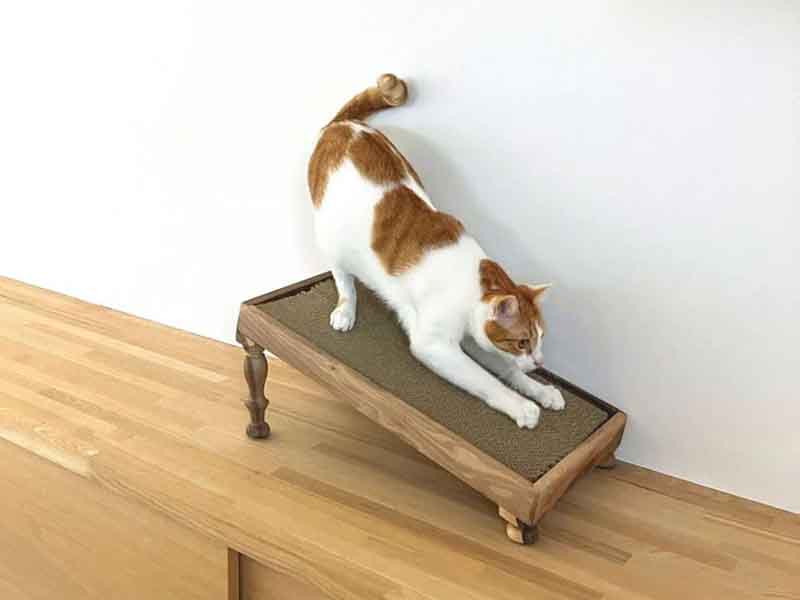
Enter the Orneko Walnut Wood Nail Sharpener, a design-forward, walnut-framed scratching solution that tries to solve the eternal cat-owner
dilemma: How do we let cats be cats without turning our living room into a shredded textile exhibit? Think of it as a “scratch zone” that looks
like actual furniturebecause it kind of is.
What Is the Orneko Walnut Wood Nail Sharpener, Exactly?
Despite the name, this isn’t a blade sharpener (no tiny swords, sadly). It’s a cat scratcher: a walnut wood frame designed to hold a replaceable corrugated
cardboard scratch insert. The goal is simplegive your cat an irresistible place to scratch, stretch, and maintain their claws, while giving your home a
piece that doesn’t scream “PET AISLE, 2007.”
Orneko is a design-focused pet line born out of the idea that cat essentials shouldn’t look like emergency camping gear. Their aesthetic leans warm, minimal,
and “this could plausibly be in a tasteful apartment where someone owns matching glassware.”
Why Cats Scratch: Not Spite, Just Biology (And a Little Drama)
Scratching is normal. It’s also productivecats scratch to stretch, to mark territory (hello, scent glands in the paws), and to help remove the outer nail
sheath so fresh claw growth can do its thing. Your cat isn’t trying to ruin your life; they’re basically doing nail care and Pilates at the same time.
The trick is that cats don’t ask, “What would my human prefer?” They ask, “What feels amazing under my toes?” Which is why the couch often wins:
it’s tall-ish, sturdy, textured, and positioned in the prime “everyone can see me” areaalso known as the cat’s marketing department.
Design Details That Matter: Walnut Frame + Replaceable Cardboard
The Orneko Walnut Wood Nail Sharpener is essentially a walnut wood “table-like” frame that cradles a cardboard scratch surface.
It’s sized to be stable and substantial, with a low profile that works well for cats who love horizontal scratching. And because the scratch surface
is the part that takes the abuse, it’s designed to be replacedso you’re not tossing the whole piece once it looks “well-loved.”
Key specs (the practical stuff your cat won’t read, but you should)
- Overall footprint: roughly 27.3 cm wide x 52 cm deep x 20.5 cm high (with a lower section around 6.7 cm high).
- Internal frame space: roughly 24.5 cm wide x 49 cm deep x 2.7 cm high (where the scratch insert sits).
- Weight: about 1.1 kgheavy enough to feel more “anchored” than flimsy cardboard loungers.
- Replaceable scratch insert guidance: a common replacement size is about 49 cm x 11.5 cm x 2.5 cm, using two pieces.
Translation: it’s built like a tidy wooden shell around the sacrificial cardboard. The walnut adds warmth and structure; the cardboard does the messy,
satisfying shredding your cat is morally entitled to.
Why Walnut Wood Is a Smart Choice (Besides Looking Expensive)
Walnutespecially American black walnutis valued for being strong, durable, and visually rich. It’s known for a deep brown heartwood, a tight grain,
and a finish that can develop an appealing patina over time. In plain English: it can take daily life without looking tired, and it tends to age
gracefully rather than tragically.
That matters for a cat product because a scratcher sits low, gets bumped, gets vacuumed around, and occasionally gets judged by visitors. Walnut keeps
the piece feeling like “furniture” rather than “pet accessory,” which is the entire point of Orneko’s vibe.
Will a “Nail Sharpener” Actually Help Your Cat’s Claws?
Scratching supports healthy claw maintenance by helping remove the older outer layers (the sheath) and giving cats a way to stretch their shoulders and back.
It can also reduce how often your cat chooses your furnitureif you make the scratcher more appealing than the illegal thrill of the couch.
The best-case scenario
Your cat adopts the scratcher quickly, uses it daily, and your sofa becomes boring again. You may still see occasional “testing” scratches (cats are quality
control professionals), but the bulk of the scratching moves to the right place.
The realistic scenario
Your cat uses both for a while. You guide them toward the Orneko piece with smart placement and positive reinforcement. Over time, the Orneko scratcher
becomes the defaultespecially if it’s placed where your cat already likes to scratch.
How to Get Your Cat to Use the Orneko Walnut Wood Nail Sharpener
Cats don’t need a lecture; they need a better offer. Here’s how to make the scratcher the best offer in the room.
1) Put it where the “crime” is happening
If your cat scratches the couch corner, place the Orneko scratcher nearby. If they scratch near the doorway when you come home, stage it there.
Location is not optionalit’s basically 80% of behavior change.
2) Make it smell and feel like a “yes”
- Rub a little catnip on the scratch surface (if your cat responds to catnip).
- Use interactive play near itwand toys are great for “accidentally” encouraging paws-on contact.
- Reward use immediately: praise, treats, or a quick favorite snack.
3) Don’t do the “grab paw, rub paw on scratcher” move
It’s tempting. It’s also a common way to make the scratcher feel suspicious. Many animal welfare resources recommend avoiding forced paw placement because
it can create stress and avoidance.
4) Offer variety if your cat is picky
Some cats prefer vertical scratching; others prefer horizontal. Some want sisal, others want cardboard, others want wood. If your cat is a connoisseur,
keep the Orneko scratcher as the “nice furniture option,” but consider pairing it with one taller scratch post elsewhere so your cat can full-body stretch.
Maintenance: Keeping Walnut Pretty and Cardboard Functional
Replacing the scratch insert
The cardboard will wear downsometimes quickly, sometimes slowly, depending on your cat’s enthusiasm and whether they believe they’re training for a
scratching marathon. When it looks flattened, overly shredded, or no longer satisfying, swap it out. The nice thing about a replaceable system is you’re
refreshing the “good part” without replacing the whole object.
Cleaning the walnut frame (without ruining it)
- Dust regularly with a soft, dry microfiber cloth.
- Spot-clean gently with a barely damp cloth and dry immediately.
- Avoid harsh cleaners (ammonia, strong solvents, abrasive scrubbers) that can damage finishes.
- Use felt pads under legs if you’re placing it on delicate floors, and to reduce sliding.
If your home is very dry or very humid, consider keeping the scratcher away from direct heat vents or damp zones. Wood is a natural material; it appreciates
a stable environmentkind of like a cat, honestly.
Where This Product Shines: The “Pet Furniture That Doesn’t Look Like Pet Furniture” Crowd
The Orneko approach is for people who want cat gear to blend in. It’s especially appealing in homes with mid-century, Japandi, Scandinavian, or minimalist
interiors, where neon plush cat towers can feel like visual heckling.
It’s a strong fit if:
- You want a horizontal scratcher that looks intentional.
- Your cat loves corrugated cardboard scratchers but you hate how they look.
- You like the idea of replaceable inserts to reduce waste and keep things fresh.
- You’re building a multi-zone scratch strategy (one pretty scratcher in the living space + other options elsewhere).
It may not be the best first pick if:
- Your cat only scratches vertically and refuses horizontal boards.
- You need a budget scratcher for a newly adopted cat whose preferences aren’t clear yet.
- Your cat is a “destroy everything in 48 hours” specialist and you’d rather start with cheaper scratchers.
Practical Strategy: Pair It With Claw Trims (Not as a Replacement, But as a Team)
A scratcher supports natural claw maintenance, but it doesn’t always stop sharp tips from becoming needle-level sharpespecially in indoor cats who don’t
wear down their claws outdoors. Many animal care organizations recommend regular, gentle nail trims, typically every couple of weeks, depending on the cat.
If trimming is stressful for your cat (or for you), ask a vet or groomer for help. The goal is comfort and safetynot turning nail day into a dramatic
reenactment of a wild-caught tiger documentary.
FAQ: Quick Answers for Real Life
Is this a “declawing alternative”?
Yesin the sense that providing appropriate scratching surfaces, training, and regular claw care are widely recommended humane approaches. Declawing is
strongly discouraged by many animal welfare organizations because it’s an amputation procedure with potential behavioral and health consequences.
Will it stop my cat from scratching the couch?
It can help a lot, but it’s not magic. Best results come from:
(1) placing it near the couch, (2) making the couch temporarily less attractive (covers or deterrents),
and (3) rewarding scratcher use like your cat just won a small award.
How long will the cardboard last?
It depends on the cat. Some cats politely scratch; others try to carve a tunnel to Narnia. Expect to replace the insert periodically and consider keeping
spare replacements on hand once you confirm your cat loves it.
Can multiple cats share it?
They can, but cats often prefer multiple scratching stations in multi-cat homes. A good rule of thumb is “more than one scratch option,” especially in
high-traffic zones.
Conclusion: A Scratch Solution That Respects Your Catand Your Living Room
The Orneko Walnut Wood Nail Sharpener is what happens when someone says, “Cats deserve scratching outlets, and humans deserve nice things,”
and then actually follows through. It’s a thoughtful blend of form and function: a stable walnut frame, a replaceable scratch surface, and a design that
won’t hijack your decor.
If your cat likes cardboard scratchers and you’re tired of hiding them behind plants like a guilty secret, this is a genuinely elegant upgrade. Pair it with
smart placement, positive reinforcement, and basic claw care, and you have a realistic path toward fewer “surprise fabric renovations.”
Experience Notes: What Using a Walnut-Framed Scratcher Tends to Feel Like (Realistic Scenarios)
In many homes, the first “aha” moment isn’t when the cat scratchesit’s when the human realizes the scratcher can sit in the living room without being
apologized for. A walnut frame reads like furniture, so people tend to place it in the exact spot that matters: near the couch corner, under the window,
or beside the entryway where the cat greets everyone like a tiny landlord. That placement tends to improve adoption, because the scratcher is suddenly in
the cat’s preferred scratching zone instead of tucked away in the “pet stuff” corner where nothing interesting ever happens.
A common pattern is a two-week transition. Week one: the cat investigates, scratches once, then returns to the couch because habits are stubborn. Week two:
the household gets strategiccatnip gets sprinkled lightly, a wand toy “accidentally” leads paws across the cardboard, and treats appear the moment scratching
happens in the right place. The couch often gets temporarily covered or protected, not as punishment, but as a way to make the old target less satisfying
while the new one becomes the obvious choice. Over time, many cats start using the scratcher as a daily stretch station, especially after naps.
For picky scratchers, the texture and orientation matter. Cats who love corrugated cardboard usually take to the insert quickly, especially if it’s stable
and doesn’t slide. The walnut frame adds a grounded feelingless wobble, less “I tried it once and it betrayed me.” Owners often notice that the scratcher
becomes part of a routine: a scratch after breakfast, a scratch after the zoomies, a scratch right before sitting in a sunbeam like they’re powering up.
If you’ve ever wanted your cat to have a wellness ritual that doesn’t involve knocking over a water glass, this helps.
The replacement cycle is where expectations get real. Some cats shred inserts fast, and that’s not failurethat’s success. Many people find that having a
replaceable insert actually reduces frustration because you’re not watching a whole product “age poorly.” You’re swapping a consumable part, like replacing
a coffee filter instead of buying a new coffee maker. And because the frame stays attractive, you don’t feel like you’re constantly reintroducing a new
object that your cat must re-approve via lengthy sniff audits.
In multi-cat homes, the scratcher can become a shared hotspotsometimes peacefully, sometimes like a tiny gym where everyone wants the same treadmill.
Owners often solve this by treating the Orneko piece as the “public lounge scratcher” and adding a second scratch station elsewhere (a tall post or another
cardboard board). That two-station approach tends to reduce competition and increases the odds that at least one scratch option is always convenient.
The overall experience, when it clicks, is simple: fewer furniture scratches, happier cats, and a living space that feels designednot dominated.