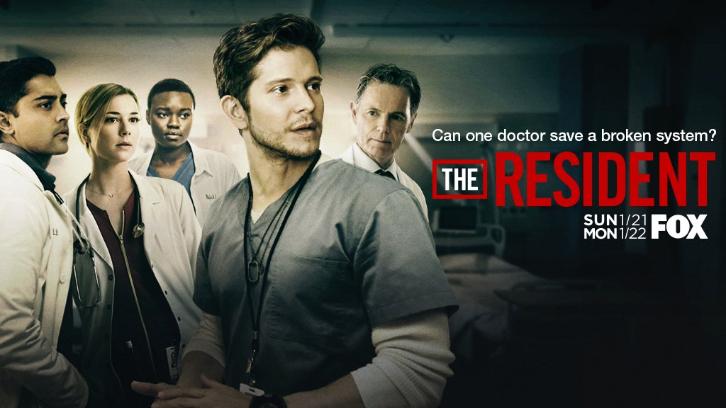
FOX’s The Resident has always been the medical drama equivalent of a doctor who walks into the room, skips the small talk, and says, “Your hospital bill is the real villain here.” Subtle? Not exactly. But effective? More than its critics sometimes admit.
Premiering on FOX in 2018 and running for six seasons, The Resident followed the doctors, nurses, surgeons, executives, and patients of the fictional Chastain Park Memorial Hospital in Atlanta. At first glance, it looked like another glossy network medical drama: attractive doctors, impossible diagnoses, emotional music, and enough hallway walking to qualify as cardio. But beneath the dramatic cases and soap-opera twists, the series had a sharper mission. It wanted to pull back the curtain on the American health-care systemits brilliance, its bureaucracy, its greed, its burnout, and its moments of breathtaking humanity.
Was The Resident always medically realistic? No. Did every episode whisper sweet nothings to peer-reviewed accuracy? Also no. But judging a network drama as if it were a hospital training manual misses the point. The Resident was not trying to replace medical school. It was trying to make viewers care about the systems behind the scrubs. And on that front, it deserves a much stronger defense.
Why The Resident Was More Than “Just Another Medical Drama”
Medical dramas are one of television’s most durable comfort foods. From ER to Grey’s Anatomy to House, audiences love stories where life-and-death decisions happen under bright lights and time pressure. The genre comes with familiar ingredients: a brilliant doctor, a difficult case, a ticking clock, and at least one person yelling “push one of epi!” while nobody in the room seems fully hydrated.
The Resident used those ingredients, but it seasoned them differently. Its central tension was not simply “Can the doctors save the patient?” It was often “Will the system let the doctors do the right thing?” That difference matters. The show repeatedly examined medical billing, hospital ownership, device companies, pharmaceutical influence, insurance barriers, profit-driven leadership, diagnostic mistakes, and the emotional cost of working inside a system that asks healers to behave like accountants with stethoscopes.
Conrad Hawkins Was Not a Perfect Heroand That Was the Point
Matt Czuchry’s Dr. Conrad Hawkins entered the series as a tough senior resident with a charming smirk and a rulebook that seemed mostly decorative. He was not written as a polite poster boy for hospital professionalism. He was abrasive, impatient, suspicious of authority, and occasionally so confident that viewers could almost hear the malpractice attorney stretching in the background.
But Conrad’s edge gave the show its moral engine. He was the character who saw medicine as a duty before it was a business. His methods were dramatic, but his anger was directed at real anxieties: patients being overcharged, ignored, misdiagnosed, rushed, or reduced to numbers on a spreadsheet. He was not always right, but he usually cared for the right reasons. That distinction gave The Resident its pulse.
The Show’s Best Defense: It Took the Business of Medicine Seriously
One of the most interesting things about The Resident is that its villains were rarely simple monsters. Yes, some characters made cartoonishly bad decisions. This is television, after all; nobody tunes in hoping for 43 minutes of quiet compliance paperwork. But many of the show’s conflicts came from pressures that exist in real health care: budgets, staffing shortages, insurance rules, public relations, corporate ownership, risk management, and the tension between what patients need and what institutions can afford.
That is where The Resident distinguished itself. It understood that modern medicine is not just a noble profession. It is also an industry. Hospitals can save lives and still be financially brutal. Doctors can be compassionate and still trapped inside a system that rewards volume. Patients can receive excellent care and still leave with bills that feel like they were calculated by a casino wearing a lab coat.
In that sense, the show’s cynicism had a purpose. It did not say doctors are bad. It said the system can make good people fight uphill. That is a far more interesting argument than “medicine is heroic” or “medicine is corrupt.” The Resident lived in the uncomfortable middle, where most real-life debates about health care actually happen.
Randolph Bell Became the Show’s Secret Weapon
Bruce Greenwood’s Dr. Randolph Bell began as a surgeon with shaky hands, a powerful title, and a talent for self-preservation. In a weaker show, Bell might have remained a one-note symbol of medical arrogance. Instead, The Resident did something smarter: it let him evolve.
Bell’s transformation from compromised power player to more reflective, patient-focused physician became one of the series’ strongest long arcs. He did not magically become perfect. He carried the weight of his past choices, which made his growth feel earned. His later relationship with Dr. Kit Voss added warmth without erasing complexity. Bell’s journey argued that accountability and redemption can coexista theme that gave the show surprising emotional depth.
The Resident Had a Stronger Ensemble Than It Often Got Credit For
The early marketing leaned heavily on Conrad, but the show’s real strength was its ensemble. Dr. Devon Pravesh, played by Manish Dayal, gave the audience a classic entry point: the idealistic young doctor discovering that medicine is messier than textbooks promised. Devon’s growth from nervous intern to confident physician helped ground the show’s bigger swings.
Emily VanCamp’s Nic Nevin brought emotional intelligence and patient advocacy to the center of the story. Shaunette Renée Wilson’s Mina Okafor added precision, ambition, humor, and a fierce sense of professional excellence. Malcolm-Jamal Warner’s AJ Austin, known as “The Raptor,” arrived with swagger but stayed because of heart. Jane Leeves’ Kit Voss gave the later seasons a needed blend of authority, wit, and moral clarity. Together, these characters made Chastain feel less like a backdrop and more like a workplace full of competing ideals.
Its Female Characters Were More Than Emotional Support
One underrated part of The Resident is how often its women were written as professionally formidable. Nic was not just Conrad’s love interest; she was a nurse practitioner whose instincts and advocacy mattered. Mina was not merely “brilliant but difficult”; she was a gifted surgeon navigating ambition, identity, immigration pressures, and institutional politics. Kit was not a decorative administrator; she was a leader with actual backbone.
The show was not flawless in every character decision, but it repeatedly gave women agency inside medical and administrative spaces. They made diagnoses, challenged authority, performed surgeries, managed crises, and called out nonsense when nonsense entered the room wearing a suit.
Critics Were Right About Some ThingsBut Not Everything
To defend The Resident honestly, we have to admit the obvious: the show could be melodramatic. Very melodramatic. Occasionally, it treated subtlety the way a surgeon treats an infected appendix: remove it quickly and move on.
Some early reviews criticized the show for being too cynical, too exaggerated, or too eager to portray hospital politics as sinister. Those criticisms were not baseless. The first season sometimes hit its themes with a hammer, then looked around for a larger hammer just in case anyone missed the message. Certain medical scenarios were heightened for drama. Some villains were painted in extra-dark ink. And yes, doctors watching at home may have occasionally thrown popcorn at the screen.
But melodrama is not automatically failure. In television, exaggeration can be a tool. The Resident used big stories to ask big questions: Who profits when patients suffer? What happens when hospital leadership prioritizes margins over safety? How much can good clinicians do when the institution itself is sick?
Those are not silly questions. They are exactly the kind of questions a mainstream network drama should be brave enough to ask.
The Resident Understood Patient Advocacy
At its best, The Resident was a show about listening. Many episodes revolved around patients who were dismissed, misunderstood, or trapped in a system that moved too fast. The doctors who succeeded were often the ones who slowed down long enough to notice what did not fit.
That message has real value. Viewers do not need to learn how to perform a thoracotomy from a television series. Please do not try that at home, or anywhere else, unless you are properly trained and surrounded by people who know where the sterile gloves live. But viewers can learn to ask questions, seek second opinions, understand their medications, bring someone with them to appointments, and speak up when something feels wrong.
The Resident made patient advocacy dramatic, but it also made it memorable. That is a legitimate contribution. A show does not have to be clinically perfect to encourage people to be more active participants in their own care.
The Medical System Was the Real Recurring Character
Chastain Park Memorial Hospital was fictional, but it represented a familiar battlefield. Every season explored a different version of the same problem: medicine is full of people trying to heal others while navigating systems that are expensive, complicated, and sometimes unfair.
That is why The Resident aged better than some early critics expected. Conversations about health-care costs, medical debt, access to care, staffing strain, diagnostic safety, and corporate influence have only become more urgent. The show’s tone may have been heightened, but its target was not imaginary.
Why the Cancellation Still Feels Like a Loss
FOX canceled The Resident after its sixth season, ending the series with 107 episodes. From a business perspective, the decision was understandable. Ratings matter. Network schedules are ruthless. Television executives do not keep shows alive because fans lovingly make GIFs of attractive doctors staring intensely at each other under fluorescent lighting.
Still, the cancellation felt disappointing because The Resident had developed a clear identity. By the final season, the show knew what it was: a character-driven medical drama with a social conscience. It had built relationships viewers cared about, especially Conrad’s life after loss, Devon and Leela’s future, Bell and Kit’s late-blooming love story, and the ongoing fight to keep Chastain alive as more than a profit machine.
The series finale, “All Hands on Deck,” worked surprisingly well as a farewell. It tied off major emotional threads while leaving the hospital’s doors feeling open. That is the best kind of ending for a medical drama: not a full stop, but the sense that somewhere, somehow, somebody is still rushing into an emergency room with a clipboard and a terrible insurance plan.
In Defense of The Resident’s Imperfections
The strongest defense of The Resident is not that it was perfect. It was not. Its medical cases sometimes sprinted past realism. Its dialogue could be blunt. Its villains occasionally arrived with flashing neon signs reading “ETHICAL PROBLEM AHEAD.” But perfection is not the only measure of a show’s worth.
The Resident had conviction. It had personality. It had a point of view. In an era when many network dramas are engineered to be pleasant background noise, this show wanted to provoke conversation. It wanted viewers to think about why health care costs so much, why patients fall through cracks, why clinicians burn out, and why compassion is harder to practice when every decision is filtered through money.
That ambition deserves credit. The show may have worn its heart on its scrub sleeve, but at least it had one.
What Other Medical Dramas Can Learn From The Resident
Future medical dramas should steal three lessons from The Resident. First, make the institution part of the story. Hospitals are not just settings; they are ecosystems with politics, hierarchies, budgets, and moral trade-offs. Second, let characters evolve. Bell’s arc worked because the show allowed him to be more than his worst decisions. Third, trust audiences with systemic issues. Viewers can handle more than romance and rare diseases. They can handle policy, ethics, economics, and moral ambiguityas long as the story has emotional stakes.
The Resident proved that a network drama can be entertaining while still poking at uncomfortable truths. It did not always do so with surgical precision. Sometimes it used a chainsaw. But even then, it was cutting into something real.
Viewer Experience: Why Defending The Resident Feels Personal
Defending The Resident often feels less like arguing about a television show and more like defending a messy friend who occasionally says too much at dinner but is usually right about the important things. Plenty of viewers came for the medical emergencies and stayed for the moral arguments. That is a rare trick. Many shows can make an audience gasp. Fewer can make them pause afterward and wonder whether the patient, the doctor, or the billing department was the most terrifying part of the episode.
The experience of watching The Resident is also different from watching a purely comforting hospital drama. This is not a show that wraps every episode in warm blankets and says, “Do not worry, the system works beautifully.” Instead, it says, “The system works sometimes because exhausted people keep forcing it to.” That can be stressful, but it can also be validating. Anyone who has argued with insurance, waited too long for answers, worried about a hospital bill, or felt unheard in a medical setting can recognize the emotional truth beneath the dramatic packaging.
There is also a pleasure in watching competent people fight for competence itself. Conrad, Devon, Nic, Mina, AJ, Kit, Bell, Leela, Billie, and others were not compelling because they were flawless. They were compelling because they kept showing up. They lost patients. They made mistakes. They fought each other. They grieved. They changed. Then they walked back into the hospital because someone needed help. That rhythm gave the show emotional credibility even when a plot twist was doing cartwheels in the background.
For many fans, the best moments were not the biggest medical miracles but the smaller acts of loyalty: a doctor refusing to give up on a confusing case, a nurse noticing what others missed, a mentor protecting a younger physician, a team choosing patient care over institutional convenience. Those scenes made Chastain feel like a place worth defending. Not because it was perfect, but because the people inside it were still trying.
The show’s humor helped too. The Resident could be intense, but it was not humorless. AJ’s confidence, Kit’s dry wit, Bell’s late-career humility, and Conrad’s professional talent for irritating authority figures kept the series from becoming a weekly lecture with scalpels. The banter gave viewers room to breathe. In a drama about illness, money, grief, and ethical compromise, that breathing room mattered.
Rewatching the show after its cancellation can even make its flaws feel more forgivable. The early rough edges become part of its identity. The big swings feel refreshing. The moral bluntness feels less like overstatement and more like a show refusing to politely look away. In a media landscape crowded with safe content, The Resident had the nerve to be opinionated. It believed hospitals could be heroic and broken at the same time. It believed doctors could be brilliant and deeply human. It believed patients deserved more than sympathy; they deserved advocates.
That is why the show still earns defense. Not because every episode was a masterpiece, but because it cared loudly. And sometimes loud caring is exactly what a medical drama needs.
Conclusion: The Resident Deserves a Second Diagnosis
The Resident was never the quiet, perfectly calibrated prestige drama some critics wanted. It was bold, emotional, sometimes outrageous, and frequently unsubtle. But it was also smart about the pressures shaping American medicine. It gave viewers memorable characters, meaningful arcs, and a medical drama that understood the hospital itself could be both sanctuary and battlefield.
In defense of FOX’s The Resident, the show deserves to be remembered not as a sensationalized hospital soap, but as a flawed, passionate, unusually pointed network drama that dared to ask who medicine really serves. It entertained, irritated, challenged, and comforted. That is not malpractice. That is television with a pulse.