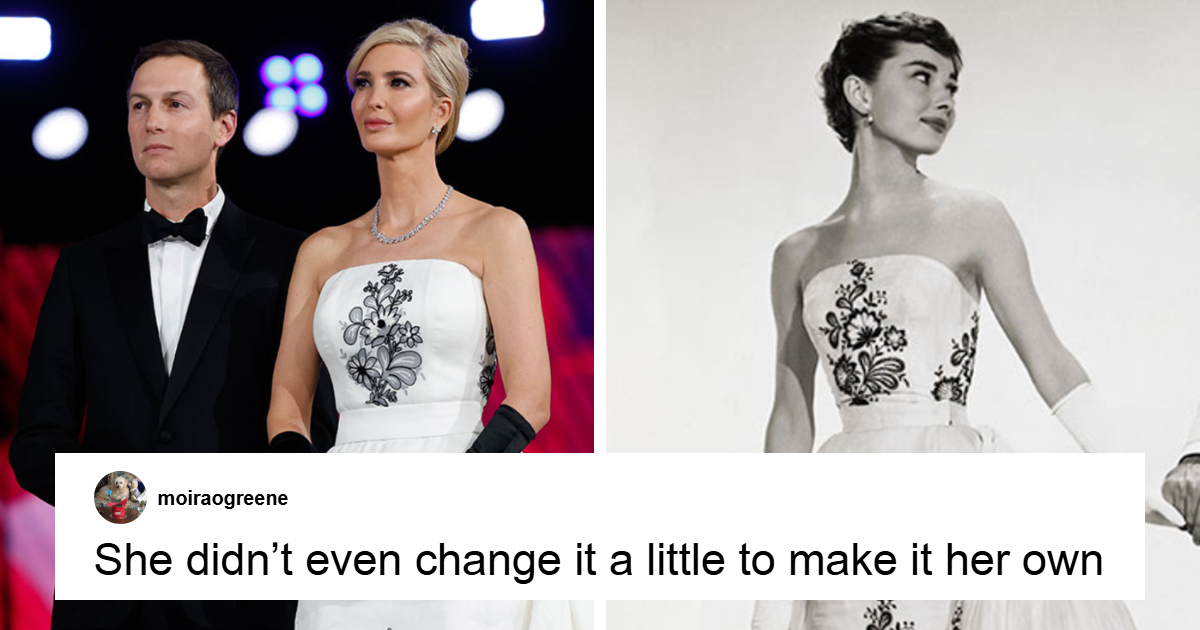
When Ivanka Trump stepped onto the 2025 Liberty Inaugural Ball stage in a black-and-white Givenchy gown inspired by Audrey Hepburn’s famous Sabrina look, the internet did what the internet does best: it put on reading glasses, grabbed a magnifying glass, and launched a full-scale cultural investigation.
The dress was elegant, polished, and unmistakably familiar. It referenced the Hubert de Givenchy design Hepburn wore in the 1954 film Sabrina, a gown that has lived rent-free in fashion history for more than 70 years. Ivanka paired the look with black opera gloves, diamond jewelry, and a sleek updo, creating a direct visual echo of Old Hollywood glamour.
But the tribute quickly became controversial. Some saw the gown as a respectful homage to one of cinema’s most beloved style icons. Others argued that Audrey Hepburn’s legacyespecially her wartime childhood, humanitarian work, and quiet moral seriousnessmade the reference politically complicated. Then Audrey Hepburn’s son, Sean Hepburn Ferrer, responded, adding a more personal layer to a debate that had already become much bigger than one dress.
What Happened With Ivanka Trump’s Audrey Hepburn-Inspired Dress?
Ivanka Trump wore the custom Givenchy Haute Couture gown on January 20, 2025, during events celebrating Donald Trump’s inauguration as the 47th president of the United States. The dress was not the original Sabrina gown, but a modern recreation inspired by the famous black-and-white design associated with Audrey Hepburn.
The gown featured a strapless bodice, black floral detailing, a structured skirt, and dramatic contrast styling. In fashion language, it said, “I have studied the archives.” In internet language, it said, “Please discuss me for 72 hours minimum.” And discuss it people did.
Ivanka’s team framed the look as a tribute. A representative said Hepburn had long been a personal inspiration to Ivanka and that she considered it a privilege to honor the actress’s legacy. Givenchy’s role also mattered: the fashion house was central to Hepburn’s image, and Hepburn’s relationship with Hubert de Givenchy became one of the most famous actress-designer partnerships in Hollywood history.
Why The Dress Sparked Backlash
The backlash was not really about whether the gown was beautiful. Most critics agreed the dress was visually striking. The controversy came from what Audrey Hepburn represents.
For many fans, Hepburn is not simply a fashion reference. She is remembered as a woman who lived through Nazi occupation in the Netherlands during World War II, endured hunger and hardship as a child, built a legendary film career, and later dedicated her final years to UNICEF. Her elegance was not just about gowns, gloves, or perfect posture. It was tied to restraint, empathy, and service.
That is why some observers felt uncomfortable seeing her image invoked at a highly political event. Critics argued that Hepburn’s humanitarian identity could not be separated from her style. To them, copying the dress without carrying the values behind the icon felt incompletelike borrowing the crown but skipping the kingdom.
Others pushed back, saying fashion references do not have to pass a political purity test. Celebrity style has always borrowed from the past, and Hepburn’s influence is so vast that modern tributes are almost inevitable. From red carpets to bridal boards to magazine covers, her image has been reinterpreted again and again.
Audrey Hepburn’s Son Responds
Sean Hepburn Ferrer, Audrey Hepburn’s eldest son, did not condemn Ivanka Trump’s dress. In fact, he said he was not surprised that Ivanka drew inspiration from his mother. He described Hepburn as a timeless reference point for elegance and class, noting that her legacy has become both transgenerational and transnational.
His response was measured rather than fiery. Ferrer acknowledged that Hepburn’s image continues to serve as an anchor for celebrities, actresses, models, and public figures. In other words, Audrey Hepburn remains one of the safest places to land when someone wants to communicate grace, refinement, and old-school glamour.
But Ferrer’s comments also reminded people that Hepburn’s elegance came from more than fashion. He emphasized the inner beauty and spirit behind her image. That distinction is important. A dress can be recreated with fabric, embroidery, and expert tailoring. A legacy is harder to stitch together.
The Complicated Power Of A Fashion Tribute
Fashion tributes are tricky because clothes carry memory. A famous gown is never just a famous gown. It becomes a symbol of a moment, a performance, a person, and sometimes an entire worldview.
Audrey Hepburn’s Sabrina wardrobe helped define her public image. In the film, her character transforms from a chauffeur’s daughter into a sophisticated young woman after time in Paris. The clothes tell that story visually. The gown suggests refinement, self-possession, and the magic of becoming.
When Ivanka Trump wore a recreation of that look, she was not only referencing a dress. She was referencing a cultural fantasy: elegance without effort, power without loudness, beauty with discipline. That is why the reaction was so intense. People were not merely asking, “Does the dress look good?” They were asking, “Who gets to use Audrey Hepburn’s image, and what does that image mean now?”
Why Audrey Hepburn Still Matters In Fashion
Audrey Hepburn’s style has survived because it is easy to recognize and hard to cheapen. Ballet flats, cropped pants, boat necklines, slim black dresses, delicate jewelry, and simple silhouettes still feel fresh because they are built on clarity. Hepburn’s fashion language was never screaming for attention. It whispered, and somehow everyone leaned in.
Her collaboration with Hubert de Givenchy made her a permanent figure in fashion history. Givenchy dressed her for films and public appearances, helping create an image that balanced European refinement with approachable charm. The result was not just celebrity styling. It was brand-building before everyone had a personal brand and a ring light.
That is why designers, stylists, and celebrities continue to reference Hepburn. Her look offers instant recognition. It says “classic” before the wearer has to say anything at all. But the danger is that classic style can become costume if it is copied too directly. A tribute works best when it transforms the source rather than simply reproducing it.
The Difference Between Inspiration And Imitation
One reason Ivanka Trump’s dress created such debate is that it appeared very close to the original inspiration. Some fashion critics prefer references that reinterpret rather than replicate. A modern Hepburn-inspired look might borrow the silhouette, the restraint, or the black-and-white palette while adding something new.
Exact recreations can feel museum-like, which is not always a problem. At a costume exhibition, that is the point. At a political ball, however, the meaning changes. The wearer becomes part of the symbol, and the symbol becomes part of the public conversation.
Ivanka’s choice was bold because it left little room for subtlety. Nobody needed a fashion historian whispering, “This may be a Hepburn reference.” The gown practically walked in carrying a Sabrina DVD. That directness made the tribute instantly recognizable, but it also made it easier to criticize.
Audrey Hepburn’s Humanitarian Legacy
Any serious discussion of Audrey Hepburn has to go beyond style. Later in life, Hepburn became a UNICEF Goodwill Ambassador and traveled to countries including Ethiopia, Bangladesh, Vietnam, and Somalia. She used her fame to draw attention to children affected by famine, poverty, and conflict.
This work was not a celebrity side quest. It became central to her later identity. Hepburn spoke often about having received help as a hungry child after World War II, and she saw her UNICEF work as a way to repay that kindness. Her humanitarian legacy gave her public image a moral depth that many fans protect fiercely.
That is why the dress backlash became emotionally charged. For Hepburn admirers, the issue was not simply political disagreement. It was about whether a person’s visual legacy can be separated from their ethical legacy. In Hepburn’s case, many would say the answer is no.
Why Sean Hepburn Ferrer’s Reaction Mattered
Sean Hepburn Ferrer’s response mattered because he brought family context to a debate dominated by strangers online. Social media can be loud, fast, and allergic to nuance. Ferrer’s comments were calmer. He recognized that his mother’s influence remains enormous while also pointing toward the deeper spirit behind her elegance.
His reaction did not erase the criticism, and it did not turn the controversy into a simple approval stamp. Instead, it complicated the conversation in a useful way. He seemed to understand why Hepburn remains a style reference, but his words also reminded readers that her style cannot be fully understood without her humanity.
That balance is probably the most accurate way to look at the entire episode. Ivanka Trump’s gown was a polished fashion tribute. The backlash was a reminder that icons are not empty mood boards. They belong to memory, history, and values as much as to red carpets and couture archives.
What The Backlash Says About Celebrity Culture Today
The controversy also reveals something about how modern audiences consume fashion. A public figure can no longer wear a historically loaded look and expect people to stop at “pretty dress.” Viewers now analyze references instantly. They compare images, identify designers, dig up interviews, and debate symbolism before the event photographer has finished uploading.
This is not always bad. Fashion has meaning, and audiences are more visually literate than ever. But the speed of reaction can flatten complexity. Within minutes, a look can be labeled brilliant, offensive, iconic, embarrassing, or “a crime against the group chat.” Sometimes it is several of those things at once.
Ivanka Trump’s Audrey Hepburn-inspired gown became a cultural Rorschach test. Supporters saw elegance and homage. Critics saw contradiction and appropriation. Fashion writers saw a debate about archival referencing. Hepburn fans saw a chance to defend a beloved icon. Everyone brought their own lens, and the dress became a screen for bigger arguments.
Lessons From The Ivanka Trump Dress Debate
The first lesson is simple: when referencing an icon, understand the whole icon. Audrey Hepburn was not just a thin silhouette in a beautiful gown. She was a survivor, an actress, a mother, a UNICEF ambassador, and a woman whose grace was shaped by hardship.
The second lesson is that tribute requires context. A strong homage should show awareness, not just admiration. It should answer the quiet question: why this person, why this look, and why now?
The third lesson is that fashion is never neutral when worn in a political setting. A gown at an awards show is one thing. A gown at an inaugural ball is another. The room changes the meaning. The guest list changes the meaning. The date on the calendar changes the meaning.
Personal Experiences And Reflections Related To The Topic
One reason this story resonates is that many people have experienced a smaller version of the same problem: borrowing a style without fully understanding its meaning. Maybe someone wears a vintage military jacket because it looks cool, only to learn it resembles a uniform tied to painful history. Maybe a bride chooses a family heirloom dress and discovers relatives have strong feelings about who should wear it. Maybe a celebrity Halloween costume starts as “fun” and ends as a public apology tour with better lighting.
Clothing often carries emotional baggage, even when it looks light as silk. A dress can remind one person of glamour and another person of grief. A fashion reference can feel like admiration to the wearer but like misuse to someone who guards the original memory. That is what made the Audrey Hepburn and Ivanka Trump debate so intense. It was not only about taste. It was about ownership of meaning.
For everyday readers, the episode offers a useful reminder: style is communication. Before copying a famous look, it helps to ask what story the look tells. Audrey Hepburn’s Sabrina gown tells a story about transformation, Parisian elegance, and cinematic fantasy. Audrey Hepburn’s life tells a larger story about resilience, compassion, and service. The most successful tribute would somehow honor both.
There is also a lesson here for public figures, influencers, and anyone building a personal brand. Referencing a beloved icon can be powerful, but it invites comparison. If you dress like Audrey Hepburn, people may ask whether your public image reflects Audrey Hepburn’s values. If you borrow from Jackie Kennedy, Princess Diana, Grace Kelly, or Michelle Obama, audiences may measure the outfit against the person behind the reference. Fashion may open the door, but character walks in right behind it.
At the same time, the backlash should not make people afraid of inspiration. Fashion has always been a conversation between past and present. We learn by referencing. We remix. We adapt. We wear things our mothers loved, our grandmothers saved, and old movie stars made immortal. The goal is not to avoid references altogether. The goal is to approach them with intelligence and humility.
In that sense, Sean Hepburn Ferrer’s response may be the most valuable part of the story. He did not reduce his mother to a dress, but he did not deny that her style continues to inspire the world. He pointed back to the inner qualities that made the outer elegance meaningful. That is the part worth remembering after the social media storm fades.
Audrey Hepburn’s image remains powerful because it combines beauty with restraint, fame with service, and glamour with moral seriousness. Ivanka Trump’s dress brought that image back into public debate, but the debate itself proved something important: Audrey Hepburn is still not just a look. She is a standard. And standards, unlike trends, do not disappear after one news cycle.
Conclusion
Ivanka Trump’s Audrey Hepburn-inspired Givenchy gown was more than an inaugural ball fashion moment. It became a debate about legacy, symbolism, politics, and the responsibility that comes with borrowing from cultural icons. Sean Hepburn Ferrer’s response added nuance, acknowledging his mother’s timeless elegance while reminding the public that her true beauty came from her spirit and humanitarian work.
The backlash shows that Audrey Hepburn’s legacy remains deeply personal to fans. Her style can still inspire, but her life asks for more than imitation. A dress may recreate the silhouette, but only compassion, humility, and purpose can honor the woman who wore it first.
Note: This article is based on publicly reported information about Ivanka Trump’s 2025 Givenchy gown, Sean Hepburn Ferrer’s response, Audrey Hepburn’s fashion history, and her humanitarian work with UNICEF.