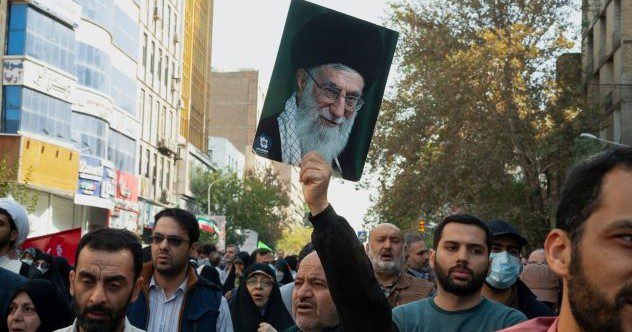
In some countries, religion and politics are neighbors. In others, they are roommates. And in a few, they are basically wearing the same sweater and arguing over who controls the thermostat. Around the world, governments handle religion in dramatically different ways: some separate church and state by law, some favor a national faith, and others build their entire political structure around religious authority.
This does not mean every country on this list is a theocracy. That word gets tossed around like confetti at a political rally, but it has a specific meaning. Some nations here are ruled directly by religious authorities. Others are constitutional democracies, monarchies, or hybrid systems where religious identity shapes laws, public office, family life, citizenship, or national identity. The common thread is simple: religion is not just a private belief system. It is part of how power works.
Below are 10 countries where religion and politics are deeply intertwined, with real-world examples of how faith influences law, leadership, national identity, and everyday governance.
Why Religion and Politics Become So Closely Linked
Religion often becomes political because it answers questions that governments also care about: Who belongs? What is moral? Who has authority? What should be taught in schools? Who can marry whom? What symbols represent the nation? Once religious ideas are written into constitutions, courts, citizenship rules, or leadership structures, they stop being only spiritual matters and become political infrastructure.
In many places, this link has historical roots. A monarchy may have used religion to legitimize royal power. A revolutionary movement may have built a new state around religious law. A postwar settlement may have divided political offices among religious communities to prevent conflict. In other cases, majority religion becomes a national brand, used by political parties to win elections or claim cultural authenticity.
The result can be stable, symbolic, restrictive, or explosive depending on the country. Religion can provide unity and shared values, but it can also create sharp boundaries between insiders and outsiders. When the state favors one faith, minority groups may face legal barriers, social suspicion, or political underrepresentation. That is where the story gets complicatedand very human.
10 Countries Where Religion and Politics Are Inseparable
1. Iran: The Islamic Republic Built Around Clerical Authority
Iran is one of the clearest modern examples of religion and politics fused into a governing system. Since the 1979 Islamic Revolution, the country has been organized as an Islamic Republic rooted in Twelver Jaafari Shia Islam. Its constitution requires laws and public rights to conform to Islamic criteria, and its political system gives enormous authority to religious institutions.
The central idea is velayat-e faqih, often translated as “guardianship of the jurist.” In practical terms, this means a senior Islamic jurist holds supreme authority over the state. The Supreme Leader sits above elected officials and influences the military, judiciary, state media, and major policy decisions. The Guardian Council also plays a crucial role by reviewing legislation and vetting political candidates.
This creates a system where elections exist, but they operate inside religious boundaries. Voters may choose among candidates, but powerful clerical institutions decide who is allowed to run and whether laws fit the Islamic framework. For ordinary citizens, the state’s interpretation of religion can affect dress codes, speech, education, gender roles, and minority religious rights. In Iran, religion is not simply part of politics; it is the architecture holding the system together.
2. Saudi Arabia: A Monarchy Where Law and Islam Are Interlocked
Saudi Arabia is another country where religion is woven directly into the state. The kingdom’s Basic Law identifies Islam as the official religion and describes the Quran and Sunnah as the country’s constitution. Governance is monarchical, but its legitimacy is tied closely to Islamic law and religious tradition.
For decades, the Saudi state has been shaped by an alliance between the royal family and religious authorities. Although the country has introduced social reforms in recent yearsespecially around entertainment, tourism, and women’s public participationreligion still strongly influences law and public life. The legal system is based largely on sharia, and public non-Muslim worship remains tightly restricted.
Saudi Arabia is especially interesting because it is changing without fully separating religion from politics. The government wants global investment, luxury tourism, and futuristic cities, but it also maintains a religiously grounded legal identity. In other words, you may see a Formula 1 race, a music festival, and a deeply conservative legal system existing in the same national storyline. That is not contradiction by accident; it is the Saudi balancing act.
3. Vatican City: The World’s Most Literal Religious State
Vatican City may be tiny, but politically speaking, it is a giant example of church and state as one entity. The pope is not only the spiritual leader of the Roman Catholic Church; he is also the sovereign of Vatican City. According to Britannica, the pope holds supreme executive, legislative, and judicial power in the city-state.
Unlike many countries where religion influences politics indirectly, Vatican City exists specifically to support the independence of the Holy See and the global mission of the Catholic Church. Its government is not built around competing political parties, mass elections, or secular public debate. It is an ecclesiastical state where religious office and political authority are formally combined.
Of course, Vatican City is unusual because it governs a very small population and a very large spiritual network. Its political influence is diplomatic and symbolic more than territorial. Still, it deserves a place on this list because nowhere else is the relationship so direct: the head of a global church is also the head of a sovereign state. That is not separation of church and state. That is church with a postal service.
4. Afghanistan: The Taliban’s Religious Rule
Afghanistan under Taliban control is a stark example of political rule justified through a strict interpretation of Islam. Since returning to power in 2021, the Taliban has reshaped public life through religious decrees, morality enforcement, and policies that sharply restrict women, minorities, dissenters, and many forms of public expression.
The Taliban describes its rule through the language of Islamic governance, and its leaders have emphasized sharia over Western-style democracy. The Ministry for the Propagation of Virtue and Prevention of Vice plays a major role in enforcing public behavior, including dress, movement, gender interaction, and media restrictions.
For many Afghans, the fusion of religion and politics is not an abstract constitutional question. It affects whether girls can attend school, whether women can work, whether religious minorities can worship safely, and whether disagreement is treated as political opposition or religious deviance. Afghanistan shows how inseparable religion and politics can become when the state claims authority not just over law, but over moral life itself.
5. Pakistan: An Islamic Republic with Powerful Religious Laws
Pakistan’s official name is the Islamic Republic of Pakistan, and that is not decorative branding. The constitution establishes Islam as the state religion and requires laws to be consistent with Islamic injunctions. Institutions such as the Federal Shariat Court and the Council of Islamic Ideology help connect religious principles to lawmaking and judicial review.
The most internationally discussed example is Pakistan’s blasphemy law framework. These laws impose severe penalties for insulting Islam, the Quran, or the Prophet Muhammad. Even when courts do not carry out the harshest sentences, accusations alone can trigger mob violence, fear, and political pressure. Religious minorities, including Christians, Hindus, Ahmadis, and Shia Muslims, often face special vulnerability.
Pakistan is not governed by clerics in the same way Iran is, but religion still shapes political identity, legal authority, and public debate. Politicians must navigate religious parties, clerical influence, public sentiment, and constitutional Islamic provisions. In Pakistan, religion is not outside the state looking in. It has a reserved seat at the tableand sometimes it speaks very loudly.
6. Israel: A Jewish State with Religious Authority in Public Life
Israel is a parliamentary democracy, but it is also constitutionally and politically defined as a Jewish state. That dual identityJewish and democratichas shaped the country from its founding and remains one of its most debated features.
Religion influences public life most clearly in personal status issues. Israel does not conduct civil marriages inside the country; marriage and divorce are handled through religious authorities for Jews, Muslims, Christians, and Druze. For Jewish citizens, the Orthodox Chief Rabbinate controls many matters related to marriage, divorce, conversion, burial, kosher certification, and religious standards.
Religious parties also play an outsized role in coalition politics. Because Israeli governments often require multi-party coalitions, small religious parties can become kingmakers. This affects debates over military service exemptions for ultra-Orthodox men, Sabbath public transportation, education funding, conversion standards, and family law. Israel shows that religion and politics can be inseparable even inside a competitive democratic system.
7. Lebanon: A Political System Divided by Religious Community
Lebanon is not a theocracy. It is something different: a confessional political system. That means power is formally distributed among religious communities. Under Lebanon’s long-standing arrangement, the president is a Maronite Christian, the prime minister is a Sunni Muslim, and the speaker of parliament is a Shia Muslim.
This system was designed to balance Lebanon’s complex religious diversity and prevent any single community from dominating the state. In theory, it protects pluralism. In practice, it can also freeze politics into sectarian categories and strengthen elite networks built around religious identity.
Lebanon’s confessional system affects everything from cabinet formation to parliamentary representation. Political parties often function as sectarian power centers, and personal status issues such as marriage, divorce, and inheritance are handled through religious courts. The upside is recognition of diversity; the downside is that citizens may feel trapped inside inherited communal labels. Lebanon’s politics are like a group project where every religious community has a required role, and nobody can leave the meeting early.
8. Egypt: Islam, Sharia Principles, and State Authority
Egypt’s constitution identifies Islam as the state religion and the principles of sharia as the main source of legislation. That one sentence has enormous political weight. It does not make Egypt a clerical state like Iran, but it ensures Islamic legal principles remain central to constitutional interpretation and public debate.
Egypt also gives special status to Al-Azhar, one of the most important institutions in Sunni Islam. Al-Azhar’s scholars and religious authority influence debates over Islamic doctrine, education, and social policy. At the same time, the modern Egyptian state is highly centralized and politically authoritarian, meaning religious authority and state power often interact in complex ways.
Religious identity also affects public life for Christians, Baha’is, atheists, Shia Muslims, and other minorities. While the state recognizes some religious communities, the legal and social space for non-recognized beliefs remains limited. Egypt illustrates how religion can be embedded in law while the government still remains controlled by a powerful secular-style presidency and security state.
9. Malaysia: A Dual Legal System with Islam at the Center
Malaysia’s constitution says Islam is the religion of the Federation, while other religions may be practiced in peace and harmony. That sounds simple, but Malaysia’s legal and political reality is anything but simple. The country has a dual system in which civil courts operate alongside sharia courts that apply to Muslims in areas such as family law, inheritance, religious conversion, and moral offenses.
Religion is also tied to ethnic identity. In Malaysia, ethnic Malays are legally understood to be Muslim, making Islam not only a religious category but also a constitutional and political identity. This connection influences affirmative action policies, party politics, education, and public debates over national identity.
Malaysia is a fascinating example because it is modern, economically dynamic, and religiously diverse, yet politics still often revolves around who best protects Islam and Malay-Muslim identity. Political parties compete not only over jobs and taxes, but also over religious legitimacy. In Malaysia, religion is not a side issue. It is one of the main languages of power.
10. Sri Lanka: Buddhism’s “Foremost Place” in the State
Sri Lanka’s constitution gives Buddhism the “foremost place” and requires the state to protect and foster the Buddha Sasana, while also guaranteeing religious freedom. That combination creates a distinctive political arrangement: Buddhism is not merely a majority faith but a constitutionally privileged tradition.
This status is deeply connected to Sinhala-Buddhist national identity. Buddhist monks have long played an influential role in public debates, elections, education, heritage protection, and questions of national unity. Political leaders often seek support from Buddhist clergy, and parties may frame policy choices as matters of protecting Buddhist civilization.
Sri Lanka is religiously diverse, with Hindu, Muslim, and Christian minorities. That diversity makes the privileged role of Buddhism politically sensitive. Supporters argue that Buddhism deserves protection because of the island’s history and cultural identity. Critics worry that constitutional preference can make minorities feel secondary. Sri Lanka shows that even a religion associated with peace and meditation can become politically powerful when tied to nationhood. Yes, even monks can become political heavyweights.
Common Patterns Across These Countries
Religious Law Often Enters Through Family Life
One of the most common places where religion and politics meet is family law. Marriage, divorce, inheritance, conversion, child custody, and burial are deeply personal matters, yet in many countries they are governed by religious courts or religious legal principles. This means that religion shapes not just national identity but intimate life.
Religious Identity Can Define Citizenship
In several countries, belonging to the nation is linked to belonging to a religious tradition. Israel’s Jewish identity, Malaysia’s Malay-Muslim framework, Sri Lanka’s Sinhala-Buddhist nationalism, and Lebanon’s sectarian offices all show how religion can become part of citizenship. This can strengthen shared culture, but it can also make minorities feel like guests in their own country.
Political Leaders Use Religion for Legitimacy
Religion can make political power appear sacred, historic, or morally necessary. Monarchs, presidents, parties, and revolutionary movements often use religious language to justify authority. The problem begins when disagreement with the government starts to look like disagreement with God. At that point, political debate can become dangerous.
Experience Section: What It Feels Like When Faith and Government Share the Same Room
To understand countries where religion and politics are inseparable, it helps to move beyond constitutions and look at daily experience. On paper, these systems may appear as legal clauses, court structures, or official titles. On the ground, they show up in small moments: what day the weekend begins, what a school textbook says about national identity, which holidays fill the public calendar, what clothing is considered acceptable, and whether a couple can marry without leaving the country.
For travelers, the first experience is often symbolic. Airports, public buildings, banknotes, and national ceremonies may display religious language or imagery. In some places, prayer calls structure the rhythm of the day. In others, church bells, Buddhist processions, rabbinical certifications, or clerical portraits make faith visible in public space. These details are not just decoration; they tell citizens and visitors what the state considers sacred.
For citizens, the experience can be much more personal. Imagine wanting to marry someone from another faith and discovering that the state recognizes only religious marriage. Imagine wanting to change your religion, but your identity card, court system, or family law makes that decision legally difficult. Imagine running for office but knowing that the most powerful positions are reserved for members of specific religious communities. In these situations, religion is not a private box you check on a form. It becomes a key that opensor closesdoors.
Minority communities often experience the fusion of religion and politics most intensely. They may be allowed to worship, but not build freely. They may be citizens, but not culturally treated as fully national. They may have legal rights, but those rights can shrink when public opinion, religious leaders, or security institutions push in the opposite direction. This is why religious freedom is not only about whether people can pray. It is also about whether they can live openly, educate their children, publish ideas, change beliefs, and participate in politics without fear.
At the same time, many citizens in these countries sincerely support religious influence in politics. They may see it as moral guidance, cultural protection, or resistance to foreign domination. For them, separating religion from politics may sound less like freedom and more like erasing identity. This is the emotional core of the issue: one person’s secular reform can feel like another person’s cultural loss.
The best way to understand these countries is not to mock them or romanticize them, but to observe the trade-offs. Religion can build community, preserve heritage, and inspire public service. But when it merges too tightly with state power, it can also limit dissent, burden minorities, and turn normal political disagreement into a battle over sacred truth. And sacred truth, as history keeps reminding us, is not exactly famous for losing elections gracefully.
Conclusion
The relationship between religion and politics is not the same everywhere. In Iran and Vatican City, religious authority sits at the heart of the state. In Saudi Arabia, Afghanistan, and Pakistan, Islamic law and political legitimacy are closely linked. In Israel, Lebanon, Egypt, Malaysia, and Sri Lanka, religion shapes national identity, family law, public office, or constitutional values in different ways.
The key lesson is that religion and politics become inseparable when faith moves from personal belief into public authority. Sometimes that fusion brings stability and shared meaning. Sometimes it produces exclusion, legal inequality, and conflict. Most often, it does both at the same time, because human societies have a talent for making simple things complicated and complicated things constitutional.
For readers, students, travelers, and anyone trying to understand global politics, these countries offer an important reminder: to understand a government, you often need to understand its sacred stories. Laws tell us what a country permits. Religion often tells us what a country believes it is.
SEO Tags
Note: This article is written for educational and editorial purposes. It analyzes political systems and legal structures without judging individual believers or religious communities.