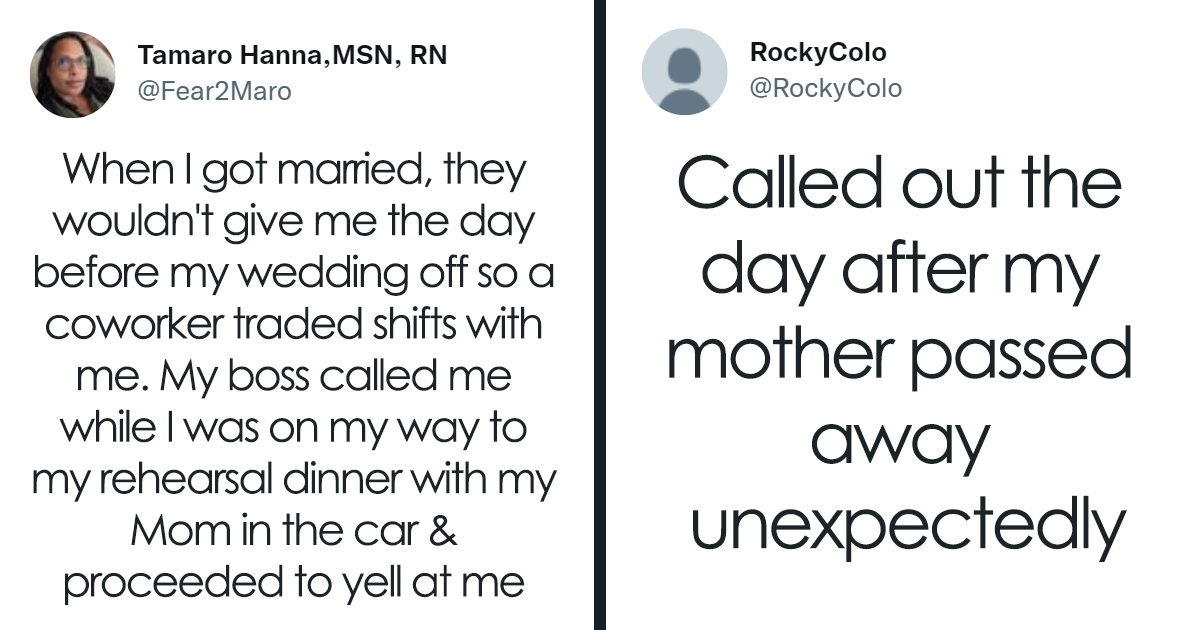
Some workplace stories make you laugh. Some make you sigh. And then there are the ones that make you stare at the screen, blink twice, and wonder whether a certain manager was assembled in a lab using equal parts spreadsheet, ego, and expired yogurt. Stories about shameless bosses refusing day-off requests fall firmly into that third category.
They hit a nerve because almost everyone has lived some version of them. Maybe not the exact “my child just died and my boss wants me on Zoom by noon” level of horror, but close enough to recognize the pattern: a human emergency collides with a manager who thinks attendance is a personality trait. Suddenly grief, illness, caregiving, and mental health get treated like scheduling inconveniences instead of, you know, life.
That is what makes these stories travel so fast online. They are outrageous, yes, but they are also familiar. They expose the ugliest side of workplace culture: when productivity becomes so overhyped that basic decency gets left in the break room next to the stale donuts.
Why These Stories Feel So Brutal
Part of the outrage comes from the legal gray zone many workers live in. In the United States, there is no broad federal requirement that employers provide bereavement leave. If a company offers it, the policy is often limited, narrow, or written in the kind of language that sounds compassionate until a real emergency shows up. Some employees may qualify for job-protected leave under the Family and Medical Leave Act when they are caring for a spouse, child, or parent with a serious health condition, or when their own physical or mental health condition prevents them from working. But that still does not mean every heartbreaking situation gets covered, and it certainly does not guarantee a manager will respond with grace.
That gap between human need and workplace policy is where the worst stories thrive. Research and workplace reporting have been saying the same thing for years: support matters, managers matter, and the emotional tone of a workplace is not fluff. It is infrastructure. When leaders handle grief badly, employees do not just feel sad. They feel unsafe, disposable, and one email away from updating their résumé.
That reaction is not dramatic. It is logical. If your boss cannot show compassion when your family is in crisis, when exactly are they planning to become a decent person? Arbor Day?
Below are 30 of the worst kinds of day-off denials people talk about again and again in workplace stories, employee forums, and management cautionary tales. They are different on the surface, but they all send the same rotten message: your life matters less than the shift chart.
30 Of The Worst Day-Off Refusals Employees Never Forget
-
1. The Funeral That Was Treated Like a Scheduling Conflict
An employee loses a child, parent, spouse, or sibling and asks for time to attend the funeral, only to hear something like, “Can you make it back by Monday?” Nothing reveals managerial failure faster than treating a burial like a dentist appointment that should have been booked earlier.
-
2. The Hospice Call During “Busy Season”
A worker learns a loved one is in their final hours and asks to leave immediately, but the boss responds with the workplace version of emotional static: “We’re short-staffed.” As if the dying relative should kindly reschedule the goodbye for after quarterly reporting.
-
3. The Child’s Emergency Surgery That Somehow Needed More Notice
There is something especially grim about bosses who hear the words “my kid is going into surgery” and still pivot to staffing coverage. In stories like these, the employee is not requesting beach time. They are choosing between being a parent and keeping a paycheck.
-
4. The Miscarriage That Got Labeled “Personal Drama”
Pregnancy loss is physically painful, emotionally disorienting, and still badly misunderstood at work. Some of the ugliest stories involve managers acting like miscarriage is a private inconvenience rather than a legitimate medical and emotional crisis. It is cruelty wearing office clothes.
-
5. The Stillbirth Followed by a Text Asking for an Update
When a boss reaches out not to offer support, but to ask whether the employee can still cover a shift after a stillbirth, the problem is no longer poor management. It is a total collapse of moral judgment. Nobody forgets a message like that. Nobody should.
-
6. The Parent in ICU While the Boss Wanted “Commitment”
Employees sitting beside an intensive care unit bed should not have to defend their devotion to work. Yet many do. The subtext is brutal: prove your loyalty to the company while your family’s life is hanging in the balance. That is not leadership. That is emotional extortion.
-
7. The Cancer Appointment That Was Treated Like Optional PTO
Whether it is chemotherapy, a biopsy, or a major scan, medical appointments tied to cancer are not “nice to have.” But shameless bosses sometimes act as though employees are trying to sneak in a manicure. The worker learns a hard truth in that moment: this manager hears fear and translates it into inconvenience.
-
8. The Caregiving Request for an Aging Parent That Got Shrugged Off
Eldercare is one of the most common strains on working adults, and still one of the least respected. Workers trying to drive a parent to treatment, coordinate after a fall, or manage a sudden decline often run straight into a wall of indifference from bosses who think everyone over 70 should apparently self-transport through a medical crisis.
-
9. The Mental Health Day That Became a Lecture
Employees asking for time off because they are spiraling, burned out, or on the edge of a panic attack do not need a TED Talk from someone who thinks mindfulness is just sitting near a ficus. They need time, care, and maybe a manager who has read a single sentence published after 1998.
-
10. The Therapy Appointment That “Didn’t Look Serious Enough”
There is a special arrogance in assuming only visible pain counts. Workers are still forced to justify therapy, psychiatry visits, or trauma counseling as if emotional survival needs a more dramatic costume. A broken leg gets sympathy. A breaking mind gets suspicion. That double standard says everything.
-
11. The Domestic Violence Escape Plan That Met with Skepticism
Some employees ask for emergency time off not because they are tired, but because they are trying to stay safe. Court dates, protective orders, relocation, and crisis response are not luxuries. When managers respond with doubt or punishment, they do more than fail professionally. They increase danger.
-
12. The Employee Asked to Find Their Own Replacement From a Hospital Bed
This one shows up so often it has become its own genre of workplace villainy. The employee is in the ER, on medication, or actively being treated, and the boss still says, “You need to get your shift covered.” That sentence should be printed on a red flag the size of Nebraska.
-
13. The Car Accident Followed by “Can You Still Come In?”
Not all shameless bosses deny time off directly. Some just ask a question so absurd it does the damage anyway. If an employee says, “I was in a car accident,” and the next reply is about availability, the manager has officially mistaken consciousness for readiness.
-
14. The School Emergency That Had to Compete With a Staff Meeting
Parents get calls nobody wants: a child is hurt, sick, suspended, terrified, or needs to be picked up immediately. A decent manager says, “Go.” A shameless one starts weighing whether the employee’s presence is more important than a minor work obligation. Spoiler: it is not.
-
15. The Pregnancy Complication That Was Minimized
Bleeding, bed rest, severe nausea, hypertension, and emergency monitoring are not just “pregnancy stuff.” They are health issues. Yet workers still report being brushed aside with comments that imply they are exaggerating. Nothing says hostile workplace quite like treating medical risk as poor team spirit.
-
16. The Multi-State Funeral That Was Somehow “Too Many Days”
Traveling for a funeral often means flights, family logistics, cultural rituals, and more than one day of grieving. Some bosses hear that and decide the real problem is calendar efficiency. They want loss to fit inside a tidy corporate window, preferably between lunch and payroll.
-
17. The Death Anniversary That Reopened Everything
Grief is rude in one very specific way: it does not care about workplace timing. Anniversaries, birthdays, and holidays can flatten someone years after the original loss. Employees asking for space on those days are not weak or dramatic. They are being honest about being human.
-
18. The Worker Told to Bring Their Laptop to the Hospital
One of the clearest signs of a workplace gone feral is the assumption that an employee can sit in a waiting room, field doctor updates, and somehow also answer email “when possible.” A hospital is not a satellite office. The Wi-Fi should not be the main concern.
-
19. The Grieving Employee Ordered to Join a Video Call
There is a certain modern flavor of insensitivity that sounds polished while doing real harm. A manager may not say, “Your grief is irrelevant,” but “Can you just hop on for 20 minutes?” gets the message across just fine. Corporate cruelty has learned to smile.
-
20. The Hourly Worker Punished for Not Being Available 24/7
Workers in retail, food service, hospitality, and health care often absorb the worst of this behavior because schedules are thin and replacements are hard to find. That reality is used like a weapon. The message becomes: if you do not sacrifice your life for the shift, you are the problem.
-
21. The Approved PTO That Was Revoked Because the Boss Forgot to Plan
This is not just rude. It is managerial malpractice. The employee requested time, got approval, made arrangements, maybe paid for travel, and then the boss suddenly acts like the worker created chaos by trusting the approval. That is not a staffing issue. That is an accountability issue.
-
22. The Worker With the Flu Told to “Tough It Out”
Many managers still act personally offended when employees do not want to drag fever, vomiting, or contagious illness into the workplace. It is a terrible call morally, medically, and operationally. Congratulations, boss: you saved one shift and infected six people.
-
23. The Employee in Burnout Treated Like a Slacker
Burnout is not laziness wearing glasses. It can look like exhaustion, panic, detachment, mistakes, memory lapses, and emotional collapse. When a boss responds by mocking the need for a day off, they often push a struggling employee from “barely coping” into “done forever.”
-
24. The Person Handling Funeral Arrangements Told to Hurry It Up
Death comes with paperwork, phone calls, decisions, relatives, bills, travel, and the emotional chaos of trying to function while your brain is basically static. Bosses who treat these tasks like a side errand reveal how little they understand the labor of loss.
-
25. The Religious Mourning Practice That Was Brushed Aside
Many families observe mourning through specific rituals, prayer periods, or burial timelines. When managers dismiss those needs because they are unfamiliar or inconvenient, it is not just insensitive. It can veer into disrespect for culture, faith, and identity all at once.
-
26. The Employee Asked to Grieve “Off the Clock”
Some bosses do not deny time off outright. They simply make grief impossible to carry with dignity. They demand normal energy, normal speed, normal mood, and normal output, as if the employee can tuck devastation into a drawer until 6 p.m. Human beings are not email drafts.
-
27. The Caregiver Told Siblings Should Handle It
Workers caring for a sick parent, spouse, or child are often met with bizarre assumptions: can’t someone else do it, can’t you hire help, can’t the appointment move? These questions sound practical until you realize they are mostly a fancy way of saying, “Please make your family emergency less real for me.”
-
28. The Emergency Leave Followed by Retaliation
Sometimes the boss says yes, but the punishment arrives later: worse shifts, cold treatment, write-ups, fewer hours, missed promotions. That delayed backlash is its own form of denial. It teaches employees the official answer may be “okay,” but the actual lesson is “never inconvenience us again.”
-
29. The Return From Bereavement Straight Into a Performance Lecture
Imagine coming back from a funeral and being told your numbers slipped, your tone changed, or your energy was “off.” No kidding. Grief has terrible synergy with key performance indicators. Workers remember these conversations because they mark the exact moment respect evaporated.
-
30. The Request That Should Never Have Needed Defending
The worst stories all end in the same place: an employee forced to explain why a moment of profound pain deserves time away from work. That is the true scandal. Nobody should have to draft a persuasive argument for attending a funeral, surviving a miscarriage, sitting with a dying parent, or protecting their own sanity.
What Good Managers Do Instead
The opposite of this behavior is not complicated, and that may be the most infuriating part. Good managers listen, believe the employee, protect privacy, explain options clearly, and do not make a person negotiate against their own emergency. They use policy as a floor, not a ceiling. They do not confuse compassion with lost productivity, because smart leaders understand that people remember how they were treated long after they forget the contents of a Tuesday meeting.
Supportive management does not mean perfection. It means refusing to behave like grief, illness, caregiving, and crisis are signs of weak character. When people get the time and dignity they need, they are more likely to recover, return, and trust the workplace again. When they are denied that grace, they may keep the job for a while, but the relationship is usually over.
Experiences Behind These Stories: What Workers Actually Carry With Them
What makes stories like these linger is not just the bad decision itself. It is the feeling that follows. Employees who are denied time off during a family crisis often describe a strange split-screen experience. On one side, their real life is exploding: there is a hospital room, a funeral home, a school nurse calling, a parent crying, a child who needs surgery, or a body that simply cannot keep going. On the other side, there is a manager talking about workflow as if the universe’s most pressing issue is whether a spreadsheet gets updated before lunch. That emotional mismatch is so jarring that workers remember it for years.
Many also describe guilt on top of grief, which is a particularly rotten combo. Instead of focusing on the emergency, they are worrying about whether coworkers will be burdened, whether they will get written up, whether asking for a basic human accommodation makes them look unreliable, or whether they should answer emails just to prove they are still “committed.” In healthy workplaces, time off during a crisis is a support system. In toxic ones, it becomes a loyalty test.
There is also the humiliation factor. People in these situations are often forced to share deeply personal details just to be believed. A worker may feel pressured to explain a miscarriage, describe a panic attack, outline a parent’s diagnosis, or justify why being present at a funeral matters. That invasion can sting almost as much as the denial itself. It turns a private pain into a workplace exhibit, with the boss playing prosecutor and the employee somehow expected to present evidence that they are suffering enough.
Then comes the long-term impact. Workers who go through this rarely say, “Well, that was unfortunate, but I feel closer to the company now.” They disengage. They start documenting everything. They stop volunteering extra effort. They quietly look for jobs with better cultures. Some never fully trust managers again, even in future roles, because once you have been asked to choose between your family and your shift, a piece of your professional innocence packs a bag and leaves town.
Ironically, bosses who deny urgent day-off requests often believe they are protecting performance. In reality, they are damaging it. A worker who is grieving, panicked, sleep-deprived, traumatized, or physically unwell is not suddenly transformed into a stronger employee because a manager said no. They are distracted, hurt, and likely to associate the workplace with shame instead of support. That does not build resilience. It builds turnover.
The stories also reveal something bigger than bad manners. They show how many organizations still reward control over judgment. Some managers have absorbed the idea that being “tough” means questioning every absence, flattening every emergency into an attendance issue, and treating compassion like a dangerous precedent. But the best workplaces do not collapse because one employee attends a funeral or steps away during a crisis. They collapse when people stop believing anyone there would care if they vanished.
That is why these stories resonate so widely. They are not only about terrible bosses. They are about the moment workers realize the company handbook may talk about values, culture, and people-first leadership, while the real operating system says something much colder: produce first, grieve later. And for a growing number of employees, that is no longer a deal worth accepting.
Final Thoughts
The most outrageous denied day-off stories are memorable because they strip workplace culture down to its bones. Forget the mission statement, the branded notebooks, and the cheerful slide deck about employee well-being. When someone asks for time to handle death, illness, caregiving, trauma, or collapse, the response tells the truth. It shows whether the company sees workers as people with lives or merely as labor with email addresses.
No job is worth being shamed for attending a funeral, protecting your mental health, or showing up for your family in a crisis. If a boss cannot understand that, the real emergency may not be the day-off request. It may be the leadership.