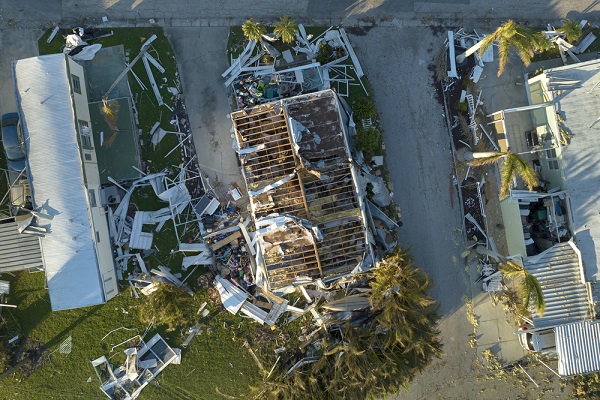
A catastrophe event, better known in insurance shorthand as a CAT event, can do more than flatten roofs, flood basements, and make claim departments drink coffee like it is a legally required fuel source. For independent insurance agencies, a major hurricane, wildfire, hailstorm, tornado outbreak, flood, or severe convective storm can also shake the numbers that buyers, lenders, and valuation consultants study when deciding what an agency is worth.
Agency valuation is not based only on revenue. Buyers look at the quality, durability, concentration, profitability, retention, carrier mix, growth trajectory, staff depth, and operational discipline behind that revenue. A CAT event can disturb all of those factors at once. One bad storm season may not wreck a strong agency’s value, but repeated catastrophic losses in the same territory can quietly turn a “premium book” into a “please explain this spreadsheet” book.
Below are five practical ways a CAT event can impact agency valuations, why buyers care, and what agency owners can do before the sky starts auditioning for a disaster movie.
What Is a CAT Event in Insurance?
In insurance, a CAT event is a large-scale disaster that creates significant insured losses across many policyholders. These events may include hurricanes, tornadoes, wildfires, winter storms, floods, hailstorms, derechos, earthquakes, and other severe weather or natural disaster events. CAT losses matter because they affect loss ratios, carrier capital, reinsurance costs, underwriting appetite, claims capacity, customer sentiment, and local economic health.
For an insurance agency, the event itself is only the first chapter. The second chapter is what happens to the agency’s revenue, workload, carrier access, client retention, and market reputation after the claims begin. Buyers understand this. During due diligence, they do not simply ask, “How much commission did the agency make?” They ask, “How reliable is that commission if another storm hits next year?”
Why CAT Events Matter to Agency Valuation
Independent insurance agencies are often valued using a multiple of EBITDA, revenue, or a combination of financial and strategic factors. Strong agencies usually command better multiples when they show stable recurring revenue, high retention, healthy profit margins, clean financials, diversified carrier relationships, low concentration risk, and modern operations.
A CAT event can make those strengths harder to prove. It may reduce contingent income, create unfavorable loss ratios, damage carrier relationships, increase use of excess and surplus lines markets, strain staff, and weaken local economic conditions. In short, it can make revenue look less predictable. And in valuation land, predictability is the golden retriever of business traits: everybody likes it, everybody trusts it, and nobody wants it running away during a thunderstorm.
1. CAT Events Can Reduce Profit Sharing and Contingent Income
One of the clearest ways a CAT event can impact agency valuations is through profit sharing. Many independent agencies receive contingency or profit-sharing income from carriers when the agency’s book performs well. These agreements often depend on premium volume, growth, retention, and favorable loss ratios.
When a major CAT event hits, loss ratios can spike quickly. Even if the agency did everything right, a hurricane does not pause at the county line to review underwriting guidelines. If many clients file claims at once, the carrier’s profitability on that book may decline, and the agency may lose some or all of its expected contingent income.
This matters because buyers separate recurring, predictable earnings from income that may be irregular. Contingent commissions are valuable, but they are not always treated the same as core commission revenue. If an agency in a CAT-prone region has depended heavily on profit sharing to boost EBITDA, buyers may normalize earnings downward or apply a more conservative multiple.
Example: The “Great Year” That Wasn’t So Great
Imagine an agency that generated $2 million in revenue and $300,000 in EBITDA, including $150,000 in contingency income. On paper, the margin looks attractive. Then a major hailstorm creates heavy roof claims across the agency’s homeowners book. The following year, profit sharing disappears. Suddenly, EBITDA looks closer to $150,000 unless the agency can replace that income elsewhere.
A buyer may not assume the lower number is permanent, but they will ask hard questions: How often does this happen? Is the agency’s book too concentrated in hail-exposed ZIP codes? Are carriers already tightening underwriting? Is the agency’s growth driven by strong sales or by rate increases in distressed markets?
The agency owner may still have a strong business. But valuation is about risk-adjusted earnings, not wishful thinking with a logo on it.
2. CAT Events Can Weaken Carrier Relationships and Market Access
Carrier relationships are a major valuation factor for independent agencies. Buyers want to see a balanced, durable carrier lineup with quality appointments, competitive products, and a history of profitable business. CAT losses can disrupt that balance.
After repeated catastrophic losses, carriers may reduce capacity, restrict new business, raise deductibles, require stronger underwriting documentation, nonrenew certain risks, or exit specific geographies or lines. In the worst cases, an agency may lose a key appointment. That is not just an operational headache; it is a valuation issue.
If a large portion of agency revenue depends on one carrier, and that carrier pulls back after a CAT event, buyers will see concentration risk. If several carriers become less willing to write property business in the agency’s core region, buyers may question the durability of renewal commissions and the agency’s ability to grow.
Why Buyers Care About Carrier Stability
Buyers do not want to purchase revenue that must be rewritten immediately under worse terms. They want to know that the agency can continue placing business, retaining clients, and producing new accounts after closing. If the agency’s market access is fragile, a buyer may reduce the purchase price, add earnout conditions, or delay the transaction until the risk becomes clearer.
This is especially important in coastal states, wildfire-prone regions, and areas with frequent severe convective storms. When carriers tighten underwriting, the agency’s value may depend on how well it has diversified markets and educated clients before the disruption.
3. CAT Events Can Push More Business Into E&S Markets
When admitted carriers become cautious after a catastrophe, agencies may need to place more accounts through excess and surplus lines brokers. E&S markets are essential, especially for hard-to-place risks, but they can change the economics of an agency’s book.
First, commission splits may be less favorable than direct appointments. Second, coverage terms may be more restrictive. Third, the placement process may require more documentation, more client explanation, and more staff time. Fourth, clients may become frustrated when they see higher premiums, larger deductibles, narrower forms, or non-admitted carrier names they do not recognize.
None of this means E&S business is bad. In many CAT-exposed markets, E&S access is what keeps clients insured at all. However, from a valuation standpoint, buyers will examine whether the agency can maintain profitability and retention when more placements move outside standard markets.
The Margin Problem Nobody Puts on a Billboard
Suppose an agency previously placed most commercial property accounts directly with admitted carriers. After a wildfire or windstorm season, those carriers restrict appetite. The agency now sends more accounts to wholesale brokers. The clients still get coverage, which is a win, but the agency may earn less per account while spending more time servicing each policy.
That combination can pressure EBITDA. If the agency’s staff is working harder for thinner margins, buyers may view the book as less scalable. In agency valuation, scalability matters because acquirers are not only buying current revenue; they are buying future cash flow. If future cash flow requires heroic servicing efforts, the valuation cape starts to wrinkle.
4. CAT Events Can Stress Operations and Damage Reputation
A CAT event is a live stress test of an agency’s operations. Phones ring nonstop. Clients need claim guidance. Carriers may be overwhelmed. Adjusters may be delayed. Documents may be missing. Staff may be dealing with damage to their own homes while still trying to help policyholders. It is one of the hardest moments in agency life.
How the agency responds can influence client loyalty for years. Strong communication, clear claim instructions, proactive outreach, digital claim tools, and organized follow-up can deepen trust. Poor communication, slow response times, confusion, and inconsistent messaging can damage reputation quickly.
Buyers pay attention to reputation because it affects retention and referral flow. If an agency loses customers after a CAT event because clients felt abandoned, valuation may suffer. If the agency earns a reputation as the calm adult in the room while everyone else is shouting at a wet ceiling, that reputation can support value.
Operational Questions Buyers May Ask
During due diligence, buyers may examine how the agency handled prior CAT events. Did retention drop after the event? Did online reviews change? Were claim workflows documented? Did the agency have remote work capabilities? Were client communications automated? Did the agency track open claims and follow up consistently?
Modern agency management systems, client portals, e-signature tools, CRM workflows, text messaging systems, and clean data can all help. Technology does not stop hail, but it can stop an agency from becoming a spreadsheet swamp during claim season.
5. CAT Events Can Hurt the Local Economy That Feeds the Agency
Insurance agencies do not operate in a vacuum. They live inside local economies. When a CAT event damages homes, businesses, farms, warehouses, vehicles, schools, and public infrastructure, the agency’s community may change.
In the short term, rebuilding can create economic activity. Contractors, roofers, restoration companies, real estate professionals, and local suppliers may see increased demand. But the longer-term picture can be more complicated. If insurance becomes less available or less affordable, property values may weaken. Businesses may relocate. Homeowners may move. New development may slow. Lenders may become more cautious.
For an agency, this can affect both personal and commercial lines. Fewer insurable properties, fewer local businesses, and lower population growth can reduce organic growth. If clients leave the area, retention may suffer. If the agency’s book is heavily tied to one CAT-exposed community, buyers may discount the valuation for geographic concentration.
Geographic Concentration: The Quiet Valuation Villain
Geographic focus can be a strength when an agency dominates a local niche. But after repeated CAT events, that same focus can become a risk. A buyer may love an agency’s local brand but worry that too much revenue sits in one coastal county, one wildfire corridor, or one hail-heavy metro area.
Agencies can reduce this concern by diversifying across regions, lines of business, customer types, and carriers. A balanced book gives buyers more confidence that one disaster will not knock the agency’s earnings off the table like a cat with a grudge.
How Agency Owners Can Protect Valuation Before the Next CAT Event
Agency owners cannot control the weather, but they can control how prepared the business is for weather-related volatility. Protecting agency valuation starts with building a more resilient revenue model.
Diversify the Book
Agencies should review concentration by geography, carrier, line of business, client segment, and producer. A book that is 80% homeowners in one storm-prone region may be easier to understand, but it may also be easier to discount. Adding commercial lines, benefits, life, specialty niches, or clients in different territories can stabilize revenue.
Strengthen Carrier Partnerships
Agencies that bring carriers clean submissions, strong documentation, risk mitigation conversations, accurate replacement cost data, and disciplined account selection are better positioned during hard markets. Carrier trust becomes especially valuable after CAT losses.
Track Loss Ratios and Contingency Trends
Owners should understand which books are driving losses and which books are producing profitable growth. Buyers appreciate agencies that can explain performance clearly. “We have no idea what happened, but the spreadsheet looks spicy” is not a premium valuation strategy.
Build a CAT Response Playbook
A written catastrophe response plan should include claim reporting instructions, staff assignments, communication templates, carrier claim contacts, client email and SMS workflows, social media updates, remote work procedures, and escalation rules. The goal is simple: when disaster hits, the agency should execute a plan, not invent one while the phones are melting.
Promote Risk Mitigation
Agencies can help clients understand stronger roofing standards, defensible space, flood mitigation, generator planning, updated valuations, higher deductibles, ordinance or law coverage, business continuity planning, and parametric or specialty coverage options where appropriate. Better client resilience can support better loss outcomes, stronger retention, and a more attractive agency profile.
Experience-Based Insights: What CAT Events Teach Agency Owners
The biggest lesson from CAT events is that valuation is built long before a buyer appears. An agency that waits until the year of sale to clean up carrier concentration, claim workflows, and financial reporting is like someone buying storm shutters while the patio furniture is already airborne. Technically, the timing is dramatic. Strategically, not ideal.
In real agency operations, CAT events reveal which relationships are strong and which ones were mostly decorative. Clients remember the agency that answered the phone, explained the claim process, helped them find policy information, and told them what to expect next. They also remember silence. In a normal renewal cycle, price may dominate the conversation. After a disaster, trust becomes the product.
Agency principals who have been through major storms often learn to separate activity from effectiveness. A staff can be extremely busy and still disorganized. The best agencies create repeatable systems: one person monitors carrier claim bulletins, another manages client communication, another tracks large-loss accounts, and another keeps producers informed so they do not accidentally promise something the policy does not provide. That kind of structure protects reputation and reduces errors and omissions exposure.
Another practical lesson is that data quality matters. After a CAT event, agencies with clean policy records, accurate contact information, updated property details, and organized document storage can move faster. Agencies with messy data spend precious hours hunting for basics. Buyers notice this because data hygiene affects integration risk. Clean data says, “This agency is scalable.” Messy data says, “Please bring a shovel.”
Carrier communication also becomes a valuation issue. Agencies that maintain regular carrier conversations before disaster strikes often have a better understanding of appetite changes, moratorium rules, claim expectations, and underwriting direction. This does not guarantee special treatment, but it helps the agency plan instead of react. Buyers like agencies that can explain their carrier strategy with evidence rather than vibes.
Client education is another underrated value driver. Agencies that explain wind deductibles, flood exclusions, replacement cost, roof age concerns, ordinance or law coverage, business interruption waiting periods, and claim reporting steps before a CAT event usually face fewer angry surprises afterward. That education may not appear as a line item on a profit and loss statement, but it can protect retention. And retention absolutely appears in valuation discussions.
Finally, owners should treat every CAT event as a post-event audit opportunity. What worked? Which carrier handled claims well? Which workflows broke? Which clients were underinsured? Which producers need more training? Which policy forms caused confusion? A documented after-action review can become part of the agency’s value story. It shows buyers that the business learns, adapts, and improves.
The agencies that protect valuation are not the ones pretending catastrophes will not happen. They are the ones building a business that can absorb shocks, serve clients under pressure, and prove that their earnings are durable. In a market where buyers are increasingly sophisticated, resilience is not just a nice word for a conference slide. It is part of the multiple.
Final Thoughts
A CAT event can impact agency valuations through lost profit sharing, weaker carrier stability, increased E&S placement, operational strain, reputational risk, and local economic disruption. The damage is not always immediate, and it is not always fatal. Strong agencies can recover, adapt, and even strengthen client loyalty after a disaster.
But buyers value clarity. They want to understand whether an agency’s revenue is durable, whether its carrier relationships are stable, whether clients stay through hard markets, and whether operations can handle pressure. CAT events test all of that.
For agency owners, the best valuation strategy is preparation: diversify revenue, document workflows, build stronger carrier relationships, improve data quality, educate clients, and track performance honestly. When the next storm arrives, the agency may not be able to control the weather forecast, but it can control the business forecast.